On June 22, 1962, inside the Atlanta Federal Penitentiary, Joseph Valachi stood near a construction area in the prison yard. He spotted a thin man with glasses nearby. For weeks, Valachi had been convinced that Vito Genovese had marked him for death.
Men who once spoke to him had gone quiet. Familiar faces watched him too closely. Every movement across the yard looked like the beginning of an execution. The man Valachi feared most had a name: Joseph "Joe Beck" Di Palermo.
Di Palermo was not a famous boss. He did not control a family or hold court for newspaper photographers. He was a small, aging Lucchese soldier whose real authority came from narcotics roots, trusted couriers, hidden distribution plants, and decades of relationships reaching across Mafia family lines.
Valachi believed Joe Beck had been chosen to kill him. So when he saw a prisoner who resembled Di Palermo, he did not wait for confirmation. He grabbed an iron pipe left near the construction work, approached from behind, and attacked.
Only after the man was down did Valachi learn the truth. He had killed the wrong prisoner. The victim was Joe Saupp, a man with no part in the supposed contract. Joe Beck was still alive, and the mistake would help produce the most damaging act of betrayal the American Mafia had ever seen.
Valachi would begin talking to federal investigators. He would describe the oath, the families, the hierarchy, the murders, and the secret organization that powerful gangsters had spent decades denying even existed.
But the documented story is not that Joe Beck was sentenced to die and every killer refused the order. Reliable court and FBI records do not establish that claim. The verified story is almost the reverse. Valachi believed Joe Beck was the killer sent for him, and that belief was powerful enough to make an innocent man die.
So why did the sight of a short, quiet narcotics trafficker terrify an experienced killer like Joe Valachi? What had Di Palermo done to make his name sound like a death sentence? And how did a man who never became boss help build the drug conspiracy that placed Vito Genovese in prison, then remain active long enough to be caught planning another drug operation almost 20 years later?
Joseph Di Palermo was born in the first decade of the 20th century and spent much of his life inside the crowded streets of Lower Manhattan. Records and later reporting place his world around Elizabeth Street, Prince Street, East 4th Street, luncheonettes, candy stores, policy banks, apartments, and back rooms that looked ordinary from the sidewalk.
A restaurant could become a meeting place after lunch. An apartment basement could become a narcotics plant. A candy store could receive messages without anyone admitting that business was being conducted. Lower Manhattan was not simply where Joe Beck lived. It was protection. Shopkeepers noticed strangers, and a detective asking questions could be seen before he reached the correct door.
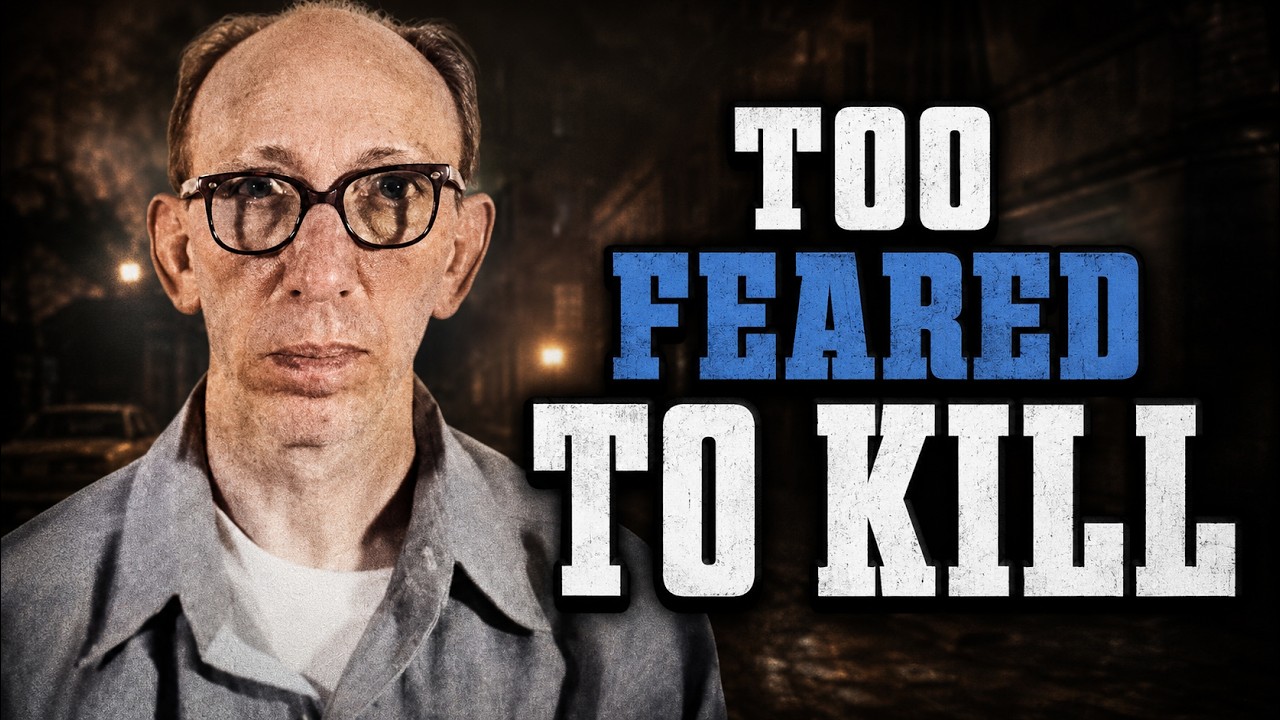
Di Palermo was physically unimposing. Photographs show a slight man with heavy glasses and a narrow face. But Joe Beck's value was not physical size. He understood supply.
A street dealer could sell packets and collect cash. A higher-level trafficker had to connect importers, couriers, storage locations, mixers, distributors, and men capable of protecting every stage. That system produced more money than almost any traditional Mafia racket. It also produced longer prison sentences and more potential witnesses.
Heroin arrived in concentrated form. Before reaching the street, it could be diluted, divided, packaged, and sold through several layers. Each layer increased the total amount available for sale while separating the principal supplier from the customer harmed by the product.
The courier knew where to collect a suitcase. The plant worker knew where to mix and package it. The distributor knew which neighborhood received the next quantity. The street seller knew the customer. Very few people knew the whole chain.
Joe Beck's power came from standing close enough to several parts of that chain to keep the business moving while remaining far from the final transaction. He also worked with relatives. His brother Charles Di Palermo appeared beside him in federal cases. The family structure gave the network something ordinary business contracts could not provide. Blood created trust. It also made the conspiracy harder to leave.
Before narcotics made Joe Beck nationally significant, he encountered the federal system through a counterfeit traveler's check operation. He was convicted around 1950 and spent years in prison. That sentence did not reform him. When he returned to lower Manhattan in the middle of the 1950s, heroin offered an opportunity larger than counterfeiting.
International routes connected Europe, Cuba, Mexico, Puerto Rico, Florida, and New York. The product multiplied in value after reaching the street. One of the people drawn into that system was Nelson Cantelops. Cantelops was not a Mafia boss. He was a courier and dealer who could travel without immediately attracting the attention created by a famous Italian gangster.
Federal court records later reconstructed his work in remarkable detail. In March of 1955, Cantelops attended a meeting at Al's Luncheonette on East 4th Street with Joseph Di Palermo, Carmine Polizzano, Ralph Polizzano, and other figures in the narcotics network. The location mattered. A luncheonette created constant movement. Customers entered, ate, paid, and left. A meeting could occur in plain sight while appearing accidental.
Cantelops agreed to carry narcotics to Las Vegas for $1,000. One man arranged the trip, another delivered the package, Cantelops transported it, and a contact at the destination received it. In June of that year, he traveled to Florida. After failed arrangements in Tampa, the route shifted to Key West. A suitcase changed hands near a hotel.
Cantelops carried the narcotics back toward New York, where the shipment reached a plant beside the luncheonette. Joseph Di Palermo and Carmine Polizzano paid him $600. He later received an ounce of heroin as a tip.
That detail exposes the criminal economy. The organization did not always compensate a courier with ordinary money. Payment in narcotics forced him to become a distributor. He had to sell the product to convert it into cash, creating another layer of crime and another reason to remain loyal to the suppliers. The tip was not generosity. It was recruitment.
Other trips reached Chicago, Miami, Key West, and Cleveland. Court testimony described narcotics hidden in luggage, automobiles, and packages passed through hotels and transportation terminals. Joe Beck's name appeared not at the bottom of the chain, but around planning, payment, pricing, and expansion.
Government witness Joseph Basile testified that Di Palermo offered heroin for $8,000 a kilogram and cocaine for $400 an ounce. Basile said he purchased repeatedly through Di Palermo and contacts around him. A kilogram could be diluted and divided into thousands of street sales. The money came through repetition, one shipment, then another. One distributor paying, then another taking his place.
The operation also examined policy banks as possible covers for narcotics distribution. Policy was an illegal lottery played heavily in working-class neighborhoods. Customers selected numbers, runners collected wages, and bankers held enough cash to pay winners.
A policy bank already possessed runners, cash flow, neighborhood trust, and locations where people came and went. The same runner who carried betting slips might pass information. The same backroom that counted gambling money could conceal another product. The same corrupt protection keeping the lottery open could reduce attention around the drug plant.
According to the federal appellate record, a meeting attended by Di Palermo, John Ormento, Benjamin Levine, and others discussed purchasing policy banks in the Lower East Side as covers. The estimated price was between $100,000 and $150,000. They were not improvising on a street corner. They were planning territory.

Above the network stood a figure witnesses called the right man. That man was Vito Genovese. Genovese had fought his way to control of the family once led by Lucky Luciano and Frank Costello. He wanted authority, recognition, and income.
Narcotics created enormous profit, but it also created political danger because Mafia leaders often publicly claimed to oppose the trade. The public rule said not to deal drugs. The private reality was filled with exceptions, denials, and bosses benefiting from men willing to accept the legal risk.
Joe Beck lived inside that contradiction. He was useful precisely because he understood narcotics while more visible leaders could maintain distance. Federal agents spent years building the case. They followed couriers, watched plants, seized narcotics, examined travel, and turned participants into witnesses.
In July of 1957, the operation collapsed into arrests. The trial record eventually stretched across thousands of pages. Witnesses described deliveries, meetings, prices, routes, apartments, hotels, and names connecting distributors to senior organized crime figures.
Di Palermo and Genovese were both convicted. Joe Beck received 15 years in federal prison and a $20,000 fine. Genovese received the same prison term. The sentence placed Di Palermo, Genovese, and Joe Valachi inside the same institution.
Valachi was a Genovese soldier with his own narcotics conviction. He had lived through gang wars, robberies, murders, and the internal politics of a family where the boss rarely explained what he truly believed. Inside Atlanta, the same men saw one another repeatedly. A look across the mess hall could become a warning. Silence could feel organized.
Valachi began believing that Genovese blamed him for the narcotics conviction or suspected him of cooperating. According to Valachi's later account, Genovese kissed him on the cheek during a conversation. Valachi interpreted the gesture as a kiss of death. Whether Genovese truly ordered the murder was never established in court. What mattered was that Valachi believed it.
And the man he expected to carry out the order was Joe Beck Di Palermo. Why Joe Beck? Because Di Palermo was dangerous without looking dramatic. He had spent years moving heroin among dangerous men and understood how orders could travel without direct language. Most importantly, he was already inside the prison. A killer from the street did not need to be smuggled through the gate. The suspected weapon was living in the same institution.
Valachi became isolated, watched other prisoners, and treated ordinary movements as signals. Paranoia can save a criminal when danger is real. It can also make an innocent man resemble the enemy.
On June 22, 1962, Valachi saw Joe Saupp near the prison construction area. Saupp resembled Di Palermo closely enough in that moment to trigger everything Valachi feared. Valachi picked up the pipe. The attack was sudden and fatal. Then came recognition. The dead man was not Joe Beck. The supposed executioner had not attacked. An innocent prisoner had been killed because one gangster believed another gangster's face represented a contract.
Valachi now faced the possibility of a death sentence for murder. He was already serving a long federal term. The Mafia men around him had become enemies in his mind, and the organization offered no reliable protection. So he turned toward the government.
Federal investigators understood what they had. Valachi knew the internal language, ceremonies, crews, leaders, and history. He could explain that the families belonged to a structure with rules, ranks, and a governing commission. In 1963, he testified before a Senate subcommittee. Television carried the hearings into American homes.
For years, powerful gangsters had insisted that no national Mafia existed. Valachi described Cosa Nostra, the oath of membership, the families, and the methods used to enforce silence. His testimony did not directly convict the major bosses he named. It destroyed the public denial. And at the center of the event that pushed him toward cooperation stood the image of Joe Beck Di Palermo.
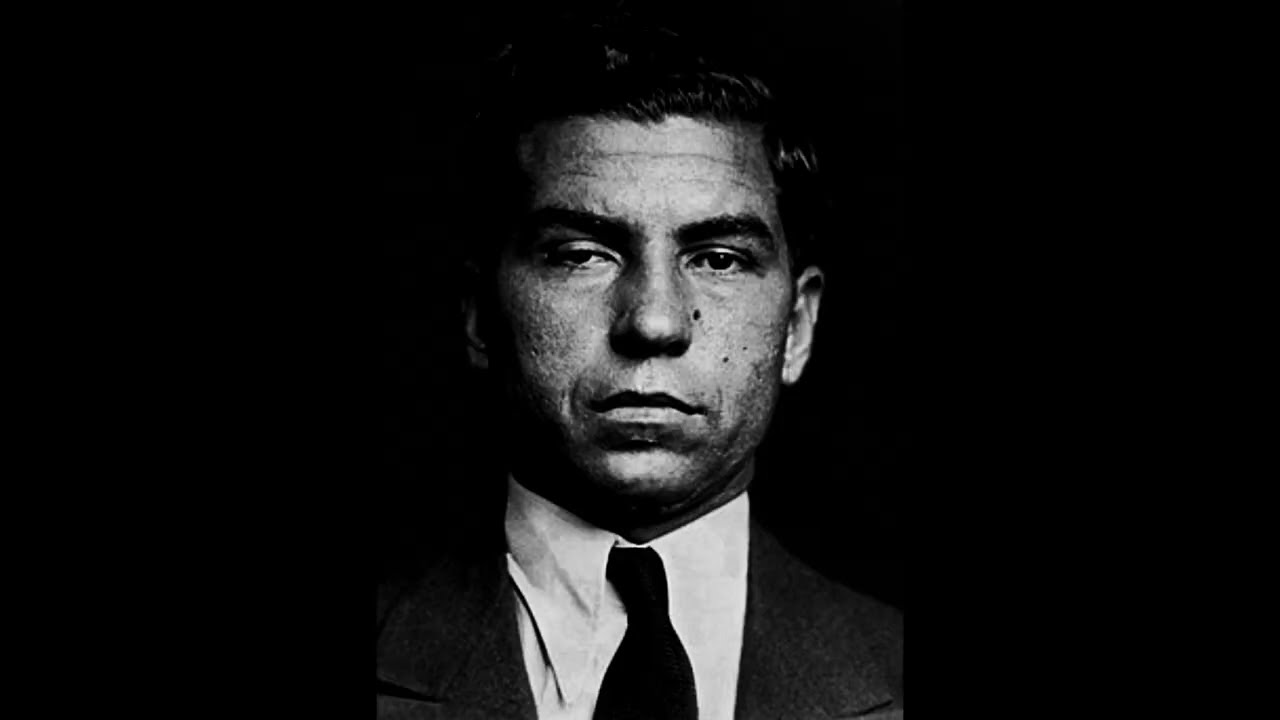
Joe Beck never had to attack Valachi. His reputation performed the violence before he entered the scene. While the country watched Valachi expose the secret society, Di Palermo remained in prison. He had built his wealth through a business that damaged thousands of lives. Yet the public knew far less about him than about the boss convicted in the same case. That anonymity was useful. A famous boss attracts headlines. A supplier survives through connections.
After serving his sentence, Joe Beck returned to Lower Manhattan. He was older, thinner, and already the survivor of a prosecution that had removed years from his life. He did not abandon narcotics. By the middle of the 1970s, New York police intelligence reportedly listed Joseph and Charles Di Palermo among the city's major drug traffickers.
Then the product changed. Heroin had defined his earlier career. In the late 1970s, a conspiracy around methaqualone, commonly called Quaaludes, brought him back into federal court. A paid DEA informant named Vincent Marchese entered the group in April of 1977.
The conspirators needed approximately 490 pounds of chemicals and $10,000 to begin manufacturing. They also needed a laboratory. The search led to 13 remote acres at 135 Ella Street on Staten Island, where an old house and a dock offered isolation. A caretaker later identified Di Palermo as one of the men who visited the site.
DEA agents followed associates from the property into lower Manhattan and overheard brief meetings with Joe Beck. During one exchange, Di Palermo said, "It is a lot of money." During another, an agent heard him give directions beginning with, "This is what you do."
Those short conversations mattered because experienced criminals rarely delivered complete plans in one speech. Authority appeared through fragments. A location was approved. Money was discussed. Chemicals moved. A pharmacist was recruited because the criminals had supplies but lacked the knowledge required to produce a marketable drug. The organization had money and fear, but it still needed expertise.
On November 14, DEA agents closed in. One participant ran into the house and tried flushing evidence while hiding behind a German Shepherd. Agents recovered methaqualone, laboratory equipment, and the chemicals obtained through the informant. Di Palermo was convicted again. The man Valachi once feared as a prison executioner was now an elderly defendant caught through surveillance, an informant, and a laboratory the government had watched being assembled.
Even that did not remove him completely. In April of 1986, authorities announced a massive New York narcotics prosecution involving 38 suspects. Joseph and Charles Di Palermo were named among reputed Lucchese figures charged in the operation. Authorities described the network as capable of feeding the addictions of tens of thousands of people. The estimates were government claims rather than a final accounting, but they showed the scale investigators believed the Di Palermo name still represented.
Joe Beck was approaching 80. He had already spent years in federal prison. He had been prosecuted across different eras of American narcotics history. And law enforcement still viewed him as part of the machine.
That may be the most revealing part of his story. He never needed the title of boss because the product created its own hierarchy. Men at the top of a family could change. Heroin still required suppliers. Couriers still needed payment. Plants still required protection. Distributors still needed someone trusted enough to settle money and arrange the next shipment.
Joe Beck's criminal identity was built around continuity. Counterfeit checks disappeared. The old policy banks faded. Street crews changed. One drug was replaced by another. He kept returning to the same principle. Find the supply. Build the layers. Keep distance between the source and the street. Let other men become visible.
Di Palermo died in January of 1992 at approximately 85 years old. He was not murdered in a social club. No reluctant hit team refused to kill him. No verified Mafia death sentence followed him into old age. The documented ending was quieter. A man who had helped move narcotics for decades died after surviving repeated convictions and prison terms.
But the legend around him continued because one moment in Atlanta changed American organized crime history. Joe Valachi saw a man who looked like Joe Beck. He imagined Vito Genovese's order behind the face. He killed before confirming the identity. And the wrong man's death helped turn a terrified Mafia soldier into the government witness who finally described the secret society in public.
That is the real power of Joe Beck's reputation. Not that every killer refused an order against him. That another killer became convinced Joe Beck was the order. The Mafia claimed fear protected its secrets. In Atlanta, fear destroyed them. Valachi's paranoia created a body. The body created a witness. The witness created the hearings. And the hearings gave the public its first detailed look inside Cosa Nostra.
Joe Beck never became boss. He never became a celebrity gangster. He remained what the narcotics machine needed him to be: a connection, a supplier, a name passed quietly between men who understood what the name implied. He did not have to swing the pipe that changed Mafia history. His reputation had already done the damage.