Gustav Franz Wagner was born on July 18, 1911, in Vienna, then part of Austria-Hungary. He trained as a mechanic and served as a soldier in the Austrian Army from 1928.
His main political goal was the annexation of Austria into the German Reich. He joined the German Nazi Party on January 19, 1931.
Beginning in May 1933, Austrian Nazis waged a propaganda and terror campaign encouraged and funded by Germany. The goal was to undermine the regime of Austrian Chancellor Engelbert Dollfuss by making it look incompetent.
Nazi activists staged disruptive protests and brawled with political opponents and police. They set off explosives and tear gas bombs in public places and Jewish-owned businesses.
In June 1933, after a fatal Nazi bombing, the Dollfuss regime banned the Austrian Nazi Party and its affiliates. The movement continued to operate illegally inside Austria.
In 1934, Wagner fled to Germany after serving prison time for daubing swastika graffiti and putting up Nazi posters. There he joined the SA, the paramilitary organization protecting Adolf Hitler's party in the early years of the Nazi regime. In the late 1930s he became a member of the SS under Heinrich Himmler.
After World War II began on September 1, 1939, Wagner started working for the Nazi euthanasia program codenamed T4. The program was the systematic murder of institutionalized patients with disabilities in Germany.
Patients were transported by bus or rail to six killing centers, where they were gassed, shot, or killed by lethal injection. Those deemed "unworthy of life" included residents of welfare institutions, some concentration camp inmates, the chronically sick, the mentally and physically disabled, homosexuals, and even sick German soldiers.
Wagner worked at the Hartheim killing center near Linz, where his duties included cremating the bodies of murdered victims. The T4 program predated the genocide of European Jews by about two years, and historians estimate it claimed the lives of 250,000 men, women, and children.
In the fall of 1941, Nazi Germany implemented a plan to systematically murder the two million Jews living in German-occupied Poland. The plan was codenamed Operation Reinhardt, and it established three killing centers: Belzec, Treblinka, and Sobibor.
Because of his experience in the T4 program, Wagner was sent to the Sobibor camp in March 1942, where he worked as a deputy commandant. Deportations to Sobibor took place between May 1942, when regular gassing operations began, and the fall of 1943.
Most of the Jews brought to Sobibor were immediately gassed with carbon monoxide piped into the gas chambers from an engine. About 250,000 victims were murdered at the killing center.
The Germans constructed Sobibor as a rectangle measuring 1,312 by 1,969 feet. A double barbed wire fence woven with tree branches surrounded the perimeter, intended to hide the view of what was inside.
The camp had two side-by-side gates, one for trains and another for foot traffic and vehicles. The Nazis paid special attention to the front of the compound, which consisted of living quarters and recreational buildings for the camp staff. SS officers lived in cottages with colorful names, which helped conceal the camp's purpose from new arrivals.
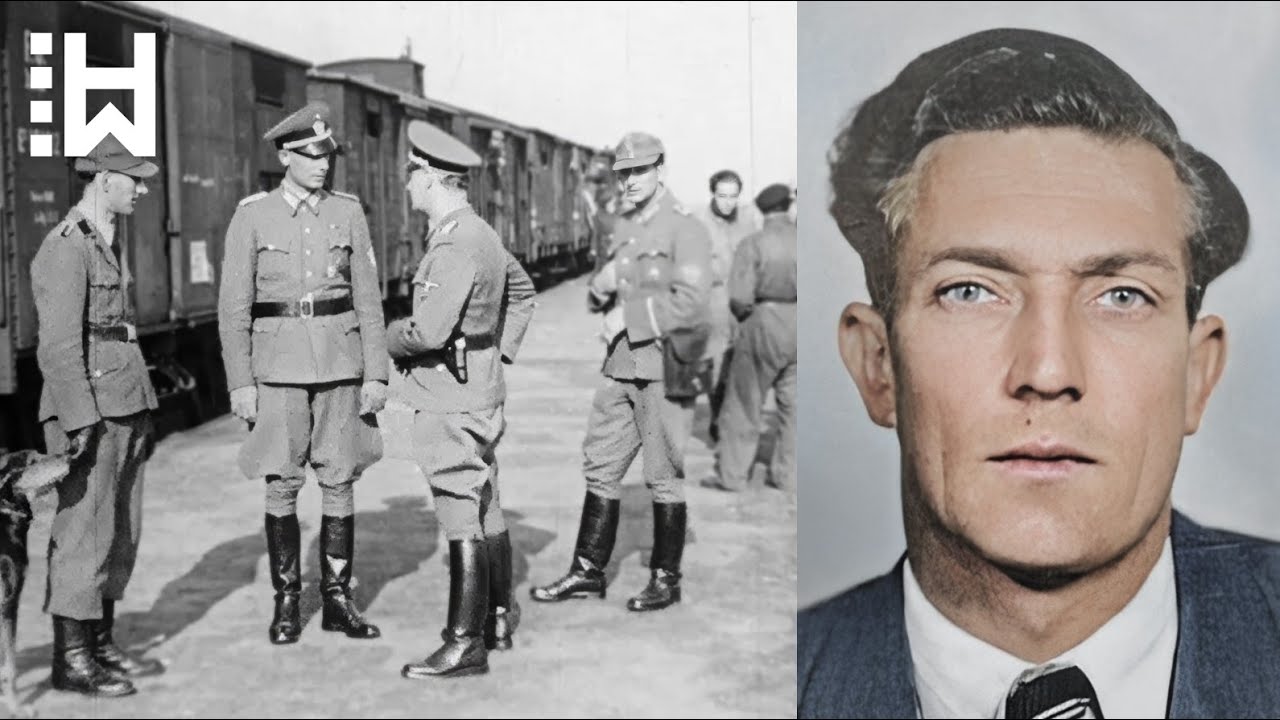
When a transport of 40 to 60 freight cars arrived at the Sobibor railway station, only 20 cars at a time were taken into the camp. The rest of the victims remained locked in the rail cars.
The victims were brought into a so-called arrival area, where an SS man gave a speech welcoming them. They were told they had reached a transit camp on their way to labor camps.
They were also told that before continuing their journey they would take showers, have their clothing disinfected, and get a meal. Men and women were then separated, and children were sent with the women.
The Nazis ordered the victims to remove their clothing and hand over their valuables. The Jews were then marched on the run to the gas chambers.
The honking of geese was used to obscure the cries of the victims from those still locked in the rail cars, who were being beaten, screamed at, and warned with gunfire. About 450 to 550 Jews were forced into the chambers at a time.
Once the maximum number of victims was inside, the gas chambers were sealed and poisonous gas was piped in. Within 20 to 30 minutes, all those inside were dead. Those too ill, weak, or elderly to make the walk to the gas chambers were shot in an open pit.
SS personnel at Sobibor enjoyed privileges such as higher pay and regular visits home every three months, when they could see their families for two weeks. The SS also stole victims' possessions, including gold, food, hair, and other valuables. Guards even took toys from murdered children back home to their families.
Wagner handled day-to-day operations in the camp and soon became the most feared and hated man in Sobibor. Inmates considered him a brutal, unpredictable, animal-like sadist who needed blood. When he was seen, prisoners knew someone was going to die.
He was almost two meters tall, weighed more than 100 kilograms, and was as strong as an ox. He had extremely long arms that reached down to his knees in a ridiculously disproportionate way.
He also had a severe deformity in one shoulder, which was much narrower than the other, making him walk with a strange gait and always lean to the right. Sobibor survivors recalled that the way he swung his body right and then left gave him the appearance of an orangutan.
According to Sobibor survivors such as Thomas Blatt, Wagner did not kill the same way as other Germans. He would use an ax, a shovel, a whip, or even his bare hands.
He would pick up a shovel and split a man's head in two over a triviality. After killing someone, he would become very calm and happy, chatting with people with a smile on his face.
On one occasion, Wagner was looking through a window, checking how prisoners were sorting suitcases. He saw a boy steal a can of sardines.
He grabbed the boy and called all the inmates out, put them in a half circle, and shot the boy in front of everybody. He then said this would happen to every one of them if they touched anything.
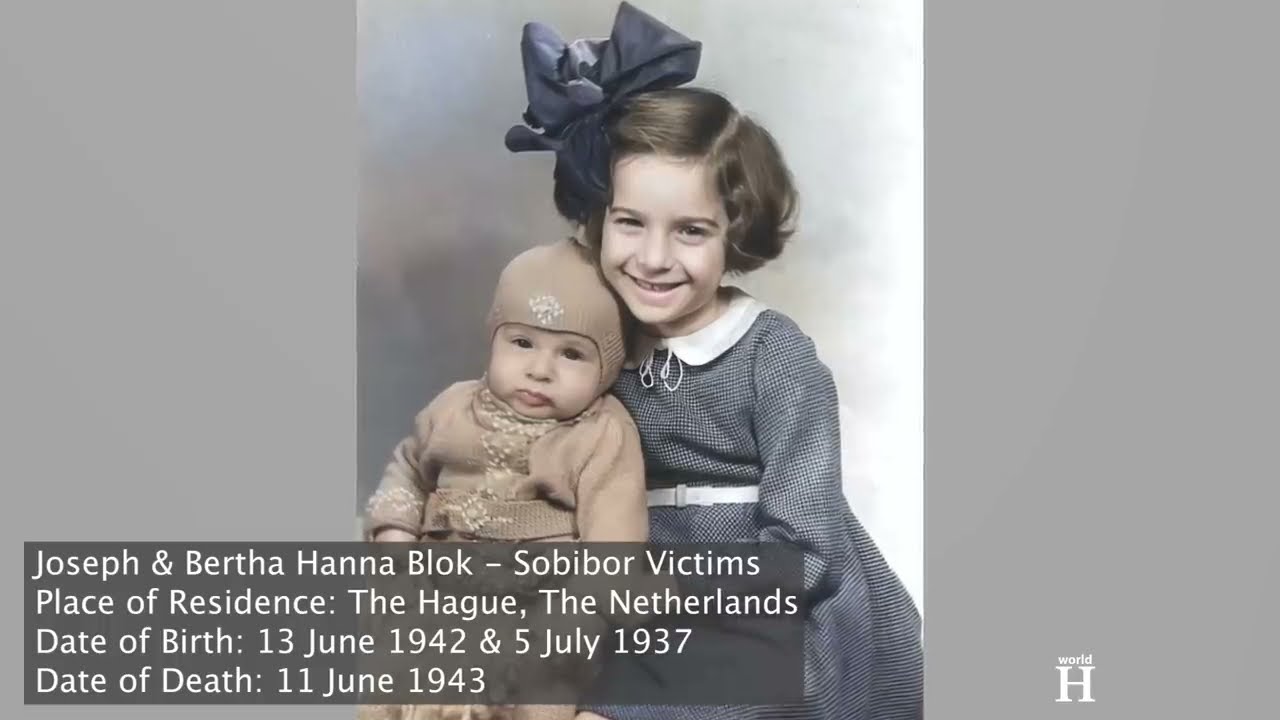
An SS officer in charge of Sobibor's gas chambers once overheard a conversation between Wagner and fellow SS officers. They were discussing the number of victims in the death camps of Treblinka, Belzec, and Sobibor and expressed regret that Sobibor came last in the competition.
Wagner and other SS guards and officers exercised absolute authority over prisoners and treated them as a source of entertainment. They forced prisoners to sing while working, while marching, and even during public executions.
Prisoners were forced to sing demeaning songs such as "I am a Jew with a big nose." Inmates also had to perform mock cockfights for the SS with their arms tied behind their backs.
Wagner's favorite activity was to shoot a father and son with one bullet. He would force the father and son to lean their heads together and then kill them with a single shot.
Another time, he found a woman who had smuggled her baby into the camp in a knapsack. He brought the woman and baby outside, made the mother kneel, and shot the baby first. After the woman started screaming, he shot her as well.
Because of his brutality, Wagner was known as "the Beast" and "Wolf." He was also a sexual deviant.
At a post-war trial, the SS officer Erich Bauer, who worked at Sobibor with Wagner, testified that Wagner and others had been involved in sexual orgies with Jewish women. According to his testimony, on one occasion Wagner and other SS men visited Ruth and Gisella, two women from Austria who were film and theater actresses, in a forester house, gang-raped them, and then had them shot.
Because Wagner lived in a room above Bauer, Bauer complained that the noisy sex parties in the forester house kept him from falling asleep after returning from a long journey.
In the summer of 1943, rumors began to circulate that Sobibor would soon cease operations. The prisoners understood this meant certain death for all of them.
The Sobibor prisoners knew this because Belzec prisoners who did the same work had sewn messages into their clothing before they were killed by Sobibor guards who shot them the same day they arrived at the camp. The next day, the Sobibor prisoners found all their clothes full of blood.
A Polish Jewish prisoner found a note in a pocket that said: "We worked at Belzec for one year and did not know where we would be sent next. They said it would be Germany. Now we are in Sobibor and nowhere to expect. Be aware that you will be killed also."
In September 1943, 20 Jewish Red Army prisoners of war arrived at Sobibor on a transport from the Minsk ghetto and were selected for labor. They had the necessary expertise to pull off an escape.
One of them, Alexander Pechersky, would become a leader of the revolt. It began around four o'clock in the afternoon on October 14, 1943, and one hour later a total of 11 SS officers had been killed by the rebels.
Chaos then took over. Prisoners had to escape by climbing over the barbed wire fence or by running out the main gate through a minefield under heavy machine gun fire.
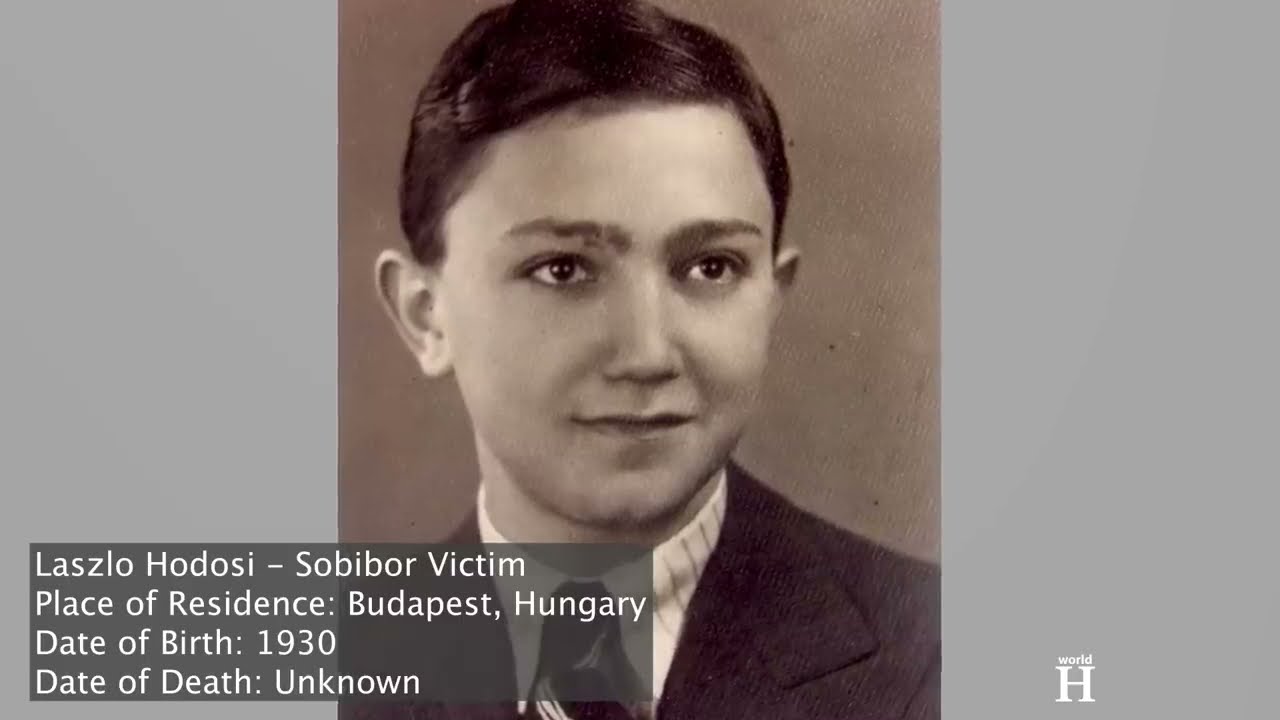
Some stepped on mines, and some gave up and did not run at all. Approximately 300 prisoners were able to escape, but most were chased down and killed. Some 50 of the escapees did survive the war.
Wagner was not present at the camp on the day of the Sobibor revolt. He had taken a holiday with his then wife, Karin, to celebrate the birth of their daughter, Marion.
The inmates knew of Wagner's absence and believed it would improve their chances of success. Wagner was considered the strictest officer at the camp in terms of prisoner supervision.
After the successful revolt, Wagner was ordered to help close the camp. He helped dismantle and remove evidence of the camp by ruthlessly commanding the Jewish prisoners who performed the task.
After the Jews had destroyed every building, removed the minefields, and torn down the barbed wire, Wagner killed them. For his work at the camp, he was rewarded with the War Merit Cross, Second Class, and Heinrich Himmler described him as one of the most deserving men of Operation Reinhardt.
After Sobibor, Wagner was transferred to Italy, where he participated in the deportation of Jews with other staff from the extermination camps and the T4 program. He ended the war in an American prisoner of war camp but was released after several weeks.
In 1948, while working on a building site in Graz, Austria, Wagner was recognized by a former commandant of Sobibor, Franz Stangl. Stangl had escaped from prison and, supported by an underground Nazi escape group, was on his way to the Vatican.
Wagner immediately joined his former commandant, and together they fled to Italy. On arrival in Rome, they went to the priest confessor at the German Catholic Community, Bishop Alois Hudal.
Hudal had helped establish the ratlines after the war, systems of escape routes for German Nazis and other fascists fleeing Europe from 1945 onward. He arranged Red Cross passports for Wagner and Stangl.
Three weeks later, they sailed for Beirut, Lebanon, and eventually, in 1952, fled to Brazil. Neither they nor anyone else in Brazil ever inquired about their past for the next 26 years.
Wagner married a Brazilian woman and built a solid Bavarian-style house in the isolated wooded hills outside São Paulo. Back in Germany, some former SS officers from Sobibor were caught and tried, but for decades German prosecutors believed Wagner was out of their reach and hiding in Egypt.
When Stangl was put on trial in Germany, he testified that Wagner was living in Brazil. Wagner was finally arrested on May 30, 1978, after an investigation by Simon Wiesenthal, a Jewish Austrian Holocaust survivor and Nazi hunter.
Several countries wanted to prosecute Wagner, including West Germany, Austria, Poland, and Israel. Wagner, who had been sentenced to death in absentia after the war, grew mentally unstable and suicidal while in Brazilian jail.
He attempted suicide by smashing his reading glasses and eating the broken glass. He was taken to a prison hospital, where he tried to commit suicide two more times, first by cutting his wrists in a bathtub and then by bashing his head against the wall.
The Supreme Court of Brazil decided for a technical reason not to allow Wagner's extradition, and Brazilian authorities allowed him to go home. In a 1979 BBC interview, Wagner showed no remorse for his activities in running the camp, remarking: "I had no feelings. It just became another job. In the evening we never discussed our work, we just drank and played cards."
On October 3, 1980, Wagner, then 69 years old, was found dead at his house with a knife in his chest. Attorneys reported his death as a suicide, but many believe there might be more to the story. There were no tears shared for Gustav Wagner.