When the war in Europe ended in 1945, there was an almost unseemly scramble for the secrets of the defeated regime. The obvious prizes, such as scientific experts and Nazi technology, are well known, with Britain, France, the United States, and the Soviet Union competing directly as the Cold War began to unfold.
But there was also a scramble to suppress things that, if revealed, would have damaged the reputations of many people in very senior positions. A series of senior Nazi officials ended up dead under mysterious circumstances, most notably Reichsführer SS Heinrich Himmler while in British hands.
One such mission to suppress information occurred at a grand German castle at Friedrichshof in the state of Hesse. It involved the British royal family, an American thief, and a Soviet spy.
When troops of General George S. Patton's U.S. Third Army arrived in April 1945, they found few of the royal occupants at home. The castle was one of several magnificent residences that belonged to Prince Philipp of Hesse, basically the hereditary ruler of the state of Hesse.
Born in 1896, Philipp was Queen Victoria's great-grandson and a close relative of the British royals, whose lineage is largely German. Following service in World War One, he fell in with the Nazis, joining the party in 1930 and being appointed to a very high position in Prussia by Hitler in 1933.
His wife, Princess Mafalda, was the daughter of King Victor Emmanuel III of Italy. Philipp dramatically fell from grace in 1943 when he unwisely outlined Germany's true position in Italy.
When Italy changed sides and his father-in-law went over to the Allies, Philipp was effectively finished. He and his wife were arrested by the Gestapo; Princess Mafalda died of injuries sustained following an Allied air attack on Buchenwald concentration camp.
Prince Philipp was kept as one of several dozen VIP hostages by the SS and eventually released in April 1945, only to be arrested by the U.S. Army shortly afterwards. Living at the castle in 1945 was Princess Sophie, a widow, while her mother-in-law, Princess Margaret of Hesse, Queen Victoria's granddaughter, lived in a 12-bedroom villa on the estate.
The Americans gave these royals and their attendants just four hours to vacate the palaces, allowing them to leave with only food and clothing. The art treasures and valuables were left behind.

Towards the end of the war, the family had made efforts to protect the crown jewels of Hesse and other valuable treasures, and they were safely hidden in the castle cellars. The Americans did not discover them for some time.
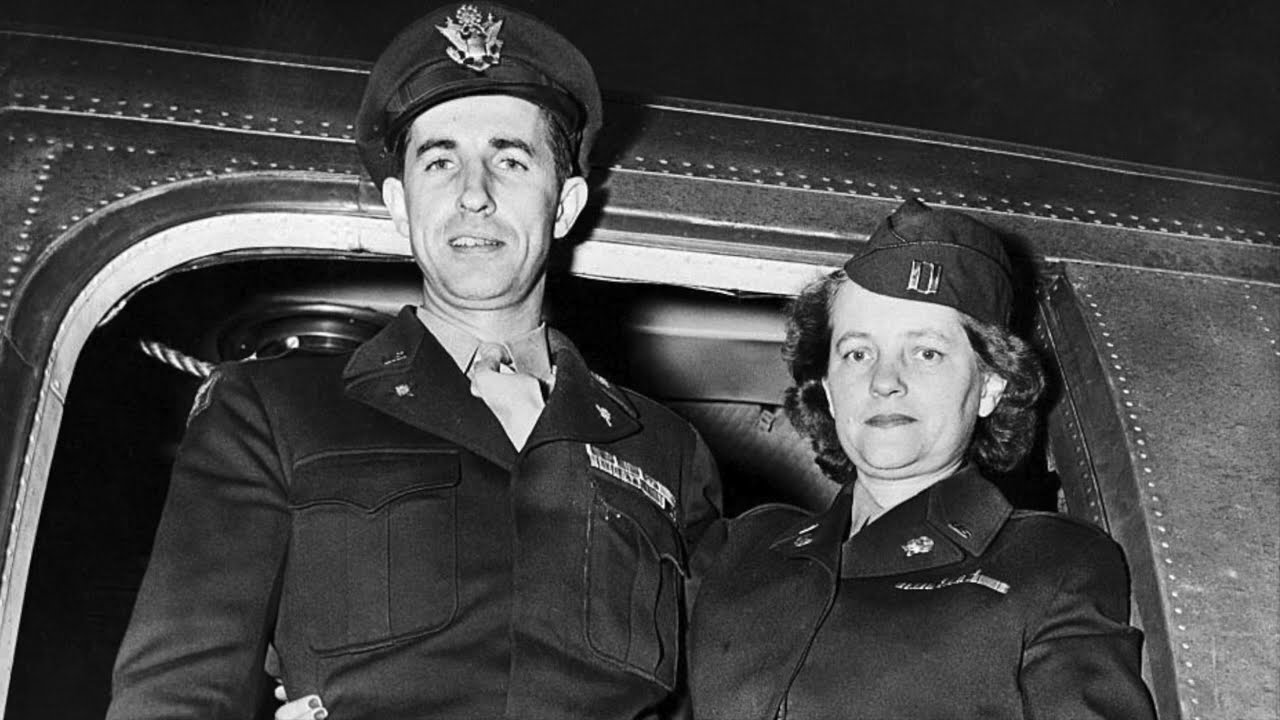
The United States Army ordered the castle turned into an officer's club and recreation center, placing Women's Army Corps Captain Kathleen Nash in charge. The British establishment was very worried once it knew of the situation at the castle.
First, the castle library contained a collection of four thousand letters written by Queen Victoria to her daughter the Princess Royal, who had married into the Hesse royal family and was Prince Philipp's grandmother. This was very private correspondence that, if published, might have tarnished Queen Victoria's reputation, as it was full of her private thoughts about her family, politics in Germany, and other important issues.
But this was nothing compared to other letters in the castle, passed between Prince Philipp of Hesse and the brother of King George VI, the former King Edward VIII, who had abdicated in 1936 and was now called the Duke of Windsor. It was suspected that Hitler had used Prince Philipp as a back channel to the Duke of Windsor himself, a well-known Nazi sympathiser long suspected of passing British military secrets to Hitler in the early part of World War Two.
The contents of these letters were assumed to be very damaging to the reputation of the British royal family. The fear was that if the Americans found and published them, King George VI and his family would be humiliated.
The Duke of Windsor remained a member of the family, and it being revealed that the former king of England had been a traitor during wartime might cause public support to turn against the wider royal family. King George VI initiated the operation, approaching Prime Minister Winston Churchill, who authorized action to be taken.
The king asked, of all people, the royal librarian to go on the raid. Owen Morshead was 52 at the time, a decorated military hero from World War One who had run the royal archives at Windsor Castle since 1926. He was also commanding officer of the 9th Battalion, Berkshire Home Guard.
A younger man was then asked to head the operation. Anthony Blunt appeared the perfect choice, being a third cousin of King George VI's wife, Queen Elizabeth, later known as the Queen Mother.
He had served in France in 1939-40 with the Intelligence Corps and had been evacuated out of Dunkirk. He had then joined MI5, the security service.

What no one knew was that Blunt had divided loyalties. He was actually a Soviet agent, having been recruited while a student at Cambridge in the 1930s.
With a small team of other ranked soldiers providing muscle, Blunt and Morshead travelled to the castle in August 1945, armed with a warrant from the king to retrieve the letters. The castle's manager, Captain Nash, was not pleased to see them and did everything she could during the three days they spent at the castle to obstruct their work.
It is doubtful that Nash was interested in the letters. She was, however, along with her lover Colonel Jack Durant, searching the castle for the Hesse crown jewels hidden by the royal family before the Americans arrived.
Major Blunt was able to retrieve the four thousand Queen Victoria letters. These were sent to the royal archives at Windsor for safe keeping and later returned to the Hesse family a few years after the war.
The really damaging letters concerning the Duke of Windsor and Hitler were, according to many sources, found by Blunt and Morshead, and this material was sent to Windsor, where it has never been seen again. But before Blunt handed over the Windsor correspondence, he is alleged to have microfilmed the letters and sent copies to his handlers in Moscow via the Soviet diplomatic bag, a fact confirmed in 2021 by Russian intelligence sources.
Blunt's insurance policy was evidently cashed in. A few years after the war, suspicions began to fall on Blunt, who was appointed Surveyor of the King's Pictures in 1945 and held this post until 1973, later becoming Surveyor of the Queen's Pictures, responsible for the care and maintenance of the priceless royal art collection.
Between 1951 and 1964, Blunt was investigated no fewer than 11 times by MI5, and the FBI also told them that he was a Soviet spy. Yet Blunt kept his job, and indeed he was knighted in 1956.
The only possible explanation was that Blunt had some leverage with the powers that be, most probably the Windsor letters that he had copied. Blunt was eventually ousted from his position in 1972 and later stripped of his knighthood in 1979, largely through the efforts of Prime Minister Margaret Thatcher. He died in 1983, aged 75.
Whatever leverage he did have kept him out of a courtroom and out of a prison cell, and though disgraced, Blunt died a free man. The government strangely did not pursue a prosecution against him, and the reason is now clear: Blunt had immunity from prosecution.
MI5 officer Peter Wright, author of the best-selling book Spycatcher, which was actually banned in the UK, revealed that the Queen's private secretary, Michael Adeane, had told him: "From time to time you may find Blunt referring to an assignment that he undertook on behalf of the palace, a visit to Germany at the end of the war. Please do not pursue this matter. Strictly speaking, it is not relevant to considerations of national security."
Whatever information Blunt had in his possession was evidently enough to get him an immunity deal despite his decades of treachery. There is also the issue of the Windsor letters, copies of which are apparently currently in FSB headquarters in Moscow, the FSB being the renamed KGB.
So returning to the castle and the American thief, did Captain Nash find the Hesse crown jewels? She did, and Colonel Durant helped her.
The affair came to light in early 1946 when the widowed Princess Sophie of Hesse wanted to remarry. Captain Nash refused her request to retrieve the jewels hidden at the castle, so Sophie suspected theft and reported Nash to the U.S. Army's Criminal Investigation Division.
By the time the investigation began, Nash and Durant, who had married, were back in the States. They had already broken up many of the crown jewel pieces and had been trying to sell them without documentation using false names, but without the proper documentation the process was difficult.
A jeweler eventually called the police, and the pair were hunted down and arrested. Flown back to Germany, they were each court-martialled in Frankfurt.
The CID had retrieved many of the stolen items, and they were displayed in the court during the trials. Nash was dishonorably discharged and given a five-year prison sentence.
Durant, believed to be the ringleader of the plot, was dismissed from the service and given 15 years hard labor, but was actually released in 1952. Nash and Durant remained married until their deaths in the 1980s.
The crown jewels were subsequently returned to the royal family of Hesse, who also got their castles back. So ends the strange story of the traitor king, the American thief, and the Soviet spy.