Marie Catherine Laveau is believed to have been born in 1801 in the French Quarter of New Orleans, Louisiana. Her mother was Margarite de Cantrell, a freed slave, and her father was Charles Laveau, the illegitimate son of a surveyor and politician who became mayor of New Orleans.
Both of her parents were free people of color, but precise details of their lives are unknown because so few records survive. Some accounts describe her father as a wealthy businessman who owned a plantation, while others claim he was a shop owner.
To understand Marie Laveau's life, it helps to look back at her ancestors and at the blend of cultures, customs, and religions that shaped New Orleans. France colonized the Louisiana territory in 1682, and many Frenchmen married Indigenous women during that period. The colony survived largely thanks to the help of Native Americans.
More than thirty years later, in 1718, Jean Baptiste Le Moyne founded the town of La Nouvelle-Orléans, also known as the Crescent City. In 1722, New Orleans became the capital of French Louisiana.
The French wanted to grow crops, expand the city, and make the colony profitable, but they lacked the resources and manpower to do so. As a result, thousands of West and Central African people were taken from their homelands and shipped to the ports of New Orleans, where they were sold as slaves.
This is what happened to Laveau's great-grandmother in 1743. She was stolen from her family and ended up enslaved in a foreign land.
Around this time, the set of laws known as the Black Code, implemented by the French, had become more liberal. This was mainly because French Louisiana had become part of Spain's territory.
After years of wars in the region, France found it extremely costly to keep the colony. In 1762, the Treaty of Fontainebleau was signed, ceding Louisiana to Spain.
Under Spanish jurisdiction, treatment of enslaved people improved slightly. They could work in their free time and save money to buy their freedom, and on Sundays they were permitted to go to the square and dance to African rhythms. Liaisons similar to marriage between white men and free women of color were also allowed.
Marie Laveau's grandmother Catherine was born into slavery a few years earlier. She was bought by a free woman of color and successful entrepreneur named Francoise Pomet, but through hard work she managed to buy her own freedom. At age 42, she even built herself a modest home in the French Quarter, the oldest neighborhood in the city. The cottage on Saint Ann Street would later become famous as the home of Marie Laveau, the city's renowned Voodoo Queen.
Marie's mother was also born into slavery, but she worked diligently for her owners and was freed at just 18.
In October 1800, Spanish rule in New Orleans and Louisiana came to an end under the Third Treaty of San Ildefonso. The Spanish Empire re-transferred Louisiana to France in exchange for the Duchy of Parma.
Napoleon Bonaparte, however, decided not to keep the immense territory. A revolution in Haiti and a breakdown of relations with the United Kingdom led him to sell Louisiana to the newly founded United States for 15 million dollars in 1803.
In April 1812, Louisiana officially became the 18th state of the United States. Before that, it was very different from the other states. The large influence of different cultures meant French was the main spoken language, official documents were in Spanish, and the official religion was Catholicism. Many white southerners opposed the idea that people of color could own slaves and businesses, or that enslaved people had opportunities to earn their freedom.
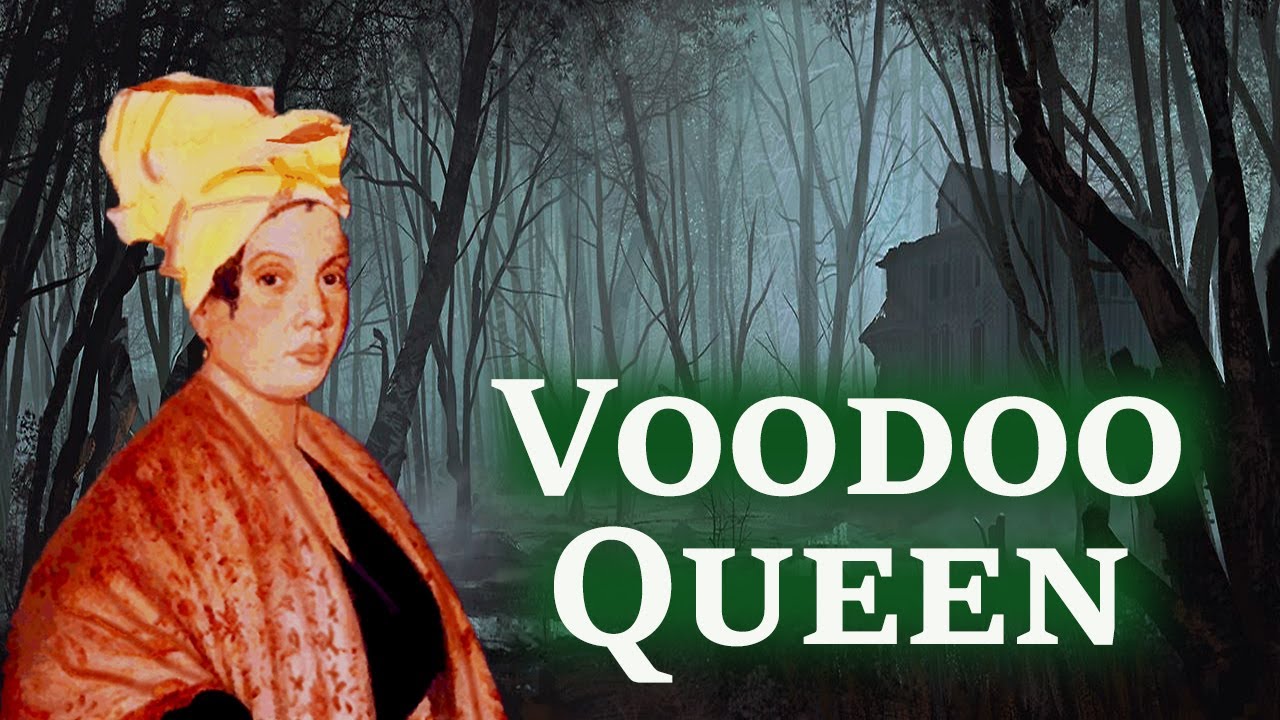
Marie Laveau was a great example of the cultural diversity that existed in New Orleans. She was a free woman of color of African, Native American, and French descent.
Details of her early life are scarce, but growing up she is known to have gone to mass nearly every day. Marie was likely raised in her grandmother's home, where she learned to become a hairdresser.
In New Orleans, Roman Catholic practices were mixed with voodoo. Practitioners believed in God but also communicated with ancestral spirits. Voodoo rituals intrigued Marie, and many of these practices were passed down from her mother and grandmother.
On August 4, 1819, Marie Laveau married Jacques Paris at Saint Louis Cathedral. Details about the relationship are scarce, but Jacques was a free man of color who worked as a carpenter. He had fled to New Orleans as a refugee, like thousands of others during the Haitian Revolution.
Marie's relationship with Jacques must have started a few years before the marriage, as they had a daughter named Felicité in 1817 and a second daughter, Marie Angie, in 1820. Baptismal records from Saint Louis Cathedral prove this.
In the 1820s, however, all records of Marie's daughters disappeared. It is possible they died, while others speculate that she and Jacques never actually had children.
Jacques Paris is believed to have passed away in 1820, but there is no documentation of his death, only a declaration on his daughter's baptismal record. This sudden disappearance is one of the many mysteries surrounding Marie's life. What is known is that around this time she began to call herself the Widow Paris.
Marie fell in love again in 1826 with a nobleman of French descent named Louis Christophe Dumesnil de Glapion. He was a wealthy white gentleman from a prominent New Orleans family. At the time, interracial couples were forbidden to marry, but their relationship lasted until Glapion's death.

It is reported that the couple had 15 children, but records show that Marie Laveau gave birth to only seven. Sadly, three perished in infancy. It is thought that her youngest daughter became the infamous Marie the Second, but this cannot be confirmed.
Marie's life as the Voodoo Queen of New Orleans is surrounded by rumor and speculation. No one knows how she rose to the position. Some theorize that she trained under Sanité Dédé and Marie Saloppé, or perhaps even the famous Doctor John. It was more likely thanks to the teachings of her mother and grandmother that she reached this position.
When exactly she gained such prominence is also unknown, though it was likely at some point during the 1840s. A newspaper article from 1869 mentions that Marie Laveau had reigned as the Voodoo Queen for a quarter of a century.
Life for free people of color in New Orleans was precarious, as they lived on the edge of poverty and enslavement. Despite this, Marie supported her fellow citizens and was known to have great influence in the city. This was due in large part to her profession as a hairdresser, but also because she tried to learn all she could about the people of New Orleans.
Marie styled the hair of some of the most powerful women in the city and used this to her advantage. She paid close attention to the secrets, complaints, and gossip of her elite white clients. All of this helped her gain useful information, making many believe she had powers of divination. Her reputation was such that the police were too afraid to confront her.
Marie is believed to have frequently conducted voodoo rituals at her home in the Saint Ann Street cottage, danced in Congo Square, and led voodoo ceremonies along the shores of Lake Pontchartrain on Saint John's Eve. She was said to have walked the streets like she owned them and danced as if she were the master of the spirit world.
Marie was even known to dance with her snake, Li Grand Zombi, the major serpent spirit of worship among New Orleans voodooists. This symbolized her power in the voodoo community. Legend states that her powers made her feared because of stories about what happened to anyone who offended her.
Although the city had other voodoo queens, her influence is why she reigned over all others as Queen of the Voodoos. Marie had a wide array of abilities, from casting spells to performing exorcisms. Her practices even gave her a nice income from the sale of amulets called gris-gris, which originated in Africa and are believed to bring luck or protect the wearer from evil.
The Queen of the Voodoos is presumed to have offered sacrifices to spirits and even acted as an oracle. The strange potions she provided, her complex rhythms and rituals, and the sudden disappearance of her first partner made many believe she was conspiring with the devil.
A local writer from the early 20th century named John Kendall wrote that after dark, carriages might roll up to Marie's door, with veiled ladies in elegant attire descending and hurrying in to buy what the old witch had for sale. He called it an arrant fraud, but noted that money poured into her lap down to the last day of her evil life.
Kendall was one of the many ill-informed people who believed voodoo was linked to dark arts, yet this could not be further from the truth. The core value of New Orleans voodoo is protection and healing.

Marie's home was a safe environment for all who lived there or visited. It was filled with images of saints, and she was known to have attended Catholic mass almost daily.
Without a doubt, Marie had a strong desire to help her community, providing locals with aid. When free women of color were accused of crimes, Marie would frequently post their bonds, granting them freedom until proven guilty. She comforted prisoners with food and prayers and offered them guidance toward redemption.
Marie was also noted to have sponsored the education of many orphans and came to the aid of many Native American women. Her kindness to others was so great that she was even regarded as a living saint.
In 1855, her lifelong partner Christophe Glapion passed away. Sadly, he left Marie with a lot of debt. This, combined with her philanthropic nature, put her in a very difficult financial position. In spite of this, her devotion to the people of New Orleans continued.
Poor sanitation, combined with the city's subtropical climate and frequent flooding, led to the spread of many diseases and yellow fever epidemics. Unfortunately, the medicine available at the time did not help and simply made things worse. Treatments included bleeding, emetics, and laxatives.
On the other hand, the natural remedies provided by Afro-Creole nurses such as Marie were much more helpful. These women worked with the parish priests and gave patients nutritional herbal teas and refreshing baths.
Sadly, the Civil War approached and things got much worse for Marie and other practitioners of voodoo. Racial tensions led to new laws in New Orleans, such as the prohibition of voodoo ceremonies.
Following the Civil War and the Emancipation Proclamation, white supremacists began to degrade voodoo and associate it with evil. Some mocked the dances and rituals as orgies, while others stated that these practices proved Africans were ignorant.
As the years went by, Marie grew old and weak, slowly becoming more impoverished. She later passed away in her cottage on June 15, 1881.
A large, diverse group of people attended her funeral, including members of the white elite. Thousands of people also took to the streets to pay their respects to the woman who had helped so many. She was then buried in Saint Louis Number One Cemetery.
The distinguished writer Lafcadio Hearn referred to her as one of the kindest women who ever lived. Reporters from the time described her as a saintly figure who nursed the sick and prayed incessantly with the deceased and condemned.
Marie Laveau's life and legend live on to this day. Every year, thousands of people visit her tomb in New Orleans. Some tales would have us believe that her ghost still roams the city, but this is untrue.
Much of her story is still surrounded in mystery. The truth is that we will never truly know just how much of a voodoo queen she really was, but her life has inspired many books, songs, TV shows, and films. However, the majority of these emphasize and exaggerate her powers as a voodoo queen.