Clint Hill was the last surviving person who had ever been inside the presidential limousine on November 22, 1963. For more than 60 years, he carried a weight that no promotion and no presidential commendation could remove.
It drove him to alcoholism, damaged his marriage, and forced him into early retirement at just 43 years old. What haunted him was not the sound of the gunshots or the sight of what happened in Dallas. It was the fraction of a second he believed he needed.
That sliver of time was too small to measure but large enough to define a man's entire life. It was the gap between where Clint Hill was and where he believed he needed to be when the shots killed John F. Kennedy.
For 12 years after Dallas, he told no one. He carried it silently and professionally, until he sat down with journalist Mike Wallace on CBS 60 Minutes in 1975 and fell apart on national television. What came out of that interview became one of the most raw and heartbreaking accounts of personal guilt in American history.
Clint Hill did not grow up dreaming of protecting presidents. He was born on January 4, 1932, in Larimore, North Dakota. His mother placed him in the North Dakota Children's Home when he was just 17 days old.
He was adopted by a family in Washburn, a small prairie town where winters were brutal and expectations were simple. Work hard, finish what you start, and don't complain.
His adoptive father drilled one belief into him above all others. When you are given an assignment, you see it through completely. You do not stop, you do not make excuses, you finish the job. That lesson would become the source of Clint Hill's lifelong torment.
He attended Concordia College in Moorhead, Minnesota, served in the United States Army, and worked as a railroad agent before joining the Secret Service in 1958. He started in the Denver field office doing quiet, routine security work.
After roughly a year in Denver, Hill was pulled into the elite Presidential Protective Division and assigned to protect First Lady Jacqueline Kennedy. It was not a posting he wanted. Agents viewed the First Lady's detail as a lesser assignment.
In his 2012 memoir, Mrs. Kennedy and Me, Hill recalled approaching his first assignment at the Kennedy Georgetown residence with great trepidation. He said being on the First Lady's detail was the last place he wanted to be.
What changed everything was Jackie Kennedy herself. Over the years leading up to November 1963, Hill developed a profound respect and protectiveness toward her. He traveled with her across Europe, to India, and to Pakistan.
He stood guard while she grieved the death of her infant son Patrick in August 1963. He watched her navigate a marriage lived largely in public. By November 1963, he had been at her side through almost every significant moment of her life as First Lady.
His job was simple and absolute: keep her safe. He had one assignment. What happened in Dallas would define for him whether he completed it.
The presidential trip to Texas was planned as a political exercise. Kennedy was working to smooth over a split within the Texas Democratic Party between Senator Ralph Yarborough and Governor John Connally. The itinerary included San Antonio, Houston, Fort Worth, Dallas, and Austin.
Dallas was considered politically difficult. United Nations Ambassador Adlai Stevenson had faced hostile demonstrations there only weeks earlier. There was ambient concern about the reception Kennedy might receive.
On the morning of November 22, 1963, the presidential party flew from Fort Worth to Dallas's Love Field Airport. The weather that had threatened rain had cleared, and the sky over Dallas was bright and open.
White House aide Kenneth O'Donnell had instructed that the protective bubble top on the presidential limousine be removed since the president preferred to be visible to crowds. The Warren Commission later confirmed the plastic top was not bulletproof in any case.
On multiple occasions, according to the Warren Commission, Kennedy had told his agents directly that he did not want them riding on the small running boards at the rear of his limousine. He repeated this wish only days before during his November 18 visit to Tampa, Florida.
The Warren Commission noted that this instruction limited certain types of immediate physical protection. It emphasized this was presidential preference, not agent negligence. Hill himself consistently pushed back on any suggestion that agents had failed by honoring that instruction.
The motorcade departed Love Field at 11:50 a.m. and wound through Dallas toward the Trade Mart, where Kennedy was scheduled to deliver a luncheon speech. The route had been published in Dallas newspapers the day before.
The crowd along the route was large and enthusiastic. Hill, riding on the left front running board of the Secret Service follow-up car, monitored the crowd as the motorcade moved through the city.
He told the Warren Commission that on four separate occasions along earlier segments of the route, the crowd had surged into the street and forced the flanking motorcycles to drop back. Each time, Hill jumped from the follow-up car and mounted the rear step of the presidential limousine to provide coverage.
He was doing his job exactly right. And then the motorcade turned onto Elm Street.
At precisely 12:30 p.m., the presidential limousine was traveling at approximately 11.2 mph down Elm Street toward the Stemmons Freeway underpass. The Texas School Book Depository building stood to the right and behind the motorcade.
Inside the car, Nellie Connally, the governor's wife, had just turned to President Kennedy and said, "Mr. President, you can't say Dallas doesn't love you." Kennedy replied warmly that the day had gone well.
Hill heard what he described in his Warren Commission testimony as a sound similar to a firecracker coming from his right. As he turned his head to identify the source, he saw the president slump in the rear seat of the limousine.
He did not hesitate. He ran. He jumped from the running board of the follow-up car and sprinted toward the presidential limousine, which was moving forward. He grabbed the small handrail on the left rear of the trunk.
He had his foot on the rear step. He was there. And as he reached the car, another shot rang out. He later told the Warren Commission it sounded like someone was shooting a revolver into a hard object. It was different from the first, distinct, final.
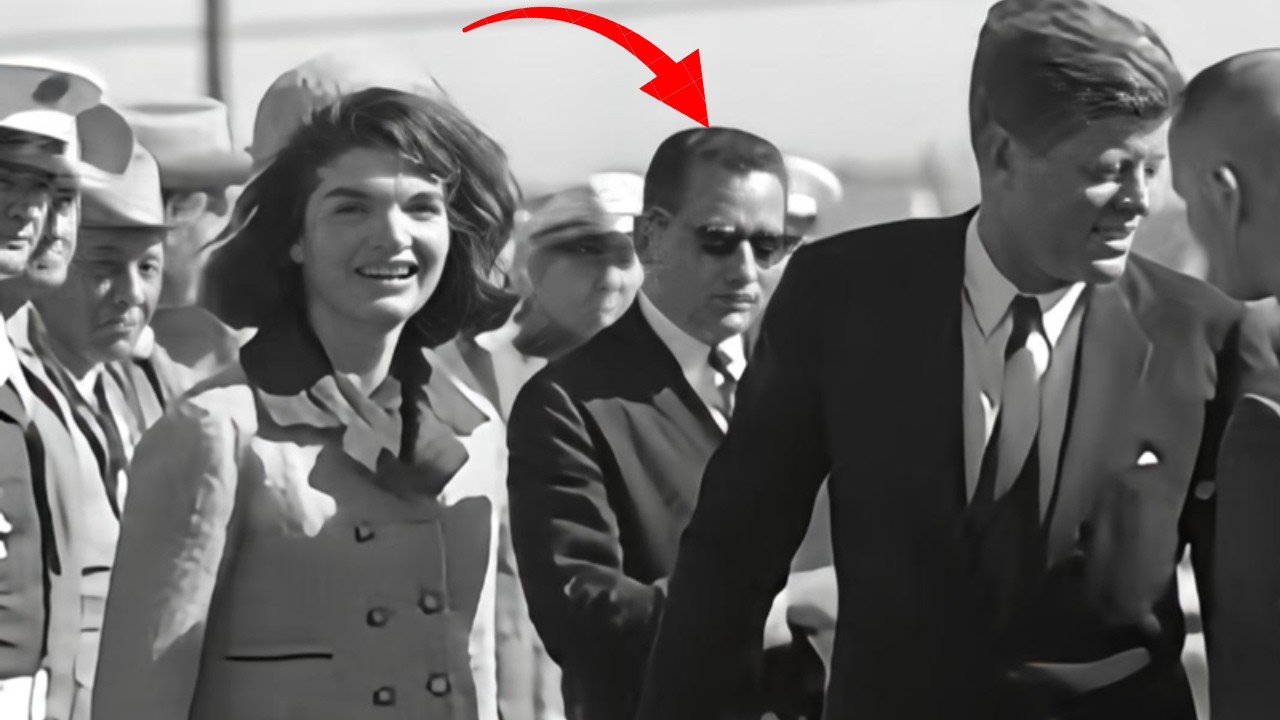
He looked toward the backseat. What Clint Hill saw in that moment would never leave him for the rest of his life.
In his Warren Commission testimony, given on March 9, 1964, Hill described what he witnessed with clinical precision. The right rear portion of the president's head was missing. It was lying in the rear seat of the car. His brain was exposed.
There was blood and bits of brain all over the entire rear portion of the car. Mrs. Kennedy was completely covered with blood. There was so much blood you could not tell if there had been any other wound except for the one large gaping wound in the right rear portion of the head.
Mrs. Kennedy was partially out of the backseat reaching toward the rear of the trunk. She said, according to Hill's testimony, "My God, they have shot his head off."
Hill pushed her back into the seat and covered both her and the president with his body as the limousine accelerated out of Dealey Plaza. He shouted as loudly as he could, "To the hospital, to the hospital."
The agents in the follow-up car watched as Hill turned back toward them. He flashed a thumbs-down signal and shook his head from side to side. No words were necessary. Everyone understood what it meant.
The limousine reached Parkland Memorial Hospital within minutes. When it stopped, Hill jumped off and discovered a second problem that would haunt him almost as much as what had just happened on Elm Street.
Jackie Kennedy was holding her husband and would not let go. Hill asked her to release the president so the medical team could assist him. No response. He asked again. Still nothing.
As he would describe in his 2013 interview with CBS News correspondent Scott Pelley, the problem was not grief alone. The First Lady did not want anyone to see the condition of her husband's head. The wound was catastrophic and visible, and she was shielding him from public view.
Hill removed his own suit coat, covered the president's head and upper back, and only then could they lift Kennedy from the seat onto a gurney and wheel him into trauma room one.
Hill then picked up a telephone inside Parkland Memorial Hospital. His supervisor had asked him to open a secure line to the White House in Washington. He did so and began briefing his senior supervisor on the situation.
Then the operator cut into the line. Robert F. Kennedy, the president's brother and the Attorney General of the United States, wanted to speak with him. In his 2013 CBS News interview, Hill recalled the conversation precisely.
Robert Kennedy said, "Clint, what's going on down there?" Hill explained that both the president and the governor had been shot and that they were in the emergency room at Parkland. Robert Kennedy asked, "Well, how bad is it?"
Hill, who knew at that moment the president was dead or effectively dead, paused. He later explained, "I didn't want to tell him his brother was dead. I didn't think it was my place."
So Hill answered Robert Kennedy with six words: "It's as bad as it can get." Robert Kennedy understood what those words meant. Clint Hill had just told the Attorney General that his brother, the president, was gone without ever saying the word.
Kennedy was officially pronounced dead at 1:00 p.m. Central Standard Time. In the chaos that followed inside Parkland Hospital, Hill, still covered in the blood of President Kennedy, helped carry the casket toward Air Force One.
Before the plane took off for Washington, Jackie Kennedy sought out Clint Hill. According to his account to Scott Pelley, she grabbed his hand and said, "Oh, Mr. Hill, what's going to happen to you now?"
The First Lady, whose husband had just been assassinated, whose pink suit was soaked in blood, was asking about Clint Hill's welfare. He told her, "I'll be okay, Mrs. Kennedy. I'll be okay."
He was not okay. He would not be okay for a very long time.
Clint Hill received a Secret Service Award for valor. He was praised publicly. He was promoted. He remained assigned to Jackie Kennedy and her children through the 1964 presidential election.
He was then reassigned to President Lyndon Johnson, eventually became special agent in charge of presidential protection in 1967, and later served as assistant director of the Secret Service responsible for all protective operations. From the outside, his career looked like a story of honor and advancement. Inside, it was disintegrating.
In the years following Dallas, Hill rarely spoke publicly about what he had seen. The Secret Service did not encourage agents to give press interviews about the details of their work, and Hill had no desire to revisit November 22, 1963. But the silence didn't contain the memories.
The Zapruder film, the 26-second home movie shot by Dallas garment manufacturer Abraham Zapruder that captured the assassination in its entirety, was not shown publicly on television until 1975, when Geraldo Rivera broadcast it on the program Good Night America. Investigators and government officials had been watching it for years before that.
Somewhere in that footage, running toward a car he couldn't quite reach in time, was Clint Hill. He watched himself in that film and saw the same impossible gap over and over.
Alcoholism took hold. His marriage deteriorated. He experienced what he would later describe as deep depression and recurring intrusive memories of the assassination. In 1975, his doctors urged him to retire.
He was 43 years old. He had served five presidents: Eisenhower, Kennedy, Johnson, Nixon, and Ford, and given 17 years to the Secret Service. His doctors were telling him that what Dallas had done to him internally was not compatible with continued service. He retired.
And then Mike Wallace called. The 60 Minutes interview aired in 1975. Mike Wallace would later write that he had never interviewed a more stricken and tormented man than Clint Hill.
The footage of that interview is not comfortable to watch. Hill wept. He was not composed. The professional stoicism that had carried him through 12 years of service cracked completely in front of a CBS News camera.

Weeping, he said, "If I had reacted just a little bit quicker, and I could have, I guess." And then the line that would follow him for the rest of his life: "I'll live with that to my grave."
Wallace pressed him, could he really have gotten there in time? Hill could not answer cleanly. He moved between the rational understanding that it was physically nearly impossible and the emotional certainty that he should have done more.
His father's voice was in that room. When you are given an assignment to do, you see it through completely. He had an assignment to keep the president and Mrs. Kennedy alive. He kept one of them alive.
He said this explicitly decades later to CBS News correspondent Seth Doane. "My dad drilled into me that when you're given an assignment to do, you do it till it's fully finished. I had an assignment to keep the president and Mrs. Kennedy alive. I only kept one of them alive. One died on my watch."
That sentence, so simple, so controlled, so devastating, encapsulates what Clint Hill carried for over six decades.
The response to the 1975 interview was enormous. Hundreds of letters poured into CBS and were forwarded to Hill. He didn't open most of them for decades.
When Hill and his second wife, Lisa McCubbin, were preparing to sell their home in 2019, they found a battered black trunk in the garage. Inside it were 17 years of presidential memorabilia, framed photos, and hundreds of those letters, unopened or barely read, then set aside.
In one of his final public interviews before his death, Hill read one aloud. It said, "It is a day I shall never forget, nor shall I forget the people so deeply involved in the events of that day. And as I watched you on 60 Minutes, I wanted to reach out and wrap you in my arms to offer some comfort." He had carried those letters unread for 44 years.
Hill did not go back to Dallas for 27 years. He avoided it the same way a man avoids the place where something irreversible happened. But in 1990, he returned.
He walked through Dealey Plaza. He went inside the Texas School Book Depository Building, which by then housed the Sixth Floor Museum dedicated to the history of the Kennedy assassination. He stood in the space where Lee Harvey Oswald had positioned himself on November 22, 1963.
He looked out the window. He spent several hours there examining angles, sightlines, distances, and conditions. And it was in that moment, standing where the shooter had stood, that something shifted.
In his own words, recorded from multiple interviews, "I checked all the angles, the weather, everything I could think of, and I finally came to the realization that he had all the advantages that day. We had none, and I did everything I could."
Former FBI analyst and JFK assassination historian Faris Rookstool, who knew Hill personally, offered a blunt summary. His entire career was defined by a fraction of a second. He tried to do the right thing, but you can't outrun a bullet traveling 2,000 feet per second. The physics were simply against him.
From the moment the first shot registered to the moment the fatal shot connected, Hill had covered most of the distance between the follow-up car and the presidential limousine. He didn't cover all of it.
The margin was not a matter of character or preparation or love for the president. It was the physical reality of time and space working against every human advantage he had. This did not make the guilt go away, but it gave him, finally, a framework for understanding that what had happened was not entirely within his power to prevent.
The Warren Commission, convened in the months following the assassination, heard testimony from hundreds of witnesses, including Clint Hill, on March 9, 1964. The Commission's final report, published September 24, 1964, made specific findings about the Secret Service's performance that day.
The Commission concluded that Lee Harvey Oswald, acting alone, fired three shots from the sixth floor of the Texas School Book Depository Building using a 6.5-mm Mannlicher-Carcano rifle. The first shot struck President Kennedy in the upper back and exited his throat.
A second shot, the basis of the single bullet theory, struck both Kennedy and Governor Connally in sequence. The third shot struck Kennedy in the right rear of the head, causing the fatal wound.
The Commission also found that the Secret Service needed sweeping procedural revision. It noted that Kennedy's repeated instruction against agents riding on the rear running boards of his limousine had limited certain protective responses, though the Commission did not frame this as agent negligence.
The Commission also noted that the motorcade route, which required the vehicles to slow significantly turning from Houston Street onto Elm Street, had brought the President's car directly beneath the depository window for several seconds. These were structural and procedural findings, not personal ones.
The Commission was explicit that Hill's actions had been brave and without fault. But for Hill, the institutional findings were almost beside the point. He wasn't thinking about procedural deficiencies or route geometry. He was thinking about the distance between a running board and a handrail, and the fraction of a second he believed had been the difference.
What the Warren Commission couldn't do, what no government document, no official commendation, no institutional finding could do, was reach the place inside Clint Hill where the guilt actually lived.
There is a moment in the Zapruder film where you can see Clint Hill. He is the figure sprinting from the left side of the follow-up car toward the rear of the presidential limousine. He grabs the handrail. He pulls himself onto the trunk. He reaches the backseat just after the fatal shot.
You can see his body language change as he registers what he is seeing. You can see him push Jackie Kennedy back into the seat. In that footage, there is no failure visible. What you see is a man running as fast as a human being can run in dress shoes from a moving vehicle across asphalt toward another moving vehicle within fractions of a second of the first shot.
What is visible is courage. But Hill did not see courage when he watched that film. He saw the gap.
The 1993 Clint Eastwood film In the Line of Fire drew on the psychological template that Hill's story had established in public consciousness. Eastwood's character, Frank Horrigan, is a Secret Service agent tormented by his failure to protect a president during an assassination. The parallels between Horrigan's fictional guilt and Hill's documented reality were widely acknowledged in production commentary on the film.
In 2012, Hill published Mrs. Kennedy and Me, a memoir of his four years on the First Lady's protective detail. The book became a New York Times bestseller and introduced a new generation to the intimacy and complexity of what his assignment had actually involved.
He followed it with Five Days in November in 2013, a detailed account of the final days of the Kennedy presidency, and Five Presidents in 2016, which chronicled his full career.
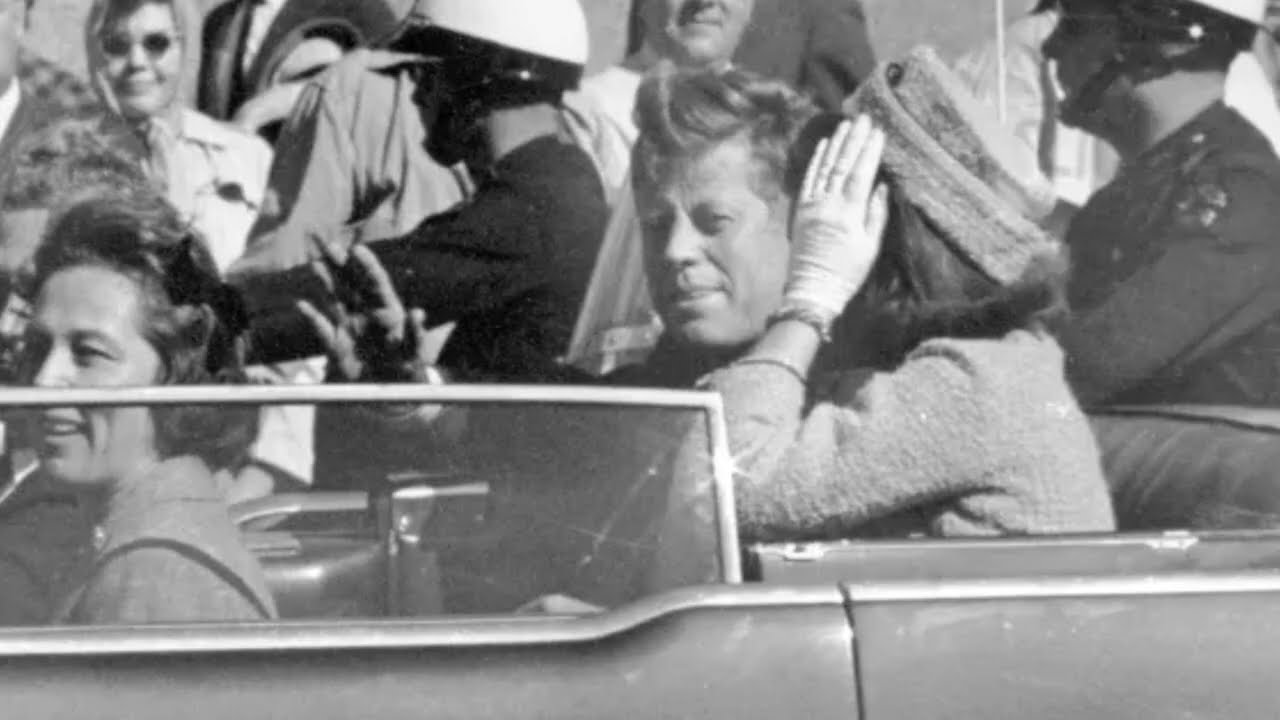
In his writing, he said something that had never appeared in any government record or commission testimony. "Guilt and anguish consumed me. All I could think about was Dallas."
He also described what he saw and felt in those frantic seconds between the follow-up car and the presidential limousine. "I was running as fast as I could run, my arm reaching for the handholds on the trunk, but it was like my legs were in quicksand. Mrs. Kennedy climbing out of the backseat, her terrified eyes looking but not seeing me, like I wasn't there."
These are not the words of a man who failed his assignment through carelessness or cowardice. These are the words of a man who did everything physically possible and still could not escape the weight of an outcome he could not control.
In a later CBS News interview, Hill was asked directly by correspondent Seth Doane whether he still blamed himself for Kennedy's death. His answer, delivered with 60 years of distance and no visible resolution, was, "Well, maybe there was something I could have done. I don't know anymore."
That phrase, "I don't know anymore," is more revealing than any definitive answer could have been. It doesn't mean he had resolved the question. It means he had lived with it for so long that the question itself had changed shape. He had stopped needing a final verdict.
In 2010, during a BBC interview, he was asked whether he thought the president's life could have been saved if things had been done differently. He said, "He had all the advantages that day. We had none, and it was a very easy job to accomplish because of the way everything was laid out."
This was the same conclusion he had reached standing at Oswald's window in the Texas School Book Depository in 1990, looking down at the slow curve of Elm Street below. The man who shot Kennedy had positioned himself at an elevated angle with a scoped rifle over a slow-moving vehicle on a curved and slightly downhill street.
The motorcade had no advance warning, no intelligence flagging the specific threat, and no physical configuration that would have allowed an instantaneous response to a shot from above and behind. As Rookstool said plainly, he tried to do the right thing, but you can't outrun a bullet traveling 2,000 feet per second. The physics don't leave room for guilt, but guilt doesn't consult physics.
There is one detail about the aftermath of the assassination that is rarely discussed. In the days following the assassination, a ceremony was held in Washington to commend certain Secret Service agents for their performance during the crisis. Jackie Kennedy attended.
She was in deep mourning. She had just buried her husband, and she came specifically to thank Clint Hill in person. The same woman who, in the back of that limousine, had been so overwhelmed she couldn't respond to Hill's urgent requests to release her husband, made a personal appearance at a formal ceremony so she could stand in front of Clint Hill and acknowledge what he had done.
According to multiple accounts, including Hill's own memoir, she told him she knew that he had done everything he could. None of that external recognition, however genuine, could reach the internal place where the guilt lived.
He had been praised by the president's widow. He had been commended by the Secret Service. He had been promoted repeatedly, and he was still waking up in the middle of the night, still fighting the images, still calculating the distance between where he was and where he believed he needed to be.
This is the specific cruelty of what Clint Hill carried. He was widely recognized as a hero at the same moment he privately considered himself a failure. These two things coexisted in him for most of his adult life. They could not be reconciled because they existed in different registers, one external and institutional, the other internal and absolute.
Jackie Kennedy also asked Hill for something in the days following the assassination that speaks to the depth of trust she placed in him. At a private viewing of the president's body, she asked Hill to find a pair of scissors so she could cut a lock of Kennedy's hair before the burial.
Hill found the scissors and gave them to her. This small intimate errand, performed in the most private and grief-stricken circumstances imaginable, tells you something precise about what the relationship between these two people actually was. It was not simply professional.
By the time of Dallas, Clint Hill was part of the inner world of the Kennedy White House in a way that very few people outside the family ever were. And when Air Force One lifted off from Dallas, carrying the body of the 35th president back to Washington, carrying the newly sworn-in 36th president, carrying a widow in a blood-stained pink suit, Clint Hill was on that plane, still in service, still assigned, still doing the job.
Clint Hill spent the last decades of his life trying to communicate something specific and important to anyone willing to listen. It was not an attempt to exonerate himself. It was not revisionism or self-justification. It was something harder, the honest account of a man trying to understand the full dimensions of something he had lived through and could not undo.
At 92 years old, he told Seth Doane, "I was the only one who had a chance, and I was unable to do anything." He did not say he was unable because of luck or circumstances or the physics of bullet velocity. He said he was unable, the personal pronoun, the personal verb. He absorbed it into himself even when he knew intellectually that the physical conditions didn't permit what he wished he had done.
What the 1975 60 Minutes interview and every interview that followed makes clear is that the grief was never simply about the assassination. It was about the specific architecture of that one afternoon, the motorcade slowing on Elm Street, the follow-up car 15 feet behind, the four previous times he had successfully jumped forward to cover the president, and the one time it mattered most when he couldn't get there in time.
It was about a father in Washburn, North Dakota, who had said, "Finish the job." It was about an assignment he believed at the most internal and private level he had not fully finished.
The scissor errand, the phone call to Robert Kennedy, the suit coat over the president's head in the back seat of the limousine, the thumbs-down signal, the six words, "It's as bad as it can get." Every small action he took in those minutes was exactly right, exactly professional, exactly what the situation demanded, and none of it was enough because none of it could undo what had already happened at 12:30 on Elm Street.
Here is what Clint Hill said in 1975: "If I had reacted just a little bit quicker, and I could have, I guess, I'll live with that to my grave." Here is what he said 60 years later: "Well, maybe there was something I could have done. I don't know anymore."
Between those two statements is a human life, a career, a marriage, alcoholism, therapy, silence, books, speeches, a return to Dallas, a window in a book depository building, hundreds of letters in a battered black trunk, five presidents, one moment, one fraction of a second that was never, in all that time, officially measured, only felt.
The bullet that killed John F. Kennedy traveled at approximately 2,000 feet per second. Clint Hill ran. He ran as fast as a human being can run in dress shoes from a moving vehicle toward another moving vehicle within fractions of a second of the shot that alerted him. And when it was over, he carried the weight of what he believed he should have done differently for every year that followed.
He said he would live with it to his grave. He did.
Clint Hill died on February 21, 2025, at his home in Belvedere, California. He was 93 years old. His wife, Lisa McCubbin Hill, wrote that he died peacefully at home in her arms.
The Secret Service issued a statement that read in part, "Clint's career exemplified the highest ideals of public service. His courage and dedication will never be forgotten."
He was the last surviving person who had been inside that presidential limousine on November 22, 1963. When he died, the living witness to one of the most consequential moments in American history went with him.
This is not a story about conspiracy or controversy. It is a story about one man, one assignment, and the specific documented weight of survivor's guilt in its purest form. Clint Hill was praised, promoted, and honored. He was also broken, rebuilt, broken again, and rebuilt again over more than six decades by the memory of a single afternoon in Dallas.
His Warren Commission testimony is a matter of public record. His 1975 interview with Mike Wallace is documented and archived. His memoirs are on library shelves. His interviews with CBS, BBC, and others are publicly available.
Clint Hill knew the actual cost of protecting a president from the inside out. Not the ceremony of it, not the drama of it. The sleepless nights and the drinking and the weight that doesn't lift no matter how many medals you receive. He paid it every day for 60 years. He said he would live with it to his grave. More than six decades later, the assignment was over. The question was not.