On August 29, 1981, Benjamin "Lefty" Ruggiero received a call he understood completely. In the Bonanno crime family, a man who vouches for someone who turns out to be an FBI agent does not get a conversation. He gets a meeting. And meetings like that one had a known outcome.
Ruggiero got dressed. He had nowhere to run, and running would have been worse. He had been in that life for decades and knew the rules better than almost anyone still breathing. So he started toward the meeting.
He never reached it. Federal agents intercepted him first and put him in handcuffs. In doing so, they saved the life of the man their own six-year undercover operation had placed directly in the crosshairs.
Lefty Ruggiero was not just another Bonanno soldier who got unlucky. He was the man who brought Donnie Brasco into the family. He vouched for him. He sponsored him. He sat across from FBI agent Joe Pistone for six years and never once saw what was right in front of him.
His career included 26 suspected murders. What nearly ended him was not a rival crew or a grand jury. It was trust, or what he believed was trust.
What makes the story striking is that Ruggiero was not naive. He was not young or inexperienced. He was a street-hardened Bonanno soldier who had been in that life since before most of his crew was born. He was fooled completely for six years because the person who fooled him was genuinely that good, and because Ruggiero still had something in him that could believe in loyalty.
Before the FBI stepped in to save him, and before Joe Pistone ever walked into his life, Lefty Ruggiero had spent roughly 30 years trying to earn something the Bonanno family was never going to give him. He worked. He killed. He ran operations. He paid his dues in blood and silence. They never made him a captain.
He spent his whole career as a soldier, watching men with fewer years get elevated, watching the family take everything he gave and return a percentage. This is the story of what it costs to believe in something that was never going to believe in you back.
Ruggiero was born in 1926 on the Lower East Side of Manhattan, in Depression-era New York. Immigrant blocks were stacked on top of each other, and families lived in apartments where the walls were thin enough to hear everything. The street below showed you enough of the rest.
He grew up learning quickly that the men with money, respect, and the ability to walk into a room and make people step back were not wearing suits from offices. They were wearing suits from social clubs on Mulberry Street.
He came up through the Bonanno family the way most men of his generation did, not through a formal process but through proximity. You were in the neighborhood. You were noticed. You ran numbers. You kept your mouth shut when keeping your mouth shut mattered. If you did that long enough, eventually a conversation happened, and after that conversation, you belonged to something.
By his 20s, Lefty was known as a man who could be trusted with violence, not because he was reckless but because he was precise. Across his career, 26 murders were suspected. He was never convicted of a single one.
In a world where the most dangerous thing a man can do is leave evidence, Ruggiero was a professional. He understood that violence in that life was not the point. It was the tool, and you kept your tools clean.
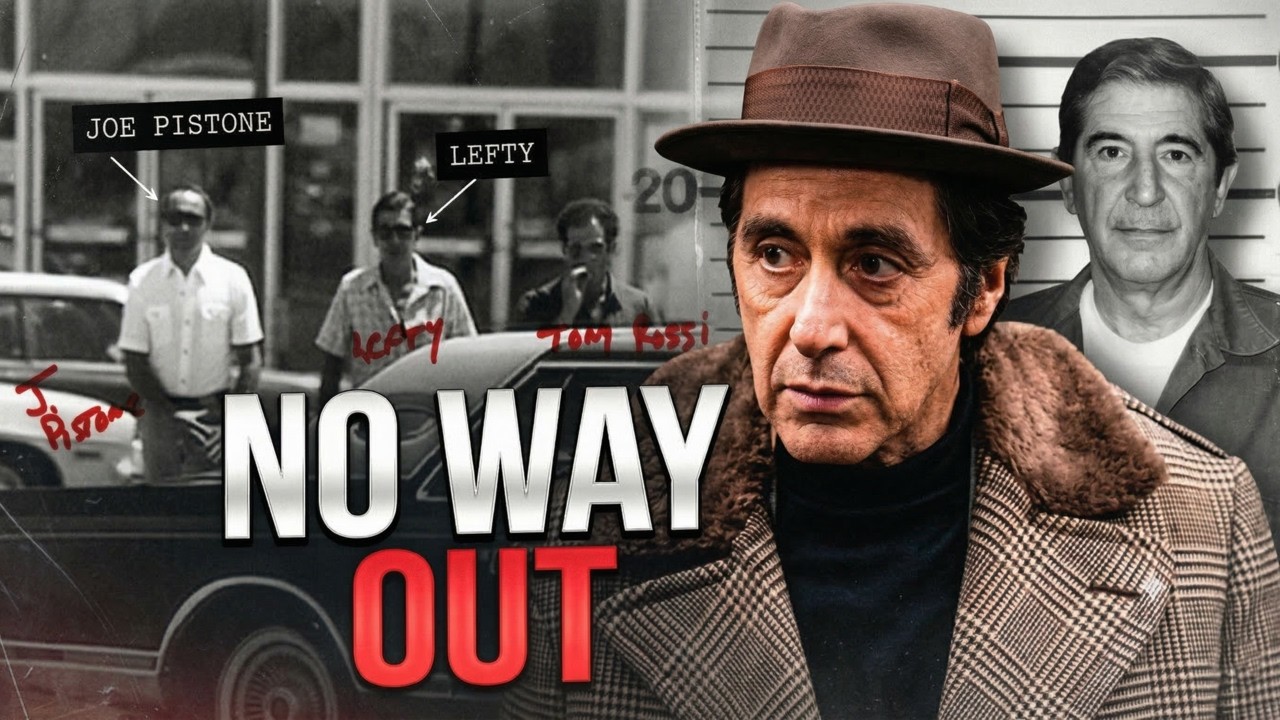
For all of it, the work, the loyalty, and the decades of doing exactly what the family required, he never made captain. In the Bonanno family, a soldier answers to a capo. The capo runs a crew, controls territory, and moves real money. Ruggiero spent his entire career on the bottom rung, watching men with less time in the life step over him.
People who knew him said he burned about it quietly. He talked about it, but he stayed. For Lefty, this was not employment. It was identity, the only one he had ever had.
Then, in 1976, a jewel thief named Donnie Brasco walked into his life. Lefty looked at this man, sharp, reliable, good with money, and familiar with the right people, and saw something he recognized.
Joe Pistone was an FBI agent who had spent years building a persona that could survive mob scrutiny. In 1976, the Bureau inserted him into the New York underworld as Donnie Brasco, a jewel thief from out of town. He had real stones. He had the vocabulary. He had the patience.
This kind of operation does not move on federal timelines. It moves on the timeline of the men being infiltrated. Pistone understood that. He moved slowly and let trust build naturally. He drifted toward the Bonanno family, and there he found Lefty Ruggiero.
Lefty was not just a contact. He was a sponsor. In the Mafia, when a made man vouches for someone, he is personally on the hook for everything that person does. If that person steals from the family, the man who vouched pays. If that person talks to the government, the man who vouched pays with his life. Vouching is not a recommendation. It is a blood contract. Lefty signed one with Donnie Brasco.
The Florida operation became the place where the relationship generated real money and real exposure. In the late 1970s, the Bonanno family wanted a foothold in Florida. Tampa was under-served, with existing clubs and social operations but no coordinated Bonanno presence. Lefty and Donnie were tapped to build it.
Donnie Brasco, as a supposed jewel thief with contacts across the country, gave the operation legitimate cover as a traveling businessman with reasons to be anywhere. Nobody questioned why he was in Tampa. He was always going somewhere.
They set up a Rondo club in Holiday, Florida. The club operated legally on paper. Underneath, it ran card games and moved stolen merchandise sourced from New York connections through Florida distribution channels. Each week, cash generated in Tampa was bundled and sent north.
Accounts vary on the specific figures, but what is documented is that the Florida operations generated consistent income that supplemented Lefty's earnings as a soldier. For a man who had never been given a crew of his own, this was the closest thing to a real operation he had ever run.
The problem was that Pistone was becoming too visible. He was present at too many things. He was being recommended for formal membership in the family. The FBI decided in the early months of 1981 to extract him before the induction happened, because if Pistone got made, the legal complications of a federal agent taking a formal oath to a criminal organization would be enormous.
The extraction itself was clean on the federal side. Pistone simply vanished. There was no confrontation and no scene. He was there, and then he was not.
In the silence that followed, questions moved through the family like smoke through a building. Where is Donnie? Why did he go? Who is he? The answer, when it came, was catastrophic.
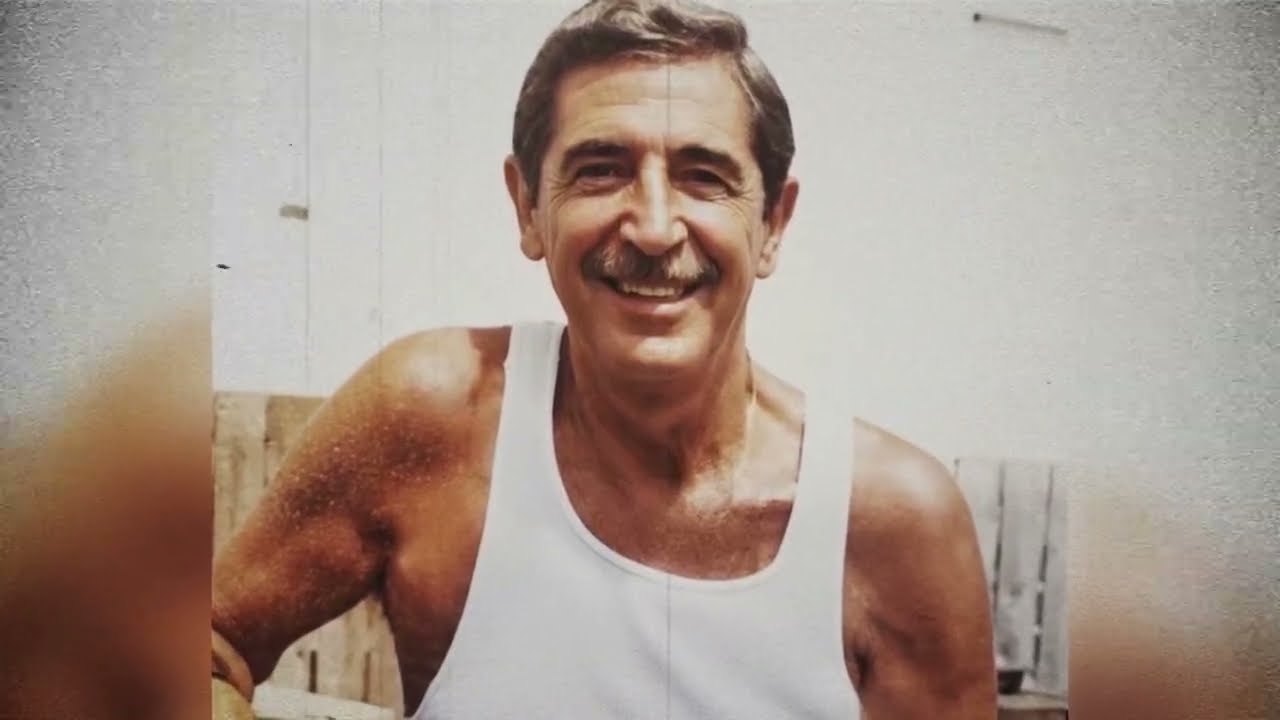
When the Bonanno family confirmed that Donnie Brasco was an FBI agent, the internal reckoning began immediately. Six years of penetration meant the government had names, financial structures, and recordings of conversations that took place in rooms where nobody suspected they were being heard. The damage was enormous and permanent.
In situations like this, the family does not get angry. It gets accountable. Two men bore direct responsibility: the soldier who vouched and the captain who allowed the access to go as deep as it did.
The captain was Anthony Napolitano, known as Sonny Black. He was Lefty's direct superior and the man who had elevated Donnie Brasco's access over time, bringing him into meetings and introductions that a street-level associate had no legitimate reason to attend. Sonny Black had amplified the damage beyond what Lefty's vouching alone could have caused.
In August 1981, Sonny Black was summoned. He went. He was a veteran of that world and understood every implication of the summons. Before he walked into the meeting, he handed over his jewelry and personal effects. In that world, the gesture meant one thing: he was not planning to need them anymore.
Sonny Black was murdered in August 1981. His body was recovered months later at a residence in Staten Island. His hands had been removed. In mob tradition, that act carried a particular message. Those were the hands that vouched for the wrong man. Those hands had shaken on behalf of a federal agent.
Lefty was also summoned. The FBI had just completed a six-year operation that would become one of the most cited undercover cases in American law enforcement history. Pistone was safe. The intelligence was secured. The Bureau was now watching in real time as the mob moved toward executing the man its own operation had put at risk.
They made a decision. On August 29, 1981, federal agents intercepted Benjamin Ruggiero before he could reach the meeting. The charges were built. The evidence was layered and solid. The arrest was not just procedural. It was a rescue.
The federal case against Lefty Ruggiero was built from six years of documented intelligence, financial records, surveillance logs, recordings, and the firsthand knowledge of Joe Pistone himself. The indictment covered operations in New York, Florida, and across the Midwest. It was not a thin case.
Lefty was taken into custody that morning. There was no shooting and no negotiation, just a man who had been walking toward what was almost certainly his execution now sitting on the other side of a federal table.
In 1982, he was convicted of racketeering conspiracy. The sentence put him in federal prison for what would be more than a decade of his life.
Then came the turn that the movie and the popular story both underplay. He never said a word. Not about the Bonannos, not about operations the FBI had not yet documented, not about the men still active in the family, and not about Sonny Black's murder, which he certainly knew details of.
Lefty Ruggiero sat in a federal penitentiary for more than a decade and gave the government nothing it had not already taken from him through Pistone.
The cost was years, his 50s and his 60s, the time a man expects to collect on whatever life he has built. What his silence gave him was the only protection that actually held. If Lefty had cooperated, the mob would have moved on him, inside prison walls or outside them. Organizations like the Bonannos operated inside the federal system and had long memories.
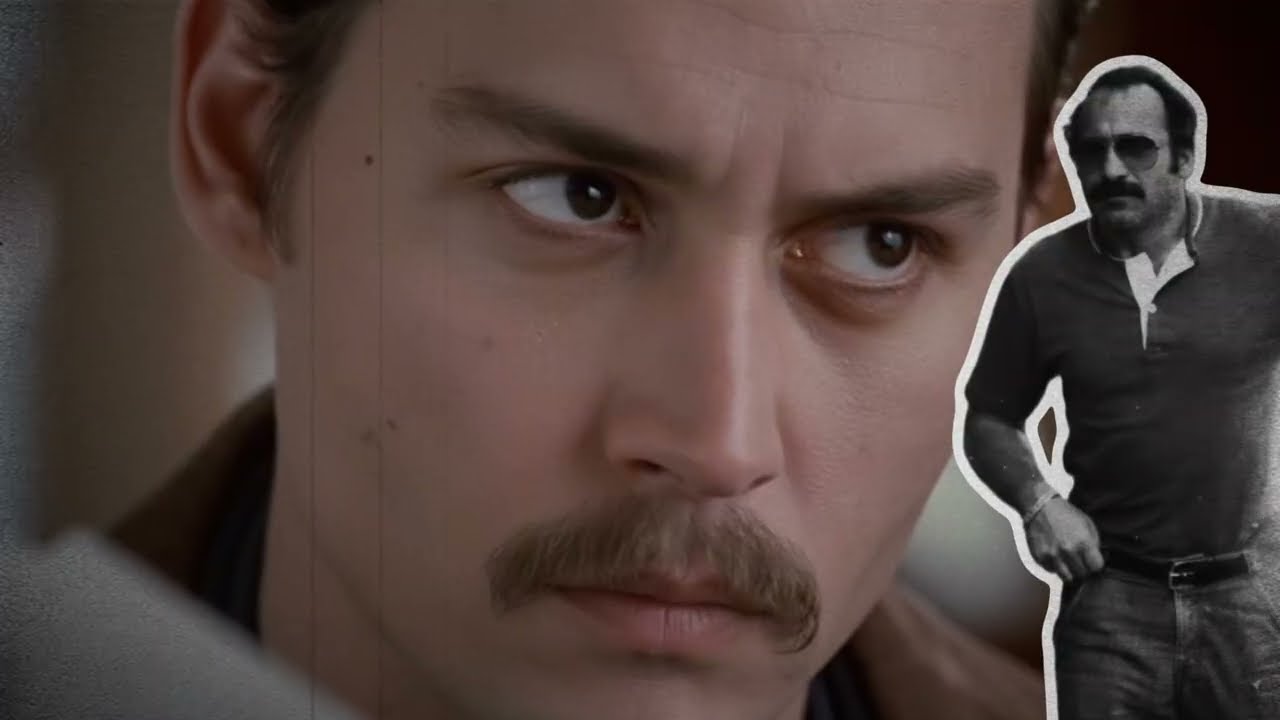
His silence was not just the code he had always followed. It was the only armor he had left. Both things were true at the same time, and in this case, both pointed to the same choice.
Pistone's operation, from 1976 to 1981, ultimately produced more than 200 convictions across multiple organized crime families. It is still referenced in FBI training as the standard for deep-cover infiltration work. In a federal prison somewhere, the man at the center of how that operation worked knew all of it and said nothing.
Lefty Ruggiero walked out of federal prison in April 1993. He was 66 years old. He had been diagnosed with lung cancer, and the Bureau of Prisons granted him compassionate release on medical grounds. He had served 11 years. He had 19 months of freedom.
Benjamin Ruggiero died on November 24, 1994, at 68 years old. He died of cancer, not of a bullet, which in the life he had chosen was nearly statistically impossible. Men who carried his history did not die in beds. They died in cars, in restaurants, in hallways, with their hands pressed against wounds that were not closing fast enough.
He outlived Sonny Black by 13 years. He outlived the worst of the Bonanno family's federal exposure. And he died three years before a Hollywood film would tell the world a version of his story that was not true.
Donnie Brasco came out in 1997. Al Pacino played Lefty. The film is genuinely powerful, but it ends with a suggestion that Lefty walked to his death, that he accepted the mob's judgment, went to the meeting, and never came back. That ending gives him a kind of dignity, a loyalty so absolute that he walked into it with open eyes and did not flinch.
The actual ending is something different. He did not die for the code. He lived because of it, not in a triumphant way but in the specific, painful way that a man who never got anything he wanted from that life managed to avoid the one final thing it was going to take from him.
The same absolute silence that never earned him a promotion, never moved him one rank above soldier, and never put real money in his pocket made him impossible to justify murdering. You do not kill a man for talking if a man will not talk.
Joe Pistone has spent the decades since 1981 testifying in federal trials, consulting for law enforcement agencies, and speaking publicly about the six years he spent inside the Bonanno family. He has said more than once that his relationship with Lefty Ruggiero was the most genuine human connection he formed during the entire operation. He has also said that the awareness of what that operation cost Lefty, specifically Lefty, is the moral weight he has carried longest from that work.
Lefty Ruggiero gave 30 years to an organization that never promoted him, never gave him real money, and ultimately sentenced him to death for a mistake that was not even a betrayal. He trusted a man the way he had been taught to trust, completely, based on observation, time, and the code he had lived by. The organization that wrote that code responded by summoning him to a room where they planned to kill him.
The FBI, the institution he had spent his whole career fighting, was the only thing that stopped it. That is not just Lefty's story. It is the story of every man at the bottom rung of these organizations who believed loyalty was a currency that would eventually pay out. It does not. The men at the top of these families do not reward loyalty. They consume it. They need it to function, and when a piece of it becomes inconvenient, they send a summons and someone hands over his jewelry at the door.
Lefty Ruggiero was summoned on August 29, 1981. He put on his clothes, checked himself in the mirror, and walked out the door prepared to accept whatever was coming. He had not broken the code. He had not talked. He had vouched for a man he genuinely believed in, and in that world, that was supposed to mean something.
He had done everything right by the only set of rules he had ever lived by, and the world he had served for 30 years decided it was not enough. He never reached that room, but the fact that he was walking toward it is the whole story in a single image.