Salvatore Lucania was born on November 24, 1897, in Lercara Friddi, a village near Palermo in northwestern Sicily. His father Antonio worked in the local sulfur mines, a harsh life that bred constant friction between father and son. His mother Rosalie raised him alongside his siblings, including sister Francesca and brother Giuseppe, and later Bartolo, who was born after the family reached New York.
The name Salvatore Lucania changed over the years. As a teenager in America he rejected the nicknames Americans used and adopted Charles instead. By the 1930s, Lucania had become Luciano, the result of New York newspapers consistently mangling his surname. The nickname Lucky came ironically in October 1929, when he survived a brutal gang attack. He was beaten nearly blind, his throat was slashed, and he was left unconscious in a Staten Island forest. He carried a droopy eye from that assault for the rest of his days, though he preferred to be called Charles or Charlie.
Separating truth from myth in Luciano's story is difficult for two reasons. First, as a crime boss he deliberately obscured the details of his life to avoid prosecution. Second, more than a decade after his death, "The Last Testament of Lucky Luciano" appeared, allegedly his memoirs dictated to film producer Martin Gosch. When Richard Hammer edited and published it in the mid-1970s after Gosch's death, controversy erupted immediately. The New York Times noted the book reproduced errors from other mafia literature, suggesting Gosch or Hammer had fabricated much of it. Still, the broad strokes of his life remain well documented.
Between the 1860s unification of Italy and the early 1900s, 15 million Italians sought better lives in the Americas. Most settled in Argentina or the United States, with Buenos Aires and New York as primary destinations. The Lucania family sailed from Sicily in spring 1907, arriving during the peak of Italian migration. A massive influx of Irish, Jews, and other groups swelled New York's population. Twenty thousand migrants arrived in a single day on the Lower East Side, shattering all previous records.
The chaos that greeted the Lucanias was overwhelming. People packed every street. Poverty ran rampant. Jobs paid pittances when available. Garbage lined the streets, and the stench was unbearable. Disease outbreaks were common, worsened by a strike of city street cleaners, many of them Italian. Four families crowded each tenement floor, sharing a single toilet. Constant street noise and sweltering summer heat drove residents to sleep on fire escapes. This was the brutal reality of how America was built.
Many Italians, Irish, and Jews turned to crime shortly after arriving, seeking to improve their circumstances. Luciano joined New York's criminal activities before long. In the late 1900s, numerous child and teenage gangs operated around the Lower East Side, picking pockets, robbing vendors, and running small gambling operations. They ventured to wealthier areas, relieving the well-to-do of their money and belongings on ferries to Staten Island and Queens.
Luciano soon formed his own gang, running a protection racket and extorting money from other children in exchange for safe passage to and from school. One day, Luciano and his teenage extortionists approached a Jewish boy demanding five cents weekly for protection. The boy refused in no uncertain terms. That defiant kid was Meyer Lansky, over four years younger than Luciano. His courage impressed Lucky, starting a lifelong friendship.
Luciano's father maintained the humble working-class existence he had known in Sicily. He tried disciplining his son for criminal activity and truancy, eventually sending him to a secure Brooklyn school in 1911. Luciano left entirely at 14, finding legitimate work as a clerk at the Goodman Hat Company. He stayed four years, his pay rising steadily, but simultaneously climbed the criminal ranks, leading a gang of young criminals on Manhattan's East Side.
In June 1916, at just 18, Luciano was arrested in a bar and served eight months at New Hampton Farms reformatory. Upon release he briefly returned to Goodman's, but it did not last. Luciano's philosophy had crystallized: if he had to be a crumb, he would rather be dead. A crumb, in his view, was the average working man. He became increasingly embedded in New York's crime world, befriending 20th-century criminal legends.
Al Capone was rising in the New York underworld then, though he fled to Chicago after a violent 1918 Manhattan bar fight landed him in police trouble. Luciano's closest associates became his old friend Meyer Lansky and Bugsy Siegel, another Jewish teenage hoodlum who earned his nickname for being crazy as a bug and his readiness with a gun. On the Italian side, Luciano befriended Francesco Castiglia, better known as Frank Costello, from Calabria, and Vito Genovese, originally from near Naples.
Through the late 1910s and early 1920s, Luciano, Lansky, and the others collaborated on various schemes but remained small-time criminals. What changed everything was their growing association with prominent Italian gangsters like Joe "the Boss" Masseria. By summer 1922, Luciano was close enough to Masseria that when hitman Umberto Valente targeted him during a turf war, Luciano helped hunt Valente down. Apparently Lucky stayed calm during the confrontation and killed him.
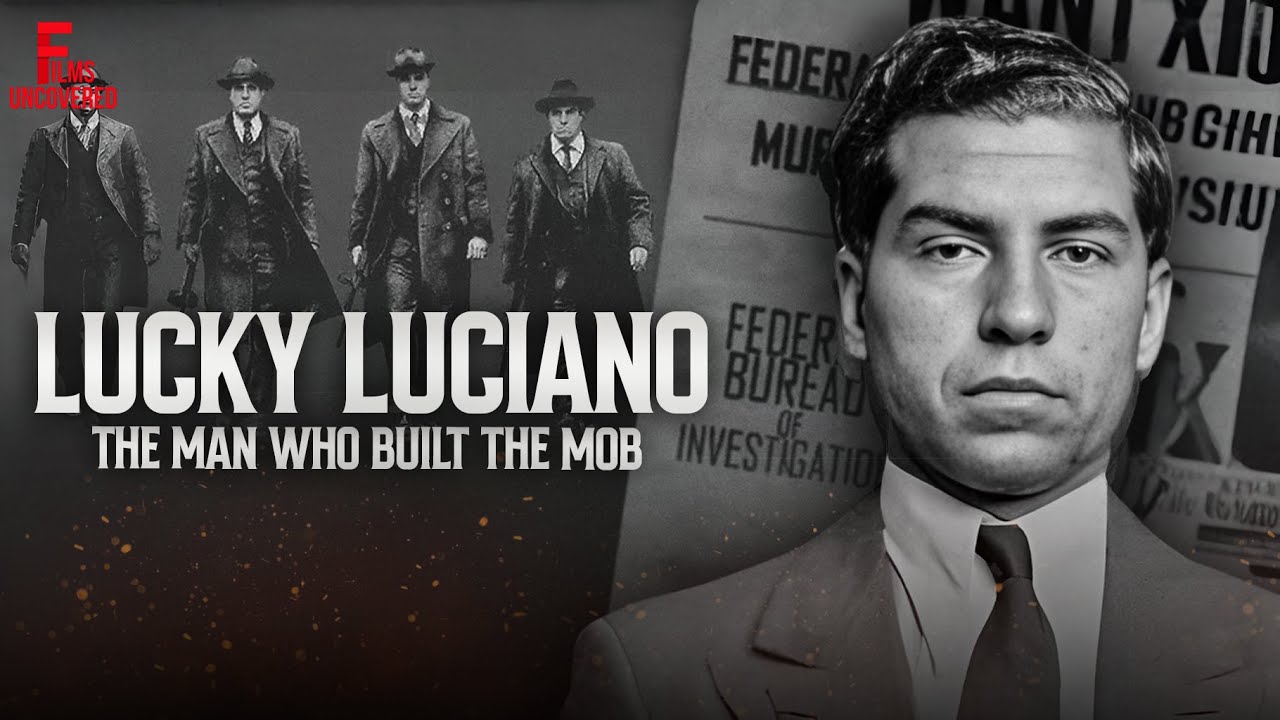
What allowed Luciano, Genovese, Costello, and Lansky to transform from peripheral figures into dominant East Coast criminals was Prohibition, the alcohol ban introduced through the 18th Amendment in 1920. Prohibition was partly designed by the Protestant political establishment to attack Roman Catholics from Ireland, Italy, and elsewhere who had opened restaurants and bars across the 1900s and 1910s. It backfired spectacularly. First, it failed to stop drinking. Second, it catalyzed the expansion and professionalization of Italian, Irish, and Jewish mafias in cities like New York, Chicago, and Boston.
Luciano was a major beneficiary. As he, Lansky, and others produced, moved, and sold bootleg alcohol around the tri-state area during the 1920s, they became leading figures in Masseria's criminal organization. Without Prohibition, few would remember Salvatore Lucania today.
Luciano and Lansky did not rise solely through Masseria. They had another connection: Arnold Rothstein, nicknamed "the Brain." Born into an affluent Jewish Manhattan family in 1882, Rothstein rose during the 1910s by applying mathematical principles to illegal gambling, operating casinos and racetracks along the East Coast. He allegedly fixed the 1919 World Series to make $350,000, though this was never proven. By the mid-1920s, Rothstein mentored Luciano and Lansky, teaching them a businessman's approach to crime. He stressed that appearances mattered. Did Luciano want to be seen as a small-time gun for hire or a leading crime boss? Both chose the latter, evolving from East Side criminals into well-dressed operators living discreetly in suburbs or Manhattan hotels under aliases, directing affairs rather than handling bootleg alcohol themselves. This ethos would spread throughout the Italian-American mafia.
The path was not risk-free. In summer 1923, while still selling narcotics alongside alcohol, Luciano met regularly with a distributor named John Lyons in an East 14th Street pool room until realizing Lyons was an undercover cop. At the police station, they informed him what he already knew. With his 1916 conviction, he faced 10 years. To save himself, Luciano gave them information about a storehouse holding a huge drug quantity. They verified the address was accurate. Luciano walked free without informing on anyone. The storehouse held his own drugs. It was a narrow escape, revealing how much money he was already making. The stash had an estimated street value of $150,000.
Within a year, he and Lansky rented a suite at the upscale Claridge Hotel, directing bootleggers operating along the East Coast. They also brought in narcotics from Canada, where Montreal's port served as a major North American entry point, and later benefited from Rothstein's connections to opium importers from China and Hong Kong. By 1928, Luciano and Lansky had become major players in New York's crime world, running their own business while serving as senior associates to Rothstein and Masseria.
A shift occurred that September when Rothstein, a notorious gambler, lost $340,000 in a marathon gambling session involving dice, stud poker, and high-card draw. Though he could easily afford it, Rothstein refused payment, claiming the game was rigged. His refusal proved costly. On November 4, he was shot in the groin near the Park Central Hotel, dying two days later after refusing to identify his shooter. His empire was divided among several gangsters. Luciano moved closer to Masseria after Rothstein's collapse.
Rothstein's death reverberated through the 1930s. His leaked records detailed bribes paid to New York police and prosecutors over nearly 20 years. In response, corrupt state officials were ousted in 1929 and the early 1930s, replaced by zealous newcomers, including special prosecutor Thomas E. Dewey, who would play a major role in Luciano's future.
More immediately, rivalry developed between Masseria and Salvatore Maranzano, a Sicilian who arrived in 1925, well-dressed, educated, ruthless, and paradoxical. He was a crime boss who spoke Latin and had once considered the priesthood. By the late 1920s, he threatened Masseria's power. The 1929 attack that nearly killed Luciano was possibly carried out by Maranzano's allies. Masseria responded by ordering Luciano, Genovese, and others to murder Gaetano Reina, a former Masseria member who had joined Maranzano.
Reina's February 1930 murder triggered the Castellammarese War between Masseria's and Maranzano's families, named for Maranzano's Sicilian port town. The conflict raged over a year. Eventually seeing Maranzano gaining the upper hand, Luciano, Costello, and Genovese switched sides, agreeing to kill their boss. On April 15, 1931, in an episode inspiring the famous Godfather murder scene, Luciano met Masseria at the Nuova Villa Tammaro restaurant on Coney Island. After eating and playing cards, Luciano went to the bathroom, the signal for Genovese and others to enter and gun down Masseria.
With the war ended, Luciano and the others joined Maranzano. Maranzano then created a new structure for Italian-American outfits operating in New York and the tri-state area. Resurrecting an idea from Chicago boss Johnny Torrio, he decided the five most prominent outfits would divide power, each controlling their own city, state, and New Jersey territories for bootlegging, prostitution, gambling, and other crime. They became the five families, headed by Maranzano, Luciano, Giuseppe Profaci, Thomas Gagliano, and Vincent Mangano. Each could operate independently in its zone, but Maranzano proclaimed himself capo di tutti capi, boss of bosses, demanding tribute from all others.
The arrangement lasted months. Tension quickly developed between Maranzano and Luciano based on Maranzano's heavy-handedness and prejudice against Jewish colleagues like Lansky and Siegel. By autumn 1931, Maranzano was discussing removing Luciano and others who had worked with Masseria, including Genovese and Costello. Luciano's suspicions were aroused when Maranzano repeatedly asked for his home address. Luciano dismissively replied he had no fixed home.

Lucky began planning Maranzano's murder, accelerating when summoned in September to meet at Maranzano's new Park Avenue office near Grand Central Station. Instead, Luciano contacted Lansky, who arranged four hitmen Maranzano would not recognize to pose as Internal Revenue Service officers. Knowing Maranzano expected IRS officials regarding tax difficulties, bodyguards let them in. They stabbed Maranzano six times. When he fought back, they shot him four times and slit his throat.
Luciano now held unprecedented power following the rapid disappearance of Rothstein, Masseria, and Maranzano. He could have claimed boss of bosses status, especially as Al Capone was about to be imprisoned in Chicago on tax evasion charges. Yet Luciano chose not to claim preeminence. After years of bloodshed, he argued collegiality and fair territorial division where everyone benefited was the best path forward.
Within weeks of Maranzano's death, the Commission was established. Seven individuals, the five family heads plus the Chicago outfit head and a seventh figure from Cleveland, Buffalo's Frank Milano in 1931, would meet occasionally to direct Italian-American mafia affairs. Each family would administer its own territory and avoid interfering in others' business except where interests overlapped. It marked the birth of the mafia as a national crime organization, and Luciano brought it about more than any other individual.
The next several years brought flux for Luciano and his crime family. Genovese became his second in command, with Costello as consigliere. They continued working with Lansky, Siegel, and the Jewish mob, plus the other four New York families. A major transition occurred in 1933 when Prohibition ended. The massive revenue loss was offset by expanding into other fields, with Siegel heading west to establish a gambling haven, first in Galveston, Texas, later in Las Vegas, Nevada. Other initiatives included growing involvement in unions and the labor movement, plus expanding the narcotics trade.
Luciano became very wealthy, residing at luxury Manhattan hotels, notably the Waldorf Astoria, perhaps the world's most esteemed hotel then, later the Barbizon Plaza. Despite plush surroundings, he maintained old habits. One evening at the Barbizon, he ordered silverware and dishes without food; an associate had brought spaghetti cooked by his mother. He did not marry and rarely had committed relationships beyond his sometime girlfriend Gay Orlova, instead dating various women briefly. This apparently resulted in a venereal disease troubling him periodically throughout life.
The mid-1930s brought instability beyond Prohibition's end. Thomas Dewey, the New York special prosecutor who would become the Republican presidential candidate in 1944 and 1948, intensified his organized crime crackdown after Fiorello La Guardia, himself an Italian immigrant's son, was elected New York mayor in 1934. Dewey first targeted Dutch Schultz, a German Jewish mobster associated with Luciano and Lansky. Schultz had diversified from bootlegging into Harlem's numbers game. Dewey tightened the noose with tax evasion charges. When Schultz made clear he was considering killing Dewey, Luciano and others had no choice but to act. Luciano argued that murdering a special prosecutor close to the mayor and an emerging Republican politician would bring unprecedented attention to mafia activities. On October 24, 1935, Dutch Schultz was murdered in Newark, New Jersey.
The Dewey problem intensified after Schultz's removal. On February 1, 1936, just over three months after Schultz's murder, Dewey oversaw simultaneous police raids on numerous Manhattan and Brooklyn brothels. Over a hundred prostitutes, madams, and managers were arrested. Questioning followed. Many had little information, but Dewey's team assembled enough to charge Luciano with pandering, profiting from others' vices, typically used against pimps and brothel runners.
As investigators worked from the Woolworth Building in Tribeca, formerly the world's tallest building until 1930, Luciano was in Miami, Florida, where he often spent winters overseeing mob business in Florida and offshore Havana, Cuba. Receiving word from Lansky about the raids, he headed to Hot Springs, Arkansas, where the mob operated several casinos and controlled numerous politicians. Luciano's Arkansas whereabouts were discovered, and he was arrested in mid-April 1936, put on a train under armed escort.
Returned to New York, a journalist crowd greeted him at Penn Station. A few hours later, he faced a judge. Dewey attacked, stating Luciano headed a wide-ranging, improperly understood criminal enterprise with nationwide concerns. He believed Luciano was very wealthy, requesting $350,000 bail. The judge agreed. The arraignment set a precedent. Dewey would turn a fairly flimsy vice and pandering charge into a broader case about Luciano's general criminal affairs despite lacking evidence on narcotics, gambling, and other activities.
The trial began three weeks later, lasting one month. Dewey followed his initial pattern, making it about more than vice offenses, building a case about Luciano's role as a leading New York crime boss. It culminated with Luciano taking the stand. During cross-examination, Dewey got the better of him. Lucky slipped once during a lengthy session where he lied about virtually everything else, admitting to being a minor bootlegger in the 1920s when Dewey questioned how he had become wealthy without legitimate employment during Prohibition. This and other revelations led the jury to determine Luciano's testimony could not be trusted. His lawyer had already warned the verdict would be guilty. Eleven days later, the judge sentenced him to 30 to 50 years in prison.
The sentence was a major blow. Though Luciano expected conviction on some offenses, a near-life sentence seemed unfeasible. Serious questions arose about how the case was prosecuted and the nature of the evidence. Meyer Lansky proclaimed his buddy Charlie had been set up. He was not entirely wrong. While the mafia was involved in New York prostitution, that involvement's level was debatable. During the 1920s and early 1930s it was negligible, and Luciano appears to have had almost zero involvement. Figures like him viewed it as hardly worth the effort when bootlegging was easier money. In the mid-1930s, with Prohibition ending and the Great Depression continuing, Luciano and associates did become involved in New York prostitution, but even then he viewed it as a small sideline generating little money. His role was peripheral enough that at least some court evidence was exaggerated.
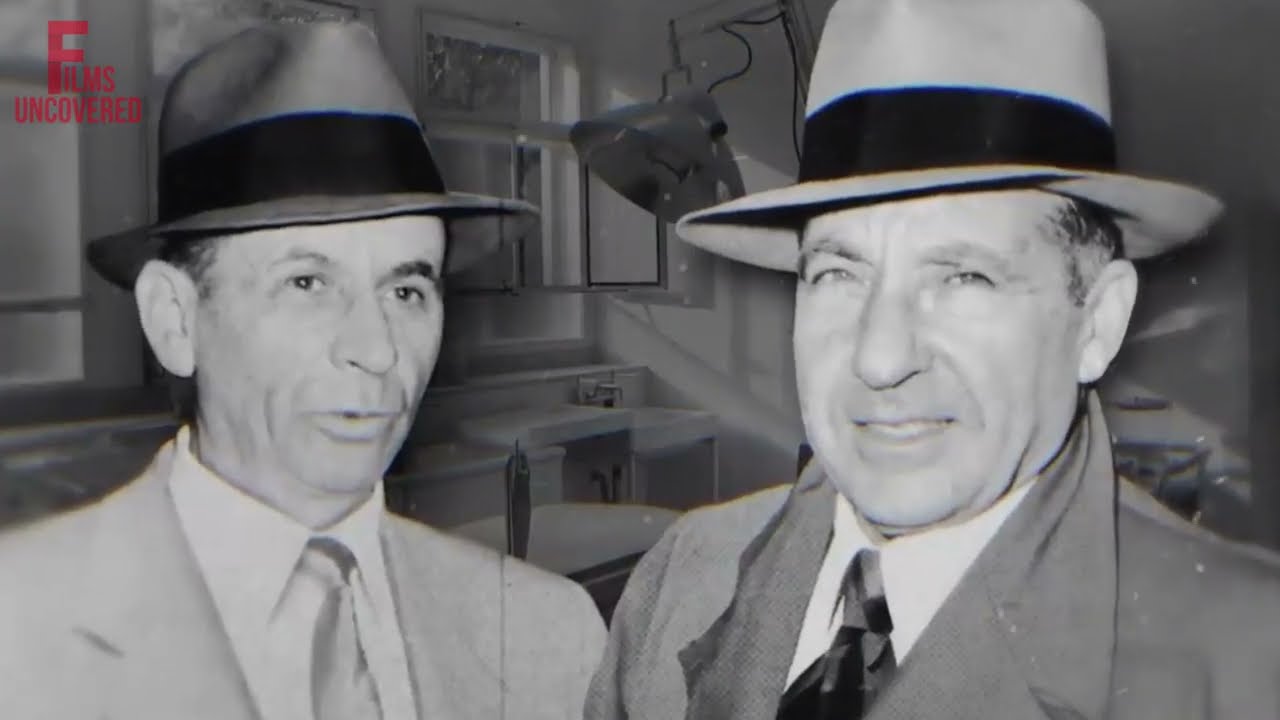
More broadly, Dewey had made the trial a prosecution of Luciano's wider life and career, for which he had only speculation and hearsay. The judge proceeded on this basis, and Luciano was convicted excessively based on available evidence. Luciano's appeal failed. He was going to prison. He tried maintaining some role running New York's underworld, but mostly Vito Genovese took over as acting head of the Luciano crime family, with Frank Costello succeeding within a year as Genovese fled to Italy when Dewey focused on his activities, notably the 1934 murder of Ferdinand Boccia.
Luciano was originally sent to Sing Sing Prison, where cells originally measured 7 by 3.5 feet, just 6.5 feet from floor to ceiling. New Sing Sing cells were built in the 1920s and 1930s, but Sing Sing deserved its fearsome reputation. Fortunately for Luciano, he was quickly moved to Dannemora prison, though conditions remained harsh. Dannemora was notoriously cold. Dubbed Siberia by inmates, Luciano quickly established himself as its most important prisoner, brokering peace between rival gangs and evidently bribing enough guards that his detention conditions became relatively pleasant. Still, Dannemora lay far upstate, making it nearly impossible to manage New York affairs in the late 1930s.
By the time Luciano's minimum 30-year sentence would be served in 1966, approaching his 70th year, there was no guarantee of release. He would almost certainly have spent most of his remaining life in an American prison, serving the pandering conviction, had it not been for events far away in Europe.
On September 1, 1939, Germany invaded Poland, leading Britain and France to declare war two days later, beginning World War II. In late 1940, after Italy entered the war, North Africa became a major conflict theater as Italians and Germans tried securing Egypt's Suez Canal. When the US entered the conflict in December 1941 after Germany's ally, the Empire of Japan, attacked the Pacific Fleet at Pearl Harbor, the US and Britain prioritized the North Africa campaign, planning to secure the Maghreb, then open a southern European front by invading Sicily and southern Italy. As these plans developed, President Roosevelt's administration in Washington considered forming an alliance with the Italian mafia to aid them with Italian contacts. It would be Luciano's salvation.
On February 9, 1942, almost exactly two months after Pearl Harbor, the SS Normandie, a captured French ship rechristened as the Lafayette with ambitions to be repurposed as a troop carrier, caught fire during repair work in New York Harbor. It sank the following day. Suspicions arose that the fire was intentionally started by a German agent. This was a key reason the US government approached several Italian and Jewish crime syndicate figures, including Meyer Lansky, in spring 1942. They hoped to use the mob's massive influence over New York's docklands and workers to prevent further arson attacks and block foreign agents from entering through the port.
Early in these talks, Luciano's imprisonment became a discussion point. He was moved to Great Meadow Correctional Facility closer to New York, a more comfortable situation, and promises were made that in return for his aid, his sentence would be commuted once the war ended. In return, the US government would have Cosa Nostra cooperation in managing New York's port and labor unions for the war's duration. Luciano also promised to use his Sicilian and southern Italian contacts to facilitate the Allied peninsula invasion as much as possible.
It has been suggested more than once that Luciano was somehow involved when charges were pressed against Genovese in New York not long after he took over affairs there. Genovese was implicated in a large narcotics sale and would eventually be sentenced to 15 years in prison in 1959. He surrendered and began his sentence in 1960, dying in prison in 1969. There is certainly a case that the incident bringing Genovese down, an alleged deal with a low-level Puerto Rican drug dealer, seems curious. Why would Genovese be directly involved in such a deal instead of letting a minion handle it? Whether Luciano, who had been visited on a few occasions in Naples by US Federal Bureau of Narcotics agents in the late 1950s, was involved remains speculative. Though friends who knew him in Italy in his later years did recount that news of Genovese's conviction and imprisonment was one of the few things that cheered Luciano up in the months following.
Luciano's final years were spent living in Naples. Somewhat surprisingly, he was not especially well off during these years, partly because much of his revenue came from Havana, and after the Cuban Revolution's success, mafia activities there ended in 1959. The changing of the guard in New York saw much of the residual payments he received over the years dry up. He resented this. It rubbed salt in the wound when Joey Adonis, one of Luciano's gunmen in the 1920s and a much more junior mob figure, arrived in Italy in 1956 after agreeing to be deported from America following a perjury charge. Adonis set himself up in a grand Milan mansion where he held court in a manner Luciano was financially incapable of.
It was in an effort to turn his ailing financial situation around that he agreed to discuss a movie project based on his life with Martin Gosch in the early 1960s. The timing seemed right. A Rod Steiger feature film on Al Capone's life had appeared in 1959, and "Murder, Inc.," another gangster film, was released a year later. In the last months of his life, Luciano had been in contact with Gosch, laying groundwork for such a film. How this project would have been received by those still active in the mafia is very debatable. As it turned out, the film would never come to fruition.
On the evening of January 26, 1962, Luciano headed to Capodichino Airport in Naples to meet Gosch as he got off a plane from Rome. They were planning to complete the movie script work over the next several days. Instead, Luciano collapsed as they walked from the terminal. When a doctor attended shortly afterward, he pronounced him dead. He had passed of a heart attack at 64 years of age. Word quickly spread internationally, with news of his death featuring the following day on the New York Times front page. Other revelations followed in the days after about how Lucky was under investigation at the time of his death for his role in a $150 million narcotics ring between Europe and the US that had been operating for decades.
Luciano's funeral was held three days later in Naples. Approximately 300 guests attended, doubtlessly a smaller number than would have been the case had he died in New York. The ceremony was disturbed by scuffles when overenthusiastic photojournalists got too close to mourners. His body was originally taken by horse-drawn hearse to Poggioreale Cemetery on Naples's outskirts, but an arrangement was subsequently reached whereby his body was repatriated to America. Two thousand mourners attended his burial in Queens.
By the time Luciano died, investigations into the mafia's activities were escalating in America. Genovese was already in prison. In 1963, Joseph Valachi gave testimony to US Senate hearings, revealing how the organized American mafia had come into being, including the central role Luciano played in creating the Commission in 1931. Though it took 20 years for the tide to turn, by the 1980s all these revelations and attacks on the mafia's extensive narcotics trade involvement, gambling, and control of labor and unions began paying off. That decade saw their Las Vegas influence vanquished, and widespread arrests and successful prosecutions. Half a century after he built it up in the early 1930s, Luciano's mafia was beginning to decline.