On August 2, 1634, twelve-year-old Victoria de la Rovere was married to her first cousin, Ferdinando III, who was twenty-four and already Grand Duke of Tuscany. Their union was forged in ambition rather than affection, and it embodied the perilous games of power and bloodlines that defined seventeenth-century Italy. Beneath the surface of the dynasty lay a darker question: what did such a marriage cost Victoria herself?
Victoria de la Rovere was born on February 7, 1622, in the ducal palace in the city of Urbino. Urbino is not a household name today, a town of some fifteen thousand people in central Italy east of Florence. Yet hidden behind its ancient walls lies one of Italy's best-kept secrets: a nearly perfectly preserved town that seems frozen in the splendor of the late Middle Ages.
Once a dazzling cradle of the Italian Renaissance, Urbino stood under the proud rule of the della Rovere family, the same dynasty that gave birth to Victoria, a girl destined for both glory and tragedy. That family had risen in the fifteenth century to rule over a number of small duchies and principalities in central Italy, including Urbino. The family also twice claimed the papacy, with Pope Sixtus IV, who reigned from 1471 to 1484, and Pope Julius II, who famously commissioned Michelangelo to paint the ceiling of the Sistine Chapel in the early sixteenth century, both members of the della Rovere family.
Victoria was thus born into an esteemed lineage. It was also one that had intermarried with many prominent Italian ruling families over the centuries, creating a high degree of inbreeding. Victoria's father was Federico della Rovere, and he had only just ascended as Duke of Urbino when fate struck its cruelest blow. Barely eighteen, he was dead before his daughter could even remember his face, passing away around a year and a half after Victoria's birth. Some whispered of a severe epileptic attack, others of poison and betrayal. Whatever the truth, his sudden death cast a dark shadow over Victoria's birthright.
Her mother was Claudia de' Medici, a daughter of Ferdinando I de' Medici, Grand Duke of Tuscany from 1587 to 1609. This is important to bear in mind given Victoria's subsequent marriage. Claudia had only married Federico in 1620, and Victoria was their only child before he died.
Victoria should theoretically have become Duchess of Urbino upon the death of her father. Female rule, though, was a complicated thing in early modern Europe. Some countries allowed female succession, others did not. France, for instance, never had a queen regnant, and it was prohibited for a woman to succeed to the French throne under the early medieval Salic law. In Italy, things were more complicated. In some city-states, lawyers genuinely had no idea whether it was legal for a woman to rule.
Following the death of Victoria's father, her grandfather Francesco Maria, who was still living, took up the title of duke again. Yet given that there was no possible way for another male to be born, in 1625 the aging duke let the issue be dealt with by the pope of the day, Urban VIII. As Victoria was still an infant and could not hope to rule for many years, he decided that the Duchy of Urbino, which lay on the northern edge of the extensive papal territories in central Italy, would simply be annexed into the papal state.
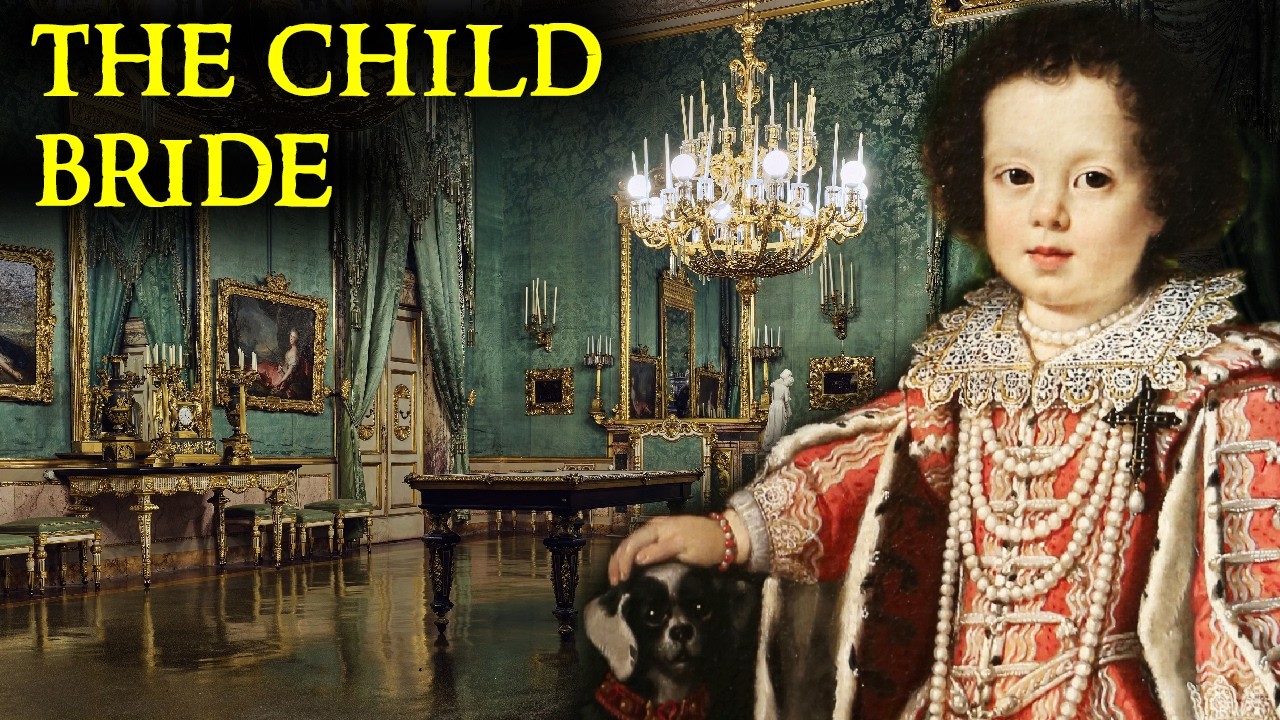
With the death of the eighty-two-year-old Francesco Maria in 1631, the papacy officially took control of the duchy. Victoria, now the last surviving member of the main della Rovere line, was compensated with the duchies of Rovere and Montefeltro as a personal fiefdom, pockets of land within the wider duchy instead of the full title. It was a small compensation for being deprived of her birthright, but it did mean that Victoria was a duchess from when she was an infant. She also inherited the family's legendary art collection, a dazzling trove of masterpieces and fine jewels, including numerous paintings by Titian, one of the greatest artists of the sixteenth century and a master of the High Renaissance style. Despite her very young age, such a vast and priceless inheritance made her one of the most sought-after brides in Italy, attracting the attention of dynasties eager to claim her wealth and status.
Following her husband's death, Claudia de' Medici went on to marry the Archduke of Further Austria, Leopold V, in 1626. She was twenty-one years old, while her new husband was thirty-nine. She now headed off to take up her new position as his consort in the Tyrol region of western Austria, where she would start a second family.
Meanwhile, young Victoria was left behind in Italy. Her childhood was shaped by the austere walls of a convent in Grochetta, Tuscany, her mother's homeland. Surrounded by nuns, yet never far from her Medici cousins' influence, she grew up under the whispers of power and ambition. Nevertheless, before she could even grasp the meaning of love or marriage, her fate had already been sealed. She was promised to her cousin Ferdinando.
Ferdinando II de' Medici, Grand Duke of Tuscany, was Victoria's first cousin, the son of her mother's brother, Cosimo II, who ruled Tuscany from 1609 until his early death in 1621. As with Victoria, Ferdinando's father had died prematurely, and so he had succeeded to the Grand Duchy of Tuscany in 1621 when he was just ten years old. Despite this, the real power lay in the hands of his mother, Archduchess Maria Magdalena of Austria, and his formidable grandmother, Grand Duchess Christina. It was these two women, acting as joint regents, who orchestrated the union that would shape both dynasties.
In the late summer of 1634, twelve-year-old Victoria de la Rovere was married to the twenty-four-year-old Grand Duke, forging a bond of blood, power, and ambition. It is believed that the marriage between Victoria and Ferdinando was not actually consummated for another four or five years. Being first cousins, both from closely intertwined and somewhat inbred dynastic lines, their union carried serious biological risks, making the task of producing a healthy heir far from simple.
One son was born and died within a couple of days in December 1639. Another suffered an identical fate a year and a half later, living long enough only to be baptized. Finally, a healthy child, the future Grand Duke Cosimo III, was born on August 14, 1642. Victoria carefully ensured he was raised along strict Roman Catholic lines in keeping with her own devout sensibilities. Yet despite his robust beginnings, Cosimo would grow up as arguably the most inbred Medici, his delicate constitution and peculiar temperament reflecting the subtle but lasting effects of generations of dynastic inbreeding.
There would be no other child for many years thereafter. It seems clear that Victoria's husband was gay and that once a healthy heir was born, he considered his marital responsibilities in siring children complete. Although this was not really how it was supposed to work in early modern times. In an age when smallpox, syphilis, the bubonic plague, and countless other deadly diseases swept through Europe, it was alarmingly common for the young and old alike to fall and never rise again. The harsh reality of life and death meant that families of power and ambition always kept two or three potential heirs ready to secure the family line.

Their second heir arrived at an unusually late date, and with good reason. Shortly after Cosimo's birth, Victoria walked in on Ferdinando in bed with a male page, a scandal that drew a wedge between them for many years. They barely spoke until a tense reconciliation in 1659. Nine months later, Victoria gave birth to another son, Francesco Maria de' Medici, born in November 1660, creating a remarkable eighteen-year gap between him and his elder brother Cosimo.
Beyond her role as mother to the heirs to the Grand Duchy, Victoria's time as Grand Duchess of Tuscany was peculiar. Her estranged relationship with her husband meant that she largely maintained her own private wing of the court. They were two very different people even beyond his sexual orientation. Ferdinando was a man of science and culture who founded a famous scientific academy and was known to have helped defend the astronomer and scientist Galileo from the Holy Inquisition. Victoria was the direct opposite of her cousin, a woman educated and partly raised by nuns who was an unswerving adherent of Roman Catholicism. Victoria was the kind of seventeenth-century Italian who believed Galileo was a heretic. As a result of her frosty and excessively pious character, she was generally not well liked by the people of the Grand Duchy, in contrast to her popular husband.
In 1670, her husband died at fifty-nine, leaving Victoria as Dowager Duchess of Tuscany in her late forties. She would not remarry. Instead, she devoted her life thereafter to advising her eldest son, who became Grand Duke Cosimo III upon his father's passing. Victoria and he were close, and she had raised him to have the same dogmatic adherence to Roman Catholicism as she did.
By then, though, scandal and unrest clung to the Florentine court like a shadow. Back in 1661, Cosimo had wed Marguerite Louise of the Orléans branch of the French royal family, a first cousin of King Louis XIV. Politically and diplomatically, the match was a triumph for Cosimo's parents, securing ties with one of Europe's most powerful dynasties. But the marriage was a disaster. Deeply unhappy and bitter, Marguerite scorned her husband at every turn, and the union also represented yet another chapter in generations of dynastic breeding between the Medici and French royals.
Mutual dislike poisoned their household, leaving the court rife with tension and whispered scandal. Legend had it that they had only slept together once to consummate the marriage, yet this obviously conflicts with the fact that they had three children: two sons, Ferdinando and Gian Gastone, and a daughter named Anna Maria Luisa. Marguerite also became infamous for trying to steal and sell some of the Tuscan crown jewels and was known to physically attack her husband.
Victoria was involved in these developments and encouraged her son to stand up for himself. She also quarreled in public and in government meetings with her daughter-in-law, so much so that the rivalry between the duchess and the former duchess became the talk of Florence. One contemporary remarked of this that the Pitti Palace had become the devil's own abode, and from morning until midnight only the noise of wrangling and abuse could be heard. Cosimo III always sided with his mother, a loyalty that only stoked the fiery temper of Marguerite Louise of Orléans.
Yet it was Victoria who ultimately triumphed. In 1675, just weeks shy of her thirtieth birthday, and after years of bitter quarrels and public confrontations, Marguerite abandoned Tuscany, fleeing back to France and leaving her three children behind: Ferdinando, eleven; Anna Maria Luisa, seven; and Gian Gastone, only four. She would spend the rest of her life largely confined to a convent and would never return to Tuscany.

When their mother left for France in 1675, Victoria took over the role of raising and educating her grandchildren. Her grandchildren suffered what appears to have been some effects of inbreeding, the very same that had shaped the challenges and fragility of her own marriage. She decided on certain elements of their education and ensured that priests and confessors played a central part in it.
It was peculiar how their lives turned out in many ways given this background. Her granddaughter Anna Maria Luisa would go on to marry a Protestant lord of a west German principality, the Elector Palatine, in the early 1690s. Gian Gastone, meanwhile, grew into a deeply unpleasant and ill-mannered man, eventually inheriting the Grand Duchy of Tuscany and shocking the court with his crude and scandalous behavior, a far cry from the decorum Victoria had painstakingly instilled.
Beyond raising her grandchildren, Victoria continued to play an unusually large role in the affairs of the Tuscan state. Her son was always obedient when it came to her desire to influence the course of government. Many people remarked that it was strange that his mother continued to form a part of the privy council and had such ready access to the Grand Duke as he entered his thirties and then his forties. She would exercise a great amount of power at the court down to the end of her life.
To the relief of a number of the more senior ministers and politicians within Cosimo III's government, his mother took a less active role in policy from the late 1680s onward, and especially so once the marriage of her granddaughter had been negotiated. By then, Victoria had already ensured that her younger son Francesco had been made the governor of the city of Siena, a territory of the Grand Duchy. Later he was made a cardinal of the church too, though there was never any chance that he could aspire to claim the papacy as two of his della Rovere and four of his Medici predecessors had in times gone by.
With her political ambitions largely achieved and the Medici line appearing secure, Victoria devoted more of her later years to religion, frequently visiting and acting as patroness of numerous convents and religious houses throughout Florence and the wider Tuscan region. She died on March 5, 1694, in the ducal palace in the city of Pisa, a port city owned by the Grand Dukes of Tuscany. Victoria enjoyed spending time there in the winter and early spring owing to the milder weather than was found inland in Florence. Other accounts place her death on March 6. She was seventy-two years of age at the time and was by all accounts becoming quite obese by the time of her passing.
She was buried in the Basilica of San Lorenzo in Florence. The Dowager Duchess's possessions of the duchies of Rovere and Montefeltro passed to her younger son Francesco. Victoria's art collection, including the priceless collection of paintings by Titian, was incorporated into the Medici art collection. The works in it were later made part of the Uffizi Gallery, which her granddaughter Anna Maria Luisa organized to become one of Europe's first public art galleries after her own death in 1743.
Sadly for Victoria, her belief that the Medici dynasty was secure proved tragically mistaken. Her eldest grandson Ferdinando died in 1713, predeceasing his father after years of a barren marriage. When Cosimo III passed away in 1723, he was succeeded by his youngest son, Gian Gastone. He too left no heirs, and with his death in 1737, the House of Medici, one of Europe's most illustrious dynasties, came to an end, marking him as the last Medici ruler of the Grand Duchy of Tuscany.