Private Eddie Slovik was executed by firing squad at 10:04 a. m. on January 31, 1945, in the snow-covered courtyard of a farmhouse near the French village of Sainte-Marie-aux-Mines, becoming the only American soldier put to death for desertion during World War II — and the first since the Civil War — in a case that remains one of the most controversial episodes in United States military history.

The execution, ordered personally by Supreme Allied Commander General Dwight D. Eisenhower, followed a court-martial that lasted less than two hours and a verdict that stunned even the officers who presided over it. Slovik, a 24-year-old replacement rifleman from Detroit, Michigan, was strapped to a post, his uniform stripped of insignia and buttons in accordance with military tradition, and shot by twelve soldiers drawn from his own 109th Infantry Regiment.
Eleven rifles carried live rounds; one carried a blank, a custom meant to spare each man the certainty of having fired the fatal shot.
At least four of the eleven bullets that struck him were fatal. He was hit in the upper neck, the left shoulder, above the heart, and beneath the heart. An American medical officer later reported that Slovik did not die instantly, but succumbed as the execution detail prepared a second volley.
The entire procedure took approximately fifteen minutes. He was buried in an American cemetery alongside other soldiers executed for crimes including murder.
Slovik’s path to the post began long before he ever set foot in France. Born in 1920 in Detroit to a Polish-American family, he was first arrested at the age of twelve for stealing copper after being caught inside a foundry. Throughout his adolescence he cycled in and out of trouble with the law, arrested repeatedly for theft and disorderly conduct.
In October 1937, at seventeen, he was sent to prison. He received parole the following year, but in 1939 he stole a car and crashed it while drunk with friends, landing him back behind bars.
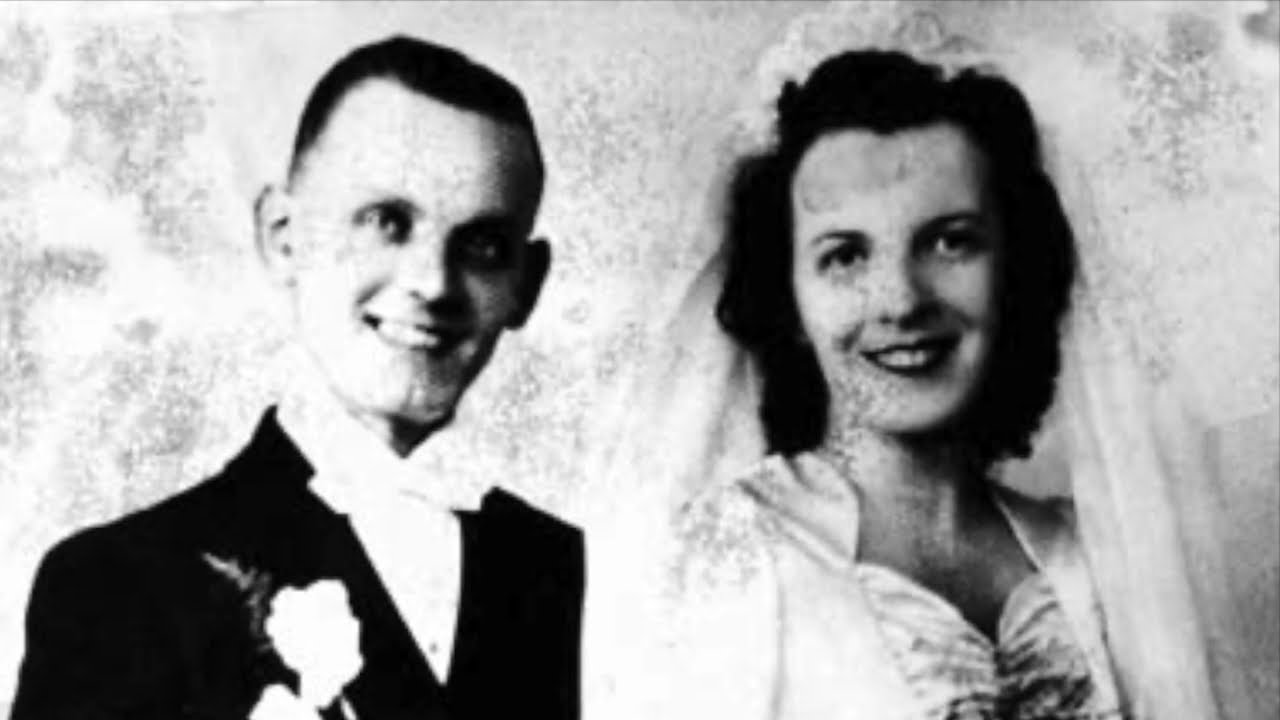
Three years later he was paroled again, took work as a plumber in Michigan, and married. Yet his criminal record followed him. At the time, it classified him as morally unfit for service in the United States Army.
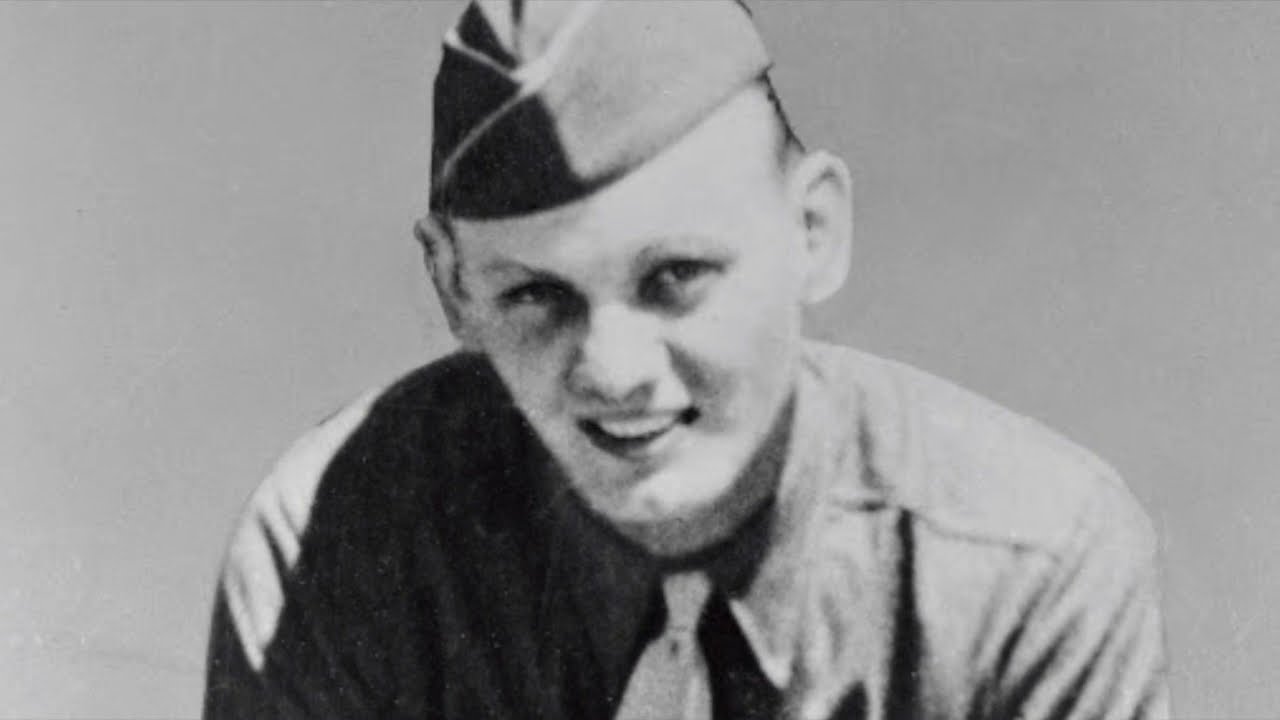
That classification was later reversed, and in January 1944 he was drafted. He completed basic training and was shipped to France after the Normandy landings, assigned to the 28th Infantry Division and then to the 109th Infantry Regiment in August 1944, trained as a rifleman despite a deep aversion to weapons.
As a replacement soldier, Slovik commanded little respect from officers, particularly in a unit that had already suffered devastating losses in France. While en route to his assigned outfit, Slovik and a friend from training, John Tankey, were caught in a nighttime artillery barrage and became separated from Company G. By morning the company had moved on without them.
 The two men found a Canadian military police unit in town and stayed with them for six weeks. Tankey wrote to the regiment explaining their whereabouts, and the Canadians arranged for them to rejoin their unit on October 7, 1944.
Neither man was charged; losing replacements in the chaos of the front was common. But the very next day, Slovik committed the act that would seal his fate. On October 8, he told his company commander he was too frightened to serve in an infantry company on the front line and asked to be transferred to a rear unit.
The commander hesitated. Slovik then said he would run away if assigned to a front-line unit, and asked whether that would constitute desertion. The commander told him it would, refused the transfer, and sent him forward to an infantry group instead.
Slovik was true to his word. The day after receiving the news, he deserted, walking miles in the wrong direction toward the rear. His friend Tankey tried to persuade him to stay, but Slovik had made up his mind.
He approached a cook belonging to the 112th Infantry Regiment and handed him a note that amounted to a self-written death warrant. In it, he confessed to deserting the United States Army, describing how he had been terrified under shelling in Albou, France, how he had trembled and been unable to move when other replacements advanced, and how he had surrendered himself to Canadian military police and later to American authorities.
He wrote that he had told his commanding officer he would run again if forced to return to the front, that the officer said he could do nothing for him, and that he had therefore fled and would flee again. The note’s journey was strange: it passed through a cook, then a military policeman, then a company commander. Slovik was told to destroy the note before his arrest, but he refused, even when given the chance to tear it up and return to his unit with no charges filed.
He was offered the same reprieve repeatedly. The division’s judge advocate urged him one final time to dispose of the note and rejoin his outfit. He was even offered a transfer to another unit for a fresh start where no one knew his past.
Slovik refused every offer, apparently believing the worst he faced was imprisonment — which he preferred to front-line combat. He reportedly said he would accept a court-martial.
The timing could not have been worse. The 28th Infantry Division was preparing to attack in the Hürtgen Forest, a campaign that became one of the bloodiest and most lethal engagements of the American war against the German army. German forces were entrenched and determined to defend their positions, and casualties were expected to be catastrophic.
Some soldiers panicked at the prospect, and desertion rates crept upward.
Slovik, whom officers regarded as an outright coward, was charged with desertion and court-martialed on November 11, 1944. Administrative officers presided because combat officers had been redeployed to the front. At trial, the prosecutor painted Slovik as a coward who had planned his escape.
He chose not to testify, hoping only for a prison sentence. Then came the verdict: the nine officers hearing the case sentenced him to death.
Death sentences were not rare in the U. S. Army during that period of the war, but none had been carried out.
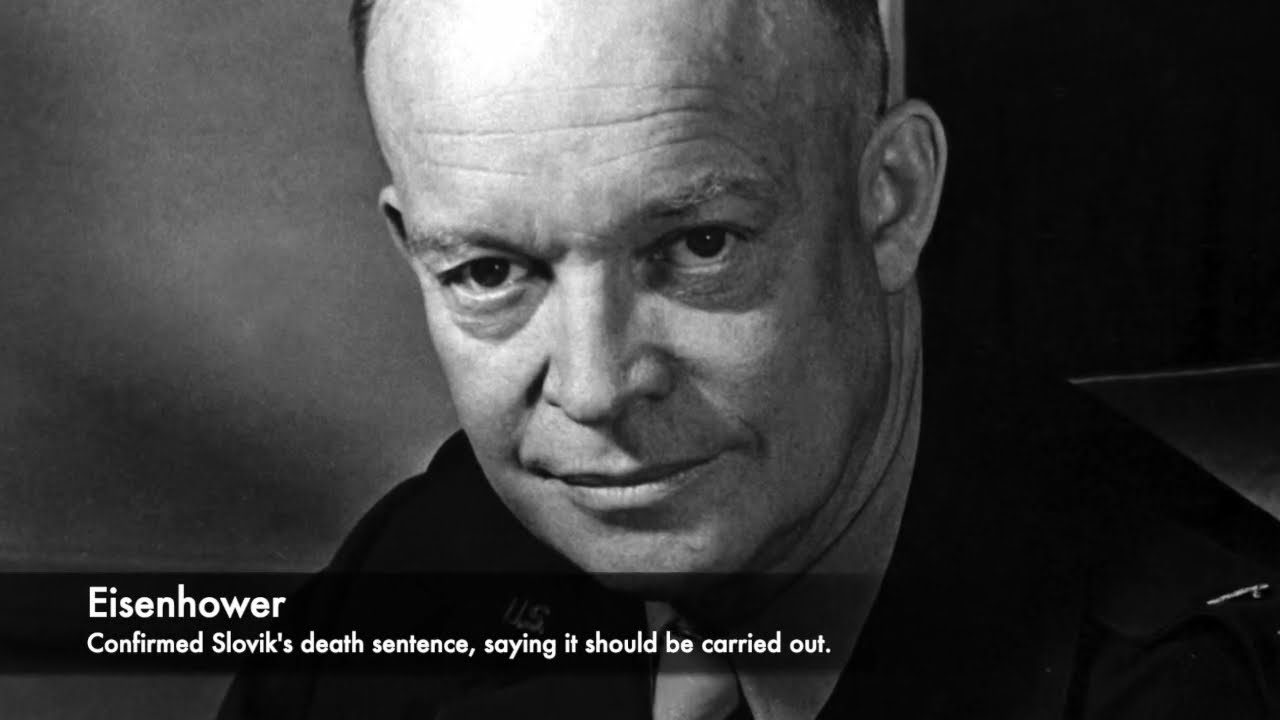
Slovik was the sole exception. Appeals for clemency reached Eisenhower, who confirmed that the execution must proceed. Eisenhower viewed the decision as justified: during the fighting in France and the Battle of the Bulge, desertion rates were climbing and becoming a larger problem amid brutal combat and mounting casualties.
He wanted to deter other soldiers from shirking their duties.
Slovik genuinely believed he would receive only a dishonorable discharge and prison time. Instead, as a former convict and repeat offender, he was made a case study to intimidate potential deserters. The 28th Infantry Division had seen soldiers wound themselves to escape the fighting, but the treatment of Slovik was exceptionally harsh.
It appeared his criminal past returned to haunt him, cementing his death sentence.
He remained in custody for months before his execution day arrived. On January 31, 1945, near the village of Sainte-Marie-aux-Mines, an execution detail was assembled. Slovik was brought before the soldiers gathered to 𝓀𝒾𝓁𝓁 him and spoke his final public words.
 “They’re not executing me because I deserted from the American Army,” he said. “Thousands of men have done that. They just need to make an example of someone, and I’m that person because I’m an ex-convict.
I was stealing things when I was a kid, and that’s why they’re executing me. They’re executing me for the bread and chewing gum I stole when I was twelve years old.”
He believed to the end that he was a scapegoat. Military tradition required that Slovik be stripped of his uniform, all insignia, and buttons. This was done in freezing weather.
He was then wrapped in a blanket to protect him from the cold and led into the courtyard of a house chosen for the execution. The house was selected because its high wall shielded the proceedings from French witnesses and could stop ricocheting bullets.
Slovik was taken to a post and bound with straps, one placed beneath his arms and hooked to a nail to keep his body from slumping. He was secured tightly, and a soldier placed a black hood over his head. A priest chosen to accompany him said, “Eddie, when you get up there, say a little prayer for me,” gesturing toward the sky.
Slovik’s last words were, “Okay, Father. I’ll pray that you don’t follow me too soon.”
Twelve soldiers selected from the 109th Regiment stood with their M1 Garand rifles loaded and ready. Eleven were loaded with live rounds and one with a blank. The order was given for the firing squad to shoot.
They fired directly at their target, striking him with eleven bullets, at least four of them fatal.
After World War II, records showed that more than 2,000 soldiers were court-martialed on purely military charges. Forty-nine were sentenced to death, but forty-eight of those sentences were commuted. Only one was carried out during the conflict: the execution of Eddie Slovik.
Many historians and advocates believe his death was unjust, that he was made a scapegoat, and that his record as a convicted criminal worked decisively against him. His case endures as a stark reminder of how military discipline, political pressure, and a single soldier’s terror converged in a frozen courtyard in France, leaving behind a grave, a controversy, and a question that has never fully been answered.