In the mountains of Sinaloa, Chihuahua, and Durango, a region known as the Golden Triangle, thousands of hectares of poppy and marijuana crops sustained families who had no other options. Then, in 1977, Operation Condor swept into the region like a military storm. More than 10,000 Mexican army soldiers, armed helicopters, and strategies learned from South American dictatorships descended on the mountains.
The mission was to eradicate illegal crops. The result was lives taken, disappearances, and mass displacement. Hundreds of farmers fled to the cities. Entire families moved to Guadalajara, Culiacán, and even crossed into the United States. Small-time traffickers were dismantled.
But the military did not foresee one thing. By dispersing the traffickers of Sinaloa, they did not eliminate them. They forced them to evolve. They pushed them to reorganize far from the mountains, inside the cities. And in that chaos, three men saw an opportunity no one else could see.
The first was Miguel Ángel Félix Gallardo, born on January 8, 1946, in Culiacán, Sinaloa. He was tall, slim, and refined in his manners, and he did not seem destined to become the most powerful trafficker in Mexico. But he possessed something few in the criminal world had: real political connections.
Félix Gallardo did not begin as a criminal. He started as an agent of the judicial police of Sinaloa and later became the personal bodyguard of Governor Leopoldo Sánchez Celis in the 1960s. He learned the secrets of power. He met politicians, military officials, and judges. He understood that in Mexico, true power did not lie in weapons, but in connections.
When Operation Condor destroyed the traditional trafficking structures in Sinaloa, Félix Gallardo saw the entire board. The old bosses were either gone or on the run. Pedro Avilés Pérez, considered the first major Mexican trafficker and a pioneer in using small aircraft to move illegal merchandise, had been killed in 1978 during a shootout with federal police. His death left a massive power vacuum.
Félix Gallardo was not the most violent or the wealthiest. But he was the smartest. He knew the future of trafficking was not in the mountains, but in the cities. Not in scattered fields, but in centralized operations. Not in confronting the government, but in buying it. And to build that empire, he needed partners.
The second man was Rafael Caro Quintero, born in October 1952 in Badiraguato, Sinaloa, the same town that decades later would give rise to El Chapo Guzmán. His family was poor, so poor that cultivating poppy and marijuana was not a crime. It was survival. When his father died, Rafael, still a teenager, took responsibility for supporting his family the only way he knew how, by planting.
But Caro Quintero was not an ordinary farmer. He had an innate business vision. While others planted small hidden plots, he thought big. Before forming the Guadalajara Cartel, he worked for Pedro Avilés Pérez, learning routes, methods, and contacts in the United States. When Avilés died, Caro Quintero retained the knowledge and the production infrastructure. He was young, bold, and possessed something Félix Gallardo did not: total control over the cultivation and large-scale production of marijuana.
The third man was Ernesto Fonseca Carrillo, born on August 1, 1930, in Badiraguato, the same town as Caro Quintero, but more than two decades earlier. By the time the Guadalajara Cartel was formed, Don Neto was already a seasoned smuggler. He had been involved in illegal trade since the early 1970s, operating routes from Ecuador to Mexico and then into the United States.
Don Neto represented the old Sinaloa school: discreet, silent, letting his partners take the spotlight while he managed operations from the shadows. He had also worked under Pedro Avilés Pérez. When the pioneer fell, Don Neto joined forces with Félix Gallardo and Caro Quintero, not out of unchecked ambition, but because he understood that the future of trafficking required organization, not rivalry.
After Operation Condor and the death of Pedro Avilés Pérez in 1978, traffickers from Sinaloa were scattered. Many fled to Jalisco, specifically to Guadalajara, Mexico's second-largest city. It was cosmopolitan, had strong infrastructure, was far from the militarized mountains, yet close enough to the northern border.
Between 1978 and 1980, somewhere in Guadalajara, the three men met. There is no founding document and no exact date, but the agreement was clear: join forces, control the routes, centralize the trade. Félix Gallardo would provide political protection and organizational structure. Caro Quintero would handle mass production of marijuana. Don Neto would manage logistics and international routes.
Thus, the Guadalajara Cartel was born. It was the first Mexican criminal organization dedicated exclusively to drug trafficking. Before them, the trade was disorganized, fragmented, controlled by small family groups or individuals. They turned it into a corporation. And unlike traditional mafias, the Guadalajara Cartel was not built on rigid hierarchies or indiscriminate violence. It was built on massive bribery, government protection, and business efficiency.
At first, the Guadalajara Cartel trafficked what they knew: marijuana and heroin into the United States. But in the 1980s, something changed the game entirely: Colombian cocaine. The organizations of Medellín and Cali, led by figures such as Pablo Escobar, produced cocaine on a massive scale in the jungles of Colombia. But the Caribbean route was saturated, and US authorities were tightening controls. The Colombians needed new routes.
Félix Gallardo was the first to see the opportunity. He had already built an impressive logistical infrastructure: land routes, tunnels, clandestine airstrips, distribution networks, and officials on the payroll. He did not need to build anything new. He simply offered the service to the Colombians.
The deal was simple. The Colombians produced the cocaine, the Mexicans moved it across the border. In return, the Guadalajara Cartel received a percentage of the shipment or a service fee. This was revolutionary. Cocaine began to flow in industrial quantities, and the Guadalajara Cartel became the indispensable middleman.
The true secret of the Guadalajara Cartel was not violence. It was systemic corruption. Félix Gallardo understood that confronting the Mexican government was suicide. Buying it, however, was profitable. The Federal Security Directorate, known as the DFS, was Mexico's intelligence agency tasked with protecting the president and combating threats. But in practice, the DFS became the enforcement arm of the Guadalajara Cartel.

DFS agents provided official credentials to traffickers, escorted them, warned them of operations, and even took part in kidnappings and interrogations. Rafael Caro Quintero received DFS credentials that made him practically untouchable. Commanders of the Judicial Police were on Don Neto's payroll. Politicians, governors, even military officers received bribes. This was not isolated corruption. It was a system.
Rafael Caro Quintero had a dream: to build the largest marijuana plantation in the world. Not hundreds of scattered hectares in the mountains, but thousands of concentrated, industrialized, guarded hectares. And he succeeded. In Chihuahua, in a remote place called Rancho Búfalo, Caro Quintero built a green empire: 6,000 hectares of marijuana, with 10,000 people working in planting, harvesting, packaging, and distribution. It was a city dedicated exclusively to producing illegal merchandise.
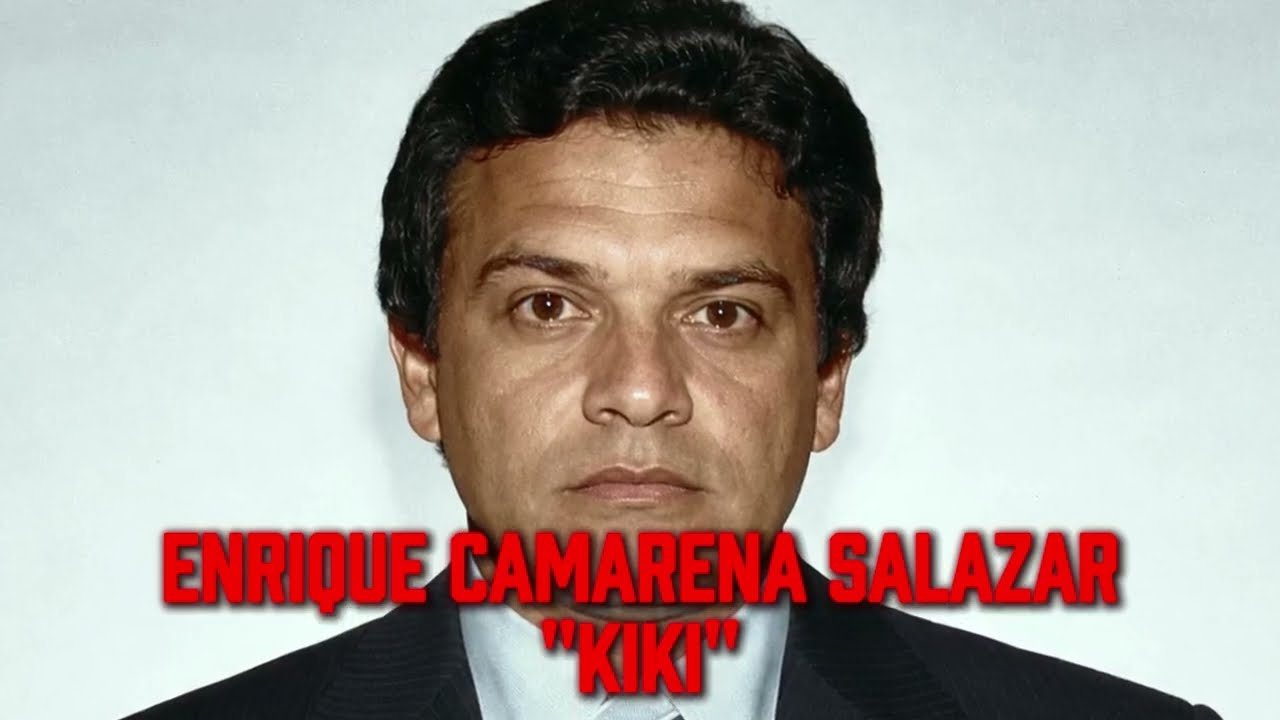
But there was a problem. A DEA agent named Enrique Camarena Salazar, known as Kiki, had been investigating the Guadalajara Cartel since 1981. Assigned to the Jalisco office, Camarena infiltrated the organization by posing as a farmer. He gathered information for years, and in 1984, he discovered Rancho Búfalo.
On November 6, 1984, more than 400 Mexican soldiers and dozens of helicopters stormed the ranch. It was the biggest blow to trafficking in Mexico's history at that time. Caro Quintero lost millions of dollars in a single operation. Some estimates place the value of the harvest at over 2 billion dollars at the time. And he knew exactly who was responsible: Kiki Camarena.
On February 7, 1985, Enrique Camarena left the DEA office in Guadalajara to meet his wife. He never arrived. The plan to abduct him had been set in motion days earlier. Four men intercepted Camarena in broad daylight. He was handed directly over to Rafael Caro Quintero.
Camarena was taken to a house in Guadalajara. Waiting for him there were Caro Quintero, Ernesto Fonseca Carrillo, and most likely Miguel Ángel Félix Gallardo. Also present were DFS agents and police officers. What happened over the next 48 hours became one of the most brutal cases of torture ever documented in the history of drug trafficking in Mexico.
Camarena was subjected to harsh interrogation. They demanded names of informants, details of operations, and information about infiltrators. He was beaten repeatedly, his airways were obstructed. He was struck in the head with metal tools until his skull was shattered. On February 9, 1985, Enrique Camarena died due to asphyxiation and severe head trauma. Along with him, Mexican pilot Alfredo Zavala Avelar was also killed. Their bodies were discovered on March 5, 1985.
The death of Kiki Camarena triggered an unprecedented diplomatic crisis between Mexico and the United States. It was not just the loss of a federal agent. It was a message that the Guadalajara Cartel operated with total impunity, killing US officials on Mexican soil without consequences.
The response from the United States was forceful and coordinated. The DEA launched Operation Leyenda, named in Camarena's honor. It was the first major operation in the DEA's history focused on completely dismantling a foreign criminal organization. Pressure on the Mexican government was intense.
The United States implemented Operation Intercept II, practically shutting down the border for weeks. Every vehicle attempting to cross into the US was thoroughly inspected, causing delays of up to 8 hours at border crossings. Bilateral trade came to a halt. Economic losses for Mexico reached millions. The message was clear: either the Mexican government handed over those responsible, or the border would remain closed indefinitely.
On April 4, 1985, just two months after the crime, Rafael Caro Quintero was located in Costa Rica. He was hiding at a luxurious residence. Costa Rican authorities, under pressure from the United States, stormed the property. Caro Quintero attempted to bribe them with millions of dollars, but he was arrested and immediately deported to Mexico.
Ernesto Fonseca Carrillo was arrested shortly afterward in Puerto Vallarta. He was taken at his residence without resistance and transferred to a maximum security prison. But the primary target remained free: Miguel Ángel Félix Gallardo. For four more years, the boss of bosses managed to evade capture, operating from the shadows, reorganizing the cartel, and negotiating with politicians and Colombian organizations.
Miguel Ángel Félix Gallardo was finally arrested on April 8, 1989, in Guadalajara. But his capture was not the result of a shootout or a dramatic chase. It was a negotiated, quiet, almost ceremonial surrender. The man who arrested him was Commander Guillermo González Calderoni of the Federal Judicial Police.
González Calderoni arrived at Félix Gallardo's hideout in Culiacán with a small group of agents. He knocked on the door. He announced himself. There was no violence. Félix Gallardo came out, said goodbye to his family, and surrendered without resistance. He knew his time was over. The political protection that had shielded him for a decade was gone.
But Félix Gallardo's arrest was not just the fall of one man. It marked the end of an era. The centralized model he had created, where a single leader controlled all territories and negotiated with every Colombian organization, collapsed with him. For years, Félix Gallardo had maintained peace among different trafficking groups through agreements, territorial divisions, and shared profits. Without him, that structure fell apart.
With Félix Gallardo behind bars, the Guadalajara Cartel collapsed. But it did not disappear. It fractured into multiple organizations that divided Mexican territory like a chessboard. That fragmentation gave rise to the cartels we know today and that have turned Mexico into one of the most violent countries in the world.
Before his arrest, Félix Gallardo organized a summit meeting in 1989. The goal was clear: divide territories, assign control zones, and prevent a civil war among cartel lieutenants. The Tijuana territory was handed to the Arellano Félix brothers, nephews of Miguel Ángel Félix Gallardo. They built one of the most violent and sophisticated criminal organizations in Mexico, specializing in the Baja California route into California and controlling the Tijuana-San Diego crossing, one of the busiest border corridors in the world.
Ciudad Juárez fell under the control of Rafael Aguilar Guajardo, who was killed shortly afterward, leaving power in the hands of Amado Carrillo Fuentes, known as the Lord of the Skies. His nickname came from his fleet of more than 20 Boeing 727 aircraft used to transport tons of cocaine from Colombia into Mexico.
The Sinaloa region was divided among several operators, but two names stood out: Ismael "El Mayo" Zambada García and Joaquín "El Chapo" Guzmán Loera, who would eventually consolidate the Sinaloa Cartel. El Chapo had worked under Miguel Ángel Félix Gallardo within the Guadalajara Cartel throughout the 1980s, serving as a transporter and coordinator of cocaine shipments. In 1989, when Félix Gallardo was captured, Guzmán took advantage of the fragmentation to form his own organization. The Sinaloa Cartel would go on to become the most powerful criminal organization in the world over the next three decades.
Other territories were divided among smaller operators. Sonora, Tamaulipas, and Michoacán were each controlled by groups that would later grow into their own cartels. This territorial division transformed drug trafficking in Mexico. What had once been a corporate monopoly with clear rules and centralized leadership became a fragmented and violently competitive marketplace. The wars between organizations that have scarred Mexico from the 1990s to the present are a direct consequence of that fragmentation.
The Guadalajara Cartel was the origin. Everything that came after, the violence, the wars, the thousands of deaths, traces back to those three men who met in Guadalajara in the late 1970s. They created the template. They proved that with enough corruption, enough money, and enough political protection, you could build a criminal empire that rivaled the state itself. And when that empire fell, it did not disappear. It multiplied into dozens of organizations, each one fighting for the same power those three men once held together.