On September 15, 1935, the Nazi regime announced the so-called Nuremberg Laws in Nuremberg, Germany. Among other things, these laws banned future marriages and sexual relations between Jews and people of German-related blood.
The Nazis believed such relationships were dangerous because they led to mixed-race children. According to the regime, these children and their descendants undermined the purity of the German race. Individuals accused of breaching these laws were to be arrested and sent to concentration camps.
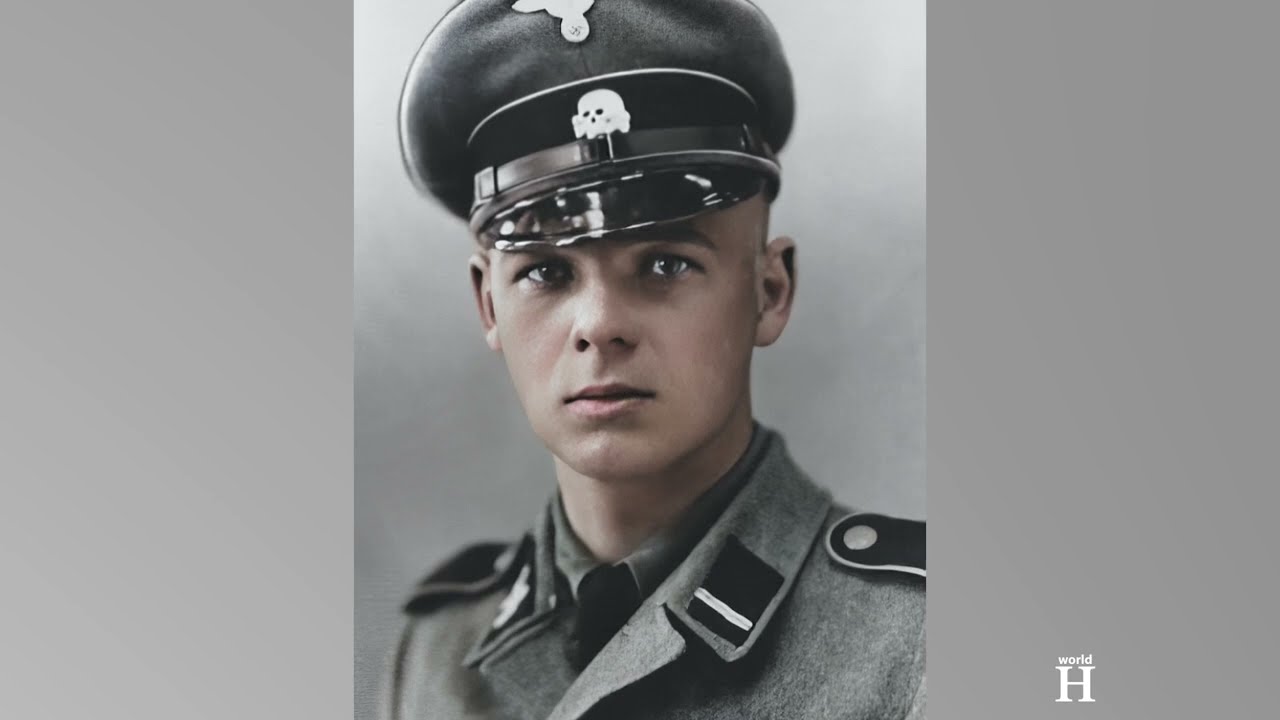
Seven years later, in 1942, a Nazi officer at Auschwitz violated the Nuremberg Laws by falling in love with a Slovak Jewish prisoner. His name was Franz Wunsch.
Wunsch was born on March 21, 1922, in Drazenhofen, Austria. He held a deep and virulent hatred for Jews. In 1940, two years after the annexation of Austria to the German Reich, he joined the SS.
The Second World War began on September 1, 1939, when Nazi Germany invaded Poland. The last operational Polish unit was surrounded on October 6. The German occupation of Poland was exceptionally brutal.
The Nazis considered Poles to be racially inferior. They launched a campaign of terror intended to destroy the Polish nation and culture and to reduce the Poles to a leaderless population of peasants and workers laboring for German masters.
In May 1940, around 60 kilometers west of Krakow, the Germans established Auschwitz concentration camp. The direct reason for the camp was that mass arrests of Poles were increasing beyond the capacity of existing local prisons.
When Germany attacked the Soviet Union on June 22, 1941, Wunsch was sent to fight on the Eastern Front. Due to harsh weather and fierce resistance, fighting there was an incredibly challenging and brutal experience for German soldiers.
While on the front, Wunsch suffered a knee injury. Afterwards he was sent to the Auschwitz concentration camp, where he worked as a guard.
A center of the extermination of Jews became Birkenau, the largest of more than 40 camps and subcamps that made up the Auschwitz complex. It was divided into 10 sections separated by electrified barbed wire fences and was patrolled by SS guards, including, after 1942, SS dog handlers.
During its three years of operation, Birkenau had a range of functions. When construction began in October 1941, it was supposed to be a camp for 125,000 prisoners of war. It opened as a branch of Auschwitz in March 1942 and served at the same time as a center for the extermination of Jews. In its final phase from 1944, it also became a place where prisoners were concentrated before being transferred to labor in German industry in the depths of the Third Reich.
At Auschwitz, the process of selection and murder was carefully planned and organized. When a train stopped at the platform, the arrivals were lined up into two columns: men and boys in one, women and girls in the other.
SS physicians such as Josef Mengele performed this selection. The only criterion was the appearance of a prisoner, whose fate — labor or death — was determined at will.
SS personnel supervising the loading of prisoners who were to be transported and gassed often behaved inhumanely and tortured incoming prisoners in a cruel way. They beat the women, the men, and the children with a stick or a cane while forcing them into the cars.
The SS men kept the people fated to die unaware of what awaited them. They were told that they were being sent to the camp where work was waiting for them, but first they had to undergo disinfection and bathe.
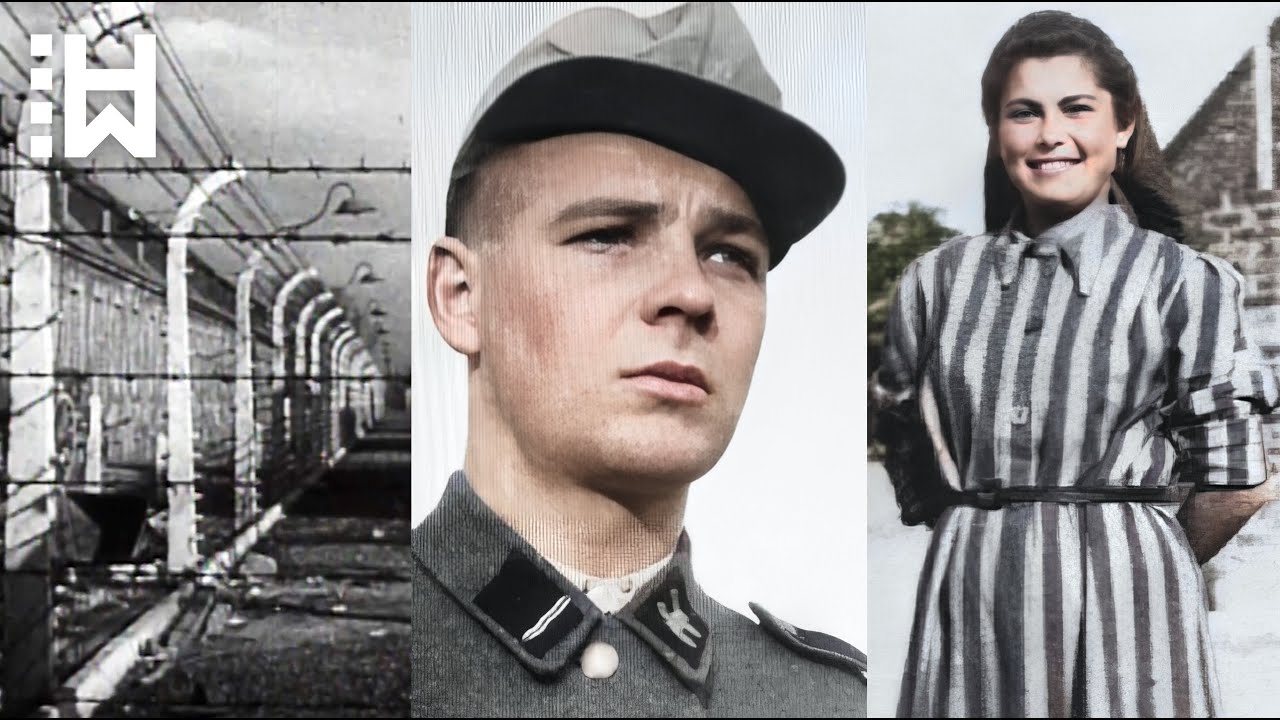
They were then told politely to hang their clothes on hooks, take a shower, and were even promised that they would be provided with soup and tea or coffee. However, they were taken into the gas chambers.
After the doors were shut, SS men dropped Zyklon B pellets through vents in the roof or holes in the side of the chamber. The victims were dead within 20 minutes.
Johann Kremer, an SS doctor who oversaw gassings, testified that the shouting and screaming of the victims could be heard through the opening and it was clear that they fought for their lives.
After the victims were murdered, their gold teeth were extracted and women's hair was shorn by the Sonderkommando, groups of Jews forced to work in the crematorium. All were taken to the crematorium furnaces for incineration. The bones were pulverized and the ashes were scattered in the fields.
Franz Wunsch took part in the selections, thus deciding which Jews would go to the gas chambers to die and which would live to work as slave laborers. He accompanied them to their death, deceived them as to their true fate, and forced them into the gas chambers, viciously beating them if necessary. He would also drop in the Zyklon B pellets that murdered the victims once the gas chamber doors were closed.
On March 21, 1942, at noon, there was a birthday party on behalf of Franz Wunsch, who was celebrating his 20th birthday. Rita, a capo, walked around the barracks looking for a performer to sing.
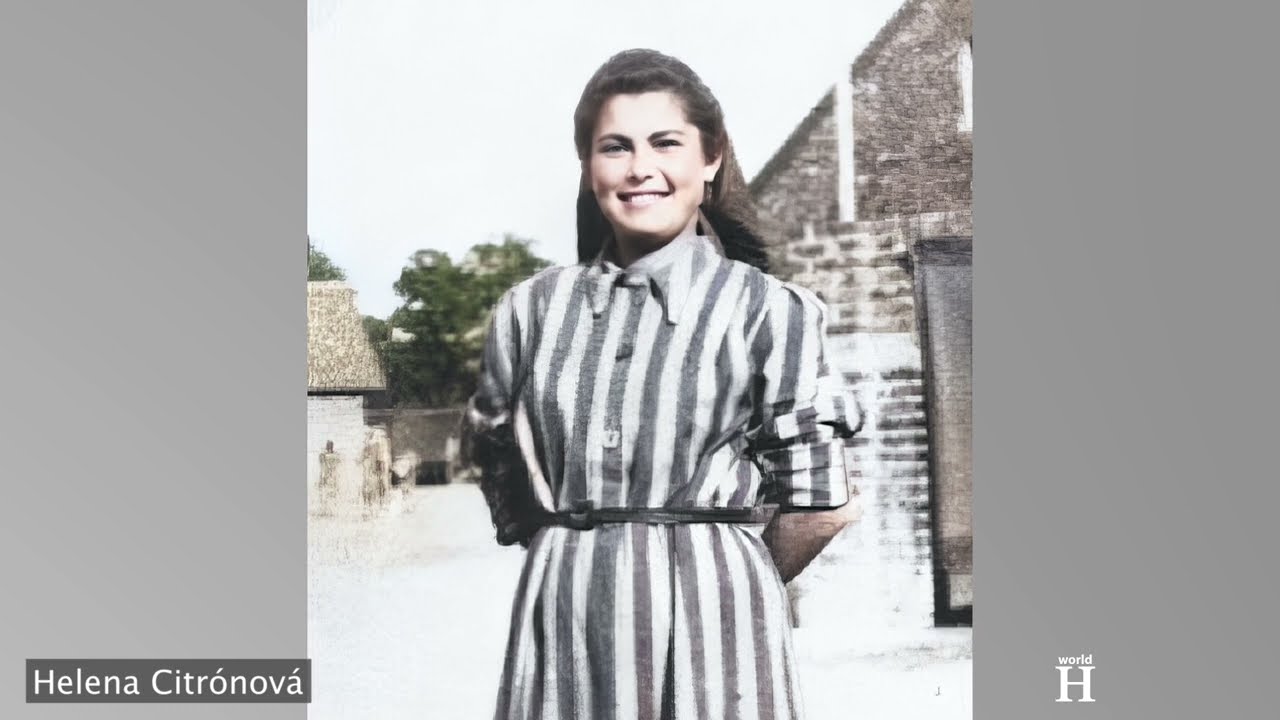
A certain Helena Citronova, a young Jewish female prisoner from Slovakia, volunteered to sing because she hoped it would save her life. Helena was one of the first 1,000 women and girls from Slovakia who arrived at Auschwitz in 1942 during the construction of the extermination camp.
According to a census on December 15, 1940, there were 89,000 Jews in Slovakia at that time. In March 1942, the Slovak State signed an agreement with Germany that permitted the deportation of Slovak Jews.
Between March and October 1942, some 58,000 Slovak Jews were concentrated in independently established labor and concentration camps, mainly in the camps of Novaky and Vyhne. The Slovak authorities then transported the Jews to the border of the Government General or the German Reich and turned them over to the German security police.
One of the main forces behind the deportation of Slovak Jews to Nazi concentration camps in German-occupied Poland was the Slovak prime minister. Virtually all of the deported Slovak Jews were killed in Auschwitz, Majdanek, Sobibor, and other locations in German-occupied Poland. Only 300 of them survived.
Among them were Alfred Wetzler and Rudolf Vrba, who escaped from Auschwitz in the spring of 1944 and compiled the first detailed report on operations there for general dissemination to the West.
Jews who were not deported were granted presidential exceptions as they were crucial for the war economy. During Jozef Tiso's presidency, the Slovak State paid Germany 500 Reichsmarks for every deported Jew for what they called retraining and accommodation. In total, the Slovak State paid Nazi Germany 10 million Reichsmarks for murdering its citizens.
The Slovak Jews sent to Nazi death camps included Helena's parents, who died in the Auschwitz gas chamber, and her brother, who while attempting to escape the camp was killed on the electrified fence, his face and hands pressed up and immobilized against the barbed wire.
On March 21, 1942, at Auschwitz, Helena sang the birthday song for Wunsch with passion, as she believed it might be the last time she would ever get to sing. When Helena was done singing, Wunsch came up to her and asked her: "Please sing the song again."
Helena later recalled that she would look up with tears in her eyes and see a uniform and think: "God, where are the eyes of a murderer? These are the eyes of a human being."
Helena returned to work in the Canada Warehouse, sorting the possessions of murdered Jews. It was so named because Canada was thought to be a country of great riches.
Inmates' possessions were taken from them upon arrival and brought there. The items were sorted and sent back to Germany, although some were stolen by SS guards.
Working at the Canada Warehouse was one of the few sought-after jobs at Auschwitz because the prisoners received food and water, they could grow their hair out, and they were not beaten.
As one of the SS personnel responsible for overseeing the sorting tasks in the Canada warehouses, Wunsch would visit Helena often. He was gentle, kind, and protective. He would bring her extra food and clothing and turned over his food rations to her.
When Helena was infected with typhus, he would hide her and nurse her back to health. He made sure that she was well fed and would even give her the gifts of food that his mother had sent him.
Wunsch would help save the lives of her fellow prisoners, risking his own life with his superiors in the SS. Sometimes he passed her notes saying: "I fell in love with you."
Helena later recalled: "I thought I'd rather be dead than be involved with an SS man." Helena despised the Nazis not only because of what they did to the Jews but also because she lost her parents and brother at Auschwitz.
However, over time Helena started to develop some affection for Wunsch in return. A turning point came when Wunsch was able to help Helena's sister Rozika, a mother of two who was transported to Auschwitz from Slovakia with her nine-year-old daughter and newborn son.
Helena heard about their arrival and ran to the crematorium where she feared that they would be killed. She hysterically told the guards that she wanted to die with them.
But a friend had alerted Wunsch, who rushed to the scene just as Josef Mengele, the notorious SS physician known as the Angel of Death, decided which of the prisoners would live or die.
When Wunsch came to the crematorium, he began to violently beat Helena for the crime of violating curfew. While he was beating her, he secretly whispered: "Tell me quickly what your sister's name is before it's too late."
Helena replied: "You won't be able to. She came with her two little children." He then told her: "That's different. Children can't live here."
Immediately after, he ran to the crematorium to find Helena's sister Rozika. While Wunsch was able to save Rozika by saying that she worked for him in the Canada Warehouse, he could do nothing for her children. They were murdered in the gas chamber.
The romance between Helena and Franz secretly continued, and Helena was once interrogated and tortured about their relationship. However, she refused to confirm its existence. She knew that if she revealed the existence of the relationship, they both would be executed.
She would later say: "There were moments where I forgot that I was a Jew and that he was not a Jew, and honestly, in the end, I loved him. But it could not be realistic."
The precise nature of their romance, which lasted until the final evacuation of Auschwitz in January 1945, has never been made clear. According to some witnesses, it was not sexual.
According to Bat Sheva Dagan, a Holocaust survivor, the couple never had sex. As Dagan later recalled, inmates slept in bunks stacked on top of each other in rows of three and it would have been impossible. Equally out of the question was the chance of Citronova visiting the officer's headquarters without being caught.
After the war, a former Auschwitz female prisoner said of Wunsch: "He didn't do anything bad to us. What he was, he was sadistic towards men. Until he met Helena, he hit and kicked women too, but afterwards it was enough for him to beat only men. He often beat them with a stick that he carried with him."
Helena had a positive influence on him, and she tried to make him behave not so cruelly. On one occasion, Wunsch damaged his hand after an attack on a defenseless man. He then told Helena: "You may bandage my hand for me." To which she replied: "I wouldn't bandage the hand that beats my brothers."
However, after the war, one Holocaust survivor testified that during the Jewish revolt in Auschwitz that occurred on October 7, 1944, Wunsch without mercy shot a 20-year-old Greek Jew.
The relationship ended in January 1945 as the Soviet Army was approaching Auschwitz. During the last conversation, Franz told her: "Take care, Helena. You'll make it. I've loved you so much." Then they kissed long and intimately.
On January 27, 1945, the Soviet Army entered Auschwitz, Birkenau, and Monowitz and liberated about 7,000 prisoners, most of whom were ill and dying. One of the prisoners liberated by the Red Army from the camp was Helena Citronova.
However, for the next 27 years, she and Franz Wunsch did not see each other. After the war, Helena married a Zionist activist, moved with him to Israel, and had two children.
Wunsch searched for Helena for years, but Helena avoided the letters that he wrote her. He then settled in Austria, got married, and started his own family.
In 1972, Franz Wunsch, then 50 years old, was put on trial for war crimes. Helena, then a married woman and a mother of two, came to testify on his behalf after having received a desperately written request from his wife.
She traveled to Vienna despite threats from Jewish rights activists because it was her duty to outline the good things that he had done at Auschwitz. But she also confirmed that she had witnessed him committing crimes against other prisoners.
Helena spoke slowly, without emotion, and she did not even look at Wunsch. However, when it came to her sister Rozika's children, she could not continue. The words caught in her throat.
At that moment, Wunsch started to cry and later repented. He said he had not killed anyone and regretted having beaten the prisoners.
Despite what the judge called overwhelming evidence of guilt in the participation of mass murder, Wunsch was acquitted on all counts. He and Helena never saw each other again.
Helena Citronova was 84 years old when she died on June 4, 2007, in Tel Aviv, Israel. Franz Wunsch died of natural causes on February 23, 2009. He was 86 years old.