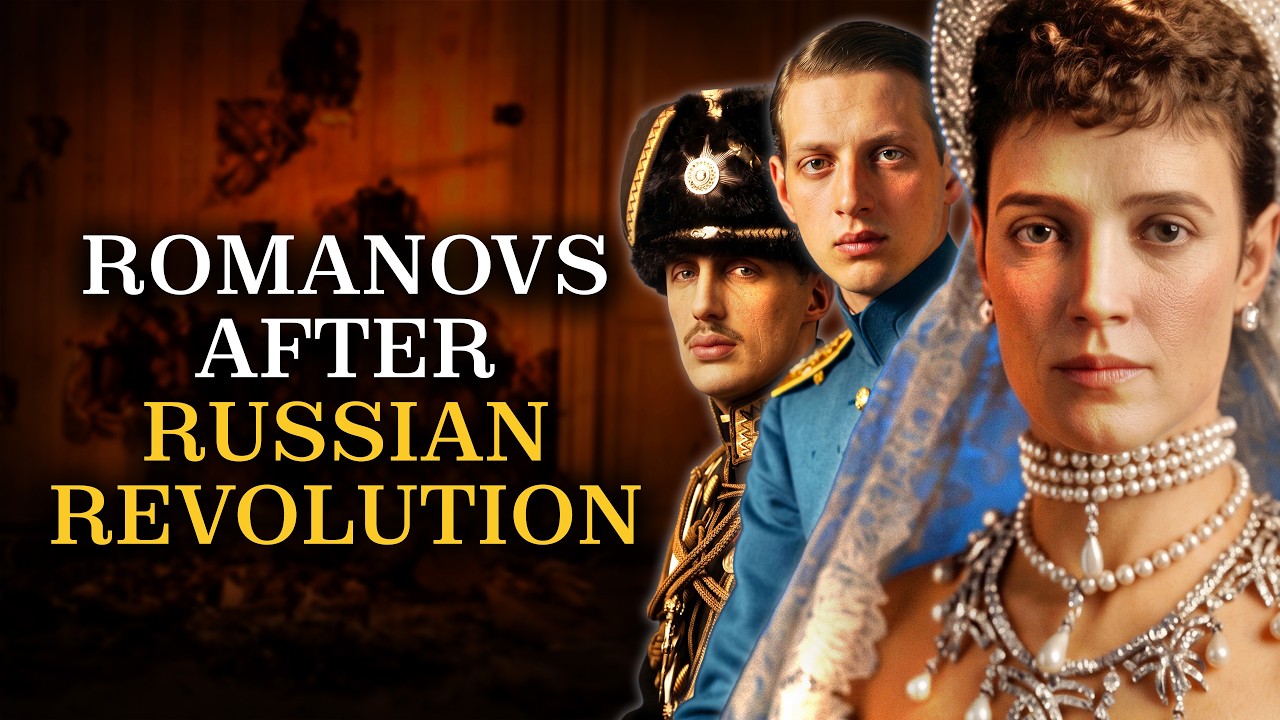
In April 1919, a British dreadnought called HMS Marlborough dropped anchor off the port of Yalta on the Black Sea coast of Crimea. The White Army was collapsing inland, and Bolshevik columns were moving south fast. The ship had been dispatched personally by King George V of England to rescue his aunt before the Reds reached the coastline.
Standing on the dock was a 71-year-old Danish-born woman who had refused for two years to accept that her empire was gone. Her own son and his entire family had been murdered in a basement nine months earlier. She agreed to board the dreadnought only when the smaller refugee boats around it began overflowing with terrified Russian aristocrats begging for passage out. She told the British officers she would not leave unless they took every single one of them, too.
That woman was Dagmar of Denmark, better known to history as Empress Maria Feodorovna of Russia. What follows is the story of the Romanovs who got out alive.
The story of the ones who did not make it has been told and retold, novelized and adapted into a Disney film that haunted a generation of children. But there is another branch of this story that almost nobody talks about. While Tsar Nicholas II and his immediate family were being executed in a damp Siberian basement, a surprising number of his cousins, aunts, brothers-in-law, and assorted hangers-on were sliding out of Russia by various means.
Some left on a British battleship, a few on refugee tugboats out of Novorossiysk. One literally walked into Finland on a train ticket signed by the provisional government. And one was sprung from a Bolshevik prison after Vladimir Lenin personally signed his release papers.
The full arc of this story even includes a family feud over who is the rightful heir to a throne that has not existed since before your great-grandparents were born. That argument is still being had today.
In July 1918, in the basement of the Ipatiev House in Yekaterinburg, the Bolsheviks executed Tsar Nicholas II, his wife Alexandra, their four daughters Olga, Tatiana, Maria, and Anastasia, and their 13-year-old son, the heir Alexei. Seven people. The shooting was botched, and the bayoneting was prolonged. The chemistry of imperial corsets sewn with hidden diamonds turned the bodies of the daughters into a horror show that the executioners would describe in their nightmares for decades afterward.
The next day, July 18, in the Ural mining town of Alapayevsk, six more members of the family were thrown alive down a flooded mine shaft. Among them were Grand Duchess Elizabeth Fyodorovna, the saintly widow of an assassinated Grand Duke and the Empress's own sister, plus Grand Duke Sergei Mikhailovich, three princes named Ioann, Konstantin, and Igor Konstantinovich, and finally Prince Vladimir Paley, a poet of 21 years. Some survived the fall and could be heard singing hymns from the bottom of the pit for hours. The Bolsheviks tossed grenades down after them.
A month earlier, near Perm, the Tsar's younger brother, Grand Duke Michael Alexandrovich, had been led into the woods at night and shot. Michael was the man Nicholas II had actually abdicated in favor of, the same man who had technically reigned as Michael II for a single day in March 1917 before refusing the crown and asking for a Constituent Assembly to decide the future of the monarchy.
Then in January 1919, inside the Peter and Paul Fortress in Petrograd, four more Grand Dukes were lined up against a wall and executed by firing squad. Their names were Paul Alexandrovich, Dmitri Konstantinovich, Nikolai Mikhailovich, and George Mikhailovich. Maxim Gorky, the famous Russian writer, had personally begged Lenin to spare them, and Lenin had verbally agreed in principle before signing the death warrants anyway.
Eighteen Romanovs were killed in seven months. That is the baseline body count you have to carry with you for the rest of this story.
If there is one Romanov who refuses to fit into the tragic Disney princess mold, it is the Dowager Empress Maria Fyodorovna. Mostly because she was not actually a Romanov by blood. She was Danish. Specifically, she was Princess Dagmar, daughter of King Christian IX of Denmark, the man Europe nicknamed the father-in-law of Europe because his children ended up married into nearly every major royal house on the continent.
Dagmar's sister Alexandra became Queen Alexandra of the United Kingdom. Her brother George ended up on the throne of Greece. Dagmar herself, after her original fiance Tsarevich Nicholas Alexandrovich died young of meningitis, was politely passed along to his younger brother Alexander, and went on to become Empress of the second largest empire on earth.
When the revolution arrived in March 1917, Maria Fyodorovna was in Kiev. She traveled south to Crimea, where the imperial family owned a string of palaces along the Black Sea, and where the climate was warm enough that you could pretend for a few hours at a time that Russia was not actually burning. Various nieces, nephews, and grand dukes converged on the same coast, settling at estates called Dulber and Harax.
For nearly two years, the Dowager Empress lived under a kind of soft revolutionary house arrest, with armed sailors guarding the gates and Bolshevik commissars showing up unannounced to inventory her remaining silver. Her son and his entire family were murdered in July 1918, and she refused to believe it.
For the rest of her life, the Empress rejected every report, dismissed every confirmed witness, and forbade any memorial services to be held for Nicholas, Alexandra, or any of her grandchildren. To be a Romanov in exile and to even gently suggest at a dinner party that the Tsar was dead was to invite an icy stare from across the table that could freeze a samovar in mid-pour.
This was not pure denial, or rather, it was, but it was also a survival strategy. Admitting that Nicholas was dead would have meant grieving him. And once the grieving started, the structure of who she still was, the Empress, the matriarch, the only fixed point in the dynasty's collapsing universe, would have collapsed along with everything else.
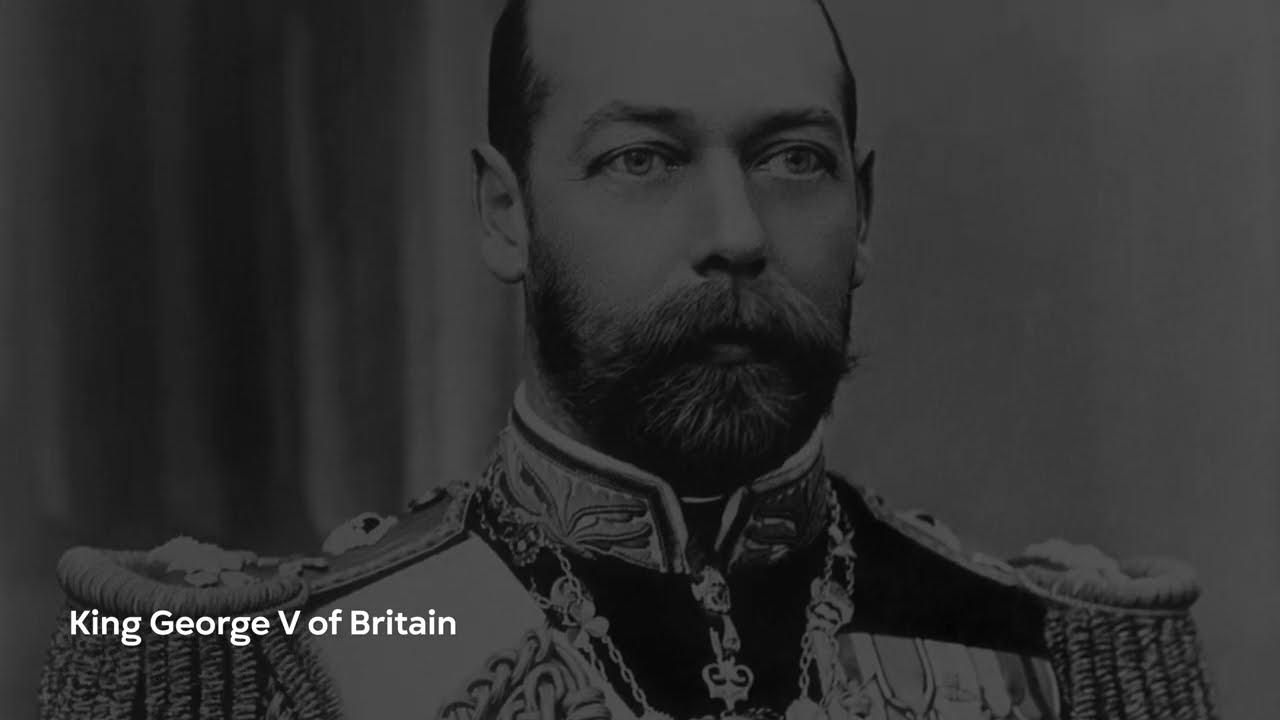
When the White Army crumbled in early 1919 and Bolshevik forces moved south into Crimea, King George V of Britain finally lost patience with his stubborn aunt Minnie. He dispatched the dreadnought HMS Marlborough to evacuate her. She refused to board until every Russian refugee on the Yalta dock had been offered passage. The British complied, and the ship pulled away from the Russian shore in the first week of April 1919, with Maria Fyodorovna standing on the deck watching the coastline shrink. She would never see Russia again as a living woman.
The Marlborough carried her to Malta, then to Britain, where her sister Queen Alexandra met her at Portsmouth. London proved expensive. Her cousin George V was already supporting a growing crowd of Romanov refugees in various grace-and-favor cottages, so she moved on to Denmark, the country of her birth.
Her last residence was Villa Hvidore, a beachside property north of Copenhagen that she had owned with her sister since the early 1900s. She lived there until her death in October 1928. When she died, her body was buried at Roskilde Cathedral with the rest of the Danish royals.
Then, in 2006, her remains were transferred home to St. Petersburg and reinterred next to her husband Alexander III in the Peter and Paul Cathedral. She had asked for that decades earlier in a will written before she lost everything. It only took the fall of the Soviet Union, the collapse of communism, and a delicate diplomatic agreement between Denmark and Russia to honor her wish.
Nicholas II had two younger sisters who survived the revolution, and they could not have lived more different exiles. One left on the same British dreadnought as her mother and settled into a quiet, respectable British life supported by jewelry sales. The other refused to leave with her family, married a cavalry officer her relatives considered beneath her, and ended her life on a small chicken farm in suburban Toronto.
Grand Duchess Xenia Alexandrovna had been the favorite daughter. As a girl, she scandalized her parents by falling for her own first cousin once removed, Grand Duke Alexander Mikhailovich, called Sandro by everyone in the family. Yes, the Romanovs married each other a lot. It is one of the things that contributed, both genetically and socially, to the dynasty becoming the inbred, hemophiliac, paranoid little bubble it had become by the time Lenin showed up at the Finland Station.
Xenia and Sandro married in 1894 and produced seven children together. When the revolution came, the whole family was in Crimea with the Dowager Empress, which is why so many of them ended up boarding the Marlborough together in April 1919.
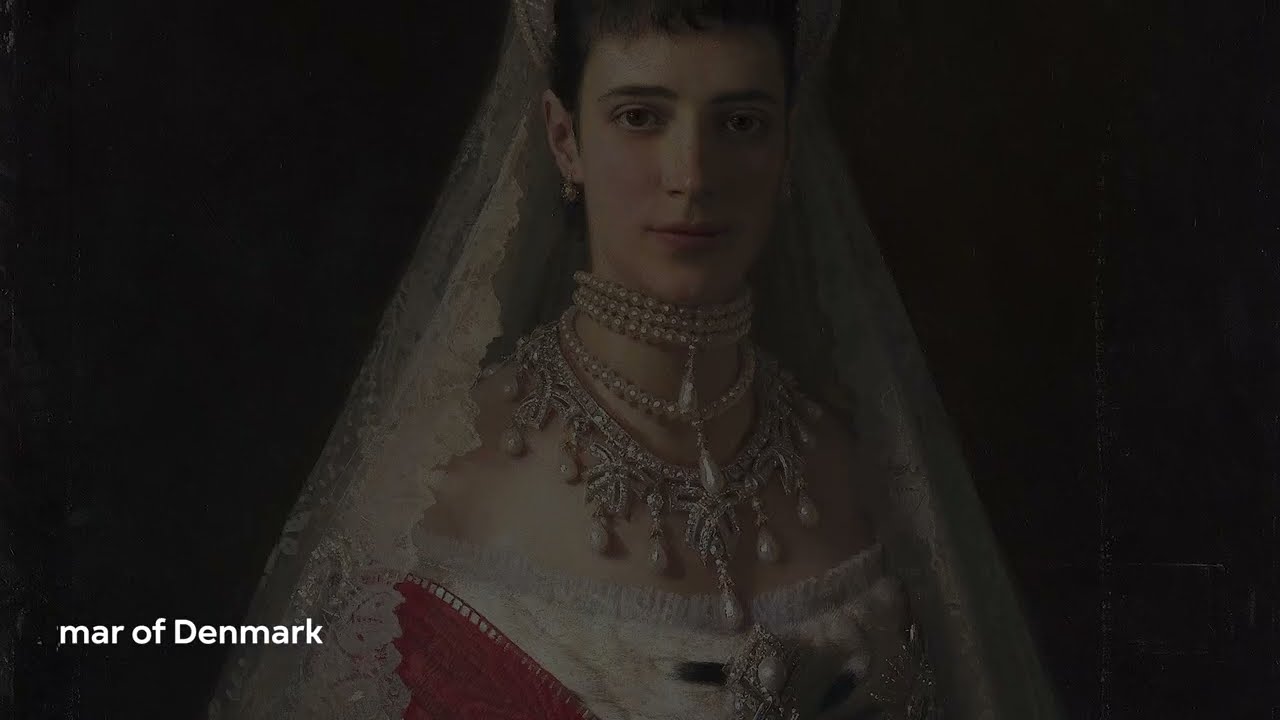
King George V, who was a first cousin to Nicholas II, granted Xenia a grace-and-favor residence at Frogmore Cottage on the Windsor estate. The exact same building that Harry and Meghan would later live in a century after Xenia got there first. Eventually, she moved on to Wilderness House at Hampton Court Palace.
Xenia lived there until her death in April 1960. For four decades, this woman who had grown up in the Anichkov Palace with hundreds of servants paid no rent, lived in a modest grace-and-favor apartment, and slowly liquidated her remaining jewelry collection to cover groceries.
Most of those jewels went to Queen Mary, the wife of George V. Queen Mary was, putting it kindly, a woman who liked nice things and was very, very good at acquiring them at distressed seller prices. Xenia would offer her a tiara. Mary would name a price below market. With no real leverage in the negotiation, Xenia would accept. Several pieces that have appeared over the decades on the late Queen Elizabeth II in news photographs came through this exact pipeline.
Xenia died in London in 1960 and was eventually buried in the south of France next to her husband, having outlived her brother Nicholas by 42 years and outlived the empire he ruled by 43.
Olga Alexandrovna was the youngest of Alexander III's children, and as a girl, she was the one closest to Nicholas. Where Xenia was elegant and dynastic, Olga was tomboyish, artistic, and completely allergic to imperial protocol.
In 1901, she was married off to Duke Peter of Oldenburg in a match arranged for political reasons with no consideration for her actual preferences. The marriage was a disaster. Peter was, depending on which source you trust, either a closeted homosexual or impotent or just deeply uninterested in his wife as a romantic partner. Either way, the marriage was never consummated and the two of them lived as roommates for 15 years.
In 1916, with Russia at war, Olga met a cavalry officer named Nikolai Kulikovsky, fell for him hard, and asked her brother to dissolve the Oldenburg marriage. Nicholas II, who normally bent imperial law for absolutely no one, granted his sister an imperial divorce on the grounds of non-consummation. The Russian Orthodox Church does not actually do annulments the way the Catholics do, so Nicholas overruled the church, dissolved the marriage by direct imperial decree, and let Olga marry her commoner cavalry officer in November 1916. Three months later, the dynasty fell.
Olga refused to board the Marlborough. She had her newborn son Tikhon to consider, and she also had a husband in a Cossack regiment whom she did not want to abandon. Instead, the family moved to the Caucasus. Then in late 1919, they fled toward Novorossiysk on the Black Sea coast just ahead of advancing Red forces.
In February 1920, she boarded a refugee ship as an ordinary passenger with no imperial fanfare and no protocol, and sailed to the Princes' Islands off Constantinople, then to Belgrade, and finally to Denmark, where she eventually rejoined her mother at Hvidore.
After the Dowager Empress died in 1928, Olga purchased a small dairy farm at Ballerup outside Copenhagen and lived there with Kulikovsky and their two sons. Then in 1948, with Soviet pressure mounting on the Danish government to extradite various White Russian exiles, the Kulikovsky family fled again, this time across the Atlantic to a small house in Cooksville, Ontario.
Olga died in Toronto in November 1960, only a few months after her sister Xenia died in London. The two sisters had not seen each other in years by that point, having taken opposite paths through the same revolution. One paid for groceries by selling tiaras to her cousin's wife. The other paid for groceries by selling watercolors to Canadian doctors. Both women died as exiles in the suburbs.
While the Tsar's mother and sisters were settling into reduced circumstances and selling jewelry to keep the lights on, an entirely separate branch of the family was hard at work plotting their own restoration. Specifically, plotting that they themselves should be the ones restored.
These are the Vladimirovichi, descended from Grand Duke Vladimir Alexandrovich, who was the second oldest brother of Tsar Alexander III. The matriarch of this clan was Grand Duchess Maria Pavlovna the Elder, also known to everyone as Miechen.
Miechen was born a princess of Mecklenburg-Schwerin. She converted to Russian Orthodoxy when she married Vladimir, but only reluctantly and only after years of stubborn resistance against her in-laws. She liked being a German Lutheran. The Duchess also liked being the most powerful woman at the imperial court. And once it became clear to her that getting more power required becoming Orthodox, she converted within about a week.
Her lifelong rival was Empress Alexandra. Where Alexandra was shy and mystical and mostly hated parties, Miechen was extroverted, glittering, ambitious, and threw the best dinners in St. Petersburg every season. The two women spent 20 years in a low-grade social war that the entire imperial family watched with the kind of fascination you would normally reserve for two senior partners at a law firm fighting over a corner office.
When the revolution came, Miechen retreated to the Caucasus with her sons Boris and Andrei. She refused to leave Russia until the absolute last possible moment. The Duchess believed, almost up to the day she boarded the boat, that the Whites would somehow win the Civil War, and she would return to Petrograd in triumph at the head of her own restored court. Her boys would inherit, and the Vladimirovichi would rule. None of that was going to happen.
In February 1920, with the Reds advancing on every front, Miechen finally boarded an Italian liner at Novorossiysk. She was the very last Romanov Grand Duchess to leave Russian soil under her own power. She made it as far as Venice, then France, then died in September of that same year. The final bill for her stubbornness was that her sons inherited a succession debate that has not ended in over a century of arguing.
We cannot talk about Miechen without talking about her jewels. Back in 1917, the Duchess had a private safe in her Vladimir Palace in Petrograd. The safe contained one of the most legendary jewel collections in Europe. Tiaras, parures, emeralds the size of plums, and the famous Vladimir Tiara with its drop pearls. When Miechen fled south to the Caucasus, she left the entire collection behind, locked in her city palace in Petrograd as the Bolsheviks were taking over the city around it.
Then we have Albert Stopford. Stopford was a British art dealer and amateur diplomat who happened to be in Petrograd during the revolution. He was a friend of Miechen's, and he was also, by basically every credible account, a genuine spy. In an act of pure cinematic audacity, Stopford disguised himself as a workman, got into the Vladimir Palace, cracked the safe, packed the entire jewel collection into two leather Gladstone bags, and smuggled the bags by hand all the way to London.
The jewels survived. Miechen did not live long enough to see them again, but she did have time before her death to bequeath the collection to her four children. The Vladimir Tiara itself ended up being sold by her daughter Elena to the future Queen Mary, and now sits permanently in the British Crown Jewels. Every single time you see Queen Elizabeth II in old footage with that distinctive pearl drop tiara, you are looking at something an English smuggler stole out of a Bolshevik-occupied Petrograd in a workman's coat.
Miechen's eldest son was Grand Duke Kirill Vladimirovich. Kirill is, depending entirely on whom you ask, either the rightful heir to the Russian throne or a traitor to the dynasty whose name should be erased from imperial history. Even now, more than a hundred years later, this argument has not been settled.
In late February 1917, with the city collapsing into open revolution, Kirill was a senior naval officer commanding the Imperial Guard Equipage. On March 1, he marched his entire unit to the Tauride Palace where the State Duma was meeting and pledged the loyalty of his men to the provisional government.
His critics say it was outright treason. Nicholas II had not actually abdicated yet on the morning of March 1. Kirill had personally taken an oath to the Tsar. Marching armed naval guards to the revolutionary Duma and pledging support for the new regime was, by the strict standards of the time, the textbook definition of betraying your sovereign in writing. Witnesses claimed Kirill wore a red revolutionary ribbon on his uniform that day. And the faction associated with his rival Grand Duke Nikolai Nikolaevich would never let him live this down.
His defenders say it was the only sensible move available to him. The unit was on the verge of mutiny. If Kirill had not led them to the Duma in an orderly formation, they would have gone there as a mob and joined the revolution as ordinary deserters. By presenting them as a disciplined force loyal to legal authority, he prevented his own sailors from joining the actual revolutionaries and arguably preserved a fragment of the imperial system. His biographer, Michael John Sullivan, presents this view at length in over 400 pages. The red ribbon, Sullivan argues, either never happened at all or was forced on him by a hostile crowd.
Both interpretations have been argued seriously by serious historians for over a century. What is clear is that almost every other Romanov in exile believed the worst version, and Kirill spent the rest of his life unable to escape that reputation, no matter where he moved or whom he hired to write his memoirs.
In June 1917, Kirill resigned his naval commission, applied formally to the provisional government for permission to travel, and boarded a regular train. With his pregnant wife, Victoria Melita, and their daughters, he went to Finland, which at that time was still technically part of the Russian Empire. The family settled at Haiko, his wife's family estate.
These were not refugees fleeing through frozen forests at midnight. They left legally by passenger train holding paperwork stamped in advance by the new revolutionary authorities. This is one of those details that makes the Kirill story so strange. The Tsar's family was being shuffled to Tobolsk and then Yekaterinburg under armed house arrest. The Alapayevsk princes were being thrown alive down a mine shaft. And meanwhile, the man who would later declare himself emperor of all the Russias caught a passenger train out of Petrograd holding a valid travel permit and a packed picnic basket.
After the deaths of the Tsar and his brother Michael, Kirill quietly began assembling an argument that he himself was now next in line. The argument rested on the Pauline laws of 1797, which laid out succession by male line primogeniture. Going through the family tree, he was indeed the senior surviving male in the imperial line. By that strict legal reading, he had a real case to make.
The problem was that almost nobody else thought this was the moment to push the case. Most Romanov elders, including the Dowager Empress, refused to even discuss proclaiming a new emperor while Russia was still in chaos and while there was no organized monarchist consensus to support such a move. Grand Duke Nikolai Nikolaevich, the former commander-in-chief, took the position that only a Zemsky Sobor, a national assembly convened on Russian soil, could legitimately restore the throne.
Kirill did not wait for any of that. In 1922, he declared himself guardian of the throne. By 1924, he had upgraded the title to Emperor of all the Russias. He issued imperial decrees from a villa in Coburg. He created an exile court complete with chamberlains and ceremonial uniforms. His own line was officially proclaimed to inherit after him.
The Dowager Empress was furious. She wrote a public letter calling the proclamation premature and divisive, said that her son might still be alive somewhere in Siberia, refused to acknowledge Nicholas's death, and stated flatly that she would not endorse Kirill under any circumstances whatsoever. The Romanov family split into two camps that have not reunited to this day.
In the early 1920s, while living in Coburg, Kirill and his wife Victoria Melita gave financial support to the early Nazi party. They saw the Nazis as a useful weapon against Bolshevism. Adolf Hitler, in turn, saw the Romanovs as legitimacy props for his fledgling movement. Kirill and Victoria Melita backed away from this association by the late 1920s, but the receipts still exist. Kirill died in 1938 in Paris, and his followers proclaimed his son, Vladimir, the new head of the dynasty.
Miechen had two more sons besides Kirill, named Boris and Andrei, and their stories are a lot less politically explosive, but considerably more entertaining.
Grand Duke Boris Vladimirovich was the family wastrel. By the time the revolution arrived, he had already been a decorated cavalry officer, a notorious playboy, and the kind of Grand Duke who routinely showed up to formal dinners already drunk. He fled the Caucasus through the port of Anapa in 1919, made it to Constantinople, and from there to Paris.
Boris had inherited a portion of his mother's emerald collection through Stopford's smuggling operation. He sold the emeralds to Cartier, who reset them and resold them to American heiresses for premium prices, and pocketed a fortune. With the proceeds, the Duke bought a villa in Biarritz, a Paris apartment, several fast cars, and access to the most expensive demimonde in 1920s Europe. Within a decade, he had blown nearly all of it.
In exile, he married his long-time mistress, Zinaida Rashevskaya. The marriage was morganatic, which in dynastic terms means it did not count for succession purposes. Boris did not seem to mind in the slightest. He drank his way through the Roaring Twenties, watched his finances collapse during the 1930s, and died in 1943, still occasionally muttering, mostly to himself, that he should have been emperor.
His brother Andrei is more interesting. Grand Duke Andrei Vladimirovich was the youngest son of Vladimir and Miechen, and his great love was a woman named Mathilde Kschessinska. Mathilde was the prima ballerina of the Mariinsky Theatre. Before that, she had been the official mistress of the future Nicholas II back when he was still Tsarevich and his parents were trying to get him out of his shy phase.
After Nicholas married Alexandra and broke off the affair, Mathilde took up with not one but two Romanov Grand Dukes simultaneously, including Andrei's older cousin, Sergei Mikhailovich. By 1902, Mathilde was specifically Andrei's mistress, although she was still being kept by Sergei as well. She had a son in 1902 whose paternity remained an open question, with Mathilde insisting the boy was Andrei's child and Sergei insisting the boy was his. Andrei legally adopted him after the revolution.
The whole family escaped through the Caucasus in 1919 and ended up in Cap d'Ail on the French Riviera. In 1921, in a small ceremony in Cannes, Andrei married Mathilde at last. Sergei Mikhailovich, the rival lover, had been thrown alive down the Alapayevsk mine shaft three years earlier, which simplified the romantic arithmetic considerably.
Mathilde opened a ballet school in Paris that operated for nearly 40 years and trained the next generation of Russian-French ballerinas. Andrei, having quietly abandoned all dynastic ambition, settled into a sort of supportive husband role and helped run the dance school administration.
Andrei was, very briefly, one of the few Romanovs who supported the claim that Anna Anderson was actually Anastasia. He met Anderson in Berlin in 1925, came away convinced, and gave a public statement of support. He retracted it within a few years after pressure from the rest of the family and after seeing more evidence. Anderson never forgave him.
Of all the Romanovs who escaped the revolution, the one with the most genuinely unhinged biography is Grand Duke Dmitri Pavlovich. The man's life reads like somebody took a Wikipedia random page generator and forced it to only return celebrities of 1920s Paris.
Dmitri was the son of Grand Duke Paul Alexandrovich, the half-brother of Tsar Alexander III. He was first cousin to Nicholas II. After his mother died and his father was banished from court for a scandalous remarriage, Dmitri was raised by his uncle Grand Duke Sergei and his aunt Ella, who was the saintly Elizabeth Fyodorovna, later thrown alive down the Alapayevsk mine shaft. Young Dmitri grew up in the Moscow Palace basically as the adoptive son of two of the most powerful people in the empire.
In December 1916, Dmitri participated in the assassination of Grigori Rasputin, the Siberian peasant mystic who had wormed his way into Empress Alexandra's confidence by appearing to relieve the symptoms of Tsarevich Alexei's hemophilia. The plot was led by Prince Felix Yusupov, but Dmitri was in the room when the killing happened, and his exact role in the murder has been debated for over a century.
Most accounts agree on the basics. Rasputin was poisoned, shot, beaten, then thrown into the Neva. Dmitri's specific contribution was probably driving the body to the river, although some sources say he fired one of the shots himself. The truth is buried under a hundred years of self-serving memoirs.
What we do know is that Nicholas II, upon finding out, wanted to execute everyone involved. The imperial family, in a rare unified action, talked him out of it on the grounds that you do not execute Romanovs for killing peasants. Dmitri was instead exiled, formally banished from the capital, and reassigned to a Russian military unit serving on the Persian front.
And this banishment saved his life. Two months later, the revolution broke out, and Dmitri was thousands of miles away from Petrograd, sitting in Persia with British military assistance close by. He left for London with the help of British officials, then moved to Paris, the way every interesting Russian eventually did.
In Paris in 1921, the Duke met Coco Chanel. The relationship lasted about a year and was, by all serious accounts, a real love affair rather than a transactional one. Dmitri introduced Chanel to Russian style, to Russian embroidery, and to the small world of emigre Russian perfumers operating out of the Paris suburbs. The connection led directly to the creation of Chanel No. 5. The perfumer in question was a man named Ernest Beaux, formerly of the imperial perfume house in Moscow, who had fled Russia and was looking for work. Dmitri introduced him to Coco.
In 1926, Dmitri married an American heiress named Audrey Emery in Biarritz. She was the daughter of a Cincinnati real estate millionaire. The marriage was morganatic, which by this point is the Romanov default in exile, and produced one son named Paul. The couple divorced in 1937.
Dmitri spent his final years living quietly in Switzerland. He died of tuberculosis at Davos in March 1942, while World War II was raging across Europe. He was 50 years old at the time. His grave on the Mainau Peninsula still gets visitors who come specifically because of the Rasputin connection, almost 100 years after the fact.
The man helped kill the most controversial figure of the late Russian Empire, dated the most famous fashion designer of the early 20th century, and helped invent Chanel No. 5 along the way. And he died in a Swiss sanatorium in the middle of the second great European war.
At the same time the Bolsheviks were throwing princes down a mine shaft at Alapayevsk, one prince in that exact same family was being walked out of a Petrograd prison with paperwork signed by Vladimir Lenin himself. His name was Prince Gabriel Konstantinovich.
He was the son of Grand Duke Konstantin Konstantinovich, the famous Russian poet who wrote under the pen name K.R. Gabriel had three brothers, and all three were murdered at Alapayevsk. His uncles, Dmitry and Nikolai, were shot at the Peter and Paul Fortress in January 1919. The family was being systematically destroyed in front of him.
Gabriel himself was imprisoned at Peter and Paul Fortress by the autumn of 1918, suffering from tuberculosis in a damp cell with no real medical care. His wife, a former ballerina named Antonina Nesterovskaya, refused to accept that he was simply going to die there.
Antonina did something almost nobody else in the imperial family thought was even possible. She approached Maxim Gorky, the famous Russian writer who had real personal access to Lenin himself. Gorky was a Bolshevik sympathizer and had publicly supported the revolution. He had also, throughout 1918 and 1919, quietly used his access to save dozens of intellectuals, scientists, and aristocrats from execution behind the scenes.
Antonina made her case to him directly. Her husband was not a political figure, was dying of tuberculosis, and posed no threat to the revolution. Gorky went straight to Lenin and explained Gabriel's medical condition. He then asked for the prince to be released for treatment abroad. Lenin agreed, signed the release order, and that was that.
In November 1918, Gabriel was discharged from Peter and Paul Fortress and allowed to leave Russia for Finland to seek medical care. From Finland, the family eventually traveled to Paris, where they settled into a small apartment.
In Paris, Antonina founded a small fashion house called the House of Berry, which did surprisingly well. She supported Gabriel financially for the rest of his life. He died in Paris in February 1955. He spent his exile writing a memoir titled In the Marble Palace, which is one of the most useful first-hand accounts we have of what daily life actually looked like inside the late Romanov court.
The prince never returned to Russia. He never rejoined the political quarrels of the exile community either. Gabriel had outlived his entire generation of Konstantinovich by surviving a prison most of them did not survive, on a piece of paper signed by the man who had ordered their deaths.
Grand Duke Alexander Mikhailovich, called Sandro by everyone, was the husband of Xenia, brother-in-law to Nicholas II, and one of the very few Romanov men who actually understood the modern world. He was an aviation pioneer, helped found the Russian Imperial Air Force, and read economics for fun on weekends.
Sandro left Crimea in December 1918 aboard a different British ship called HMS Foresight, four whole months before Xenia and the Dowager Empress boarded the Marlborough. He was in a real hurry. The Duke was traveling to Paris specifically to attend the Paris Peace Conference and lobby on behalf of Russian White interests at Versailles, on the assumption that the allies still cared about Russia after winning the war.
The mission failed badly. The allies who had spent four years promising Russian monarchists their unconditional support against Bolshevism completely abandoned them once the war ended. Sandro met with Lloyd George, with Clemenceau, with Wilson, and with anyone else who would give him a meeting. He was politely received and politely ignored every single time. Russia was no longer a useful war ally. It was now a chaotic civil war zone with no clear winner the West actually wanted to back.
Sandro left Paris in early 1919, a defeated man. He spent the rest of his life writing memoirs, the most famous of which was titled Once a Grand Duke and became a genuine best seller in the United States in 1932. He earned money on the lecture circuit, traveling around American Lions clubs explaining what it had been like to be born into the largest empire on earth and to die as a divorced exile in a small French apartment. He died in February 1933, separated from Xenia, who outlived him by 27 years and never remarried.
So who, if anyone, is the rightful heir today? Nobody is. That is the only honest answer. The family is still arguing about it.
The Kirillovich line, descended from Grand Duke Kirill Vladimirovich and his son Vladimir, is now headed by Grand Duchess Maria Vladimirovna, who is Vladimir's daughter. She lives in Madrid. Her son George attends ceremonial events in Russia and is sometimes received by Russian Orthodox bishops as a future Tsar in waiting. Maria insists she is the legitimate head of the Russian Imperial House and refers to herself in formal correspondence as Empress de jure.
The Romanov Family Association, which was founded by descendants of the Mikhailovichi and Konstantinovichi cadet branches, regards Maria's claim as essentially nonsense. They point out that her father Vladimir married a Bagration princess in 1948, and they argue that the Bagration family, despite being Georgian royalty of ancient lineage, is not technically equal in dynastic status to the Russian Imperial House under the strict reading of the Pauline laws. By that logic, Vladimir's marriage was morganatic and Maria has no actual dynastic claim. The association also notes that almost every other Romanov line ended up making morganatic marriages anyway, so the entire dynastic question is somewhere between purely ceremonial and completely defunct.
Maria's supporters reply that the Bagrations were sovereign princes of Georgia from the medieval period, that the marriage was equal in every meaningful sense, that her line is the only one with an unbroken male claim, and that if you accept the Pauline laws at all, you have to accept her. The argument has been ongoing since the early 1990s and shows no signs of resolution.
The Russian Federation, despite occasional flirtations with monarchical symbolism on state holidays, has shown zero practical interest in restoring the throne. The Russian Orthodox Church has taken no formal position on the succession question. There is no Russian state mechanism currently in place to adjudicate the question, even if anyone wanted one. The dispute exists entirely as an intra-family quarrel sustained by elderly relatives, by history buffs, and by the small ecosystem of imperial revival enthusiasts who attend Romanov family reunions and post on internet forums.
In 1981, the Russian Orthodox Church Outside Russia canonized Nicholas II, his wife, his five children, and the loyal servants who died with them in Yekaterinburg as holy martyrs. Then in 2000, the Moscow Patriarchate, which is the official church inside Russia, finally followed suit, but with one notable difference.
The Patriarchate canonized only Nicholas, Alexandra, and the children. They classified the imperial family not as martyrs, but as passion bearers, which is a lesser category in Orthodox theology reserved for those who faced death with Christ-like resignation. The servants were excluded entirely, partly because Dr. Botkin's classification was contested, partly because two of the others were not Russian Orthodox at all. The footman Alexei Trupp was Catholic. The maid Catherine Schneider was Lutheran. Moscow decided that canonizing non-Orthodox believers was a step too far for the official church. So even the religious recognition of the murdered family is fractured between two churches operating under two different theological standards.
None of the survivors actually got away. They escaped the basement, the mine shaft, the firing squad, and the prison cell. But none of them escaped the loss itself.
Every single one of them spent the rest of their lives as exiles in cottages they did not own, on pensions paid by various distant relatives, in countries that did not speak their language, attending the funerals of people who had once attended their imperial coronations. They sold tiaras to pay grocery bills. The grand dukes wrote memoirs to pay rent. Their descendants dictated their version of events to ghost writers who got the spelling wrong. Year after year, they watched the empire that had defined them fade into an academic subject taught by historians who had never met any of them personally.
The Yekaterinburg massacre is the part of this story that everyone knows. The longer story, the one that lasted 70 years and crossed three continents, is what happened to the family that survived it. They survived, but none of them recovered. They aged into a slow, dignified, drawn-out fade that lasted into the era of color television and Sony Walkmans.
In the cemetery at Sainte-Genevieve-des-Bois, south of Paris, you can still walk past their graves today. The headstones are simple, in the Russian Orthodox style, often Cyrillic, often half erased by weather and time. There are no imperial crests carved into the stone. No honor guards stand watch. Just gravestones in a graveyard in a country that was never theirs, marking the resting places of people who had once owned thousands of square miles of land they would never see again. That, more than the bullets and the bayonets and the mine shafts, is what the actual end of the Russian empire looked like.