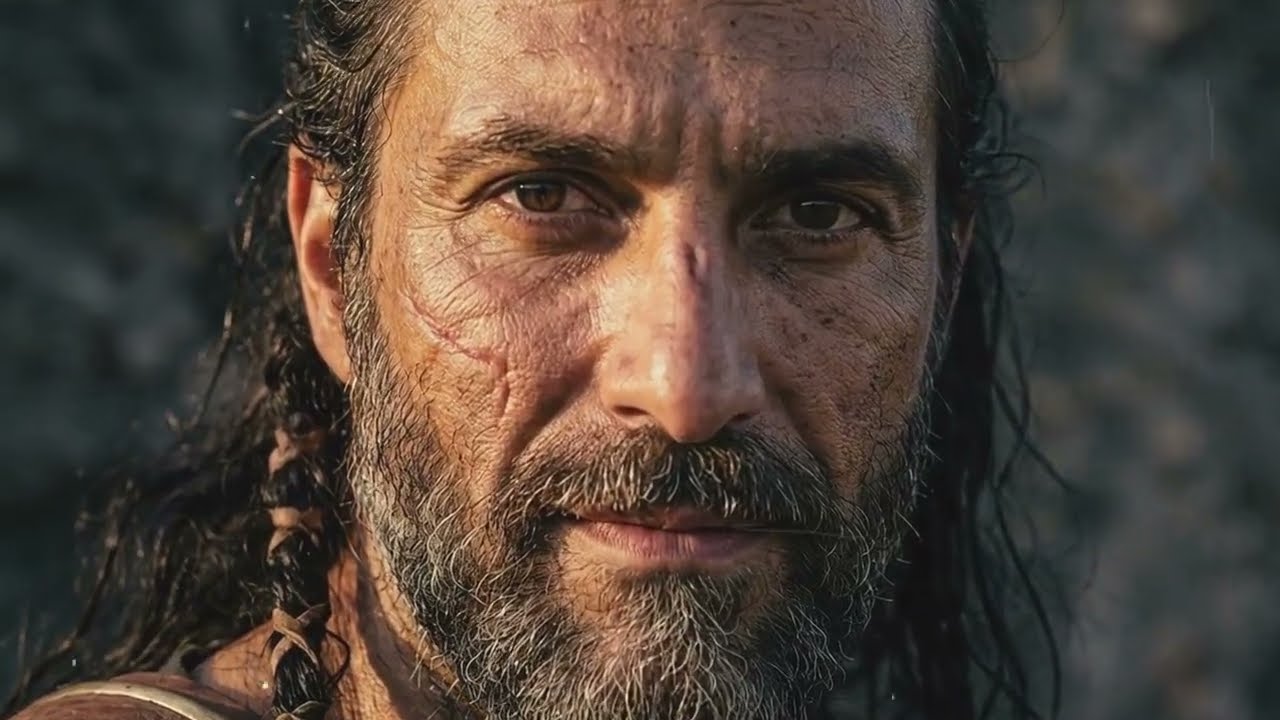
At dawn on the third day at the Hot Gates, a Spartan soldier combs his hair. He could be thirty or fifty; from a distance, it is impossible to tell. His bronze helmet rests in the dust beside him, and his hands move slowly through his long black hair, oiled and braided, as though he were preparing for a wedding rather than a massacre.
Around him, 300 others do the same. They stretch. They tie their sandals. They check the edges of their short swords. Somewhere down the pass, behind a rebuilt stone wall, the largest army the world had ever seen is forming to kill them. Within hours, every man combing his hair on this small Greek hill will be dead.
Behind one Persian king, an empire stretching from the Indus River to the Aegean Sea is about to throw itself once more into a strip of dust roughly twenty meters wide. By the time the sun reaches its highest point, the Greeks will fight with broken spears, then with swords, then, according to those who recorded it all, with their hands and teeth.
The Spartan king leading them marched his men nearly 400 kilometers in the heat of late summer to die at this exact spot. To put that in human terms, it is the distance from New York City to Pittsburgh on foot, wearing armor, and knowing the end of the road is the grave.
But here is what the legend does not fully explain. Sparta, the most militarized society in the Greek world, a city whose entire existence was organized around producing soldiers, sent only 300 men to defend all of Greece. Three hundred out of an army of thousands. Why?
The traditional answer is that they were an elite force. The real answer is darker, stranger, and tied to a religious festival that almost no one mentions when telling this story.
And there is a second mystery that Persian records quietly refused to acknowledge for thousands of years. The man who destroyed Leonidas at Thermopylae was not Xerxes. He was not a Persian general. He was a Greek. And what Greece did to avenge Leonidas, what they did to the empire that desecrated his body, is a story Persia spent millennia trying to bury.
Now go back to the summer of 480 BC, to a narrow pass on the Greek coast, and to a king who already knew he would not return home.
The man combing his hair has a name we do not know. The man who orders him to die, we do. Leonidas was about sixty years old. That is the first fact the legend gets wrong. The hero of Thermopylae is not a young warrior king in his prime. He is an older man with a wife named Gorgo, a young son named Pleistarchus, and a crown he never expected to wear.
Leonidas became king of Sparta only because his older half-brother Cleomenes died without a male heir. He died, in fact, under circumstances Sparta itself preferred not to discuss. Leonidas inherited the throne by accident, and he now walks toward his grave on purpose.
In late summer 480 BC, he led 300 Spartans out of Sparta. He was not leading an army. Sparta could have mustered thousands. He was leading what the Spartans called a royal bodyguard. Here lies the answer to the first mystery.
The Spartan religious calendar forbade military campaigns during the Carneia festival. The full army could not march, but the king's personal retinue could. It was a legal loophole. So Leonidas chose 300 men with one specific qualification beyond their fighting skill. Each one had a living son. He was choosing men whose family lines would continue after their deaths. He was choosing a force designed to be annihilated.
On the other side came something Greece had never seen. Xerxes I, son of Darius, was thirty-eight years old. He had spent four years preparing for this invasion, not for conquest, but for revenge. His father had lost at Marathon a decade earlier. Xerxes intended to erase that humiliation.
But the men he led were not one people. They were Persians, Medes, Scythians, Phoenicians, Egyptians, Indians, Lydians, and Bactrians. Many were conscripts forced to travel hundreds of miles from their villages in Central Asia, marched through mountains, hungry and afraid, fighting not for an idea but because the king's officers stood behind them with whips. They had wives too. They had sons. Most would die in a country whose name they could not even pronounce.
Years earlier, when a Persian noble named Hydarnes told a group of Greek envoys that they would be happier as subjects of the Great King, the envoys answered with a single sentence. You have never tasted freedom. You do not know how sweet it is. That exchange captures the war in its essence. Two ways of seeing the world walking toward each other through a pass barely wide enough for a cart.
Leonidas did not arrive alone. By the time the Spartan column reached Thermopylae in early August, other Greek units had begun to gather. From the south came more Peloponnesians. From central Greece came the Thespians, the Phocians, and the Locrians. From Boeotia came the Thebans, and we will return to them because nothing about the Thebans is simple.
The total Greek force assembled at Thermopylae was about 7,000 hoplites, not 300. Seven thousand. The 300 are only part of a larger story. A real part, but still only a part.
These 7,000 men came from twelve different cities, speaking the same language in varying dialects, worshipping the same gods with different rites, and most knew that some cities in the north had already surrendered to the Persians. They were not a unified nation. They were an alliance of differing opinions bound by one belief that the alternative was worse.
Among the 7,000, three contingents would matter most. The 300 Spartans you already know. With them, uncounted in the famous numbers, served helots who would fight as light infantry and die without their names recorded anywhere.
Then there were the 700 Thespians led by a commander named Demophilus. Thespiae was a small Boeotian city. It was not a warrior society. Its citizens were farmers and craftsmen who would leave behind half-harvested fields. They came because they believed Persian rule meant the end of everything they had built. Demophilus brought the equivalent of his city's entire fighting male population. There was no reserve. There was no second force at home. If the 700 died, Thespiae would not produce another generation of soldiers for a hundred years.
There were also 400 Thebans. Their presence was awkward. Thebes was suspected, rightly, of leaning toward Persia. Herodotus claims these 400 came as hostages sent under pressure to prove Theban loyalty. Whether that was fair or bias against Thebes, no Greek watching them line up that morning was entirely sure they would fight.
But here is what should astonish you. While Persian scouts watched from a hill above the pass, they saw the Spartans doing something inexplicable. The men were bare-chested. They were exercising. They were combing their hair.
Xerxes himself, when told, did not believe it. He summoned a Greek exile in his court and demanded an explanation. The exile told him: when Spartans tend their hair, it means they are preparing to die. That was the moment Xerxes realized he was not facing an ordinary enemy.
The pass itself is the second character in this story. Thermopylae means the Hot Gates, named for the sulfur springs that bubble from the rocks and give the whole area a faint smell like struck matches. In 480 BC, the sea came much closer to the cliffs than it does today. The road from Thessaly to central Greece narrowed into a pass no more than fifteen to twenty meters wide at its tightest points. A few hundred meters were the battlefield between mountain and water.
Leonidas found an old, half-collapsed stone wall built by the Phocians generations before. He ordered his men to rebuild it. They worked under the sun's heat, stacking stones, aware they were building the front edge of their own graves.
But there was a weakness in the position: a mountain path. A goat trail called Anopaea wound eight to ten kilometers through wooded high ground to emerge behind the pass. Leonidas knew it existed. He sent a thousand Phocians to guard it. He believed that was enough. It would not be enough.
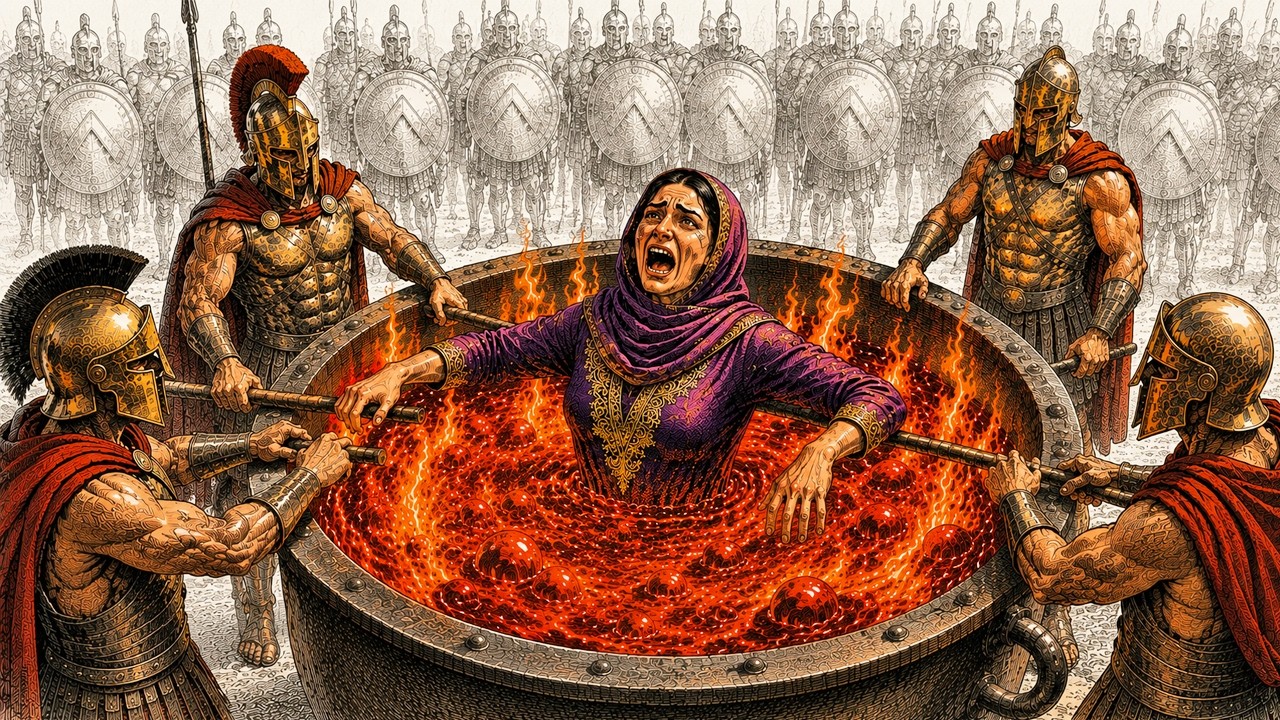
Before the first arrow flew, Xerxes sent an envoy. The man approached the Greek position alone, as envoys did in the ancient world under the protection of traditions older than Persia itself. He carried a message and a choice. The Great King says: lay down your weapons and you will live, and you will even receive rewards and become governors of Greek lands. They were offered gold. They were offered honor. All they had to do was surrender their spears.
The Greek officers watched. The Thespians watched. The Thebans, especially the Thebans, watched. Whatever Leonidas said next would spread through the ranks within minutes. It would spread to Thebes, to Athens, to Sparta. It would define the meaning of the next three days.
Leonidas, sixty years old, an old king who took the throne after his brother's death, looked at the envoy and answered with two words. Molon labe. Come and take them. Whether he spoke those exact syllables has been debated by historians for 2,500 years. Herodotus did not record it. The phrase was preserved by Plutarch, who wrote centuries later. But the emotional truth of that moment is beyond doubt.
A Spartan king was given the chance to save his life and the lives of his men by giving up two pieces of bronze and wood, and he refused. Not with a speech, not with a prayer. With two words carrying everything Sparta had taught its sons about the value of life, the envoy walked back.
The wall was finished. The 7,000 took their positions, and the greatest army in the world began to move.
For four days, nothing happened. Then on the fifth day, Xerxes ran out of patience. Four days. That is how long Xerxes waited. Four days while his army stretched along the road from Thessaly, an unbroken column of men, horses, cattle, and supply wagons reaching to the horizon. Four days in which Xerxes' scouts crept forward to observe the Greeks and returned with a strange story about hair-combing. Four days in which he was confident, entirely confident, that this ridiculous little force of 7,000 would lose its nerve and withdraw in the night.
They did not withdraw.
On the morning of the fifth day, Xerxes sat on a throne carried by his servants, placed on a slope where he could see the entire pass, and gave his order: send in the Medes. Behind the advancing Medes, Persian officers carried whips. Herodotus is very precise about this. Whips. Men were being driven into the killing zone because their commanders did not trust them to advance willingly.
Stop and picture that. The largest army on earth. The legions of the King of Kings. And the men in the front ranks had to be lashed forward like cattle.
This is what it looked like from the Greek side of the wall. The Medes crashed into the Greek line at a run. They were good soldiers, disciplined, well-armed, veterans of campaigns from Egypt to Bactria. They also wore wicker shields against bronze, and scale armor against eight-foot iron spearheads, and they were attacking uphill into a pass barely wide enough for twelve of them to fight side by side.
The phalanx held. The phalanx did more than hold. It absorbed the assault, locked shields, and pushed back. The front rank stabbed down with long dory spears. The second rank stabbed over their shoulders. And when a Greek fell, the man behind him stepped forward and the line closed without breaking.
The Medes fell in heaps. Their bodies piled up in front of the wall until men in the rear were climbing over their own dead to reach the Spartans. This went on for hours, wave after wave.
Xerxes watched from his slope. According to Herodotus, the king leaped from his throne three times in shock, in rage, and in disbelief that this small, ridiculous Greek force was slaughtering his elite troops while apparently losing almost no one.
So Xerxes sent in the Immortals. This was his answer to everything. Ten thousand hand-picked soldiers. The standing professional core of the Achaemenid army, called Immortals because their number was always maintained at exactly 10,000. Every casualty was replaced immediately so the unit's nominal strength never shrank.
They advanced late in the day in good order, expecting to do what the Medes could not, and hit the same wall of bronze. Worse, Leonidas began using a trick. The Spartans would suddenly turn and flee as if their nerve had broken. The Persians would surge after them, their ranks breaking apart in the pursuit, and then the Spartans would wheel in perfect unison and reform the phalanx, harvesting the lives of the men who had been chasing them moments before.
The trick worked. It worked again and again. The Immortals shattered against the defensive line as the Medes had, and by the evening of the first day, the pass was carpeted with Persian dead while the Greek numbers had barely diminished.
Xerxes spent that night in his tent. We do not know what he said. But we know what he did. He sent his men to attack again the next morning. The same plan, the same result.
On that second day, a local Greek from the town of Trachis ran toward a group of Spartans carrying what he thought was terrifying news. He told them the Persian archers were so numerous that when they shot their arrows, the sky went dark. The sun would be completely blocked. One Spartan, a man named Dienekes, looked at him without expression and replied: Good. Then we will fight in the shade.
That line outlived empires. It outlived the Persian language as it existed in 480 BC, and it outlived nearly every name and place mentioned in this story. And it was said casually by a man who would be dead within forty-eight hours.
By the evening of the second day, Xerxes was facing disaster. His elite forces had failed. His morale was crumbling. And the pass had not moved a single meter.
Then a Greek entered his camp. His name was Ephialtes. He was a local from Malis, a farmer by most accounts, who knew the mountains of Thermopylae the way only a son of that land could. He went to Xerxes, hoping for a great reward from the king. That is what Herodotus tells us. And he told the Persian command something they did not know.
There was a path, a narrow mountain trail called Anopaea, winding through the wooded high ground above the pass, running eight to ten kilometers over rough terrain. This trail led to the rear of the Greek position. If a force could move along it in the dark, it would appear at dawn behind the Greeks, and the defense would collapse entirely.
Xerxes did not hesitate. He turned to Hydarnes, the noble commanding the Immortals, and gave his order: take your men. Follow this path and be in position by dawn.
The name Ephialtes became a common noun in the Greek language. It came to mean nightmare. And for 2,500 years, no Greek father named his child Ephialtes. The man who destroyed Leonidas was not Persian. He was not even a soldier. He was a neighbor.
That night, while the Greeks slept behind their wall and Xerxes paced in his tent, Hydarnes led his picked force into the mountains. The path was narrow and overgrown. Branches snagged on shields. The men moved in single file with Ephialtes guiding them. The wind through oak leaves made hearing difficult, which was both a curse and a blessing. They could not be heard, but they could not hear what might be waiting for them.
What was waiting for them was the thousand Phocians Leonidas had placed there. The Phocians woke to the sound of footsteps. They rushed to form up and made a decision that proved catastrophic. They retreated to high ground, thinking the Persians had come specifically for them and that the heights would give them a defensive advantage.
The Persians were not coming for them. The Persians barely stopped. Hydarnes loosed one volley of arrows at the slope to keep the Phocians' heads down, then continued along the path. Within an hour they were gone, descending toward the rear of the main Greek position.
The Phocians, frightened and confused, sent no runner. No one warned Leonidas. By the time the king learned what had happened, dawn was near.
By sunrise on the third day, Leonidas understood the battle was already lost. The only question left was how he would lose it.
A runner reached the wall before dawn. The Phocians had broken. The Persian elite infantry, thousands of them, were coming down from behind the mountain. Within two or three hours, they would be in position to attack the Greek rear.
Leonidas called a council of the allied commanders. What was said in that council was not preserved word for word. What was decided was that most of the 7,000 would leave immediately. They now had to withdraw south while the road was still open and carry the warning to Athens, to the Peloponnese, and to every Greek city that had not yet joined. The war was bigger than this pass. An army that survived to fight tomorrow mattered more than an army that died today.
But Leonidas himself, with his 300, would stay. He had no other choice. Spartan law forbade retreat. Leaving the field alive meant losing their citizenship, their honor, and their name. He had marched here knowing that. He had chosen men with living sons. He knew this, but he did not order anyone to stay and die with him.
Most units accepted the dismissal. The Locrians left. The Phocians on the mountain were already gone. The Arcadians, Corinthians, and other Peloponnesians marched south, many of them weeping, and not one of them looked back.
Within an hour, the Greek force had shrunk to a fraction of what it had been the night before. Two contingents refused to leave. The 400 Thebans stayed, though Herodotus is unsure whether that was their choice or because Leonidas held them as hostages to guarantee their city's loyalty. And the 700 Thespians stayed, led by Demophilus. They were not Spartans. They were not professional soldiers. They were farmers from a city of perhaps 3,000 citizens. And they made the decision that the 700 would die rather than abandon Leonidas. No surviving record explains why. There is no speech. There is only the fact of what they did.
Leonidas made one final tactical decision. He moved his men out from behind the rebuilt wall to more open ground. The logic was cold and clear. Behind the wall, the killing zone was narrow, and the Greeks could only kill so many at a time. In the open, they could attack instead of defend, and they could kill more Persians before being wiped out. The goal was no longer to hold the pass. The goal was to make the Persians pay the highest possible price to take it.
The Spartans formed the front, the Thespians on one flank, the Thebans in the rear, and Leonidas led them into the dust.
This is the moment in every account where myth takes over. The truth is harsher and more impressive than the myth.
The Persians came at them from the front in a great mass. It was no longer chaos, no longer just the Immortals, but everything Xerxes could push forward. The Greeks fought with the long dory spear until the spears began to splinter against shields and helmets. Then they drew the xiphos, the short iron sword, and fought at close quarters.
The pass filled with screams. Persian officers, still using whips, drove their men into the killing zone. The Greek hoplites moved as one organism, the phalanx contracting and expanding and killing with regularity.
Look at one Spartan's hands. The leather grip of his shield is dark with sweat. His knuckles are broken where a Persian sword passed by the bronze. His spear broke twenty minutes ago, and the splintered butt is still in his left fist because he has not found one second to drop it. He breathes through his mouth because dust has coated his nose and throat. He does not know that his king has just been killed. Forty meters to his right. He will know in about thirty seconds. He will fight for seven more minutes after that.
Leonidas died sometime during the first hour of fighting on the open ground. Herodotus is brief about it. He fell, certainly, to Persian arrows fired from beyond spear range.
The Spartans saw their king fall, and what they did next is among the most extraordinary things in the historical record. They went to recover the body. They charged through the Persian lines, 300 men against thousands, and fought their way to where their king lay. They lifted him from the ground. They carried him and fought their way back.
Herodotus says the struggle over Leonidas' body was one of the most savage moments of the battle. Four separate Persian attacks, repelled four times, before the Spartans recovered their king. They dragged him back toward the wall, leaving a trail of dead behind them.
Then Hydarnes arrived. The Persian flanking force appeared from behind the mountain at the Greek rear, and the trap closed. From the front, Xerxes' main army surged forward. From the rear, the Immortals came down the slopes. The Greeks were now in a shrinking pocket between two enemies, in thick dust that made breathing painful.
And with their king's body at the center of their formation, Xerxes watched them from his slope across the field. Herodotus tells us he leaped from his throne again, not in rage this time, but in something closer to astonishment. After three days, and after the deaths of thousands of his elite troops, the small Greek force was still fighting, still organized, still killing.
The Great King of Kings, ruler of an empire spanning three continents, sat back down on his carried chair on a Greek hill, watching a handful of men refuse to die on his schedule.
The Spartans and Thespians fell back together. Demophilus' 700 fought alongside the king's 300 with no clear distinction. A Boeotian farmer beside a Spartan citizen, dying in the same minute and the same dust. They retreated step by step toward a small hill near the rebuilt wall, a hill now called Kolonos.
The Thebans at some point in this fight made their own decision. They threw down their shields. They raised their hands. They surrendered. Herodotus says the Persians took them prisoner and branded them as slaves. Whether that is accurate or simply propaganda against the Thebans, it is one of the unresolved questions about the battle. But of the 400 Thebans who marched to Thermopylae, 350 likely surrendered alive.
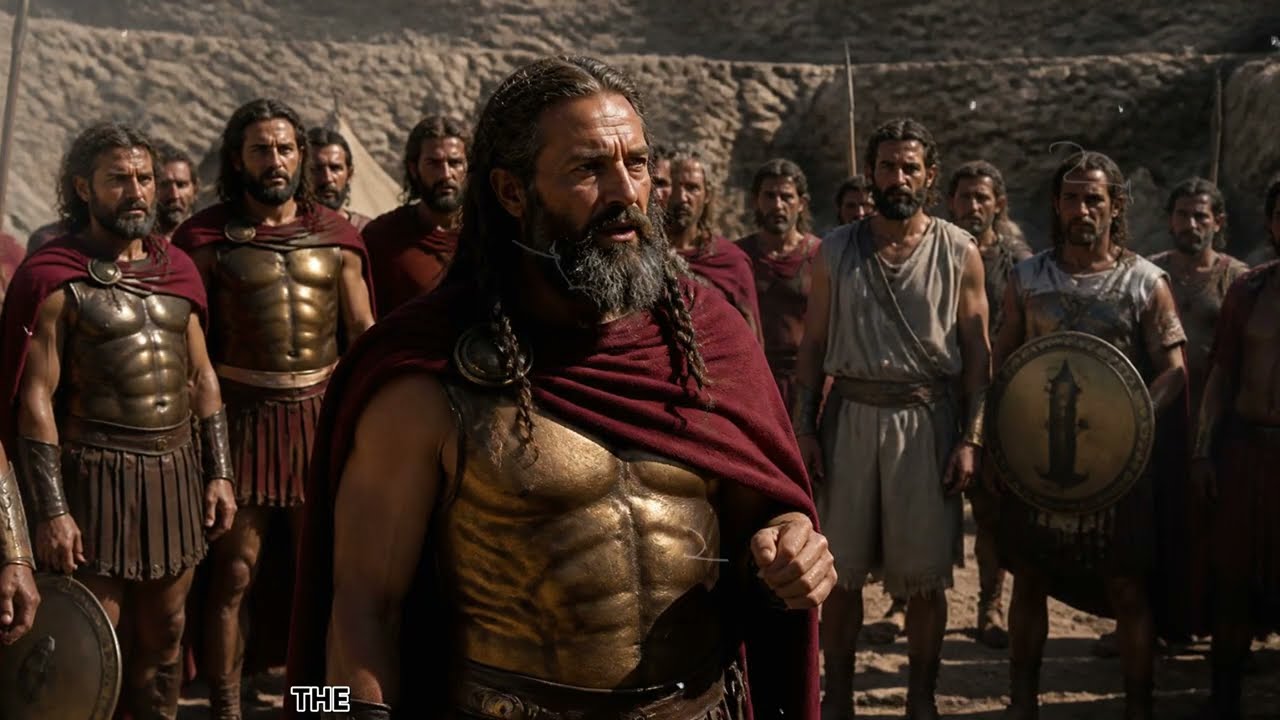
The Spartans and Thespians did not surrender. They reached the hill of Kolonos. They formed a circle around Leonidas' body. Their swords were broken. Their shields were battered. Perhaps only a few hundred remained, exhausted beyond human endurance, and completely surrounded.
Xerxes did not order an infantry attack. He had learned his lesson. He had learned over three days what these men could do. When bronze met bronze, he gave a different order. The archers were called, thousands of them ringing the small hill from every side, and they began to shoot.
This is the moment Herodotus describes in language unlike anything before it. The Greeks defended the hill of Kolonos, their weapons broken or lost, with their swords if they had them, then with their hands and teeth. They did not retreat. They did not lay down their arms. They stood under the Persian arrow storm. And they died standing in a tight ring around their king's body, killing anyone who came close until they had nothing left to fight with.
When the last man fell, there was a moment of silence, and it did not last long. But there was a moment on that hot August morning in 480 BC when the largest army in the world stood looking at a hill covered in bodies and did not know what to say.
The arrows stopped, the screaming stopped, the sound of advancing feet stopped, and for perhaps thirty seconds, the only sound at Thermopylae was the wind coming off the Aegean through the pass the Persians had finally taken, and the faint hiss of the sulfur springs that gave the place its name.
Dienekes died somewhere on that hill, fighting as he promised, in the shade. Demophilus died surrounded by his men from Thespiae, after his city lost everything: its harvest, its soldiers, its future. And Leonidas, sixty years old, the old king who marched 400 kilometers to die at this exact place, lay at the center of a pile of bronze and iron and broken bone.
The Persians took the hill. They walked among the bodies. They stripped the dead. Then Xerxes himself came, the Great King, the King of Kings, ruler of an empire stretching from India to the Aegean, to look at the body of Leonidas.
What he did next was the moment the course of the war changed. He ordered the Spartan king's body mutilated. He ordered the head cut off and placed on a pole. He ordered the remains crucified on a wooden frame at the edge of the pass.
The Persians did not do this. The Persians did not desecrate the bodies of enemy kings. It was, in Achaemenid culture, strictly forbidden, a violation of both religious law and military custom. The fact that Xerxes ordered it tells us something the Persian inscriptions never recorded. He was not triumphant. He was burning with rage. The three days at the Hot Gates had broken something inside him, and he expressed it by desecrating a corpse in a way that must have made his own priests shudder.
And it turned out to be the worst political decision of his life. Because the story of Thermopylae does not end at Thermopylae. It ends at Salamis, and then at Plataea. And in the answer Greece gave to what Xerxes did to the body of Leonidas.
When the dust settled at Thermopylae, the tally was this. Around 1,000 Greeks dead on the battlefield. The 300 Spartans, the 700 Thespians, an unknown number of helots, and the Thebans who fought before their comrades surrendered. The pass and the hill were covered with their bodies. Most of the original 7,000 defenders survived because Leonidas had dismissed them in time. Those survivors were already on the road south, carrying the story.
Persian casualties are difficult to count. Herodotus claims 20,000, a figure that is certainly exaggerated. Modern historians estimate between 2,000 and 10,000 Persian dead over the three days, a staggering ratio given the size of the attacking force, and a number that included a notable proportion of noble officers. Xerxes had spent the elite of his army to take a dirt pass twenty meters wide, and the empire felt every death.
The 400 Thebans, most of them were alive. They had surrendered. Persian soldiers physically branded them with hot iron as slaves of the Great King. Many were sent back to Thebes. How they were received there was not recorded, but it is not hard to imagine.
The runners carrying the news reached Athens within days. Athens was already in a state of panic. The Greek fleet had fought an indecisive engagement with the Persians at Artemisium in the strait off Thermopylae, but with the pass lost, the navy could no longer hold its position. The fleet withdrew. The land north of Athens lay open to the Persians.
The Athenian assembly voted by a majority for the most painful decision in the city's history. They abandoned Athens. They evacuated everyone, the elderly, women, and children, to the island of Salamis and to nearby ports. They left the city itself, the Acropolis, the temples, and the homes of every Athenian undefended.
Xerxes marched south. He took Athens. He burned the Acropolis. The temples on the hill, the ones the Athenians had built to celebrate the victory at Marathon a decade earlier, went up in smoke that could be seen from the evacuation ships in the bay.
The Greeks who had been ordered to leave Thermopylae, the Arcadians, Corinthians, and Locrians, returned to their families that autumn. We have no record of what they said. We have no letters, no speeches, no preserved conversations. But over the next 2,500 years, in Greek villages, schools, and churches, the stories those men told their children that winter became the foundation of Greece's sense of its own identity. We did not stay. The king stayed. The king and the 700 from Thespiae stayed. We left because we were ordered to leave. We left so that there would still be a Greece to come back to.
A few weeks after the burning of Athens, Persian ships sailed into the narrow strait between the mainland and the island of Salamis. The Athenian commander Themistocles had lured them there. He sent Xerxes a false message suggesting the Greek fleet was about to fall apart. That now was the moment to attack. Xerxes, still furious from Thermopylae and convinced of his destiny, believed it. He ordered his fleet into the strait. His throne was moved to a hill overlooking the water so he could watch his victory.
He watched a catastrophe. The Persian ships, jammed into a narrow waterway, could not maneuver. The Greek ships, faster and crewed by men who had waited for this exact moment, rammed them with force. Hundreds of Persian ships were destroyed in a single afternoon. The fleet that supplied the largest army in the world ceased to exist as a fighting force. Xerxes, watching from his hill, saw the war turn against him in a few hours.
He left Greece shortly afterward. He left a commander named Mardonius with the bulk of the land army to finish what he had started. He himself returned to Asia. He never came back.
The following summer, in 479 BC, the Spartans came north. This time they did not come with 300 men. They came with 5,000 Spartan warriors, the largest Spartan army ever mustered outside the Peloponnese. And behind them came the rest of Greece. The Athenians, Corinthians, Megarians, and Thespians who had rebuilt their cities from ash. Tens of thousands of hoplites marching to meet the Persian army on the plains of Plataea.
When they met, the battle was not close. The Greek hoplite phalanx, with the same formation, tactics, and discipline that had killed Persians for three days at Thermopylae, did what it was designed to do, but with ten times the force. Mardonius died on the field. The Persian army was annihilated. The invasion of Greece ended on the plains of Plataea, roughly one year after the death of Leonidas. Sparta repaid Xerxes for what he did at the Hot Gates, with interest.
What happened to Ephialtes is a small footnote, but an important one. He never received the reward Xerxes promised him. Persian fortunes collapsed before any payment was made. He fled into Greece, hunted. The Amphictyonic League, the religious council of the Greek city-states, put a bounty on his head. He lived in exile for several years before another Greek killed him over what Herodotus describes as a personal dispute unrelated to the war. The man who destroyed Leonidas died because of a private quarrel. No statue, no song, no monument, only his name, used to frighten children.
This is the part of the story Persia tried to erase. The Achaemenid royal inscriptions, the ones carved at Persepolis, at Naqsh-e Rostam, and at Susa, list his conquests. They list the peoples who served him. They do not mention Thermopylae. They do not mention Salamis. They do not mention Plataea. Officially, in Persia's record of itself, the war against the Greeks did not happen. The desecration of Leonidas' body did not happen. The invasion that bankrupted the imperial treasury and shattered the prestige of the Great King did not happen.
But there is a deeper burial than that. The story Greece told about itself, the story of the 300 heroes, the warrior king, and the Spartans standing alone, buried something too. It buried the 700 Thespians. It buried Demophilus, a name almost no one outside academic history has heard. It buried the helots who died beside their masters and were never counted. It buried the Phocians, Locrians, and Arcadians who marched south on Leonidas' orders and lived with that decision for the rest of their lives. The myth of the 300 required everyone else to disappear.
Here is a fact most people do not know. At the modern memorial at Thermopylae, there are two statues. One is of Leonidas with the phrase Molon labe. Come and take them. Most visitors photograph this statue and leave. The second statue, smaller and set to the side, was not even erected until 1997, more than 2,400 years after the battle. It commemorates the 700 Thespians. For nearly the entire span of recorded Western history, there were no memorials to the Thespian sacrifice. The Spartans were so successful at mythologizing their role that the city, which lost its entire fighting force alongside Leonidas, was erased for centuries from the public memory of the event they died fighting in.
Demophilus had a city. His 700 men had families. They were deliberately forgotten.
Forty years after the battle, the Spartans returned to Thermopylae and recovered what they could find of Leonidas' remains. They carried the bones home. They reburied them in Sparta. They held annual games in his honor for as long as Sparta remained a city. Gorgo, his widow, lived long enough to receive them. His son Pleistarchus had come of age as king under a regency. The Spartans built a monument over the tomb.
Then the Greek poet Simonides composed the epitaph that would be carved at Thermopylae itself, at the place where the men fell. Go tell the Spartans, stranger passing by, that here, obedient to their laws, we lie. That is the epitaph. It is one sentence. It has outlived the empire of Xerxes. It has outlived the Persian language as it existed in 480 BC, and it has outlived every name on either side of that pass, except for those who refused to leave.
A man was combing his hair on a Greek hill on an August morning 25 centuries ago. He died a few hours later. He left behind two words from his king, one sentence from a poet, and the silence of an empire that still, to this day, refuses to speak his name.
Sparta avenged Leonidas at Plataea. But the deeper revenge was simpler than that. They made sure we remembered.