On November 22, 1963, in Dallas, Texas, someone built a sniper's nest on the sixth floor of the Texas School Book Depository. It was not a metaphor. Boxes of textbooks, each weighing between 40 and 65 pounds, were arranged in an L-shaped barrier along the southeast corner window.
The arrangement faced Elm Street. It faced the precise point where the presidential motorcade would slow to make a hairpin turn, reducing the limousine to under 15 mph at its closest approach to the building. Whoever built that nest knew the route, the turn, and the window.
They also left something behind that nobody was supposed to find. Not a shell casing, not a confession, but something smaller. Something that cannot lie, cannot be coached, and cannot change its account under institutional pressure: a fingerprint.
It was pressed into the cardboard surface of a box the Warren Commission would catalog as Warren Commission Exhibit 641, Box A, positioned directly at the southeast corner window. It sat there, processed by Dallas Police Department crime scene technician Robert Studebaker on the afternoon of November 22, lifted, photographed, and entered into the federal record with a classification that the most powerful investigative body in American history apparently found acceptable: Unknown.
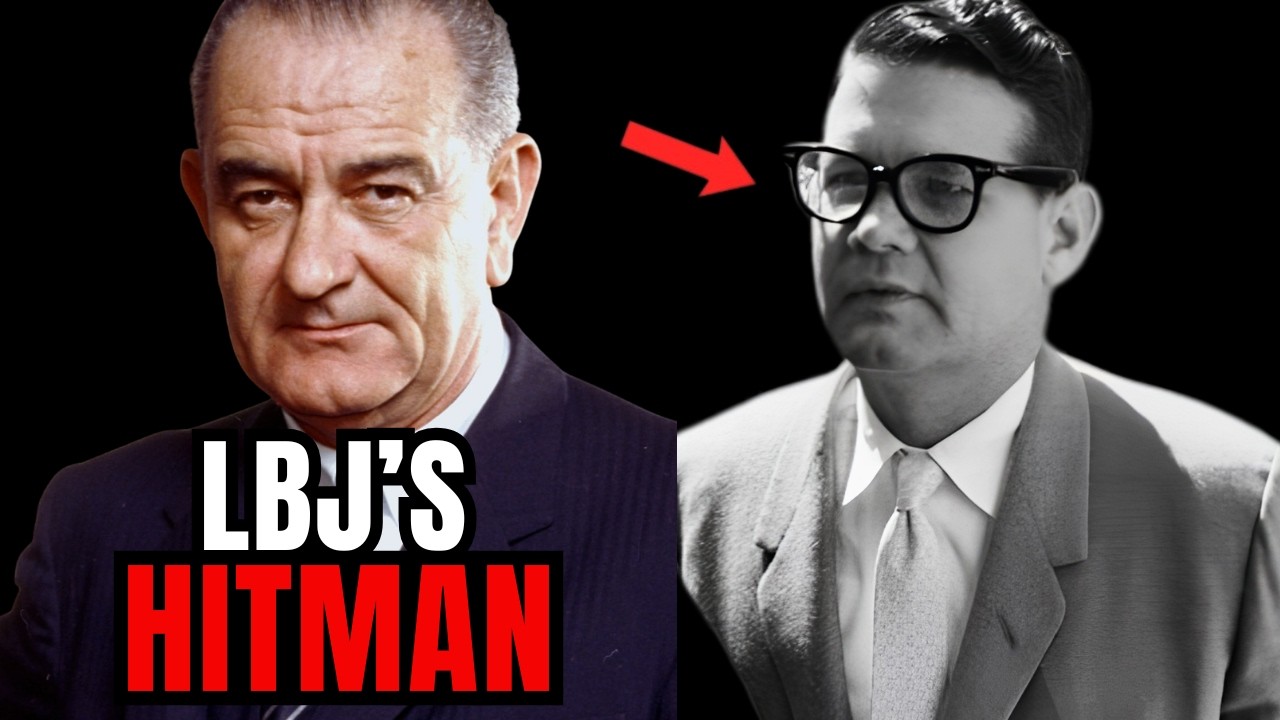
That word sat undisturbed in the National Archives for decades. The fingerprint was not unknown. It belonged to a man with a documented criminal conviction, a documented connection to the new president of the United States, and a documented history of making problems disappear on Lyndon Johnson's behalf.
His name was Malcolm Mac Wallace. On March 12, 1998, a board-certified fingerprint examiner with 50 years of professional experience signed a sworn affidavit confirming the match to 14 identification points. The FBI received that affidavit. The FBI did not respond.
To understand why that fingerprint matters, you need to understand who Mac Wallace was, specifically. On November 22, 1951, at a golf driving range on Barton Springs Road in Austin, Texas, Mac Wallace shot and killed a man named John Kinser. The murder was witnessed.
Wallace was arrested the same day. He was tried in Travis County Court in February 1952, charged with first-degree murder, and convicted by a jury of his peers. The jury recommended a five-year suspended sentence. Wallace served no prison time.
He walked out of that courtroom a convicted murderer and returned to government employment. That outcome requires an explanation. Wallace's defense was conducted by John Cofer, a prominent Austin trial attorney who also served as personal counsel to United States Senator Lyndon Baines Johnson.
John Kinser had been romantically involved with Johnson's sister, Josefa Johnson. What Kinser knew about the Johnson family and what that knowledge was worth in 1951 Austin is not recorded in any public document. What is recorded is that a man defended by Johnson's personal lawyer received a suspended sentence from a Travis County jury in a state where such outcomes for such crimes were not routine.
Following the trial, Wallace secured employment with Ling-Temco-Vought, the Dallas-based defense contractor then known as Temco, a company with documented connections to the Johnson political and financial network in Texas. He maintained a government security clearance through the Office of Naval Intelligence, a clearance that, under standard federal procedure, should have been revoked following a murder conviction. It was not revoked.
As Barr McClellan documented in his 2003 book Blood, Money, and Power, published by Hanover House, Wallace remained an operational asset, a man whose continued freedom and continued employment existed at the pleasure of one person. By November 1963, Lyndon Johnson was the vice president of the United States and the target of a federal corruption investigation driven by the Bobby Baker scandal.
Multiple Johnson biographers, including Robert Caro in The Years of Lyndon Johnson, Volume 4, published by Knopf in 2012, documented that Johnson understood a Kennedy second term meant the end of his political career and potential criminal exposure. That context matters when returning to the fingerprint.
Warren Commission Exhibit 641 is a cardboard box from the sixth-floor sniper's nest. On the afternoon of November 22, 1963, Dallas Police Department crime scene technician Robert Studebaker lifted fingerprints from that box as part of the physical evidence collection at the Texas School Book Depository.
Among the prints lifted from Box A, the top box in the two-box stack positioned directly at the southeast corner window, one print was processed, analyzed, and entered into the Warren Commission record as belonging to an unidentified individual. The Warren Commission spent 10 months producing 26 volumes of testimony and evidence.
Its fingerprint analysis was conducted by the FBI laboratory under the direction of Sebastian Latona, the FBI senior fingerprint examiner. Latona testified before the Commission on April 2, 1964, identifying Oswald's left palm print and right index fingerprint on Box A, along with prints belonging to Studebaker himself, collected as elimination prints during the crime scene processing.
The unidentified print on Box A was noted in Commission records, submitted for analysis, and returned without identification. It was cataloged as unknown. The Commission's final report, delivered to President Johnson on September 24, 1964, made no further reference to it. That fingerprint sat in the National Archives for decades.
In early 1998, researcher and JFK assassination historian Walt Brown, while conducting documentary review of Warren Commission physical evidence held at the National Archives in College Park, Maryland, pulled the original fingerprint card containing the unidentified print from Box A. Brown was not a fingerprint examiner. He recognized the print as a potential lead that had never been pursued and brought it to A. Nathan Darby.
Darby's professional record requires attention because it is directly relevant to the legal weight of what follows. A. Nathan Darby had been a certified latent fingerprint examiner for more than 50 years at the time of his analysis. He held certification from the International Association for Identification, the professional body that establishes global standards for forensic fingerprint analysis, and had testified as a qualified expert witness in criminal proceedings in Texas courts for decades.
He was not a hobbyist. He was not a Kennedy assassination advocate. He was a professional examiner whose findings carried the legal standing required for admission as expert testimony in a court of law. Darby examined the unidentified print from Box A. He compared it against the known fingerprint records of Malcolm Mac Wallace, records that existed in the Texas Department of Public Safety files from Wallace's 1951 murder arrest in Travis County.
He conducted his analysis using standard ridge detail methodology. He found a match to 14 points of identification on Wallace's left little finger. In standard forensic practice employed by the FBI and accepted in United States federal courts, a 12-point match is considered sufficient for a positive identification. Darby's match exceeded that threshold by two points.
On March 12, 1998, Darby executed a sworn affidavit documenting his findings. A sworn affidavit, not a theory, not an opinion piece, a legal document signed under oath and subject to the penalties of perjury under Texas law, stating that the unidentified fingerprint found on Box A in the sixth-floor sniper's nest of the Texas School Book Depository on November 22, 1963 belonged to Malcolm Mac Wallace, a man convicted of murder in 1952 with the documented assistance of Lyndon Baines Johnson's personal attorney.
In May 1998, Walt Brown held a press conference in Dallas presenting Darby's findings. The affidavit was submitted to the Dallas Police Department, which forwarded it to the FBI. Copies were transmitted to the Assassination Records Review Board, the federal panel created by the JFK Records Act of 1992 specifically to oversee the identification and release of assassination-related evidence.
The FBI issued no official response. The Assassination Records Review Board acknowledged receipt and took no public action. No counter analysis was commissioned disputing Darby's methodology. No statement was issued questioning his credentials or his findings. No investigation was opened.
A board-certified examiner with 50 years of professional experience executed a sworn affidavit identifying a convicted murderer's fingerprint at the scene of the most consequential assassination in American history. The federal agency responsible for fingerprint identification in the United States, the agency that had originally processed that same print in 1964 and cataloged it as unknown, received that affidavit in 1998 and said nothing.
The fingerprint does not exist in isolation. It exists inside a pattern of documented behavior that begins the evening of November 21, 1963 and continues through the days, months, and years that followed.

The night of November 21, 1963, Dallas. A private gathering at the home of Clint Murchison Sr., the Texas oil billionaire whose political and financial connections to the Johnson network were documented by investigative journalist Ronnie Dugger in his 1982 biography of Johnson, The Politician, published by Norton. Among those present at the Murchison gathering, according to multiple witness accounts compiled by journalist and author Craig Zirbel in his 1991 book, The Texas Connection, were figures from the Dallas business establishment with direct ties to Johnson's Texas political operation.
Madeleine Brown, Johnson's mistress of 21 years and the mother of his son Steven Mark Brown, born December 27, 1950, gave multiple recorded interviews before her death on June 22, 2002 describing what Johnson told her as he left the Murchison gathering that night. His words, as she stated them in a recorded interview conducted by Gus Russo and cited in Russo's 2008 book, Brothers in Arms, published by Bloomsbury, were: "After tomorrow, those goddamn Kennedys will never embarrass me again. That's not a threat, that's a promise."
The following afternoon, Air Force One lifted off from Love Field carrying John Kennedy's body in a bronze casket in the rear of the aircraft. Every witness account of the swearing-in ceremony aboard that plane, including the account of Kennedy aide David Powers documented in Powers' oral history held at the John F. Kennedy Presidential Library in Boston, describes Lyndon Johnson as composed.
Judge Sarah Hughes administered the oath of office at 2:38 p.m. Central Standard Time. Jackie Kennedy stood three feet to Johnson's left, still wearing the dress stained with her husband's blood.
William Manchester, commissioned by the Kennedy family in 1964 to write the definitive account of the assassination, documented Johnson's behavior aboard Air Force One in his original manuscript submitted to Harper & Row in 1966. Manchester, drawing on interviews conducted with Air Force One crew members and Kennedy staff, described Johnson making calls in the first 30 minutes after takeoff that were, in Manchester's precise language as preserved in his original notes donated to Wesleyan University and unsealed in 1993, organizational rather than reactive.
The manuscript contains specific descriptions of those calls with named witnesses and timestamps that Jackie Kennedy and her attorney Simon Rifkin fought to have removed. The case was settled in January 1967. The passages were excised from the published edition.
The motorcade route alteration is documented in Warren Commission Exhibit Volume 18, pages 801 through 803. The original Dallas motorcade route published in the Dallas Morning News on November 19, 1963 did not pass Dealey Plaza. It did not require the presidential limousine to make a hairpin left turn onto Elm Street at the base of the Texas School Book Depository.
That route was altered on November 21, one day before the assassination, to add the slow turn that brought the limousine directly below the southeast corner window of the sixth floor at its lowest speed. The Warren Commission's own exhibits confirm this alteration. The commission did not investigate who authorized the change or why it was made 24 hours before the shots were fired.
Then there is Allen Dulles. The Warren Commission, appointed by Lyndon Johnson on November 29, 1963, included among its seven members Allen Welsh Dulles, the former director of Central Intelligence dismissed by John Kennedy in November 1961 following the catastrophic failure of the CIA-organized Bay of Pigs invasion. Kennedy had publicly blamed Dulles for the intelligence failures that had produced the Bay of Pigs disaster.
Dulles sat on the commission investigating the murder of the president who fired him. Lyndon Johnson selected him for that commission.
Darby's affidavit was not suppressed in a single dramatic act. It was buried the way most institutionally inconvenient evidence is buried in Washington: through the absence of official response, through a media landscape that had spent 35 years investing in a settled narrative and had no institutional appetite for a finding that required the entire structure of that narrative to be rebuilt from the foundation.
Barr McClellan published Blood, Money, and Power in 2003 through Hanover House. McClellan had worked as an associate attorney at the Austin law firm of Clark, Thomas, and Winters, a firm whose senior partner, Edward Clark, was, in McClellan's account drawn from his own direct professional experience, Johnson's primary legal fixer in Texas for decades.
McClellan cited Darby's March 12, 1998 affidavit and placed it in the context of Wallace's documented history and the established chain of Wallace's relationship to Johnson reaching back to the 1952 murder trial. The book was covered by the History Channel in a documentary episode titled The Men Who Killed Kennedy, The Guilty Men.

The episode aired twice before being permanently withdrawn following pressure from former President Johnson's associates, including former President Jimmy Carter, former Vice President Walter Mondale, and Johnson aide Jack Valenti, who wrote formally to the History Channel demanding its suppression. The History Channel complied. The episode has not been broadcast since November 2003.
These events need to be understood as a sequence, not as isolated incidents. John Kinser is shot dead by Mac Wallace in Austin on October 22, 1951. Johnson's attorney defends Wallace. Wallace receives a suspended sentence for first-degree murder. Wallace maintains government employment and a federal security clearance through the Office of Naval Intelligence.
On November 22, 1963, Wallace's fingerprint appears on Box A in the sixth-floor sniper's nest of the Texas School Book Depository. The Warren Commission catalogs that print as unknown in 1964. The print sits in the National Archives for decades. A. Nathan Darby matches it in a sworn affidavit dated March 12, 1998. The FBI receives the affidavit and issues no response.
Mac Wallace himself died on November 7, 1971 in a single-car accident on a highway outside Pittsburg, Texas. He was 50 years old. The accident was ruled non-suspicious by local authorities in Camp County. No investigation was opened.
The one man alive who could have confirmed his own presence in the sniper's nest died in a rural Texas highway accident seven years after the assassination and years before Nathan Darby pulled his fingerprint from a federal archive. Each of those events, taken individually, has a conventional explanation. Accidents happen. Investigations close. Prints go unmatched. Together, they describe something else entirely.
What the Mac Wallace fingerprint reveals is institutional convergence. It is not a conspiracy in the Hollywood sense. It is not one man in a dark room issuing orders that cascade through a chain of loyal executioners. That version of events is too fragile, too dependent on silence maintained under pressure across decades, too easy to fracture.
The Warren Commission, operating under a mandate to produce a clean conclusion quickly, filed an unidentified print as unknown and moved forward. The FBI, whose director J. Edgar Hoover had been Johnson's neighbor on 30th Place NW in Washington since 1943, and whose institutional relationship with the new president was documented, transactional, and mutual, received Darby's 1998 affidavit and chose not to pursue it.
The History Channel, facing formal complaints from former heads of state, withdrew the documentary episode that had aired Darby's findings to a national audience, rather than defend its editorial decision. None of these actors needed to meet. None needed to coordinate. Each, independently, for their own institutional reasons, chose silence. And collectively, without a meeting, without a memo, without a conspiracy in any conventional sense, they buried it.
The fingerprint on Box A is not proof in a criminal evidentiary sense. No single piece of evidence in a case this old, this institutionally managed, and this deliberately fragmented constitutes proof sufficient for prosecution. Darby's sworn affidavit does not prove Mac Wallace fired a weapon on November 22, 1963. It does not prove Lyndon Johnson ordered anything. It does not constitute a conviction.
What it proves is narrower and more important than a conviction. It proves that on November 22, 1963, a man convicted of first-degree murder, whose continued freedom had depended for 11 years on the goodwill of the Vice President of the United States, left his fingerprint on a box in the precise location from which the Warren Commission concluded the shots that killed John Kennedy were fired.
It proves that the Warren Commission senior fingerprint examiner, Sebastian Latona, processed that print in 1964, could not identify it, and cataloged it as unknown. It proves that when A. Nathan Darby identified it 34 years later in a sworn legal document dated March 12, 1998, and submitted that document through official channels to the Dallas Police Department, the FBI, and the Assassination Records Board, not one of those institutions produced a written response.
The Warren Commission did not say the print belonged to Lee Harvey Oswald. It said the print was unknown. A. Nathan Darby said the print was not unknown. That silence is not neutral.
In law, in logic, and in the language of institutional behavior, silence in response to a sworn affidavit is a choice. It is an active decision not to pursue a finding that, if confirmed through official channels, would require every institution that has built its authority on the Warren Commission's conclusions to explain why a convicted murderer connected to the sitting president was in the sniper's nest the day that president's predecessor was killed.
Mac Wallace died in 1971. A. Nathan Darby died in 2006. The cardboard surface of Box A has been handled by researchers, archivists, and federal employees across 60 years of processing. The chain of custody required for criminal prosecution was broken long before most of the people watching this story were born.
That silence is not neutral.