On the evening of January 30, 1933, in Berlin, just hours after Adolf Hitler was appointed Chancellor of Germany, his supporters marched through the Brandenburg Gate carrying torches. Within six months, every rival political party had been banned or dissolved, and Germany had become a one-party dictatorship.
The Nazis promised not only a new political order but a biological one. They presented Germans as a master race whose blood had to be kept pure, and claimed the nation was being weakened from within by those they deemed racially inferior or hereditarily unfit.
Jews and Roma faced persecution that ultimately led to their systematic murder, while millions of Slavs were targeted for displacement, exploitation, and death. The regime also turned on Germans it considered unfit to belong to the national community, including people with mental and physical disabilities.
The persecution of these people would not have been possible without the participation of medical staff. German doctors joined the Nazi Party at higher rates than almost any other profession, and many nurses became supporters of the regime. Within a few years, some helped carry out the regime's racial policies and even took part in killing their own patients.
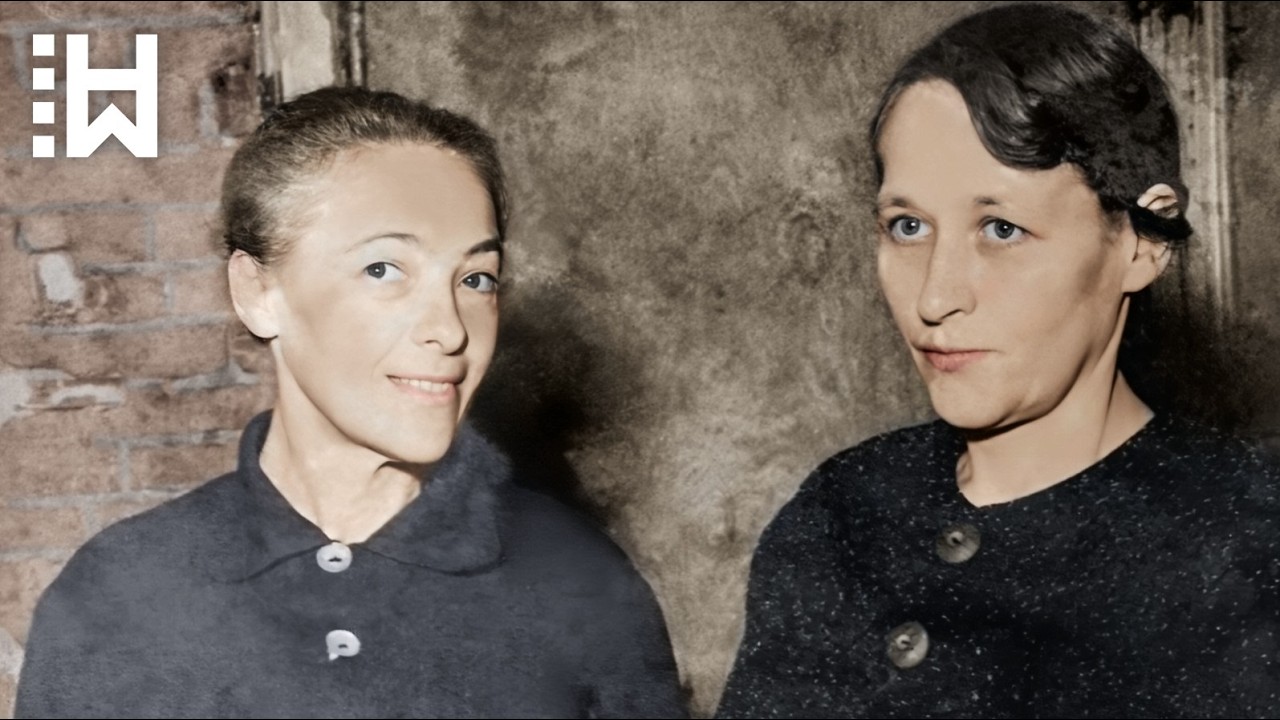
One place where this happened was the Meseritz-Obrawalde psychiatric hospital, at the far eastern edge of Germany. There, a senior doctor selected patients for death, while nursing staff carried out many of the killings. Two women stand at the center of this system: Hilde Wernicke and Helene Witorik. Both would eventually pay a heavy price for their crimes.
Gertrud Emma Hilde Wernicke was born on November 11, 1899, in the northern German town of Schleswig, into the family of an army officer. She left a girls' secondary school in Mainz in 1919 after earning her Abitur, the examination that qualifies students for university.
Wernicke studied medicine in Frankfurt, passed her first state examination in 1924, and received her doctorate from the University of Marburg two years later. From 1929 onward, she spent her entire career as a senior physician at the Meseritz-Obrawalde sanatorium and care home.
In May 1933, four months after Hitler took power, she joined the Nazi Party and later became the local branch leader of the National Socialist Women's League.
Helena Witorik was born in 1904 and worked as a head nurse, or Oberschwester. She met Wernicke at the Meseritz-Obrawalde sanatorium and care home, where the two had initially come to care for patients.
Meseritz-Obrawalde, often referred to as Obrawalde, opened in 1904 as a hospital near the town of Meseritz, known today as Międzyrzecz in western Poland. Germany lost World War I, and in November 1918 the German Empire collapsed and was replaced by the Weimar Republic.
Most of the territory of the former Province of Posen was transferred to the re-established Polish state, while Meseritz remained part of Germany. The new German-Polish border lay only a few kilometers to the east, making the hospital part of Germany's eastern frontier.
The debate over killing mentally ill patients did not begin with the Nazis' rise to power. In 1920, during the democratic Weimar Republic, a prominent lawyer named Karl Binding and a professor of psychiatry named Alfred Hoche published a short book arguing that the state should be allowed to kill terminally ill and severely disabled patients, whom they described as "life unworthy of life."
The book was widely circulated. So when Adolf Hitler took power in January 1933, the argument for killing patients was ready and waiting for him.
In July 1933, only six months after the Nazis took power in Germany, a law was issued imposing forced sterilization on hereditarily ill patients. These operations were authorized by special hereditary health courts, where two doctors and a judge made decisions behind closed doors.
Approximately 400,000 people were sterilized in Nazi Germany. The idea that certain groups of people did not deserve to live became so deeply embedded that schoolchildren were given arithmetic problems to calculate the cost of keeping a disabled person alive. German society was gradually being prepared to accept the killing of its most vulnerable members.
In March 1939, the city of Berlin began talks, among others, with the Obrawalde sanatorium and care home. Berlin's sanatoriums were overcrowded, while Obrawalde had space and lay far to the east of the capital. The two sides agreed that Berlin would send its mentally ill patients there and pay for their care.
About 900 patients were living at Obrawalde at the beginning of 1939, and by the end of that year the number had reached more than 2,000 patients under the care of only three doctors. Thousands of people with mental illness were now far away from anyone who knew them.
As Obrawalde filled up, Nazi Germany began killing people with mental and physical disabilities. In October 1939, Hitler signed a memorandum authorizing doctors to grant so-called "mercy death" to patients judged incurable. The order was backdated to September 1, 1939, the day World War II began.
Hospitals filled out forms about everyone in their care, and assessors in Berlin reviewed the forms and decided who would die. Those selected were gathered onto buses and taken to one of six facilities equipped with gas chambers. The operation became known as "T4," after its headquarters at Tiergartenstrasse 4 in Berlin. In less than two years, more than 70,000 people were killed at these facilities.
The mass killing of patients did not remain secret for long. Families received urns of ashes and condolence letters containing details that did not match what they knew about their relatives. By the summer of 1941, Catholic and Protestant clergy were publicly condemning the killings in sermons and written protests, some addressed directly to Adolf Hitler.

In August 1941, Hitler ordered a halt to the gassing, but the killings moved inside the hospitals themselves, where they could be carried out quietly, ward by ward, using medication and starvation. Many institutions continued to kill their patients, but Obrawalde was better suited to it than others because it was remote, overcrowded, and full of patients whose families were hundreds of kilometers away.
In the end, patients from at least 26 German cities were sent to Obrawalde and killed there.
Hilde Wernicke was one of the main perpetrators. She was responsible for the women's and children's wards, and she took on the task of examining every new arrival before recording one of two outcomes. A classification of "fit for work" gave a patient time, but a "terminally ill" patient and children were marked for death from the start.
Between 1943 and 1944, Wernicke selected about 600 people in this way. In early 1944, while she was killing her patients, the Nazi regime awarded her the War Merit Cross, a decoration for service away from the front.
Wernicke did not act alone. The nurses working under her supervision took an active part in the killings. Among them was head nurse Helena Witorik, who oversaw the women involved in these crimes and carried out injections with her own hands. She was later accused of responsibility for the deaths of several hundred people.
The patients Wernicke identified were not killed in the open wards. Instead, they were taken to separate rooms set aside for the purpose, away from the sight of others. There they were given a barbiturate, a sedative drug that stops breathing if the dose is large enough.
Sometimes it was injected, but often it was mixed into food. Patients who realized what was happening resisted, and it could take three staff members to restrain one of them.
Among those who worked in those rooms were ward supervisor Amanda Ratajczak, nurse Hermann Gölke, and 21 other nurses who later became known by the grim nickname "Sisters of Death." The staff themselves initially carried the bodies, and later a work detail of male patients was formed for this task and became known as the "graveyard gang."
Most of the bodies were buried naked in mass graves, but some were cremated in Frankfurt on their orders. Construction of a crematorium to deal with the large number of dead began, but the project was not completed until the end of the war.
Doctors filled out death certificates with plausible causes, with stroke a common one, and each was sent to the deceased's family.

By January 1945, the Red Army, the armed forces of the Soviet Union, was approaching the area, and Wernicke and Witorik did not wait to be liberated from the hospital. They fled together toward the west, to the town of Wernigerode in the Harz mountains of central Germany.
Soviet forces reached the hospital on January 29, 1945, and found about 1,000 patients still alive and mass graves holding at least 10,000 people who had been killed there.
In March 1945, former ward supervisor Amanda Ratajczak was arrested. She confessed to killing more than 1,500 patients, the last of them on the day before liberation, and on May 10, 1945, two days after the war in Europe ended, she was executed by firing squad alongside caregiver Hermann Gölke.
Hildegard Wernicke and Helene Witorik were arrested in Wernigerode on August 10, 1945, and taken to Berlin. Their trial began before the regional court there, with newsreel cameras recording the proceedings.
During the trial, Wernicke defended herself without any visible remorse. She told the court that her task had been to identify patients capable of performing simple work from among the large number entering the institution, and to exempt them from killing.
According to Wernicke, mentally ill patients considered incurable and those suffering from the most severe physical illnesses were selected for mercy death only. She claimed that for them, death, in the truest sense of the word, was a deliverance.
Witorik's defense was different. According to her, she had initially refused to kill patients, but Walter Grabowski, the hospital director, told her that refusal was pointless, that her years of service to the state bound her to her duty, and that the law permitted ending the suffering of the incurably ill.
In her testimony, Witorik claimed that Director Grabowski repeatedly threatened the nurses with the Gestapo, Nazi Germany's secret police. She told the court: "I only did my duty and carried out everything according to the instructions of my superiors. Director Grabowski was always threatening us with the Gestapo. He told us the Gestapo would take us by the necks if we did not do what he wanted."
Despite her defense, the truth is that the Nazis' mass killing program depended on people willing to carry it out, and at Obrawalde, no nurse who refused to take part was punished or persecuted by the Gestapo.
The court believed neither of them, and on March 25, 1946, the two women were convicted of murder in several hundred cases and sentenced to death. The Berlin appeals court upheld the verdict on August 24, 1946.
The sentence was carried out on the morning of January 14, 1947, at Lehrter Strasse prison in Berlin, where the two women were executed by guillotine. Helene Witorik was 42 years old, and Hilde Wernicke was 47.