María was certain she had lived a perfect life with Pablo. Twenty-seven years of marriage had felt like a carefully woven tapestry, without holes or ugly knots. She was sure she knew him better than anyone—his habits, his fears, his laughter, even the way he fell silent. She was wrong, and the proof of how little she truly knew was hidden in the old wooden drawer of the desk that Pablo had never allowed her to open.
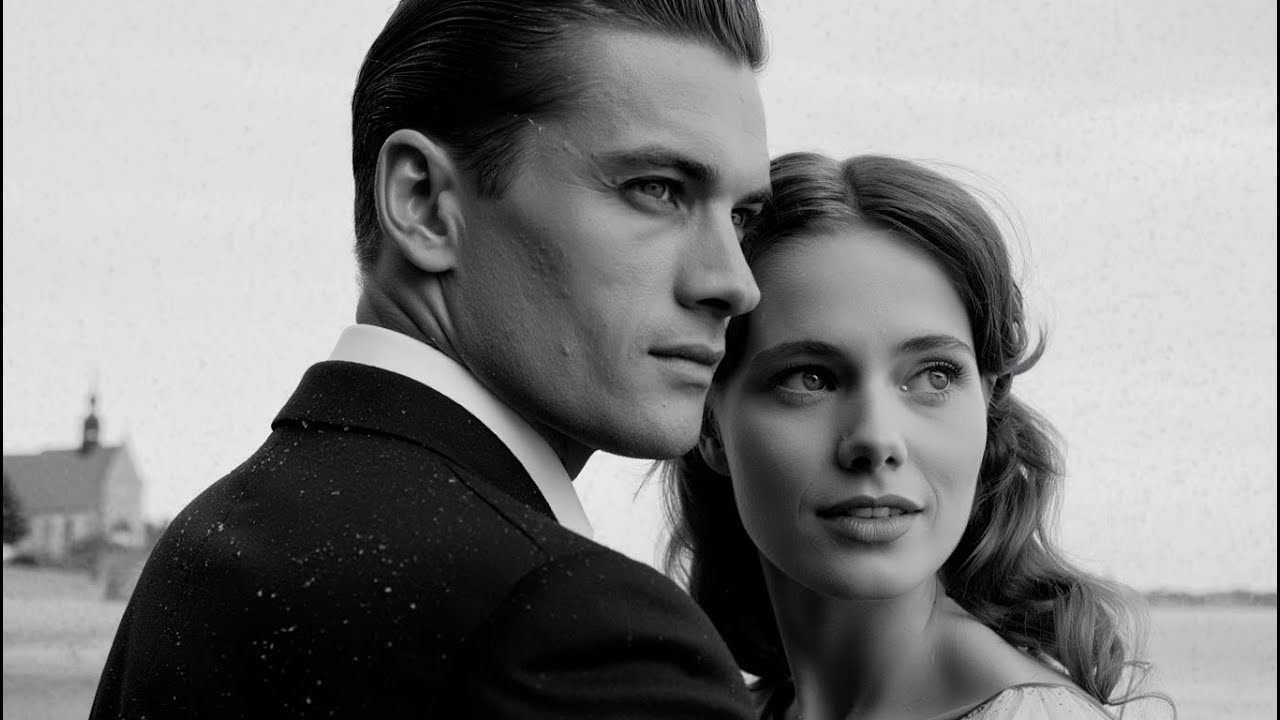
The smell of his aftershave still lingered in the bedroom, as if he had just stepped out to buy bread rather than been lowered into the ground beneath fresh soil. His favorite shirt hung over the back of a chair. María held it against her face, breathing in the familiar mix of soap, tobacco, and something she had called home for decades. In the kitchen, the radio Pablo switched on every Sunday morning was still there, tuned to the same station he had first found in 1976, the year they met at a school gathering in a working-class neighborhood of Madrid.
They had their small rituals. He always turned on the kitchen light before dawn to make her tea, and she pretended to stay asleep just to hear him set the cup on the nightstand. On their wedding anniversary, he brought her tea-colored roses, always repeating the same clumsy phrase about her deserving more. At night he sat at the kitchen table fixing toys for the grandchildren, humming melodies from his youth.
They never went to bed angry. That was their sacred rule, and they had kept it stubbornly. After his death, the house became too quiet. The ticking of the living room clock suddenly sounded louder than ever.
María moved through the apartment with caution, as if walking through a museum of their shared life, afraid that one careless gesture might shatter the memories still holding her upright. She knew that sooner or later she would have to sort through Pablo’s things—the clothes, the documents, all the small objects whose meanings only he understood. For a long time, she avoided the study. The desk was his territory.
He always joked about that drawer, saying he had his chaos under control and that if she reached inside, she would never find anything again. The lock on the drawer sealed their agreement. She did not look inside. Now, however, the keychain rested on the desktop.
Ownerless. María picked it up, turning it between her fingers as if it were something foreign, even though she had seen that metal hundreds of times. The smallest key gleamed dully. For a moment, she simply stood there, looking at the drawer.
She could leave it as it was. She could tell herself that some boundaries are not crossed even after death. But the longer she stared at that discreet lock, the clearer she felt that a question still remained in that house, one whose answer she had never heard. Finally, she inserted the key.
The click was soft, surprisingly light, as if the drawer had been waiting for years for someone to open it at last. Inside were old notebooks, some bills, and a few photographs she already recognized—Pablo with the children on a beach in Valencia, Pablo holding one of their granddaughters in his arms. Only at the back did she spot a thin, yellowish envelope. On the back was a name she did not associate with family or friends.
The handwriting was small, feminine, slightly slanted. Her heart rose to her throat. For a second, she had the urge to close the drawer and pretend she had never seen the envelope. She was a widow with the right to live peacefully in the memory of an ideal husband.
A single sheet of paper should not change that. Only her fingers were already gripping the envelope too tightly. She sat down in the chair, slid her thumb carefully under the edge, and tore the hardened paper. Inside was a letter written in that same tiny handwriting.
María swallowed and began to read. The very first sentence shook her world. “Dear Pablo, I still do not know how you plan to tell her about us. ” The words blurred before her eyes.
The phrase “tell her about us” hit her like a cold wave washing over a carefully built sandcastle. Suddenly, those twenty-seven years that had seemed so secure, so obvious, began to tilt like an old table with one leg snapped off. She sat for a long time at the desk, her gaze fixed on the first line. Knowing that more words awaited her further down was a weight she could not yet lift.
She pushed the sheet aside as if it were an object capable of burning her. Her breathing became shallow and ragged, like when they had fought over money as newlyweds and she feared the end of something fragile. Now the stakes were different. Not the future—the past.
Everything she had considered a fact. She stood up almost abruptly and walked to the kitchen, letter in hand. The kitchen was as it always was. The tea cup still sat on the table beside an empty plate.
Only Pablo was missing to turn off the light, as he had done for her for so many years. She opened the drawer where she kept the matches, took out the box, and ran her finger over the rough surface. “I will burn it,” she whispered. “I will burn it and forget.
”
She imagined the flame greedily taking the paper, folding it into a dark cylinder, turning the letters into ash. In that vision, she could go back to having a simple story to tell her grandchildren—that their grandfather was a good man, that his marriage was happy, that nothing had ever cast a shadow over him. She could return to the armchair, hug his shirt, and cry as a widow, clinging to what she knew. Only something was already irreversible.
She knew. The words “tell her about us” were etched into her like a scratch on glass. You can clean the surface, but you cannot erase it. Her hand trembled when she took out a match.
For a moment she stared at it as if the shape of her entire grieving life depended on that piece of wood. Then she slowly put it back in the box and closed it with a decisive gesture. She did not want to be a woman who chooses a comfortable lie merely because she fears the truth. She returned to the living room, sat on the sofa, and brought the letter close.
She took a deep breath, like when she plunged into cold sea water during their first vacations together on the coast before they were married. She smoothed the paper and began reading from the beginning, slowly, word by word. The letter revealed the story of a woman Pablo had known before María, of a feeling that did not end when he moved to another city, of a child born into the world while he was already planning a new life, and of a promise. “Someday you will tell her.
I beg you. She has the right to know. ” Years of silence had hurt everyone a little. Each sentence was a new blow, but also like peeling back layer after layer of a picture María had been looking at from only one angle for decades.
For the first time, she saw Pablo not only as a faithful husband and calm father, but also as a frightened young man who once tried to be in two places at once. When she reached the final line, her hands were ice-cold. She knew enough to understand that her marriage was not as simple as she had believed, but too little to grasp that story to its end. She knew that somewhere was the woman who had written the letter.
She knew that somewhere was a son who, for years, had a father only in letters and brief visits. She tucked the sheet back into the envelope, pressed it in her hand, and looked toward the hall shelf, where old phone directories piled up, thick with dust and surnames. At that moment, she made a decision that would change not only how she remembered Pablo, but also who she would be as a widow. It was no longer enough to mourn the past.
She wanted to understand it, and to do that she had to find those the letter spoke of in the plural, as “us. ”
The night after reading the letter was strangely calm on the surface and turbulent within. She lay on her back, staring at the ceiling, counting the ticks of the clock, as if each one brought her closer to the answer she sought. At dawn, when light began to slip through the curtains, she got up before the alarm would have rung—though she had stopped setting it since Pablo’s death.
On autopilot, she put water on for coffee and, without thinking, took two cups from the cupboard, as she had done her whole life. Only when she set them on the counter did she realize that one would remain empty forever. For a few seconds, she stared at those two cups like a silent image of her marriage—her and him, a set that seemed inseparable. Now one cup was only a trace of presence.
She took the letter from the table, where it had stayed like a strange visitor that could not be asked to leave. She sat down with a notebook and pen and, in the margin, wrote down the name from the envelope, the city, and the street mentioned in the text. Then she went to the hall, opened the box of old phone directories from the era when numbers were found with a finger on paper rather than a tap on a screen. She spread the directories across the floor like a large map of human stories.
She ran her finger down the columns of surnames until she found the one she was looking for—the same one on the back of the envelope. Beside it was an address, a neighborhood in Valencia where Pablo had worked when he was just starting to go out with María. She underlined the surname in pencil. Her hand was trembling.
For several days, she prepared for the trip. She told her grandchildren she had to sort out some paperwork regarding their grandfather’s inheritance—a phrase so boring and gray that no one asked for details. She packed a small suitcase with some clothes and documents, and folded the letter into the inner pocket of her coat, so close to her heart that it felt like both anchor and compass. On the train to Valencia, she had the sensation of crossing an invisible border.
Familiar landscapes passed by the window—fields, villages, solitary trees along the tracks—but for her it was a journey toward another reality, one in which she was not the only person Pablo had said “I love you” to. She looked at her reflection in the glass and saw a woman with silver streaks in her hair and laugh lines around her eyes that now seemed like signs of fatigue. For a moment, she seriously considered getting off at the next station and taking another train home. The idea of sitting across from someone who had known Pablo in a completely different way was terrifying.
At the same time, she felt that if she turned back, that untold story would sit with her at every family meal and stand beside her bed each night when she turned off the lamp. An older woman sitting across from her, a newspaper on her knees, watched her closely. “Are you going to visit someone? ” she asked suddenly, as if she had guessed this journey was no simple excursion.
María hesitated, then answered with a half-truth. “Yes, someone I should have known about much earlier. ” The other woman murmured, “The truth has that quality—it arrives when we are least prepared to see it. But it is worse to live with what we do not even try to name.
” Those words sounded like confirmation of the decision María had been trying to solidify for days. When the train pulled into the station of the city whose name she had seen so many times in Pablo’s letters during his youth, she felt fear but also a strange calm. There was no turning back now. The building she stood before was an old apartment block with peeling facade and creaking stairs, but it was well kept.
She climbed to the floor she needed, counting the steps like someone counting seconds before an inevitable jump. On the door was a small metal plate with the surname she already knew from the envelope and the phone directory. Her knees felt like cotton. She raised her hand, but her fingers hovered over the doorbell.
A clear thought surfaced in her mind. If I walk away now, I will live forever in two versions of the past—the one I know and the one I am afraid of. She still did not know what part of herself she would see when the door opened, but she understood that if she did not ring the bell, she would be fleeing forever. She pressed it.
The sound of the bell faded into the ordinary interior of the apartment, as if it had gone visiting a distant cousin. A few seconds later, the door opened a crack, and in the doorway appeared a woman roughly María’s age. She had dark hair pulled back in a simple braid and tired eyes in which, for an instant, something flickered between fear and recognition. “Yes?
” she asked, her hand still on the doorknob, like someone unsure whether she wanted to let the light inside. María felt her mouth go dry. She searched her coat pocket, took out the yellowed envelope, and raised it slightly, as if it were an identification document. “My name is María,” she said in a low voice.
“I was Pablo’s wife. I found this letter after his death. ” Something trembled in the woman’s eyes, as if in a second she had stepped decades back into memory. Her fingers tightened briefly on the doorknob, but then she let it go and stepped aside.
“Come in,” she whispered. “I think we have both waited too long for this conversation. ”
Inside, the apartment smelled of old books. On the shelves were photographs in simple frames, but María avoided looking at them too closely, as if each photo could become a mirror showing not only Pablo but also her own naivety.
The woman led her to the kitchen, where two cups were already set out on the table, as if she truly had been expecting her. “My name is Elena,” she said, sitting down across from her. “I met Pablo many years ago. Before…
before he began his new life. ” María nodded, gripping the envelope like an anchor. The silence between them was dense but not hostile—more like the calm before a storm meant to clear the air. “The year we met was 1976,” Elena began, looking at the steam from her tea.
“He came to work like someone trying to pretend confidence while terrified inside. He laughed too loudly at others’ jokes. He came home late so no one would see that he had no one to return to. Then I thought I would be the one.
” She spoke of their first meetings, of cheap cafeterias, of walks through a city María knew only from postcards. She told how one day she realized she was pregnant—a miracle to her, and to him something between joy and panic. She spoke of his departure for Valencia for a better job, and of his promise to come back for her and the child. María listened, feeling each fragment of that story slot into the gaps of her own memories.
The letters she had received from Pablo back then took on new meaning—those strange pauses, the ambiguous sentences, the allusions to “matters that are hard to write about. ” “At first, he came back,” Elena said, playing with her teaspoon. “Whenever he could. He held our son in his arms as if he feared that if he put him in the crib, he would not get a second chance.
Then the visits became rarer. In one letter, he wrote that he had met someone who made him feel like a better person. He did not write your name, but I already knew it was the beginning of the end of us. ”
María gripped her cup so hard her knuckles turned white.
She wanted to feel pure rage, but the more she looked at Elena, the harder it was to find it. Instead of “the other woman,” she saw another woman who had also waited by the window for the same man. Elena got up, went to a sideboard, and took out a small metal tea tin. She opened it on the table.
Inside were photos. In one, a small boy stood on a beach, holding the hand of a man whose profile María knew all too well. In another, a young man, nearly an adult, had the same spark in his eyes that María had seen in Pablo when he told jokes to the grandchildren. “That is Pedro,” Elena said quietly.
“Pablo’s son. Our son. He always knew his father had another family—that somewhere there were children who said ‘dad’ out loud, not just in imagination. ”
María felt a lump in her throat.
“Does he know about me? ” she asked, though the answer was almost obvious. “Does he know there was a wife? ” Elena replied, “He knows.
I never spoke badly of you. I could not. In my mind, you were the woman he chose when he wanted to be better than he had been with me. That is why I wrote this letter.
I asked him to tell you, to stop living beside each other like shadows. ” María touched the envelope again, as if needing to confirm it was the same paper she had held in her living room. “Did you send it to him? ” she asked.
“Yes,” Elena nodded. “He answered that he would try—but not yet. Because the children were small, because you were having a hard time at work, because his parents were ill. There was always a ‘not yet.
’ Then he stopped mentioning it, but he did not throw the letter away. If you found it, it means he kept it until the end. ”
Elena looked directly at her then, with such intensity that María felt as if someone had opened a window straight into her heart. “He truly loved you,” she said.
“In every letter, even when he wrote about us, I felt he was more afraid of losing you than of losing himself. He hid all this not because you mattered less. He hid it because he was afraid that if he told you the truth, he would lose the only place where he had managed to be a good husband. ” That sentence hung between them like a bridge over emptiness.
On the train back to Madrid, María carried on her lap not only her bag but one of Pedro’s photos that Elena had pressed into her hand at parting. The world streamed past the window like an old film, and she thought that her marriage had not been a pure lie nor a pure truth. It had been the story of a man who tried to be good in two different ways and had not had the courage to follow through with either. That afternoon, when she entered the house, she did not take off her coat.
She went straight to the study, opened the same desk drawer, took out a small box, and placed inside the envelope with the letter and Pedro’s photo. She let her hand rest on the lid for a moment, as if closing a chapter that for years had been only a blank page. She did not burn the evidence. She destroyed nothing.
Instead, she carried the box to the bedroom and placed it on the top shelf of the wardrobe, next to other keepsakes—video tapes of summers at the coast, cinema tickets, dried roses from the first bouquets Pablo had given her. That simple gesture was her answer. I accept you whole—what you wanted to show me and what you were afraid to reveal. The day her ideal world collapsed, María did not lose love.
She lost the illusion that love must be flawless to be real. She gained something harder but more lasting—a quiet calm in the face of the fact that a person can be both weak and good, both cowardly and devoted. That night, for the first time, María felt she did not have to choose between being the victim or being the one who forgives because it is the right thing to do.
She could simply decide to understand.