When Meyer Lansky died in 1983, his official financial records told a story that seemed impossible. On paper, the man investigators had long believed controlled hundreds of millions of dollars in organized crime wealth left behind less than $50,000. There were no hidden vaults, no dramatic discoveries, no empire waiting to be seized. Just a quiet ending that contradicted decades of federal scrutiny.
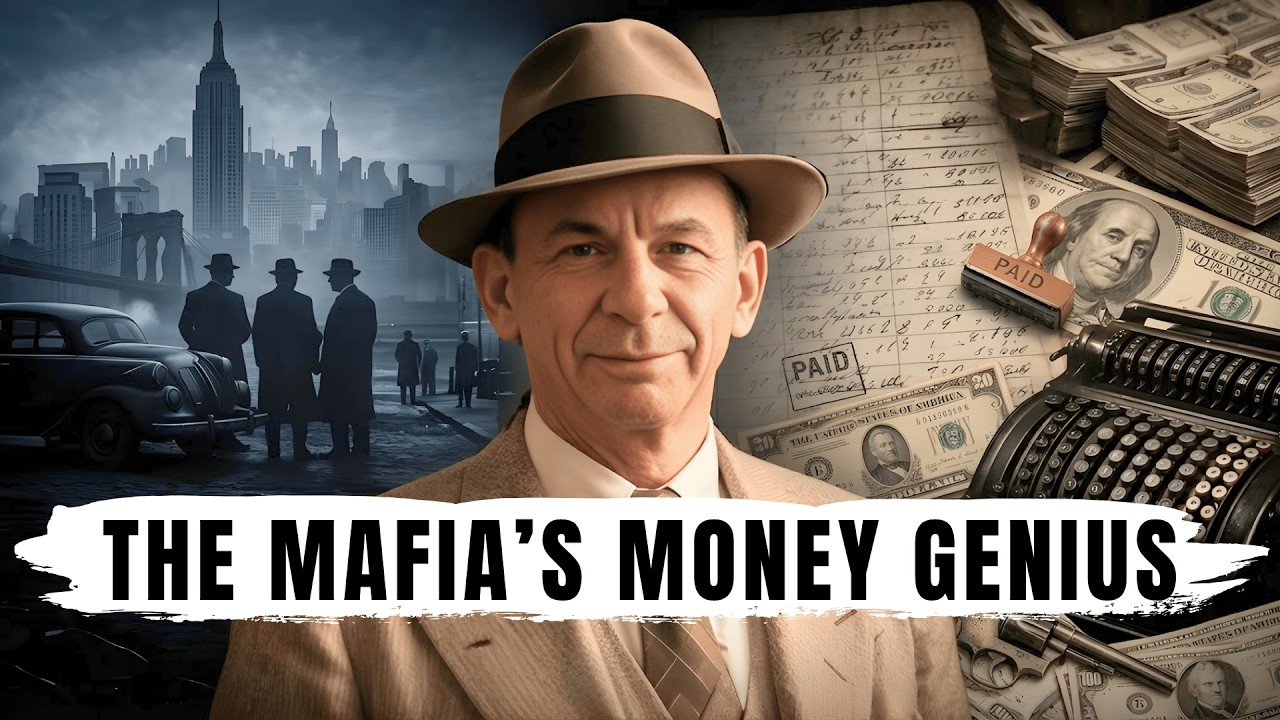
The question that followed him to the grave remains unanswered: where did the money go? Not simply hidden, but moved through layers so complex that even the most determined investigators could never trace, seize, or prove it existed. Lansky never fit the image of a traditional crime boss. He didn’t build his name through violence like Al Capone or command attention like John Gotti.
He operated in the background, quiet and controlled, calculating outcomes while others pulled triggers. His power came from understanding systems, not from commanding loyalty through fear. Born into a poor Jewish immigrant family in New York at the start of the 20th century, Lansky grew up in a rough neighborhood where survival often depended on strength. Even as a boy, he watched and calculated instead of fighting.
His unlikely friendship with Lucky Luciano, a young Italian street hustler, would reshape the structure of organized crime in America. Luciano understood ambition and power. Lansky understood numbers. Illegal gambling became his entry point.
Not because it was glamorous, but because it was predictable. Lansky understood that every game had an edge and that the house could win over time without ever needing to win every time. He built operations that looked chaotic but were engineered underneath, with profits guaranteed through careful calculation. When Prohibition exploded the criminal landscape in the 1920s, figures like Capone built empires on bootlegging and attracted the spotlight.
Lansky stayed in the background, organizing the money. He studied how cash flowed from massive operations and built structures to manage, distribute, and protect it. Most criminals failed at this stage, leaving their wealth vulnerable to seizure and suspicion. Lansky solved the problem before most people recognized it existed.
His partnership with Bugsy Siegel extended operations beyond U. S. borders. Cuba became a key hub, with casinos operating as financial engines that could absorb and transform large amounts of money under the appearance of legitimacy.
This marked the beginning of what would later be recognized as one of the earliest international money laundering systems. Money from illegal operations was broken apart, moved through layers, transferred across countries, and reinvested into businesses that looked entirely legitimate. By the end of the process, the original source was nearly impossible to trace. It no longer looked like crime.
It looked like business. What made Lansky particularly difficult to prosecute was that he carried the entire system in his mind. He kept no incriminating ledgers or detailed records. Millions of dollars, countless transactions, complex distributions across multiple locations, all tracked mentally with precision that stunned those closest to him.
Without records, there was nothing to seize or prove in court. The most powerful figures in organized crime came to depend on him. Their fortunes passed through his hands, and their operations relied on his systems. He became a living bank, earning importance not through fear but through necessity.
Without him, the money was exposed. Without the money, power meant nothing. By the 1950s and 1960s, federal agencies began shifting their approach. Instead of chasing the men pulling triggers, they followed the cash that fueled them.
The FBI turned its attention toward financial networks, and one name kept surfacing: Meyer Lansky. The pressure intensified, with constant surveillance and investigations, but every time investigators reached for proof, it slipped away. Then came Cuba. The revolution removed the regime that had allowed Lansky’s casino operations to thrive.
Overnight, one of his most valuable financial channels disappeared. The structure he had built showed cracks for the first time, and he was forced to move assets defensively rather than strategically. Lansky attempted to leave the United States, believing he could claim citizenship in Israel and escape the legal pressure building against him. The request was denied.
He had to return, back into the reach of the same system he had outmaneuvered for most of his life. Despite years of scrutiny as one of the most closely watched figures in organized crime, Lansky was never convicted for the true scale of his operations. Investigators knew what he had done. They simply could not prove it.
He died in 1983 with his official record showing almost nothing. His legacy was not the wealth he controlled but the method he created. He demonstrated that crime could evolve beyond violence into something far more sophisticated: financial systems, global movement, and invisible control. After Lansky, the underworld no longer relied solely on force.
Money became the new battlefield, and intelligence became the most dangerous weapon. The final question remains unanswered. Did Meyer Lansky truly die a poor man, or did he take the secret of a hidden fortune with him, one that no one has ever been able to find?