For more than twenty years, Andrew Parker Bowles lived inside a marriage that the entire country felt free to gossip about. He was a decorated cavalry officer, a brigadier, and in the shorthand the public had long since settled on, simply Camilla's first husband. Then, on the evening of June 29, 1994, the future king sat beneath the lights of a television studio and broke a silence Andrew had kept for two decades.
The documentary had been two years in the making and ran for more than two hours. Close to 14 million people across Britain watched it live. Late in the program, the interviewer, Jonathan Dimbleby, asked the question the whole country had been waiting on: whether Charles had been faithful to his wife.
There was a pause. He answered carefully, almost reluctantly. He had been faithful, he said, until the marriage had irretrievably broken down. By the next morning, the front pages had reduced two hours of television to a single word: confession.
But the man whose life that answer detonated was not in the studio, and his name was never spoken aloud. For more than twenty years, Andrew Parker Bowles had lived inside a marriage the whole country now felt free to discuss. In a single sentence, the future king had broken a silence Andrew had kept for two decades.
To understand why a man would sit through all of it in silence, you have to go back much further than the summer of 1994. Andrew Parker Bowles was never the outsider the public imagined him to be. He was born into that family's orbit, raised inside it, decorated by it, and bound to it by ties of blood, faith, soldiering, and horses that reached back to his earliest childhood.
He was born Andrew Henry Parker Bowles on December 27, 1939, into a family stitched into the English establishment at nearly every seam: aristocratic, Catholic, military, and steeped in horse racing. His maternal grandfather, Sir Humphrey de Trafford, was a wealthy racehorse owner, and the world of the turf ran through the family like a bloodline.
Horses would remain the throughline of Andrew's entire life, connecting him to the army, to the aristocracy, and eventually to the royal family itself. He was educated at Ampleforth College, the great Catholic boarding school in Yorkshire, and from there went to the Royal Military Academy at Sandhurst.
His proximity to the crown was there almost from infancy. His parents moved easily in the circle of Queen Elizabeth, the Queen Mother. In 1953, when Andrew was 13 years old, he served as a page at the coronation of Queen Elizabeth II.
Before he was a soldier, before he was a husband, before he was a punchline, Andrew Parker Bowles was a boy in ceremonial dress inside Westminster Abbey, close enough to watch a young queen crowned. Seven years later, in 1960, he entered the Royal Horse Guards, beginning a military career that would eventually carry him to the rank of brigadier.
For Andrew, the crown was never an abstract institution intruding upon his private life from the outside. Royal service, military duty, family, friendship, faith, and horses were not separate things. They were the single landscape he had lived in since he was a child.
By his late twenties, Andrew had become the kind of man that world produced almost as a specialty. He was handsome, athletic, and entirely at home in the equestrian and social circles of the English upper class. He played polo, was awarded army sporting colors, and in the 1969 Grand National rode in one of the most punishing horse races in the world.
Biographical accounts describe his long on-again, off-again courtship with the woman he would eventually marry as repeatedly interrupted by other women, sometimes from within her own circle. Andrew was charming and Andrew was unfaithful, and in the world he came from, those two facts were not thought to be in serious contradiction.
One of those relationships mattered more than the rest. In June 1970, around the time of Royal Ascot, Andrew Parker Bowles was romantically involved with Princess Anne, the 20-year-old daughter of the Queen. Sally Bedell Smith's reconstruction of the period describes Andrew staying at Windsor and sharing Anne's deep enthusiasm for horses and racing.
It was a real romance, though a brief one, and it ran directly into the immovable obstacle of the age: Andrew's Roman Catholicism, which under the constitutional rules of the time made him an impossible prospect for marriage into the royal family. But the romance did not curdle into estrangement. It softened into a lifelong friendship.
Decades later, Andrew would stand as godfather to Anne's daughter, Zara, and he would remain close to the Princess Royal for the rest of his life. In this world, a former lover did not become an enemy. A former lover became family.
Camilla Rosemary Shand was born on July 17, 1947, at King's College Hospital in London, the eldest child of Major Bruce Shand and Rosalind Cubitt. Her father was a decorated cavalry officer who had fought in the Second World War, and her mother descended from the Barons Ashcombe.
The family lived in East Sussex in the kind of English country comfort that came with dogs and horses and a particular set of unspoken expectations. Camilla was educated at Dumbrells, then Queensgate in London, then finished abroad at Mon Fertile in Switzerland and the Institut Britannique in Paris.
What Camilla wanted was not grandeur. What she wanted was the country house life she associated with horses and dogs and friends, with marriage and children, and the familiar rhythms of the world she had grown up in. She did not set out to become a queen.
She had already, years before Prince Charles ever entered the picture, begun an intermittent on-and-off relationship with Andrew Parker Bowles. His reluctance to settle down and his interest in other women made that relationship unstable and frequently painful, but she remained attached to him. She kept coming back, and he kept eventually coming back too.
Into this circle in the early 1970s came a third figure whose entire life had been shaped by a different kind of pressure altogether. Charles, the Prince of Wales, was born on November 14, 1948, and had been heir to the throne since he was three years old.
Where Andrew moved through his world with the ease of a man who owed it nothing, Charles moved through his under constant, suffocating observation. Every serious girlfriend was a potential future queen. Every choice was a matter of state.
When Charles and Camilla became involved in the early 1970s, there was a warmth and an ease between them that Charles, in particular, seemed never to have found before. But the chronology of what happened next has been badly distorted by the dramatizations that came later.
The television series The Crown would later stage the whole entanglement as a single deliberate love quadrangle, with Andrew and Anne on one side and Charles and Camilla on the other, all four moving in strategic simultaneity. Sally Bedell Smith specifically disputes that, holding that Anne's romance with Andrew came first and had largely run its course before Charles's relationship with Camilla developed.
There was no elegant, four-cornered conspiracy. There were only people moving through a small world, colliding in the ordinary ways that people do. What is not in dispute is what happened when Charles left.
In early 1973, the prince departed on naval service, and in his absence, Camilla became engaged to Andrew Parker Bowles. One influential account holds that the engagement was pushed into being by the couple's own fathers, who sent the announcement to The Times before Andrew had formally proposed, forcing a decision he might otherwise have gone on postponing.
That is a biographer's account and not an independently proven fact. What is certain is the outcome. Camilla chose Andrew, and on a summer day in 1973, she married him.
On July 4, 1973, 25-year-old Camilla Shand married 33-year-old Captain Andrew Parker Bowles at the Guard's Chapel at Wellington Barracks in London. Roughly 800 guests attended. The Queen Mother was there, Princess Anne was there, Princess Margaret was there.
Camilla wore a gown by Bellville Sassoon, and when she and Andrew emerged from the chapel, they walked beneath an arch of raised military swords. It was treated at the time as one of the society weddings of the year, and by every indication, it was a marriage both of them genuinely wanted.
The tragedy in hindsight is not that the marriage was a fraud from the first day. The tragedy is that the very qualities their world tolerated, the sexual latitude, the long absences, the discretion, the separate interests, were the same qualities that would one day allow a completely different relationship to live and grow inside it.
Andrew and Camilla established themselves in Wiltshire, first at Bolehyde Manor, a 17th-century country house near Chippenham, and later at Middlewick House near Corsham. Their days ran on the familiar machinery of the upper-class sporting world: army postings, hunting, polo, racing, dinner parties, and the same rotating cast of friends.
Prince Charles did not disappear from that world when Camilla married. Within months of the wedding, he was writing to her again, and before long he was a guest at the Parker Bowleses' weekend house parties. The future king was not lurking at the edges of this marriage. He was inside the house.
Their son, Thomas Henry Parker Bowles, was born on December 18, 1974, and Charles became one of his godfathers. The heir to the throne stood at the christening of Andrew and Camilla's first child, formally bound to their family years before the affair became public knowledge. Their daughter, Laura Rose Parker Bowles, followed on January 1, 1978.
For a time, the marriage worked. Camilla became the country wife and mother she had always wanted to be. Andrew advanced in his career. Friends remembered them as popular, companionable, easy company, functioning well socially even when Andrew's duties took him away for long stretches.
The looseness of the marriage was not, in their circle, understood as collapse. One later profile described it simply as affectionate and effectively open. This was not, by the standards of that world, a broken home. It was a successful one.
Andrew, all the while, was becoming something the caricature would never make room for: a genuinely distinguished soldier. His career took him through some of the hardest postings of the era, including military service during the Troubles in Northern Ireland and work during Rhodesia's fraught transition into Zimbabwe.
In 1980, he received the Queen's Commendation for Bravery. He was appointed an officer of the Order of the British Empire in its military division. He commanded the Household Cavalry Mounted Regiment and would in time become Silver Stick in Waiting to the Queen, a ceremonial office reaching back centuries.
One morning shows who Andrew Parker Bowles was when it counted, and it has nothing to do with his marriage. On July 20, 1982, the soldiers of the Household Cavalry set out on the route they rode nearly every day in ceremonial dress, on horses groomed for public display, bound for the Changing of the Guard.
At 10:43, an IRA car bomb detonated in Hyde Park as the mounted column passed by. Parliament was told that soldiers had been killed and many people wounded. Horses were killed outright or so badly injured they had to be destroyed.
Andrew Parker Bowles, then commanding the Household Cavalry Mounted Regiment, was among those who responded. He later recalled running toward the smoke. Among the horses caught in the blast was one named Sefton, struck by shrapnel in dozens of places, gravely wounded, who survived his injuries and became, for a grieving public, a symbol of endurance.
When you later wonder why this man met public humiliation with such extraordinary restraint, remember that restraint under fire was, for Andrew Parker Bowles, not a metaphor. It was a documented fact of his professional life.
Beneath the construction, the cracks were always there. Andrew's own infidelity remained a constant feature of the marriage. The best accounts describe him as a man who had many affairs, though the specific names and dates should not all be treated as equally established.
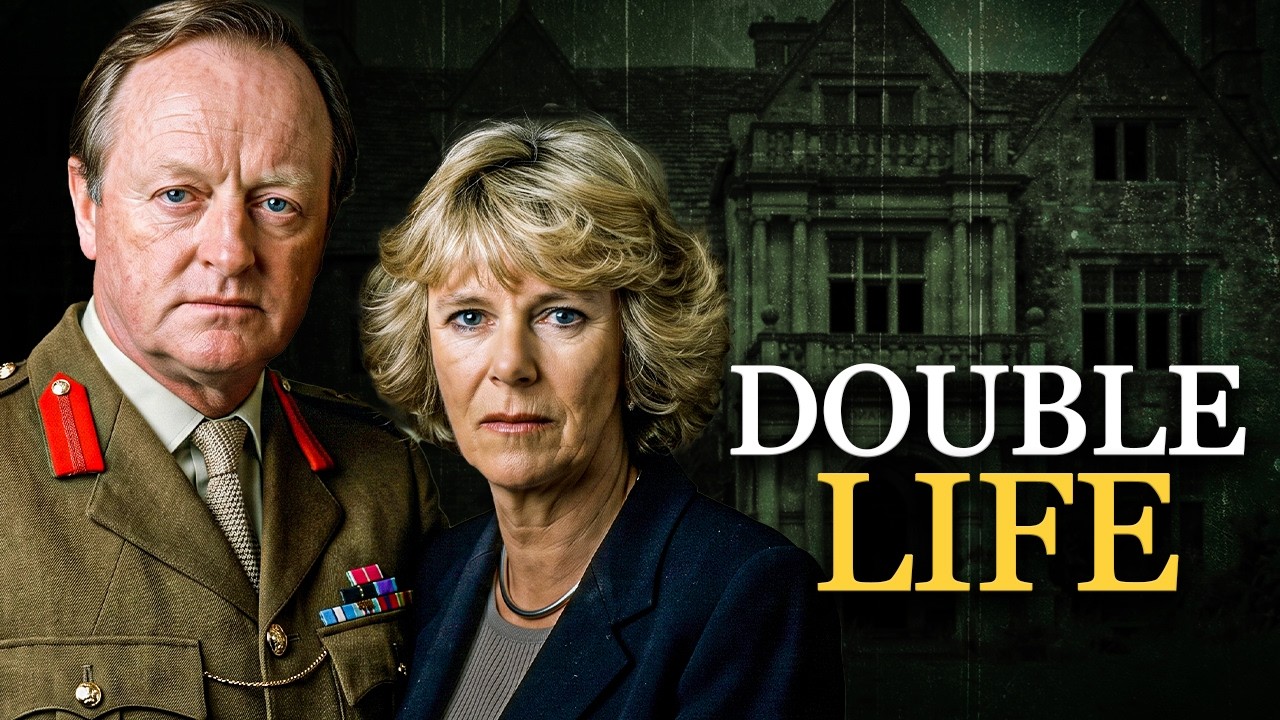
This was never the simple tale of a faithful husband secretly betrayed by his wife. This was a marriage in which both people understood from the beginning that fidelity and loyalty were not the same thing, and in which loyalty, the keeping of appearances, mattered far more than fidelity ever had.
In this rarified horse-and-country set, adultery could be absorbed. It could be tolerated, accommodated, quietly known, and never spoken of, so long as everyone involved preserved the surface. Andrew's apparent tolerance of his wife's relationship with Charles makes far more sense when set beside his own behavior.
This was not a conventional marriage being attacked from the outside by a royal interloper. This was a marriage that had always operated by rules utterly different from the public Victorian ideal that surrounded the monarchy itself. Contemporary commentary described exactly this: a class code in which discreet affairs could be quietly permitted, while public scandal could not be forgiven.
On July 29, 1981, Charles married 20-year-old Lady Diana Spencer at St. Paul's Cathedral in a wedding watched by hundreds of millions of people. Their son William was born in 1982 and Harry in 1984.
But Diana came in time to understand something the public did not. She came to understand that Camilla Parker Bowles was not a discarded former girlfriend. She was a continuing presence, and that left Andrew in the strangest position of all: a man whose wife's former lover had married the future queen of England, and who nonetheless remained inside the same social orbit, godfather to his son, guest at his table.
By the accounts used in Charles's own authorized biography and the histories that followed, the sexual relationship between Charles and Camilla resumed by around 1986, though some biographers place earlier episodes in the late 1970s. This chronology is genuinely contested and should be held as contested rather than flattened into false certainty.
What is not contested is the shape of the thing. Two marriages were now quietly entangled with each other, and one of them belonged to the man who would one day be king. For years, the code held.
It had survived Andrew's other women. It had survived Camilla's long history with Charles. It had survived the future king becoming godfather to their son and a fixture at their weekends. It had survived because everyone involved understood the one rule that made it survivable: that what happened privately could remain private, provided it never became public evidence.
Then, in the winter of 1989, a private conversation became a physical object, and a physical object could be copied and sold and read aloud. On the night of December 17, 1989, some accounts date the recording itself to the following day, Charles and Camilla spoke on the telephone. Both were still married to other people.
The conversation moved, as intimate conversations do, between affection and ordinary logistics and a good deal of private joking, some of it sexual. Somewhere out in the dark, an amateur radio enthusiast with a scanner picked up the signal and recorded it. The precise technical circumstances, even the exact date, generated dispute for years afterward.
What is certain is that the words existed now on tape. What had belonged to two people now belonged to a machine. For three years, nothing happened. The recording sat somewhere waiting, and then the world it would fall into began on its own to come apart.
By late 1992, the marriage of Charles and Diana was already an open public collapse. On December 9, 1992, the Prime Minister, John Major, stood before the House of Commons and formally announced their separation, adding that both would continue to raise their children.
Into that already febrile atmosphere, in January 1993, the transcript of that three-year-old telephone call surfaced, first abroad, then in Britain. What had been the private property of a narrow social circle became overnight mass entertainment. The intimacy of the future king and a married woman was now printed in newspapers, quoted in offices, read aloud for laughs.
The humiliation fell most visibly on Charles and Camilla, but it fell on Andrew too, and in a way that no one had prepared him for. For the first time, the arrangement he had lived inside for years could no longer be protected by discretion, because discretion was over.
His wife's intimacy with the heir to the throne was no longer a thing quietly known in Wiltshire drawing rooms. It was a national text. And still, Andrew did not retaliate. He did not attack.
Camilla was being vilified in the press. Charles's very fitness to be king was being debated. And Andrew Parker Bowles, the man with more public reason for grievance than anyone, largely said nothing.
Even the jokes at his expense were noted at the time. Friends had reportedly taken to calling him "Ernest," after Ernest Simpson, the discarded husband of Wallis Simpson, a private cruelty that reveals exactly which historical parallel that world was drawing around him.
There were two people in this story who had no say in any of it. Tom Parker Bowles was 18. Laura was 15. Later accounts say that Tom found the publicity surrounding his mother almost unbearable, that he stopped reading the coverage altogether.
The documented truth is simpler and it is enough. The private lives of all four parents, Charles and Diana, Andrew and Camilla, and of their children, had been converted into newsprint, and there was no converting it back.
For twenty years, Andrew Parker Bowles had kept the silence his world demanded of him. He had absorbed his wife's affair, tolerated a future king in his home, and endured the slow erosion of a marriage everyone around him could see. He had done it the way he did everything: quietly, with discipline, without complaint.
What none of them yet understood in the wreckage of that January was that the silence had held only because the world had let it. The one person capable of ending it for good was not the tabloid press, and not a man with a radio scanner in the dark. It was the future king himself.
Jonathan Dimbleby, in a documentary filmed over roughly two years and meant to rehabilitate the prince's battered public image, asked the Prince of Wales the one question that mattered: whether he had been faithful to his wife. Charles, after a career of careful evasions, conceded that he had been faithful until the marriage had, in his own description, irretrievably broken down.
The newspapers did not treat it as a nuance. They treated it as a confession. With those few televised words, the private arrangement that Andrew Parker Bowles had lived alongside for two decades was no longer a matter of gossip or leaked tape or upper-class rumor. It had been confirmed on camera by the future king.
For twenty years, the one thing Andrew's world had asked of everyone was discretion. Say nothing. Keep the surface intact. And Andrew had kept it through his own affairs, through Camilla's, through the leaked telephone call, through the jokes at his expense.
The man who finally shattered that discretion was not Andrew, who had every reason to. It was Charles, who had every reason not to. The future king broke the silence the wronged husband had faithfully maintained.
To understand how strange Andrew's position had become by that summer of 1994, you have to hold two things in your mind at once. Two marriages were now breaking in parallel, quietly and separately. Charles and Diana had already formally separated, and Andrew and Camilla, though the public did not yet know it, had been living increasingly separate lives for some time.
When their marriage finally ended, they would say they had been apart for two years. There had been no single explosion between them, no public rupture. There had only been the slow mutual drift of two people whose marriage had always been built on latitude, now quietly reaching the end of what latitude could hold.
It helps to remember the state of the monarchy in those years, because Andrew's quiet catastrophe was unfolding inside a much larger one. 1992 had been, in the Queen's own words spoken at the Guildhall that November, an annus horribilis, a horrible year.
In the space of twelve months, the Princess Royal's first marriage had ended in divorce. The Duke and Duchess of York had separated. Windsor Castle had caught fire and burned for hours. And in December, the Prince and Princess of Wales had formally parted.
The institution that had spent the entire 20th century selling itself as the emblem of stable family life was visibly coming apart in public, marriage by marriage. It was into this atmosphere, an establishment already reeling, already exposed, already the subject of open speculation about its own survival, that the transcript of Charles and Camilla's telephone call had fallen.
Andrew Parker Bowles did not publicly expose Charles. He did not sell his story. He did not write a bitter memoir. He did not stand before the cameras and cast himself as the victim of a royal family that had taken his wife. He did not demand that the palace answer for any of it.
In an era when a wronged spouse could command a fortune for a single interview, Andrew said nothing. That silence is real, and it is remarkable. But silence is not the same thing as a secret pact.
His lifelong familiarity with royalty, his own long record of infidelity, and his membership in a class that prized discretion above almost everything all offer a plausible explanation for why he behaved as he did. But the motive remains an inference. What can be said with certainty is that he stayed quiet. Why he stayed quiet, only Andrew ever truly knew.
Anyone can keep a secret when keeping it costs nothing. What Andrew did was harder and stranger. He kept his composure while being mocked by name in the national press, while his marriage was dissected in every newspaper in the country, while comedians and columnists turned him into a stock figure of fun.
He had spent a lifetime learning to absorb pressure without flinching, first at Ampleforth, then at Sandhurst, then across three decades of soldiering that had put him in the path of a car bomb. That training did not switch off when the battlefield became a divorce.
The world saw a passive man. What the world was actually looking at was a man exercising the only kind of control still available to him: the refusal to give anyone the reaction they were waiting for.
While the press was mocking him as the accommodating husband, Andrew Parker Bowles was quietly finishing something the caricature had no room for. He was concluding a military career of more than three decades. He had reached the rank of brigadier and served as director of the Royal Army Veterinary Corps, a fitting final posting for a man whose whole life had run on horses.
In 1994, the very year of the televised confession, the very year his marriage entered its final months, he retired. In the newspapers, he was a punchline. In reality, he was a decorated brigadier with a commendation for bravery, closing out a serious career of royal ceremonial and battlefield service.
For 34 years the army had been the frame that held everything else in place. It had given him rank, purpose, structure, a uniform to put on in the morning and a chain of command to answer to. It had defined him as something other than the husband in the newspapers, and it ended in the same year the marriage did.
The two great organizing structures of his adult life, his career and his marriage, dissolved almost in step with one another. A lesser-known man might have been permitted to grieve those losses quietly. Andrew had to absorb them while the country watched, and while the country had already decided exactly what kind of man he was.
The documentary that undid the discretion had been intended to do the opposite. Charles and Dimbleby had conceived it as an act of reputational repair. Instead, one honest answer to one direct question undid two years of careful filming.

Until that broadcast, Andrew could go on existing inside an eccentric private marriage without ever formally acknowledging the obvious. After it, the acknowledgement was national. The obvious had been said aloud by the one person whose word on the matter could not be dismissed.
Several accounts written well after the fact described Charles's confession as the final humiliation, the thing that at last made Andrew move toward divorce. It is a satisfying story. It may even be true. But the couple themselves never said it.
When the divorce came seven months after the broadcast, Andrew and Camilla described it as mutual and long incoming, the natural end of a marriage that had already been over in all but name for two years. Both things can be true at once. Andrew may have privately reached the limit that summer while still choosing publicly to end the marriage jointly and without a word of blame.
The timing was cruelest of all for Camilla. In that same year, 1994, her mother died. Rosalind Shand had suffered from osteoporosis and died at the age of 72.
At the precise moment Camilla had become the human focus of a national scandal, caricatured on front pages and blamed for the collapse of a royal marriage, she was also privately burying her mother and watching her own marriage reach its quiet end.
The woman being drawn as a villain in the national story was in her own life a daughter losing her mother and a wife losing her marriage all at once, in full view of a public that felt entitled to every detail. She could not grieve privately because nothing about her was private anymore.
Andrew's own life, meanwhile, was already moving toward its next chapter. By this period, he had a long-standing companion in Rosemary Pitman, the woman he would marry in 1996. Neither Andrew nor Camilla at the end of their marriage behaved like people destroyed by betrayal. They did not act like enemies. They acted like two people who had known each other for a very long time and were now without rancor letting go.
Tom Parker Bowles carried the particular strangeness of having the Prince of Wales, the man at the center of his parents' unraveling, as his own godfather. Laura had grown up inside the same tight country-house network, surrounded by the same friends, the same horses, the same weekends.
Their parents' marriage was ending at the exact moment their mother's relationship with their godfather had become a constitutional problem and a media obsession. What the record supports is restrained and, in its way, more human: press intrusion, private embarrassment, and a family instinct to draw together when the outside world became unbearable.
Both children would in time build lives deliberately outside the formal machinery of royalty. Tom would say plainly, again and again in the years to come, that whatever his mother became, he and his sister were not members of the royal family. They had learned young exactly how much a famous name could cost.
Years later, Netflix's The Crown would find irresistible drama in the tangle of Charles, Camilla, Andrew, and Anne. The series staged the romantic geometry of that early period as something far more simultaneous and far more strategically manipulated than the historical record actually allows. It made a conspiracy of what was in truth just a small world in motion.
Sally Bedell Smith has said directly that Anne and Andrew's romance had largely ended before Charles and Camilla's began, and that the push toward Andrew and Camilla's marriage came not from any palace plot, but from their own fathers.
Nobody needed to sit in a room at Buckingham Palace and instruct Andrew Parker Bowles to keep his silence. No arrangement had to be struck. No favor had to be called in, because Andrew already belonged to a world that rewarded silence as a matter of breeding, a world where a man of his background simply did not complain, did not expose, did not make a scene, no matter what had been done to him.
The silence was not the product of a conspiracy. The silence was the product of a class. And it was about to be tested by the most ordinary legal proceeding imaginable.
On January 10, 1995, lawyers announced that Andrew and Camilla Parker Bowles would divorce after 21 years of marriage. The statement they released was almost startling in its restraint. The decision, it said, was a joint one. They had lived apart for two years. Beyond their two children and a continuing friendship, they had little remaining in common.
That was all. That was the entire public accounting of a marriage that had begun beneath an arch of swords, produced two children, entangled itself with the future of the monarchy, and been picked over by every newspaper in Britain.
After 21 years, after Andrew's affairs, after Camilla's relationship with the Prince of Wales, after the leaked telephone call, after the global ridicule, after the confession that had confirmed everything, there was no accusation in it. None.
No attack on Charles. No revenge against Camilla. No suggestion that the palace had interfered. No hint of a wronged man's grievance. Whatever anger existed between them stayed exactly where Andrew had always kept everything. It stayed private.
The press, of course, could not let it be that simple. The announcement became front-page news across Britain and beyond, dissected for what it might mean for the monarchy, for Charles, for the eventual question of whether the prince and his mistress could ever marry.
But the two people whose marriage it actually was gave the machine nothing further to work with. There would be no interview, no elaboration, no wounded statement of feeling. The lawyers had said what there was to say, and it fit in a few plain sentences.
The lawyers expected the divorce to be uncomplicated, and it was. The couple agreed. They had been separated long enough to satisfy the legal requirement. There was nothing to fight over that they were willing to fight over in public.
Charles, by the accounts of the time, had been informed in advance. But when the news broke, he was away skiing in Switzerland. Andrew was reported to be staying with friends. There was no summit, no crisis meeting, no gathering of the principals.
Then, nine days later, on January 19, 1995, it ended in a courtroom. And the manner of the ending is the most devastating detail in the entire story. Not because it was dramatic, but because it was so completely ordinary.
A decree nisi was granted in London. The proceeding, by the reporting of the day, lasted only a few minutes. The Parker Bowles case was processed alongside dozens of other failed marriages, one more entry on a routine court list, indistinguishable in the eyes of the law from any other couple whose marriage had run out.
Twenty-one years, two children, a future king, a princess, a leaked tape read across a nation, acres and acres of newsprint. And it was undone in the time it takes to boil a kettle, in a room full of strangers ending their own marriages, with no one present to mark that this one was different. Because in the only terms that mattered to the court, it wasn't different at all.
The world had spent two years treating this marriage as a matter of state, as a threat to the monarchy, a national scandal, a constitutional problem. And the law dispatched it in minutes without ceremony, as though it were nothing more than what it technically was: two people who no longer wished to be married.
The divorce became final that March in 1995. The arrangement that had held for 21 years was at last simply over. Andrew Parker Bowles woke up one morning that spring as a divorced man, 55 years old, with a distinguished career behind him, two grown children, a companion in his future, and a lifetime of connections that no court order could sever.
Camilla, for her part, disappeared as far as she could from the cameras, into the country and the company of the small circle of friends who had always closed around her. The two of them had built a marriage inside a world that specialized in surviving scandal, and now they set about doing the thing that world did best: carrying on as though the surface were still intact, whatever had happened beneath it.
Did Andrew wait? Did he time his exit, choosing the clean, dignified moment when a quiet divorce had become useful to everyone, himself included? The question is worth posing, but it cannot be answered with a yes, because the evidence will not carry it.
The only contemporary statement the couple made says the divorce was mutual and long overdue. The dramatic later version says the confession broke him. Both can live side by side. The most defensible thing that can be said is that Andrew did not need to protect Charles by lying about what had happened, because by 1995 everyone already knew what had happened.
What Andrew protected was not the truth. It was the manner of the ending: quiet, joint, and without forcing the future king into a hostile, humiliating divorce. He gave up the marriage the way he had endured it, without a public word.
That November, on the 20th, Diana sat for her own famous television interview and told the nation, in the line that would outlive everything else said in that period, that there had been three people in her marriage. The following year, on August 28, 1996, the divorce of Charles and Diana was finalized.
The monarchy's two parallel marital crises, the one that had played out under blinding public light and the one that had ended in a three-minute courtroom hearing almost no one witnessed, were now both irreversible legal facts. Two marriages begun in the same closed world, undone within a year of each other.
But letting go of the marriage did not mean letting go of Camilla. And it did not mean letting go of the family that had complicated everything. He was still bound to that world by his son's godfather, by his own decades inside it, by ties that a decree nisi could not touch.
Andrew Parker Bowles married Rosemary Pitman in 1996, a year after the divorce became final. Rosemary was not exiled to the far edge of Camilla's life. She was not treated as an interloper or a rival. When Charles and Camilla finally married years later, Andrew and Rosemary were there, guests at the wedding of the man whose relationship with Camilla had run through the whole of Andrew's first marriage.
The former husband, his new wife, the former wife, and the future king she was marrying, all gathered under the same roof, all behaving as though this were the most natural thing in the world. Because in their world, it was. This was a class that did not produce enemies out of former lovers and former spouses. It absorbed them. It folded them back in and called them family.
Rosemary would remain Andrew's wife until she died of cancer in 2010. By every account, it was a happy marriage, the settled, companionable life that his first marriage, for all its warmth, had never quite managed to be.
Andrew and Rosemary settled into the Cotswolds, into the rhythms of the racing world he had belonged to since boyhood: the meetings, the paddocks, the long familiar company of horse people. Within the Household Cavalry, the old soldiers still called him by his initials, APB, a mark of the affection and respect he commanded in a world the tabloids never bothered to look at.
He did not give the interviews he could have given. He did not write the book he could have written. In an age when almost everyone adjacent to the royal family eventually found a way to convert that proximity into money or attention, Andrew Parker Bowles converted it into nothing at all.
Camilla's road was far harder, and it ran directly through the darkest event of the entire royal decade. Through the late 1990s, the machinery around Charles was engaged in something close to a full reconstruction of Camilla's public image, a patient, deliberate campaign to move her, in the eyes of the country, from the woman who had wrecked a marriage to a woman the public could one day accept.
Then, before it had truly begun, the ground gave way entirely. On August 31, 1997, Diana died in a car crash in Paris. She was 36 years old. In the wave of grief and anger that followed, Camilla became, for millions of people, the woman on the other side of the story that had just ended in a Paris tunnel.
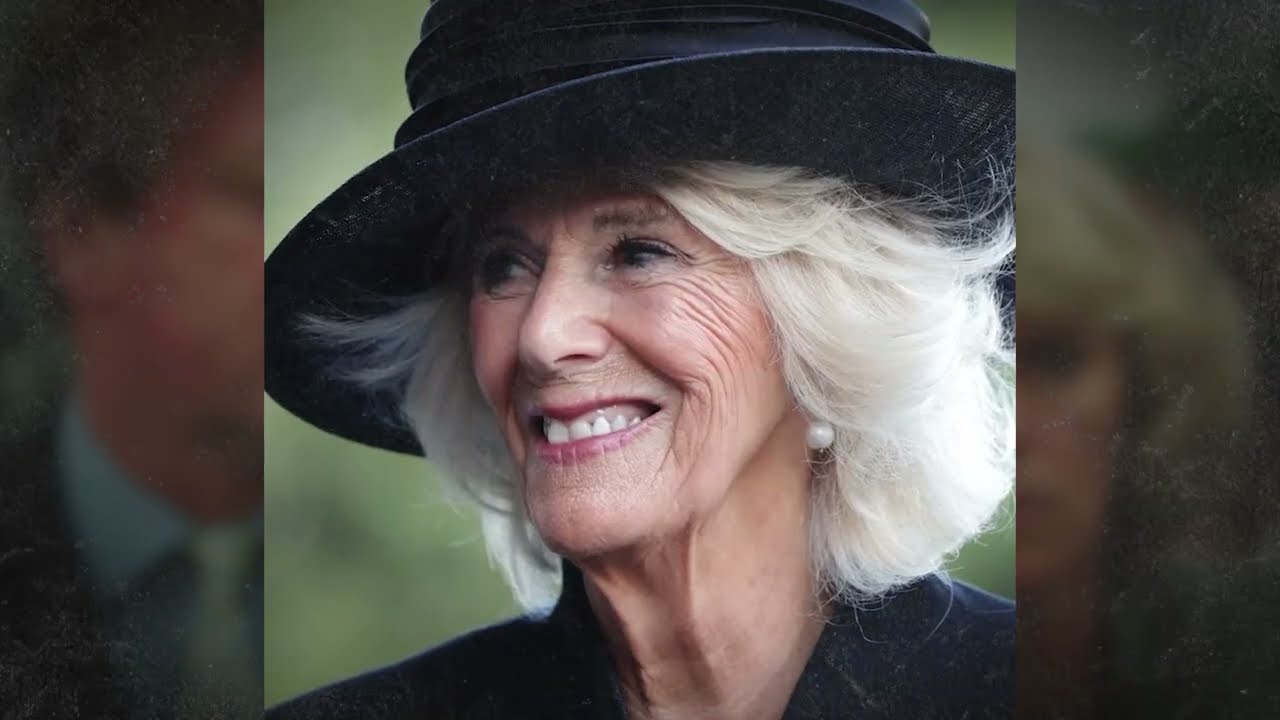
Whatever tentative progress had been made toward her acceptance vanished overnight. For a time it seemed the rehabilitation might be finished before it started, that the country would never forgive the woman it now held, fairly or not, at the edge of its grief. The work did not stop, but it slowed to a crawl, and the timeline stretched from months into years.
When it resumed, it resumed carefully, one small public step at a time. On January 28, 1999, Charles and Camilla left a party at the Ritz Hotel in London together, walking out into a wall of waiting photographers. It had been arranged. Camilla had been at a birthday party for her sister.
The couple's emergence side by side in front of the cameras was the calculated beginning of their public life together, the first time in the long history of their relationship that they allowed themselves to be photographed as a couple on purpose, for the world to see. After more than two decades of hiding, of leaked tapes and denials and country-house discretion, they walked into the flashbulbs and did not look away.
From there the steps came slowly and deliberately: shared appearances, the gradual, grudging warming of public opinion, and at last the quiet approval of the Queen herself. It would take the better part of another decade before the country was ready to let Charles marry the woman he had always wanted.
The engagement was announced on February 10, 2005. The wedding had been set for April 8, but Pope John Paul II died that week, and his funeral fell on the same day. Charles, who intended to attend, had the wedding moved back 24 hours.
On April 9, 2005, Charles and Camilla married in a civil ceremony at the Windsor Guild Hall, followed by a service of prayer and dedication at St. George's Chapel. There was no arch of swords this time, no 800 guests, no society wedding of the year. There was a register office and a blessing, the quiet second-marriage version of a royal wedding, hedged with all the constitutional care that a future king marrying a divorced woman required.
Camilla did not take the title Princess of Wales, the title the public still associated with the woman who had died in Paris. She became the Duchess of Cornwall instead, and stepped at last into the family in the open.
Among the people present at the wedding, unremarkably and easily, was Andrew Parker Bowles. The man Camilla had married beneath the swords in 1973 stood as a guest at the wedding that finally united her with Charles. If you wanted a single image to capture how completely this world had metabolized its own scandal, you could not invent a better one than the true one: the first husband in the pews, watching the second marriage.
When The Crown dramatized these lives, it introduced an entirely new generation to the tangle of Charles, Camilla, Andrew, and Anne. Hundreds of millions of viewers in more than a hundred countries, most of whom knew the outline of the scandal but none of its texture, met these people for the first time as characters in a prestige drama.
The series did what television does. It smoothed the mess into a plot. It gave the accidents the shape of design. It compressed years of drift and coincidence into clean, motivated scenes, and turned a small world in motion into something that looked like strategy.
The people who had actually lived it mostly kept their silence about the depiction, as they had kept their silence about everything else. There were no lawsuits, no indignant statements, no demands for correction. The historians who knew the period best kept pointing patiently at the same thing: that the truth had been messier and more human and far less deliberate than the elegant version the screen preferred.
Queen Elizabeth II died on September 8, 2022, after 70 years on the throne, and Charles became king. Camilla, the woman whose relationship with him had once seemed capable of ending his claim to the crown, became queen.
It is worth pausing on how improbable that outcome had looked from the vantage point of 1993, when the leaked telephone call made her the most vilified woman in Britain, or 1997, when Diana's death seemed to have closed the door on her acceptance for good. The late Queen herself had, in her final years, made her wish explicit: that when the time came, Camilla should be known as Queen Consort. The endorsement converted decades of scandal into settled constitutional fact.
At the coronation in May 2023, the transformation was complete in public and beyond dispute. Charles was crowned king, and Camilla was crowned beside him in the same abbey, under the same weight of ceremony that had shaped both their lives.
On the guest list once again was Andrew Parker Bowles. The boy who had been a page at Elizabeth II's coronation in 1953 was there more than 70 years later to watch his former wife crowned beside the new king. He had begun his life inside the family ceremonies as a child carrying a train through Westminster Abbey, and he was inside them still.
By the time of that coronation, the whole cast of the scandal that had nearly toppled the monarchy in the 1990s had been quietly reabsorbed. Charles was king. Camilla was queen. Andrew had a second marriage behind him and a new companion beside him. The children had built lives at careful remove.
The same discretion that had allowed the affair to flourish inside Andrew and Camilla's marriage was the discretion that eventually allowed everyone to walk away from it without permanent wreckage. The code that had complicated their lives was, in the end, the code that let them all survive one another.
Tom Parker Bowles became a food writer and a restaurant critic, a serious one, with a career built entirely on his own work rather than on his mother's title. He wrote for newspapers and magazines, published a string of cookbooks, and made himself into an authority on food in his own right.
In 2024, he published Cooking and the Crown, a history of royal food, the closest he came to trading on the family story, and even then on his own terms, as a historian of the table rather than a courtier cashing in. He said over and over, in interview after interview, the same clarifying thing: that whatever his mother had become, he and his sister were not royal.
Laura, his younger sister, drew the boundary even more firmly. She became an art historian and worked in the London gallery world. In May 2006, she married Harry Lopes, a former Calvin Klein model turned accountant, at the parish church in Lacock, the Wiltshire village near where she had grown up. She had three children and kept a public profile so low that most people who could readily name her mother could not have named her.
Both of them had watched, as children, what the machinery of fame did to a family. Both of them had decided it would not do the same to theirs.
Andrew, through all of it, remained exactly where he had always been: inside the circle, close to the family, close to the horses, close to Anne. He never became an enemy of the new king and queen. He never gave an interview that cashed in the extraordinary story he was sitting on.
He remained godfather to Anne's daughter Zara, and close enough to the Princess Royal that decades after their youthful romance had ended over the impossibility of his faith, he was still standing in for her at royal occasions when she could not attend.
In early 2026, he represented Anne at a memorial service for Field Marshal Lord Guthrie at the Guards Chapel, the same chapel where he had married Camilla 53 years before. Weeks later, he stood in for Anne again, this time at a thanksgiving service for the racehorse trainer Ian Balding.
A family does not send just anyone to stand in its place at the funerals of its friends. It sends the people it trusts most completely, the people it knows will conduct themselves without a false note. That the royal family, after everything, still chose Andrew Parker Bowles for that role is perhaps the most eloquent verdict anyone ever delivered on the man.
There was even, late in his life, a new companionship. Former television presenter Anne Robinson, the famously sharp-tongued host of the game show that had made her a household name, confirmed in 2024 that she and Andrew were in a relationship. The two had met at a lunch, kept the romance private for as long as they could, and lived some 30 miles apart in the Cotswolds, in no hurry to change any of it.
Camilla, by every account, was entirely at ease with it, said even to have joked about the four of them going out together. In the world these people had always inhabited, an old love becoming a lasting friendship, a former spouse finding new company, an ex-wife blessing an ex-husband's late romance, was not a scandal. It was simply how things were done.
The clearest picture of what that marriage had really been came from a reception at a horse trials in the Gloucestershire countryside in May of 2026. Queen Camilla, there in her capacity as president of a writing charity for disadvantaged children, moved through the event greeting the familiar faces of the equestrian world she had loved since girlhood.
Among them, without ceremony, without awkwardness, without a flicker of the old drama, she greeted Andrew Parker Bowles. The Queen of the United Kingdom, 78 years old that spring, greeting the husband she had divorced 31 years earlier, while the man for whom that marriage had become impossible now sat on the throne of England.
It made no headlines worth the name. There was no wound to reopen, no bitterness to photograph, no story the newspapers could build from it. There was only an old friendship still intact in a field full of horses, two people who had known each other for the better part of 60 years, greeting each other the way old friends do.
Something happened to Andrew's reputation too in the long years afterward, though it happened so quietly that most people never noticed the shift. The tabloid caricature of the 1990s, the compliant husband, the famous cuckold, the man who wouldn't fight, began slowly to give way to a fuller and more generous picture.
Biographers and royal historians who went back over the record found not a weak man, but a disciplined one; not a passive figure, but a deliberate one; a decorated soldier who had made a choice about how to carry an impossible situation and then held to it for 30 years. The joke curdled into something closer to respect.
Andrew Parker Bowles is 86 years old now. He is a retired brigadier, widowed since Rosemary's death in 2010, still a familiar presence in the world of racing and equestrian sport, still turning up at the memorials and services that mark the passing of his generation. He is in a relationship with Anne Robinson. He still, when the Princess Royal cannot be somewhere, goes in her place.
Queen Camilla is 79. She carries out royal duties alongside King Charles, the woman once cast as the villain of the monarchy's worst decade, now standing at its center as its consort. She has built her working life around causes that would have seemed unimaginable for her in the years of the scandal: literacy, domestic abuse survivors, animal welfare, and the riding charities that keep her tied to the world of horses she has loved since she was a girl in East Sussex.
The official record of her life keeps its account of that first marriage plain and unadorned, noting only that her marriage to Brigadier Andrew Parker Bowles was dissolved in 1995. Everything the country once fought over, every leaked word and front page and long year of public argument, reduced to a single neutral clause.
King Charles III is 77. He has been king since 2022 and married to Camilla since 2005. The relationship that once threatened his future is now the settled companionship of his reign, the thing he had wanted since he was a young man and been made to wait more than 30 years to have.
Princess Anne is 75 and remains one of the hardest-working members of the royal family, the one whose reputation for duty never wavered through any of it, still bound by an easy friendship to the man she nearly married more than half a century ago.
Tom Parker Bowles is 51, a food writer and critic who has spent his career insisting gently and firmly that he is not royal, a man who took the one inheritance he might have cashed in and quietly declined it. Laura Lopes is 48, an art historian and mother of three, who has spent her adult life making sure almost no one has cause to ask her surname twice.
There is a temptation at the end of a story like this to decide what Andrew Parker Bowles was, to call him a martyr who sacrificed his marriage for the crown or a mastermind who quietly engineered a convenient exit. He was neither, and the evidence supports neither.
He was unfaithful, and so was Camilla, and so was Charles, and it was Diana who was left to carry the consequences of all of it in front of the whole world. What set Andrew apart was never innocence. It was silence.
He belonged to a class that understood, as an unspoken article of faith, that private behavior could be almost infinitely flexible so long as the public surface stayed rigid. And he kept that surface intact long after the people around him had shattered it.
Perhaps the truest image of him is not the man walking out of a three-minute courtroom in 1995, but the old man, three decades later, greeting a queen across a field of horses, still standing inside the world that had complicated his life from the beginning, and never once saying a word about it.