On the night of November 30, 2004, in an industrial section of Brooklyn, Randolph “Randy” Pizzolo was shot dead. His new BMW was found nearby. His wallet was still on him, and his valuables untouched. This was not a robbery.
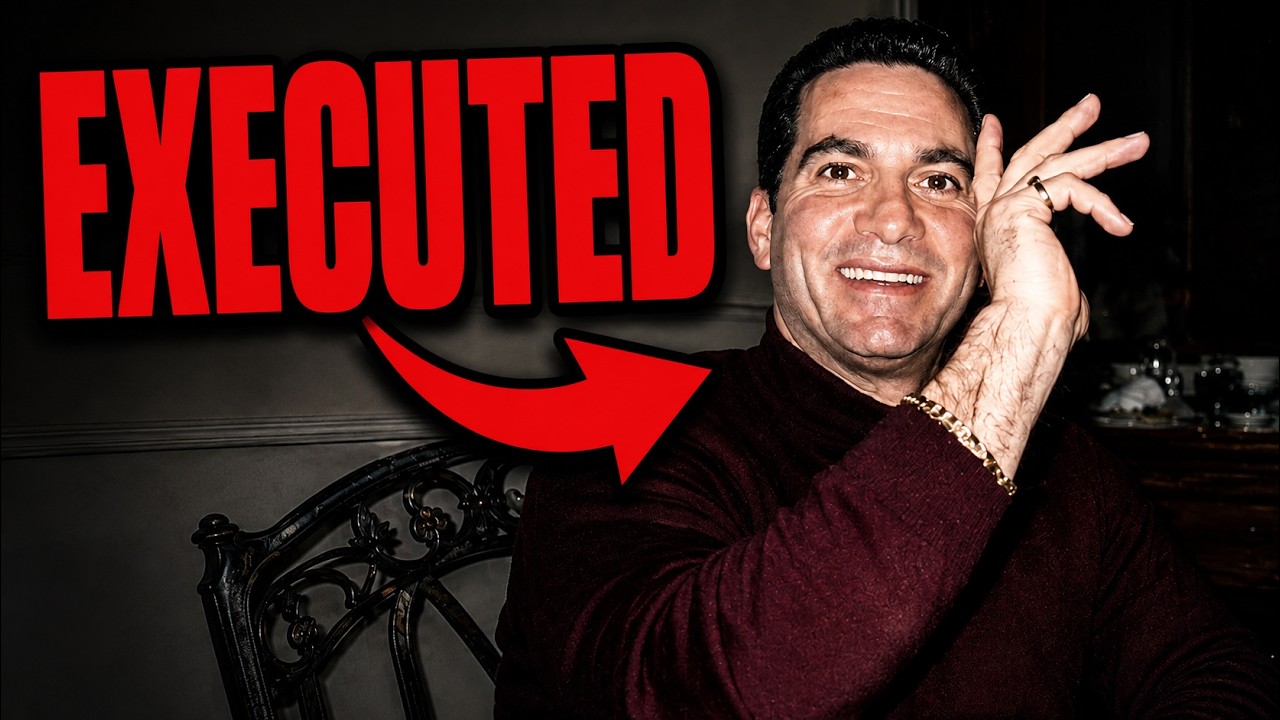
Pizzolo had spent years trying to climb inside the Bonanno crime family. He worked around made members, earned money in their orbit, and desperately wanted to become an official associate. He wanted his “button”—formal membership in the organization. But the family never gave it to him, and his frustration eventually turned into a fatal liability.
According to testimony later presented in federal court, Pizzolo had been drinking at a restaurant in Queens and exploded in anger over being passed over. He allegedly boasted about what he was capable of doing and threatened to level the Bronx. That threat was aimed squarely at territory controlled by Vincent “Vinny Gorgeous” Basciano, then the acting boss of the Bonanno family. Basciano already had problems with Pizzolo, according to witness accounts.
He reportedly believed Pizzolo had botched construction work on his waterfront home in the Bronx, and he thought Pizzolo talked too much. There was also an earlier incident in which Pizzolo reportedly showed up armed to meet a made member of the family—a serious breach of protocol for someone who was still just an associate. The decision to kill Pizzolo moved quietly through the Bonanno chain of command. There would be no ceremony, no swearing-in, no button.
Instead, men from the same organization he wanted to join lured him to the industrial area in Brooklyn. The killing was intended to send a message to the rest of the family: those who step out of line become examples. But what Basciano did not know was that the crime meant to prove his power was about to become evidence against him. The Bonanno family was already crumbling from within.
The boss, Joseph Massino, was preparing to cooperate with the government. The men involved in Pizzolo’s death would eventually talk. And one day, inside a federal detention center, Basciano himself would discuss Pizzolo with a man secretly recording every word. Pizzolo was a man caught between two worlds.
He was inside enough to work with the Bonannos, but not inside enough to gain the status he craved. That distinction proved to be everything. American Mafia families operated through a strict hierarchy. At the top was the boss, followed by the underboss and consigliere.
Captains controlled crews of soldiers, and beneath those formally initiated members were a much larger number of associates. Associates could earn with the family and work alongside made men daily. But they did not possess the one thing Pizzolo wanted most: membership. To become “made,” a candidate needed a sponsor.
His background had to be approved, and other members could object. Leadership ultimately had to sign off. Once initiated, he became part of the formal structure. For an ambitious associate, that difference could become an obsession.
Pizzolo was one of those associates. In the later murder trial, federal prosecutors described him as a mob aspirant whose ultimate ambition was to become a formal member of organized crime. The problem was that wanting the title did not mean the family believed he deserved it. At the center of the problem was Basciano.
He came out of the Bronx and owned a beauty salon called “Hello Gorgeous,” which gave him the nickname that followed him through mob history. Behind that nickname was a highly ambitious mob figure. Basciano rose through the Bonanno ranks and eventually became a captain, then moved higher as the leadership above him collapsed. Joseph Massino had spent years rebuilding the Bonanno family after the humiliation of the Donnie Brasco infiltration.
He understood surveillance and informants, and he recognized that the Mafia’s traditional habit of gathering in social clubs made investigators’ work easier. Under his leadership, the family recovered its strength. But federal prosecutors were closing in. Massino was arrested, and other leadership figures disappeared into federal custody.
With leadership weakened, Basciano rose. By 2004, Vinny Gorgeous was the acting boss. That meant Pizzolo was not troubling just a neighborhood mob figure. He was troubling the man who controlled the Bonanno family on the streets, and their relationship was already strained.
Pizzolo worked as a construction manager. One project was directly connected to Basciano. Basciano had a waterfront house in the Bronx, and Pizzolo was involved in the construction work there. According to later testimony, Basciano believed Pizzolo was botching the job.
That alone might not have sealed Pizzolo’s fate. Construction problems could be fixed and workers replaced. But Basciano’s complaints about Pizzolo went much further. Pizzolo talked too much.
He acted erratically. People around the family were growing annoyed with him. Patrick DeFilippo, a veteran Bonanno captain, was quoted in testimony as saying that Pizzolo’s tongue was his own worst enemy. That was a dangerous reputation for someone connected to the Mafia.
The entire organization depended on discretion. A man could be violent, gamble, steal, or lie, but if senior members believed he could not control his mouth, every other problem became more dangerous. Then there was the firearms incident. According to testimony later given by Dominick Ciaramitaro, Joseph Cammarano Jr.
complained that Pizzolo went to meet an official Bonanno member while carrying a gun. This mattered because Pizzolo was still only an associate. The hierarchy was built on status, and a made member had protected standing that an associate did not. Showing up armed around one of them could be read as something far more serious than simply carrying a weapon.
It suggested Pizzolo did not understand his place. Other testimony later questioned how aggressive Pizzolo actually was during some of these confrontations. That distinction matters. The government’s witnesses did not agree on every detail of Pizzolo’s behavior, but they did agree on the part that ultimately counted: Basciano had grown tired of him.
Then Pizzolo was given another chance—Florida. The Bonanno family wanted him to move there and manage property. For Pizzolo, that meant leaving New York and leaving the environment where formal Mafia membership mattered to him. He refused.
Another problem was added to the pile: the construction work, his mouth, his behavior, the weapons incident, Florida. And underneath it all was Pizzolo’s obsession with being formally initiated into the family. Then came the outburst that made everything worse. Pizzolo was at a restaurant in Queens and had been drinking.
According to Anthony Volpe, a Bonanno associate who became a government witness, Pizzolo began complaining that he had not been made. He had waited a long time. He had worked around these men. He believed he deserved his button.
Now he was angry. Pizzolo was said to have declared that he was ready to level the Bronx. That was the worst possible direction for a threat. The Bronx was Vinny Gorgeous’s territory.
The acting boss now had an associate under him expressing public anger about not being made and making reckless statements about Basciano’s own backyard. Pizzolo wanted the Mafia to recognize him. Instead, he was giving its leadership reasons not to trust him. At that point, the story shifted.
Basciano did not simply decide Pizzolo was annoying. According to testimony later given by Dominick Cicale, Basciano began to see Pizzolo’s death as useful. Cammarano Jr. had complained about Pizzolo.
Others knew Pizzolo was acting out. If Pizzolo suddenly disappeared, everyone would understand why. No meeting was needed, and no written rules had to be distributed. The message would spread through the family on its own.
Vinny Gorgeous was not soft on things, Cicale later described Basciano’s thinking. Pizzolo would be an example, a warning to everyone. Once Basciano reached that point, Pizzolo’s dream of becoming a formal member was over. He just did not know it yet.
The Bonanno family did not tell Pizzolo he had crossed an irreversible line. No one sent him a rejection letter, and no one announced that his relationship with the organization had changed. That ambiguity was part of what made Mafia hits possible. A man could know others were angry with him without realizing permission to kill him had already been given.
He could answer calls, meet friends, and ride in cars with people he had known for years, thinking the dispute was resolvable. Meanwhile, somewhere above him, discussions had moved past discipline. The question was no longer whether Pizzolo should become a member. The question was who would kill him.
Dominick Cicale became central to what followed. He was close to Basciano and deeply involved in the Bonanno chain of command. Anthony “Ace” Aiello was another member involved. Above them all stood another powerful Bonanno figure, Michael “The Nose” Mancuso.
The murder order moved through men Pizzolo considered part of the world he wanted to join. Then, before the murder could happen, something unexpected occurred. On November 19, 2004, federal agents arrested Vincent Basciano. The acting boss was suddenly off the streets.
Pizzolo remained alive. If Pizzolo had known how dangerous his situation was, he might have believed the arrest had saved him. It had not. Orders inside organized crime do not necessarily disappear just because the person who issued them enters federal prison.
Messages were passed through intermediaries. Leaders could continue carrying out tasks. The men on the street knew what had been approved, and the murder of Pizzolo remained in motion. Eleven days later came November 30.
Pizzolo was lured to an industrial area in Brooklyn. The location mattered. It was not a crowded restaurant, not a social club full of familiar faces, not a busy street with potential witnesses. It was an industrial zone, where the men who brought Pizzolo could control what happened next.
Pizzolo arrived with people from the same criminal circle he had spent years trying to impress. Anthony Aiello was among them. At some point, Pizzolo realized too late that this was not another Bonanno family meeting. Aiello shot him.
The men left. Pizzolo remained. When his body was discovered, the scene raised immediate questions. His valuables were not stolen.
His wallet was intact. His BMW was nearby. This was not a person killing a man for his car, and it was not a robbery gone wrong. Someone had brought him there specifically to kill him.
The associate who wanted more than anything to join the Bonanno family had been killed on the orders of its leadership. But the most important part of Pizzolo’s story begins after his death. Vinny Gorgeous believed the murder achieved exactly what he wanted. Pizzolo was gone, the family would hear about it, and anyone acting recklessly could understand the warning.
Basciano had shown his authority without being personally near Pizzolo at the shooting. This was how Mafia leadership was supposed to work: the boss gives approval, trusted men arrange the details, and the shooter handles the street work. Everyone stays silent. Except the Bonanno family no longer had everyone’s silence.
Joseph Massino was facing life in prison. For decades, the Mafia considered cooperation the ultimate betrayal. A soldier was supposed to accept 20 years, 30 years, or life rather than testify against the family. Massino had enforced that culture as boss.
Then he faced his own future and chose survival. Joseph Massino became a government cooperator. The significance was enormous. The Bonanno family had survived informants before, but this was not an associate, a soldier, or even a captain.
This was the boss himself. Massino understood the entire structure. He knew who held power, how orders were issued, and the relationships behind the titles. And he knew Vincent Basciano.
The FBI gave Massino an opportunity no one in the Mafia could have imagined. They wired him. In January 2005, Massino met with Basciano while both were in federal custody. They were separated in prison recreation cages only inches apart.
Basciano thought he was speaking to the boss. He did not know the boss was now working for the government. Massino brought up Randy Pizzolo. He asked whether Basciano had approved it.
Basciano answered, admitting he had given the order. Massino pressed further. Did Pizzolo’s behavior really justify killing him? Basciano began to justify himself, describing Pizzolo as dangerous, someone who did not listen, someone who talked foolishly.
He mentioned the incident where Pizzolo went to meet a formal member while carrying a gun. The conversation federal prosecutors needed was happening naturally because Basciano believed he was defending his decision to another Mafia boss. The murder designed to prove his authority was now being described in his own words while the FBI listened. Massino was not the only problem.
Dominick Cicale eventually cooperated as well. Cicale could explain what happened before the murder. He could tell prosecutors what Basciano said about Pizzolo, describe the murder order, and explain why Pizzolo had been chosen. Most importantly, he could explain the message Basciano wanted the killing to send: Pizzolo would be a message to the crime family, and Basciano would not tolerate those who acted out of line.
Prosecutors now had both sides. They had the acting boss discussing Pizzolo secretly, and they had an insider explaining the murder from within the conspiracy. Then Anthony Aiello admitted his role. In August 2008, Aiello pleaded guilty and admitted he shot and killed Randy Pizzolo.
Michael Mancuso pleaded guilty the same day to a murder conspiracy charge related to Pizzolo’s death and admitted his role in it. The Justice Department stated the murder had been ordered by Mancuso and Basciano. The chain was now visible. Basciano and Mancuso at the top.
Cicale helping put the plan into motion. Aiello carrying out the shooting. Pizzolo at the bottom—the man who wanted to rise in the Bonanno hierarchy ended up exposing that hierarchy through his own murder. Eventually, Vinny Gorgeous faced Randy Pizzolo again.
Not on a Brooklyn street, but in federal court. By the time Basciano was tried for the murder, he was already serving a life sentence in another federal case. But the Pizzolo murder carried a greater threat. Federal prosecutors pursued the case as a potential death penalty matter.
The government argued that Basciano ordered Pizzolo killed to maintain and strengthen his position in the Bonanno family. The jury heard about Pizzolo’s obsession with becoming a formal member. They heard about his behavior and testimony about his drunken complaints after being passed over. They heard Cicale explain why Basciano wanted him dead.
And they heard Vinny Gorgeous himself—not from the witness stand, but from the recording Massino had secretly made. Basciano’s own words followed Pizzolo from that Brooklyn industrial section into the courtroom. In May 2011, a jury convicted Vincent Basciano of murdering Randy Pizzolo. The government then sought the death penalty.
But the jury did not unanimously choose execution. Basciano received another life sentence. The acting boss who wanted Pizzolo’s murder to prove his control would spend the rest of his life inside federal prison. Pizzolo never got the one thing that consumed him: formal membership.
That is what makes his story so revealing. He was close enough to the Mafia to experience its danger, but not close enough to gain the status he wanted from it. He worked among its made men, dealt with prominent Bonanno figures, managed construction jobs, and knew people inside the hierarchy. He wanted the organization to look at him and say, “You are one of us.
”
Instead, every attempt to force that recognition pushed it further away. The more he talked about respect, the less respect leadership had for him. The more frustrated he became over not being accepted, the more dangerous his behavior seemed. And when he complained publicly, threatened, and challenged the authority around Vinny Gorgeous, his ambition became part of why leaders wanted him gone.
There is a brutal contradiction at the core of Randy Pizzolo’s life. He wanted protection through membership, but his pursuit of membership put him directly in the path of the men who could kill him. He wanted the Bonanno name to give him status. Instead, Bonanno leadership used his death to strengthen their own status.
He wanted to be an example of someone who rose through the ranks. Vinny Gorgeous turned him into an example of what happens when an associate forgets his place. Even that failed, because the Mafia lesson Basciano wanted to teach did not survive federal court. Pizzolo’s death was supposed to tell Bonanno members that Vinny Gorgeous was powerful.
Instead, it helped reveal how fragile that power was. The boss cooperated. The captain cooperated. The shooter pleaded guilty.
Another prominent figure pleaded guilty. And the acting boss was secretly recorded. The hierarchy Pizzolo desperately wanted to join began testifying against itself. That is the part Pizzolo could never have imagined while demanding his button.
Formal membership was supposed to mean safety, respect, and belonging. But by 2004, the Bonanno family could barely protect its own leadership from federal investigators. Joseph Massino became an informant. Basciano was in federal custody.
Cicale would eventually cooperate. Mancuso would plead guilty. Aiello would admit to pulling the trigger. The secret society Pizzolo wanted to enter was already falling apart.
He simply did not live long enough to see it. On November 30, 2004, Randy Pizzolo went to an industrial area in Brooklyn with men from the world he wanted to join permanently. His BMW was left behind. His valuables remained in place.
His ambition brought him close enough to the Bonanno family to believe he belonged to it. But in the Mafia world, closeness never meant protection. Pizzolo spent years wishing the Bonannos would make him one of them.
When they finally made him an example, it was the last thing he ever wanted.