On September 15, 1944, the First Marine Division landed on Peleliu expecting three days of resistance. Intelligence described the operation as a walk in the park. Within minutes of hitting the beach, Japanese artillery opened fire from positions that were not supposed to exist. The naval bombardment that was meant to destroy those defenses had failed to do so. Marines died in the water and on the sand, cut down by machine gun fire from invisible positions.
The battle lasted 73 days. When it finally ended, 60 percent of the division was dead or wounded. Some companies ceased to exist. The coral island had become a graveyard. But Peleliu was not a failure of intelligence. It was the result of something far more dangerous. The Japanese had stopped fighting the way Americans expected. They had learned, adapted, and evolved.
That evolution explains why the Pacific War produced the highest casualty rates in Marine Corps history. It explains why battles that should have been quick victories turned into months-long nightmares. And it explains why every Marine who survived said the same thing: fighting the Japanese was the hardest combat they ever experienced.
To understand why Marines died in such horrific numbers, start with a simple question. When did the Japanese stop using banzai charges? Many people assume they never stopped. That misconception got Marines killed.
In the early Pacific War, from 1942 to 1943, Japanese tactics were predictable. They launched mass banzai charges, with screaming soldiers rushing American positions at night, trying to break the line through shock and aggression. It was slaughter. American machine guns cut them down by the hundreds. The M1919 Browning .30 caliber could fire 400 to 600 rounds per minute. A single well-positioned machine gun nest could stop an entire banzai charge. Japanese soldiers died in piles in front of Marine positions.
The Americans learned to expect it. Hold your fire until they are close. Let them commit, then unleash hell. Banzai charges became predictable, almost routine. Then something changed.
By 1944, the banzai charges stopped. The Japanese went underground, literally. Picture a Marine rifle company advancing across coral ridges. They have landed and secured the beach. Intelligence says Japanese forces are demoralized and scattered. It should be an easy mop-up operation. The Marines move forward cautiously at first, then with more confidence. They see nothing and hear nothing. The island seems abandoned.
Then hell erupts. Machine gun fire comes from positions they cannot see. Mortar rounds drop with impossible accuracy. Marines dive for cover behind rocks that offer no protection. Men are hit, screaming. The fire is coming from everywhere and nowhere.
The company commander tries to locate the enemy positions. He scans the ridge line. Nothing is visible. The Japanese are firing from spider holes, covered positions, and reverse slope bunkers that naval gunfire never touched. He calls for air support. The planes arrive and drop bombs on suspected positions. The explosions are massive. Surely nothing survived that. The moment the planes leave, the Japanese fire resumes. Same positions, same intensity. They were in caves and connected tunnels. The bombs never reached them.
Now picture a different island: Iwo Jima. Marines land expecting the same tactics from Peleliu. They are ready for hidden positions. They advance carefully, checking every cave and every spider hole. But the Japanese commander, General Tadamichi Kuribayashi, has taken the defensive evolution even further. He has had months to prepare. Eleven miles of tunnels. Fifteen hundred rooms underground. Positions connected so soldiers can retreat, reposition, and emerge elsewhere. He has created a fortress island where every square yard is covered by interlocking fields of fire.
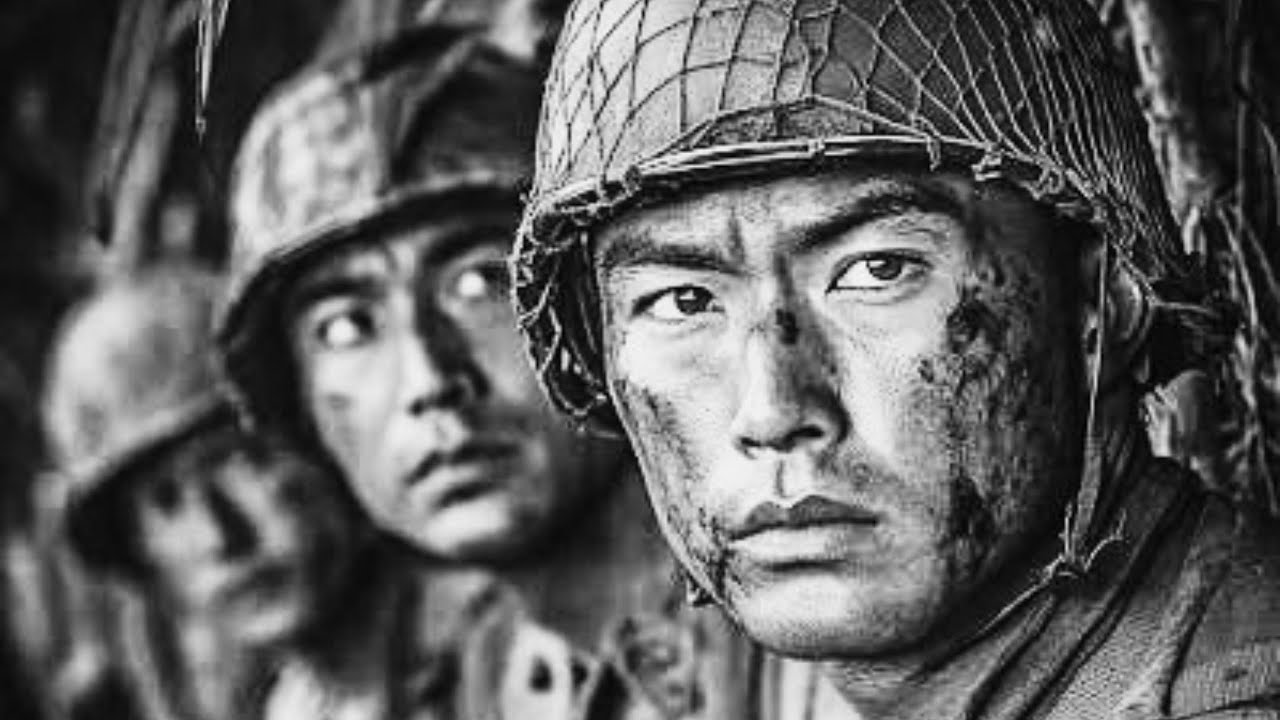
The Marines land. The Japanese let them come. No fire on the beach. The Marines advance 200 yards inland. Then Kuribayashi springs the trap. Pre-registered artillery, mortars, and machine guns fire from positions the naval bombardment never touched. The Marines are trapped on exposed volcanic ash with no cover. Men are hit before they can dig in. The beach becomes a killing zone.
It takes 36 days to secure an island that is only 8 square miles. There are 26,000 American casualties, nearly 7,000 dead. That is the evolution. From predictable banzai charges to defense in depth. From dying by the hundreds to making Americans pay for every yard.
But what made it devastating was not just how the Japanese defended. They built their defenses in terrain that nullified every American advantage. And that terrain was unlike anything American forces had faced anywhere else in the war.
The terrain was not just difficult. It was actively trying to kill you before you ever saw the enemy. The jungle islands, like Guadalcanal, New Guinea, and New Britain, had temperatures over 100 degrees and humidity near 100 percent. You carried a 60-pound pack through vegetation so dense you could not see 10 feet ahead. Every step required cutting through vines with machetes. Your uniform was soaked with sweat within minutes. Your boots rotted. Your skin developed ulcers that would not heal. You drank water from streams that carried diseases.
Malaria alone hospitalized more Marines on Guadalcanal than combat wounds in the first three months. Dengue fever, dysentery, and Japanese encephalitis followed. You could survive every firefight and still be evacuated because your body was literally falling apart.
But the jungle islands were not the worst terrain. The coral atolls were worse in different ways. Tarawa, Peleliu, and Eniwetok were flat, exposed islands with almost no cover. The coral itself was razor sharp, shredding boots and slicing through skin. Temperatures on exposed coral reached 120 degrees. There was no fresh water. Marines filled canteens with brackish water that made them sick. Heat exhaustion killed men before they encountered the enemy.
Then there were the volcanic islands. Iwo Jima's black volcanic ash. You could not dig foxholes because the ash collapsed. You could not run because every step sank six inches. Vehicles got stuck. Wounded men could not be evacuated because stretcher bearers sank with every step. One Marine described it perfectly: we were not just fighting the Japanese. We were fighting the island itself.
Compare that to Europe. Roads, buildings, infrastructure. Soldiers could rotate to rear areas, sleep in beds, and see civilians. There was some semblance of normal life beyond the front line. In the Pacific, there was no rear area. If you were on an island under attack, you were in the combat zone. Period. No towns, no civilians, no buildings. Just jungle, coral, volcanic ash, and the enemy.
American advantages like air superiority and mechanized vehicles meant less in terrain where tanks could not maneuver and planes could not see the enemy. The Pacific War came down to small unit infantry combat in the worst conditions imaginable. And the Japanese knew exactly how to use that terrain.
Everyone wants to talk about Japanese weapons. The Arisaka rifle, the Nambu machine gun, the Type 89 grenade discharger that Marines called the knee mortar. But the most effective Japanese weapon was not a gun. It was patience.
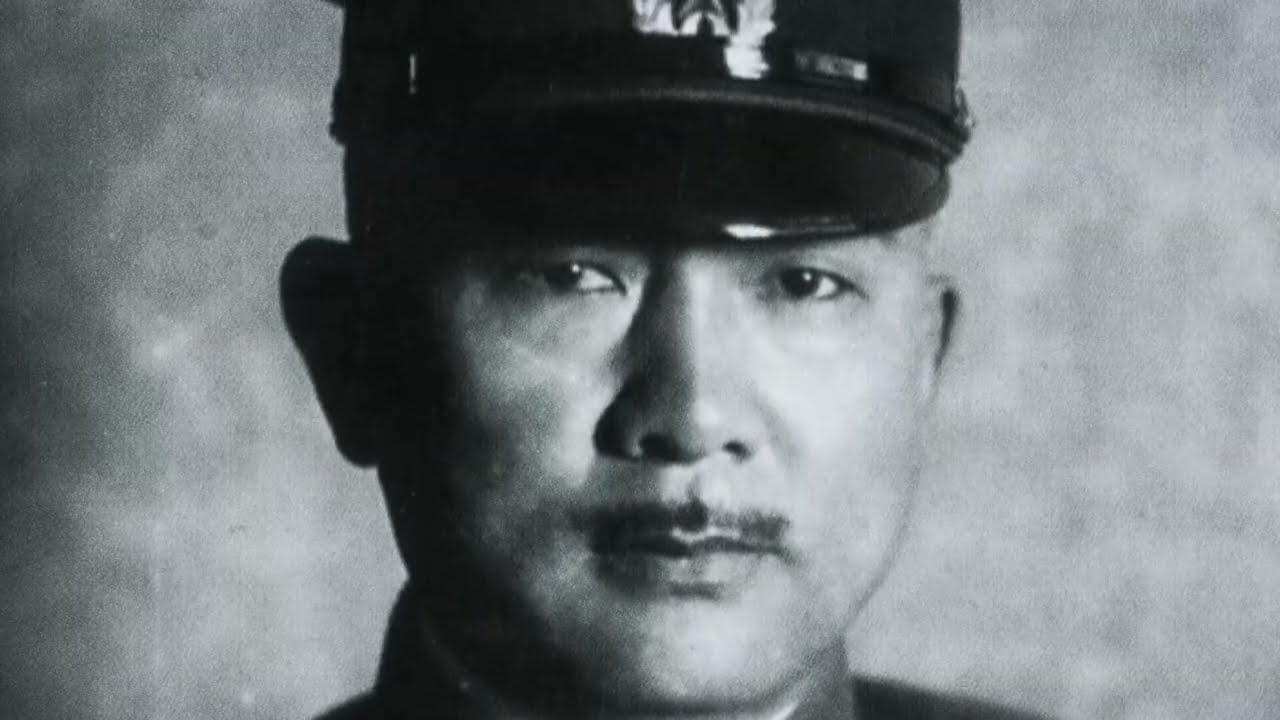
The Nambu Type 92 machine gun fired 450 rounds per minute, slower than the American Browning, but it was lighter and more portable. Japanese crews could carry it into caves, set it up in spider holes, and reposition it quickly. The Type 89 grenade discharger could drop mortar rounds with terrifying accuracy at ranges up to 700 yards. A single crew could carry multiple launchers, fire from concealed positions, and move before American counter-battery fire arrived.
But the real killer was the booby trap. The Japanese became masters of improvisation. They rigged grenades to door frames, buried artillery shells along trails, and wired them to trees, rocks, anything Marines might touch or move. They booby-trapped their own dead. Wounded Japanese soldiers would lie still until Marines approached, then detonate grenades hidden under their bodies.
Marines learned to approach everything with paranoia. That seemingly abandoned position was probably a trap. That wounded enemy soldier might have a grenade. That food left behind could be poisoned. One Marine on Peleliu described checking a cave. You would throw grenades in first, wait for explosions, then flames from a flamethrower, wait for the screaming to stop, then you would still have to go in because sometimes they survived all that and were waiting with bayonets.
The flamethrower became the Marines' answer to fortified positions. Teams would approach a cave entrance under covering fire and spray burning fuel inside, incinerating everything. It was brutal, horrifying work, but it was the only way to neutralize positions without losing entire squads. Casualty rates for flamethrower operators were catastrophic. Average life expectancy once you picked up a flamethrower, some estimates said, was minutes in heavy combat. The tanks on your back made you a priority target. Japanese snipers aimed for the tanks. If they hit them, you died in an explosion of burning fuel.
Satchel charges, explosive packs weighing 20 pounds, became standard equipment. Marines would crawl under fire, reach a bunker entrance, shove the charge through a gunport or firing slit, and blow it apart from inside. But you had to get close. Close enough to be shot. Close enough for grenades. Every tactic required getting into range where Japanese weapons were just as deadly as American weapons.
There is a myth that Japanese weapons were inferior and that is why they lost. That is far from the truth. The Arisaka Type 99 rifle was actually excellent: reliable, accurate, well-made, and in some ways better than the M1 Garand. It had a stronger action, could handle more abuse, and kept firing in conditions that jammed American weapons.
The problem was not quality. It was logistics. Japan could not produce enough weapons, could not supply ammunition, and could not replace losses. By 1945, Japanese soldiers on some islands were down to 10 rounds per rifle. Machine guns rationed ammunition to short bursts. Artillery had limited shells. They were not fighting with inferior weapons. They were fighting with no ammunition for the weapons they had.
But even with limited ammunition, Japanese soldiers inflicted devastating casualties. Why? Because they had chosen their positions perfectly and waited for the right moment to fire. At Iwo Jima, American intelligence estimated 13,000 Japanese defenders. They were wrong. There were 21,000, all underground, all waiting. When the battle ended, 18,000 Japanese soldiers were dead. Only 216 surrendered. The remaining 2,784 were never found, sealed in collapsed caves and tunnels. Those 21,000 defenders, with limited ammunition and no hope of reinforcement, inflicted 26,000 American casualties.
That is not inferior weapons. That is professional soldiers using terrain and tactics to offset American advantages. But there was something about Japanese defensive evolution that American commanders did not understand until after the war. And once you understand it, everything about Pacific casualties makes sense.
The Japanese had a word for their new defensive doctrine: Fukaku, defense in depth. American commanders understood it backwards. They thought Fukaku meant the Japanese would fight harder, die in place, and refuse to retreat. They were wrong. Fukaku meant the opposite. Retreat when necessary, preserve forces, make Americans pay for every advance, then fall back to the next defensive line. Repeat until the Americans run out of men or time.
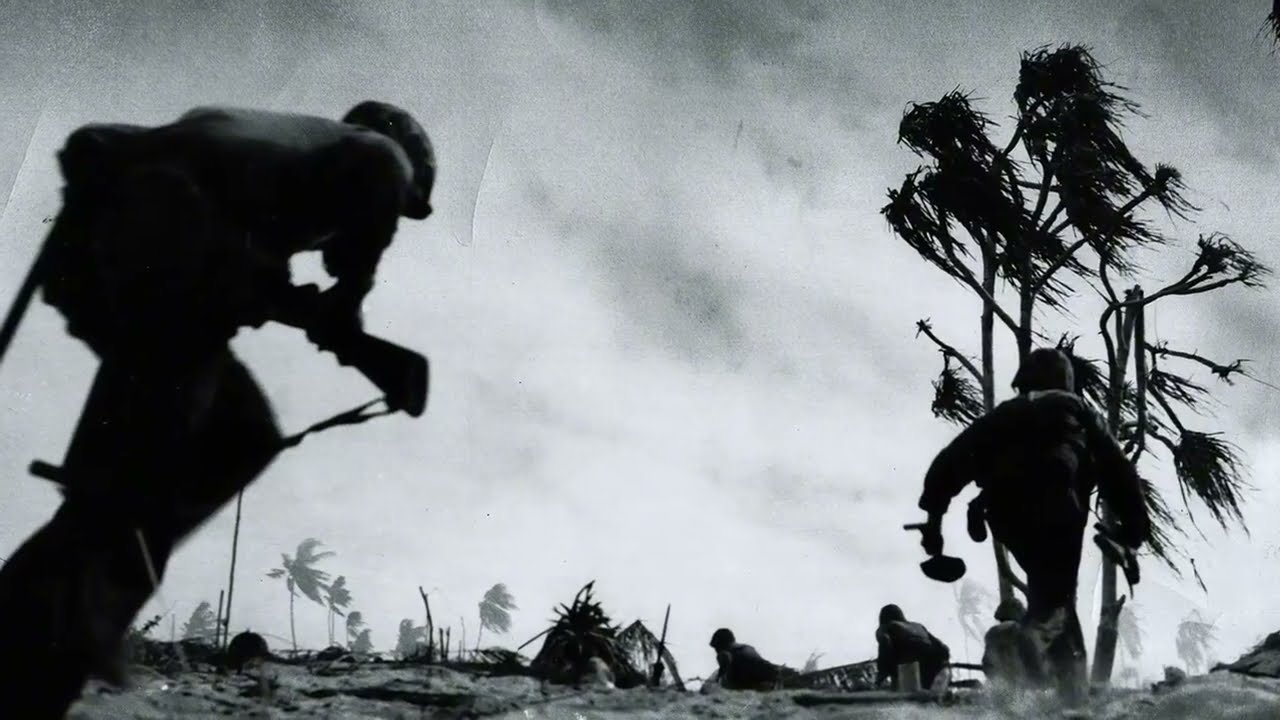
At Peleliu, Colonel Kunio Nakagawa perfected this. He had 11,000 troops and months to prepare. He divided the island into defensive zones. When the Marines took one zone, his troops retreated to the next. Pre-planned routes. Interconnected tunnels. Every withdrawal brought Marines into range of new positions.
The Marines thought they were winning. They counted bodies, secured territory, and raised flags. But Nakagawa's forces were still intact, still fighting, forcing Americans to fight the same battle over and over in different terrain. When Peleliu was finally secured after 73 days, fewer than 200 Japanese soldiers had surrendered out of 11,000 defenders. The rest died in place or were sealed in caves. But they had inflicted 60 percent casualties on the entire First Marine Division.
That is Fukaku. Not dying uselessly, but dying effectively. Making Americans pay such a high price for victory that the next battle becomes politically and militarily harder to justify. And it worked. After Peleliu, American commanders started questioning whether every island needed to be taken, whether the casualties were worth it. Some islands were bypassed entirely. Others, like Iwo Jima, were deemed necessary, but the casualty projections were nightmarish. The Japanese defensive evolution forced America to make brutal calculations. How many Marines is this island worth? How many casualties before we try a different strategy?
Every Marine who fought in the Pacific says the combat was personal in ways Europe never was. In Europe, you might be killed by artillery from miles away, a sniper you never saw, or a bomb from a plane. Death was random and impersonal. In the Pacific, you killed people at arm's length. You cleared caves with pistols and knives. You threw grenades into bunkers and heard the screams. You shot enemy soldiers so close you could see their expressions.
The fighting never stopped. On an island under attack, there was no rear area, no safe zone. You were in the combat zone 24 hours a day, seven days a week. Japanese infiltrators slipped through lines at night. You could not sleep or relax. One hundred percent alertness all the time, or you died.
Combat fatigue rates in the Pacific were significantly higher than in Europe. Men who had fought for months without relief developed thousand-yard stares, stopped eating, could not sleep, and just sat staring at nothing. On Peleliu, the First Marine Regiment suffered 1,749 casualties out of 3,000 men. They had to be pulled off the island before the battle ended. The regiment had simply ceased to exist as a fighting unit. The Seventh Marines took their place. They had already been fighting for weeks. They had already lost friends. Now they had to go back into the same ridges, the same caves, fighting the same enemy that had destroyed another regiment. The Pacific War was not just physically brutal. It was psychologically destroying. No end in sight, no breaks, just killing until one side could not fight anymore.
So if the Pacific War was so costly and so brutal, why did America not stop? Why keep fighting for tiny islands most Americans had never heard of? Strategy. Every island brought American bombers closer to Japan. Saipan put B-29s in range of Tokyo. Iwo Jima gave them an emergency landing strip. Okinawa was the staging ground for the invasion of the home islands.
But there was a darker calculation. American commanders knew what was coming: an invasion of Japan itself. Intelligence estimates suggested 2 million Japanese soldiers defending the home islands, with 28 million civilians being armed and trained. Plans called for fighting to the last person. Casualty projections for Operation Downfall, the planned invasion, reached 1 million American casualties. Estimates ranged up to 4 million if the Japanese truly fought to the last.
After seeing what 21,000 Japanese defenders did to the Marines on Iwo Jima, an island of 8 square miles, American commanders knew what 2 million defenders would do on the home islands. The math was nightmarish. That is why the atomic bombs ended the war. Not as a war crime, but as an alternative to an invasion that would have killed millions. The bombs killed approximately 200,000 people, which was absolutely horrific. But Operation Downfall would have killed millions of Japanese and possibly a million Americans. The Pacific War's brutality made the atomic bombs a terrible choice among worse choices.
So were the Japanese better soldiers than the Americans? No. But they adapted faster. They used terrain better. They were willing to die when Americans were trying to survive. That is not better soldiering. That is fanaticism backed by professional defensive tactics.
Man for man, Marines were highly effective, well-trained, well-equipped, and backed by the best logistics in military history. But in the Pacific, logistics mattered less. Equipment advantages mattered less. It came down to small unit combat in terrain that favored the defender. The Japanese made Americans pay for every island, not because they were better soldiers, but because they had built defenses that turned American advantages into disadvantages.
Marines who fought in the Pacific came away with respect for Japanese soldiers, not as fanatics, but as professionals who fought smart, fought hard, and refused to quit. After the war, American commanders studied Japanese defensive tactics. The lessons learned in the Pacific influenced Marine Corps doctrine for generations. Defense in depth, reverse slope positions, and interconnected tunnel systems all became part of American military thinking. The Japanese lost the war, but their defensive innovations changed how modern armies fight.