Elisabeth Becker was born on July 20, 1923, in Neuteich, in the Free City of Danzig, into a German family. In 1936, at the age of thirteen, she joined the League of German Girls, the female wing of the Nazi Party's Hitler Youth movement. In 1938 she became a cook in the city of Danzig.
Nazi Germany invaded Poland in 1939, and Germany annexed most of western Poland along with the city of Danzig. Becker adapted successfully to the new situation. She began working for the Dokendorf company in Neuteich, where she was employed from 1940 to 1941. She later became an agricultural assistant in Danzig.
In 1944 the SS needed more guards at the nearby Stutthof camp. Stutthof was the first concentration camp the Nazis established outside Germany. It was founded in 1939 as a camp for civilian prisoners of war, then converted into a concentration camp in 1942. The Nazis used Stutthof prisoners as forced laborers, and the site was later turned into an extermination camp in 1944, when a crematorium and a gas chamber were added.
Estimates indicate that between 63,000 and 65,000 prisoners from Stutthof and its subcamps died as a result of harsh working conditions, hunger, epidemics, executions, and brutal forced evacuations.

Becker was called up for service at the concentration camp. She arrived at Stutthof on September 5, 1944, and began training as an SS guard. She then served in the women's subcamp known as SK 3 at Stutthof, where she personally selected women and children for the gas chamber. She worked at the Stutthof camp for four months.
As the Soviet Red Army advanced toward Stutthof, most of the SS guards fled the camp. On May 9, 1945, Stutthof was liberated by the Soviet Red Army. Becker fled the camp on May 15, 1945, and returned to her home in Neuteich.
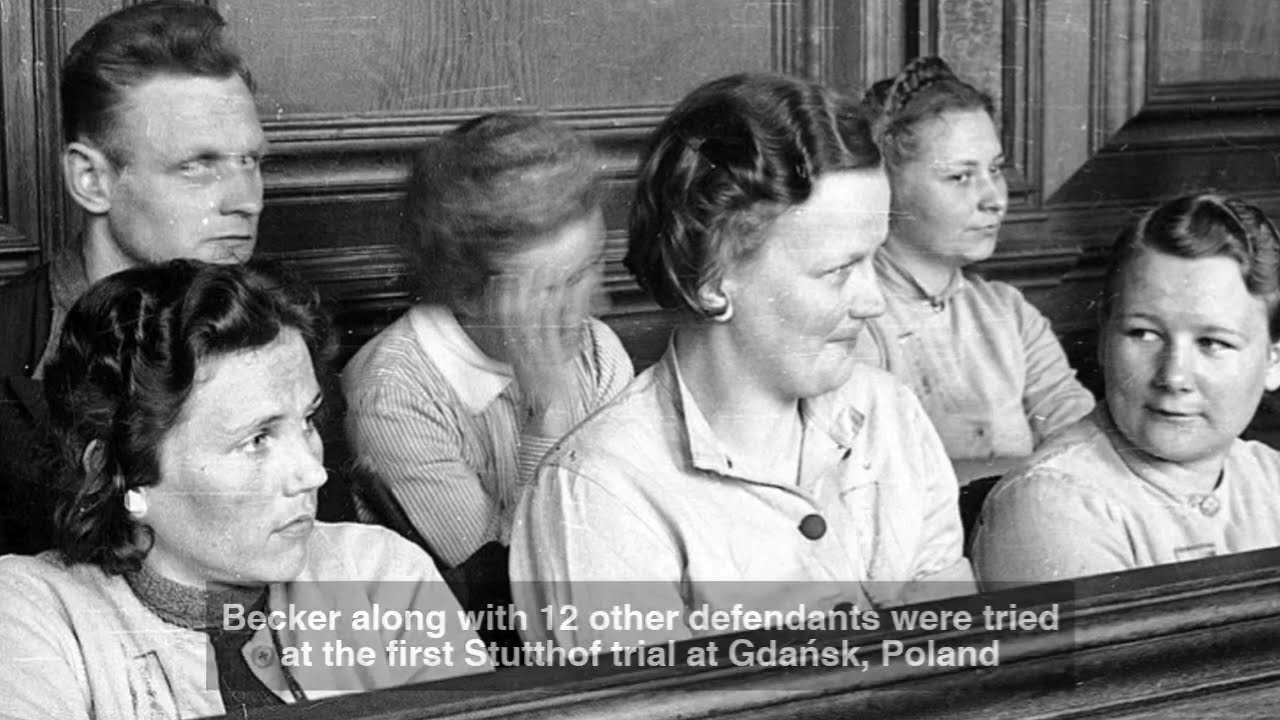
Three months later, on April 13, the Polish police arrested her, and she was imprisoned to await trial. Becker was tried alongside twelve other defendants in the first Stutthof trial in Gdansk, Poland. During the hearing, the former SS guards laughed and joked. They showed no concern for the charges against them.
Becker admitted to selecting at least thirty female prisoners to be killed by gas, but she later retracted her confession. Becker, along with ten other defendants, was convicted of crimes against humanity and sentenced to death. After the verdict was announced, most of the defendants wept and begged to have their lives spared. Becker cried and pleaded for her life. She maintained her innocence of the charges against her.
She sent several letters to the Polish president, Boleslaw Bierut, asking for clemency. The court recommended that Becker's sentence be commuted to fifteen years, on the grounds that her actions had not been as cruel as those of her two co-defendants in the case, Gerda Steinhoff and Jenny-Wanda Barkmann. Becker had spent the shortest time at the camp, but no pardon was issued for her.
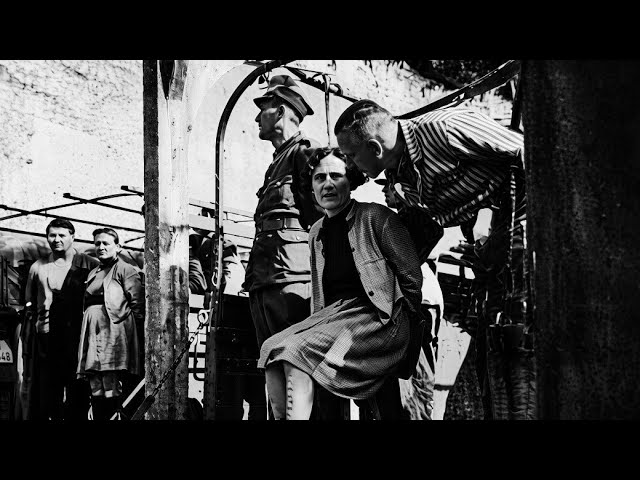
The execution was carried out on July 4, 1946, publicly on Biskupia Gorka hill near Gdansk. Thousands of people came to watch the execution. Former Stutthof prisoners volunteered to serve as the executioners. Eleven condemned prisoners were brought to the execution site.
The condemned were placed on eleven trucks with their hands and feet bound. Nooses were placed around their necks, and they were then pushed off the trucks. Elisabeth Becker and ten other defendants were publicly hanged by the short-drop method on July 4, 1946, on Biskupia Gorka hill near Gdansk. She was twenty-two years old.