On February 3, 1947, in Hamburg, Germany, the former staff of Ravensbrück, the largest concentration camp for women in Nazi Germany, heard their sentences read. After nearly two months of gruesome testimonies, the world finally learned the truth about the inhumane mistreatment and torture conducted by the camp's male and female personnel during its six-year existence. Of the 16 defendants, 11 were sentenced to death by hanging. One of them was Elisabeth Marschall.
Elisabeth Marschall was born on May 27, 1886, in Meiningen, then part of the German Empire. She trained as a nurse and began working in her profession in 1909.
Germany's economic collapse during the Great Depression, which began in 1929, contributed heavily to the Nazi Party's success. The crisis resulted in widespread unemployment and poverty and also led to an increase in crime. The resulting anger and fear left Germans vulnerable to arguments from both the extreme right and the extreme left. One such German was Elisabeth Marschall, who joined the Nazi Party in 1931.
After Adolf Hitler and his Nazi Party came to power in January 1933, Nazi propaganda became inescapable in Germany. Joseph Goebbels, head of the new Propaganda Ministry, created a cult of personality that glorified Hitler as Germany's infallible savior. Nazi propaganda dominated the press, film, radio, and public spaces. Portraits and statues of Hitler appeared everywhere, and every city and town renamed a street or public space to honor him. In public, ordinary Germans were expected to praise Hitler and give the so-called German greeting, "Heil Hitler!" Propaganda permeated school curricula as well, and children learned odes praising Hitler's leadership in public schools.
The first concentration camp, Dachau, was established in March 1933, less than two months after Hitler became chancellor. Between 1933 and 1939, the Nazi regime brought radical and daunting social, economic, and communal change to the German Jewish community. Six years of Nazi-sponsored legislation had marginalized and disenfranchised Germany's Jewish citizenry and had expelled Jews from the professions and from commercial life.
Following Kristallnacht, a series of coordinated violent riots against Jews throughout Nazi Germany and recently incorporated territories that occurred on November 9 and 10, 1938, thousands of Jews remained interned in concentration camps. By early 1939, only about 16 percent of Jewish breadwinners had steady employment of any kind. While in January 1933 some 522,000 Jews by religious definition lived in Germany, approximately 304,000 of them emigrated during the first six years of the Nazi dictatorship.
Before Elisabeth Marschall was transferred to the Ravensbrück concentration camp as a head nurse in April 1943, she worked in the same position at a Reichswerke Hermann Göring hospital near Braunschweig. Reichswerke Hermann Göring was an industrial conglomerate in Nazi Germany from 1937 until 1945. In November 1937, Reichsminister of Aviation Hermann Göring obtained unchecked access to state financing and launched a chain of mergers, diversifying into military industries with the absorption of Rheinmetall, a German automotive and arms manufacturer. Göring himself supervised the Reichswerke but did not own it in any sense.
This industrial conglomerate provided one-eighth of German steel output during the Second World War and created a Nazi-controlled military complex that was independent of private interests. By the end of 1941, the Reichswerke Hermann Göring had become the largest company in Europe and probably in the whole world, with capital of 2.4 billion reichsmarks and about half a million workers. At times Hermann Göring withdrew cash from this conglomerate for his personal expenses.

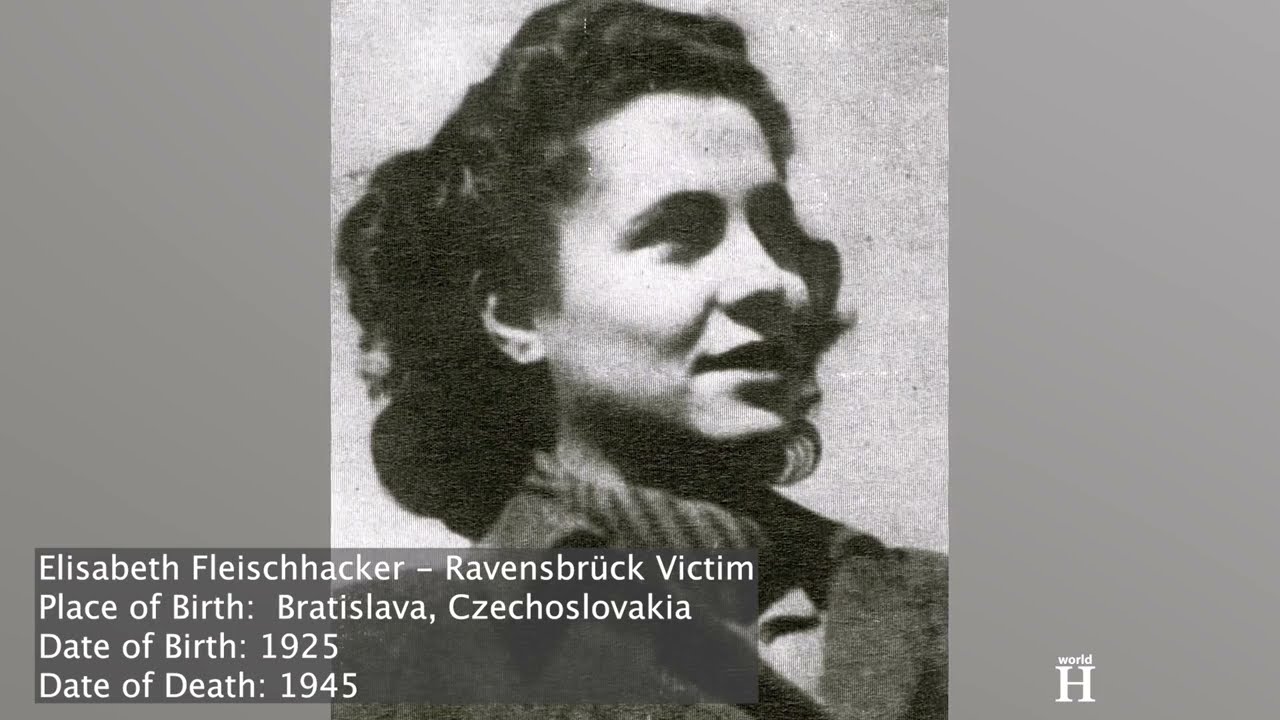
At Ravensbrück, Marschall was responsible for numerous crimes committed against female prisoners. Ravensbrück, opened in May 1939, was the only major women's camp established by the Nazis. In total, some 132,000 women from all over Europe passed through the camp, including Poles, Russians, Jews, Roma, and others. Of that number, over 92,000 women perished.
Ravensbrück was staffed both by SS men, who served as guards and administrators, and by 150 women, who served as supervisors. These female supervisors were either SS volunteers or women who had taken the job for the good pay and working conditions. Ravensbrück also housed a training camp for female SS guards who were taught by Dorothea Binz, the sadistically cruel German Nazi officer and supervisor, who instructed her trainees on how to handle the prisoners they were going to supervise. These prisoners would have to work until they died, and the task of their supervisors was to get a maximum amount of work out of them while they were still alive. Ravensbrück thus also became a training center, or "a school of violence," for about 3,500 female guards who went on to serve either there or at other concentration camps.
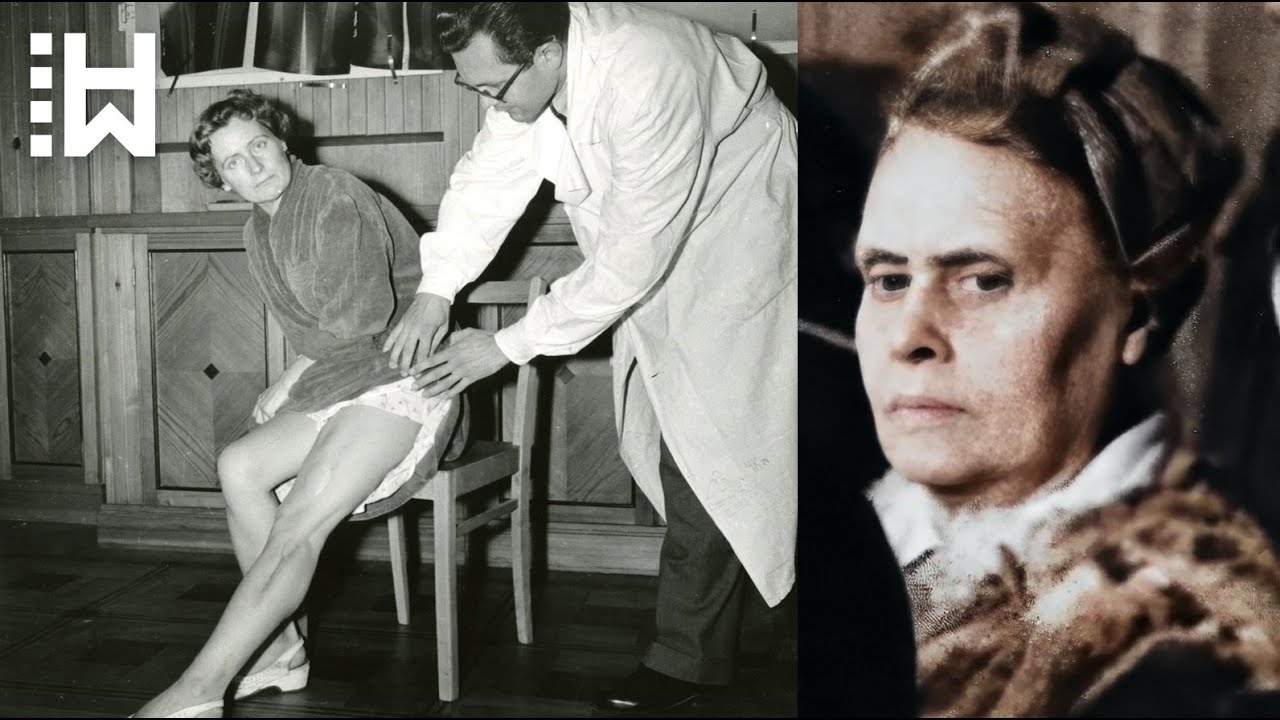
Starting in the summer of 1942, SS medical doctors subjected prisoners at Ravensbrück to unethical medical experiments. The main coordinator of these experiments was Karl Gebhardt, and his assistants included doctors Herta Oberheuser and Fritz Fischer. They often used a hammer to break the legs of female prisoners, then infected open wounds with aggressive bacteria and monitored the healing with and without various chemical substances such as sulfanilamide, an early antibiotic, to prevent infections. Believing it could help in treating amputee soldiers, they also tested various methods of setting and transplanting bones. Such experiments included amputations and were often performed without any anesthesia. The SS selected nearly 80 women, mostly Polish, for these experiments. Many of the women died as a result, and those who survived often suffered permanent physical damage.
SS doctors also carried out sterilization experiments on women and children, many of them Roma and Sinti people, in an attempt to develop an efficient method of sterilization. They were also involved in forced abortions of women who were already seven or eight months pregnant. In addition to these forced abortions, they were also known for beating pregnant women to cause miscarriages and for killing newborns.
Those female prisoners who were lucky enough to survive these experiments later testified that Elisabeth Marschall, the head nurse at Ravensbrück concentration camp, never helped any of them, neither the sick nor the pregnant women. Marschall's duties at Ravensbrück also included overseeing these medical experiments and selecting prisoners for execution. Every night before the executions, she went to the infirmary camp hospital and selected the names of the women to be liquidated from the sick files. Subsequently, Marschall also compiled lists of those murdered.
Together with the SS doctor Percival Treite, Marschall participated in the random selection of 800 female prisoners who were then sent to Auschwitz-Birkenau. Many of them died during the transport and in the Auschwitz-Birkenau camp itself. She also participated in these selections together with doctor Adolf Winkelmann, who later testified about how these selections were carried out: "The searches took place on one of the camp streets or in a barracks, but very rarely. The inmates marched in a row to Doctor Richard Trommer and past me. Of course, we could only do a very superficial examination, and the people who were obviously sick, unable to work, or unable to march were searched. The inmates had to bare their legs so that we could see if they were capable of walking."
After the war, both doctor Winkelmann and Elisabeth Marschall claimed they had not known that the selection could mean death in gas chambers for the prisoners.
After the end of the war, justice finally caught up with Marschall when she was tried at the first Ravensbrück trial, which began on December 5, 1946. Unlike her, Percival Treite, a half-British medical doctor at Ravensbrück with whom Elisabeth Marschall selected 800 female prisoners to be sent to Auschwitz-Birkenau, was defended by a dozen former female prisoners, including Special Operations Executive agent Yvonne Baseden, who wrote letters to the court that were favorable to him.
Another ex-prisoner, Mary Lindell, an English woman born to a wealthy family who became a member of the French Resistance during World War II, testified in favor of Treite at the trial, saying that Treite "was the only man who was human, the only man who looked after the sick people as a doctor should look after them." Lindell also criticized the judge advocate, who, as she claimed, was partial and objectionable and had taken on the cross-examination of witnesses himself and prevented other questions from being put that might have been answered in favor of the accused.
Nevertheless, on February 3, 1947, the British military tribunal sentenced both Percival Treite and Elisabeth Marschall to death by hanging. However, before the sentence could be carried out, Treite, then 35 years old, committed suicide with poison on April 8, 1947.
Elisabeth Marschall did not fare any better. She was 60 years old when the British executioner Albert Pierrepoint carried out the death sentence on May 3, 1947. Marschall became the oldest female Nazi war criminal to be executed by the British occupation authorities. There were no tears shed for Elisabeth Marschall.