In November 1945, the world gathered in Nuremberg, Germany, for the first time in history to put war criminals on trial. Inside a courtroom guarded by soldiers and watched by lawyers and journalists, judges from the United States, the United Kingdom, the Soviet Union, and France took their seats.
Together they formed the International Military Tribunal, created to deliver justice after the devastation of the Second World War. The atmosphere was tense. Before them sat the highest surviving leaders of Nazi Germany, accused of war crimes, crimes against peace, and crimes against humanity.
Across the globe, millions followed every detail, waiting for truth and accountability. One figure commanded particular attention. Once among Hitler's closest allies, he had helped forge the Nazi police state, overseen economic looting across occupied Europe, and played a central role in the persecution of Jews.
Now stripped of power but still defiant, he represented the inner circle of the Third Reich in court. His name was Hermann Göring.
Hermann Wilhelm Göring was born on January 12, 1893, in the town of Rosenheim, then part of the German Empire. His father, Heinrich Ernst Göring, served as the colonial governor of German Southwest Africa, which is today Namibia.
His mother, Franziska Tiefenbrunn, was Heinrich's second wife and came from humble origins. Göring grew up in a household that valued military tradition and national pride. As a boy, he spent some time living with family friends while his father worked overseas.
Later, he attended military cadet schools, where he proved to be a spirited and ambitious student who dreamed of glory in uniform. When the First World War broke out in the summer of 1914, Göring immediately joined the German army.
He began his service as an infantry officer but was later transferred to the German Air Force, which was still a new branch of military operations. As a pilot, Göring quickly demonstrated skill and daring. He flew reconnaissance and combat missions, and his successes earned him promotions.
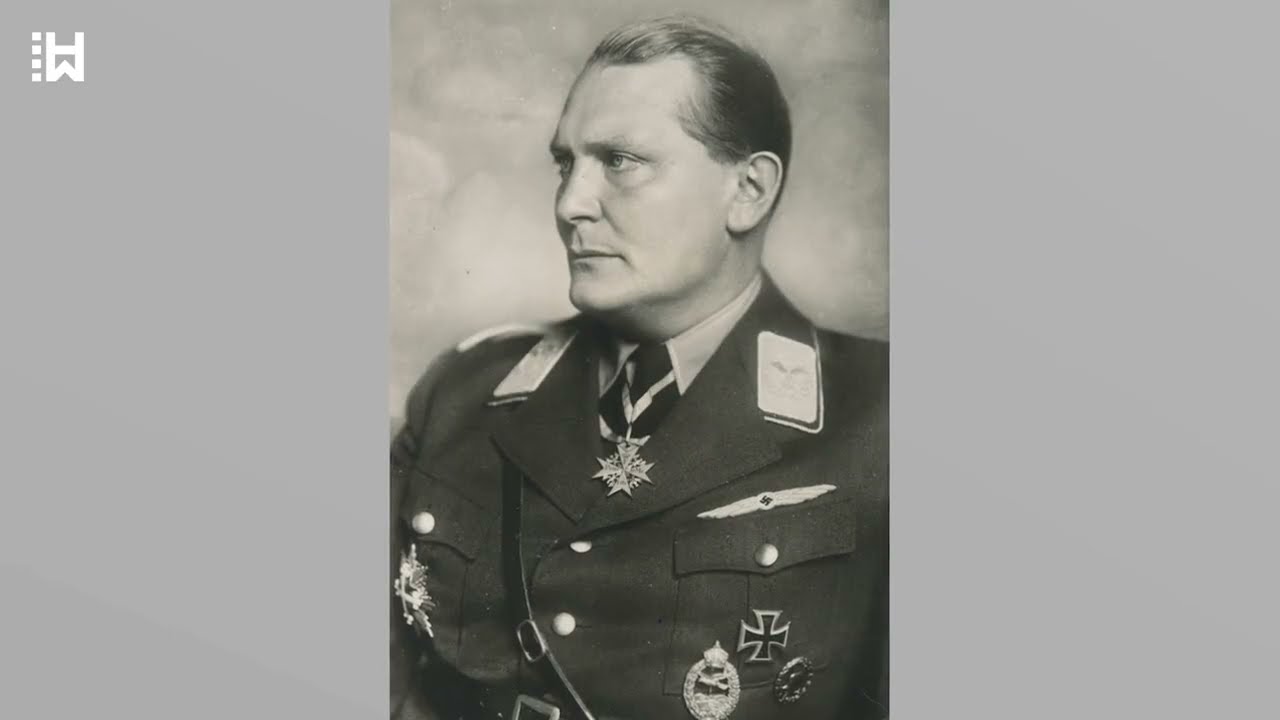
He eventually became a fighter ace credited with shooting down 22 enemy aircraft. In the later stages of the war, after the death of Manfred von Richthofen, the famous Red Baron, Göring was appointed commander of the legendary squadron. This brought him prestige, and he ended the war decorated with the Pour le Mérite, Germany's highest military honor for bravery at that time.
However, his arrogance made him unpopular with the men of his squadron. After Germany's defeat in November 1918, Göring faced the same confusion and bitterness that many former soldiers experienced. The collapse of the German Empire and the harsh conditions of the Treaty of Versailles left the country humiliated and economically shattered.
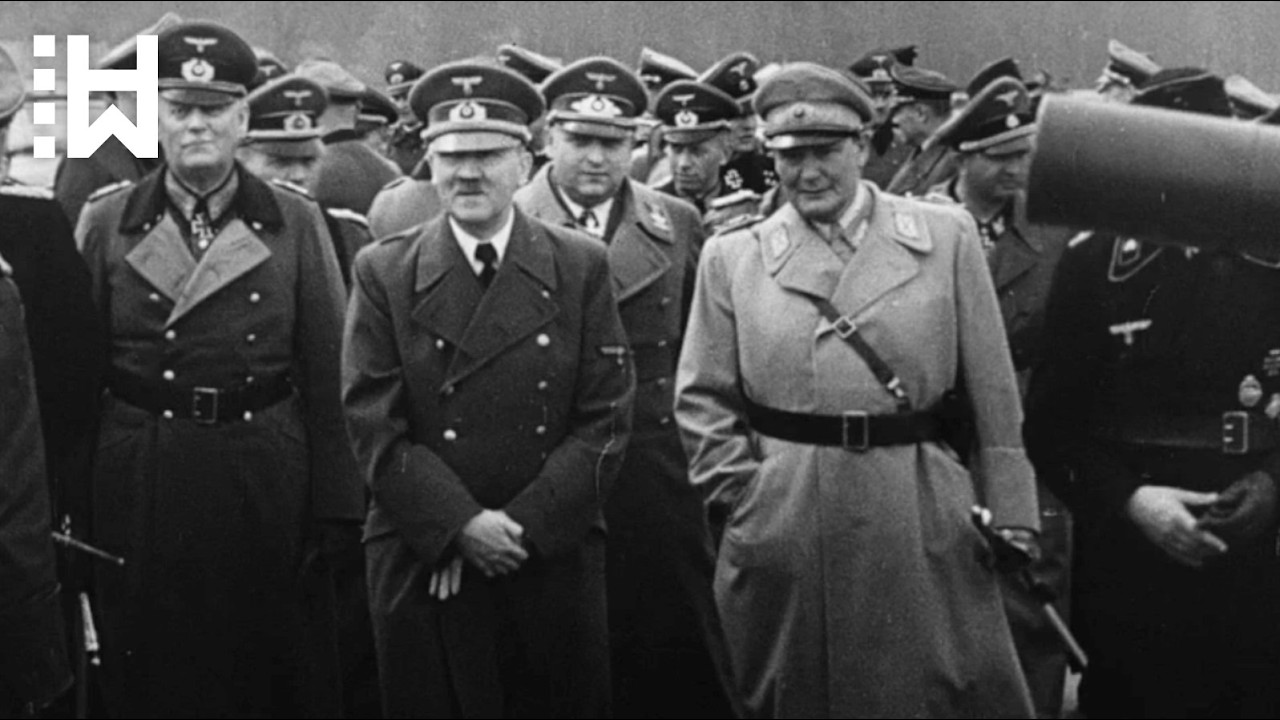
Göring decided to remain in the aviation business and was often hired for private flights. For a few years he lived abroad in Denmark and Sweden, and during this period he married Karin von Fock, a baroness who became a central figure in his personal life. She supported him emotionally and financially as he tried to find a new purpose in a postwar Germany.
In 1922, Göring returned to Germany and attended a rally where he first heard Adolf Hitler speak. He was impressed by Hitler's promise to restore Germany's strength and reverse the humiliation of Versailles. Soon after, Göring joined the Nazi Party, and because of his status as a decorated war hero, he quickly gained influence in the Nazi movement.
Hitler appointed him commander of the SA, the party's paramilitary organization that not only intimidated and attacked political opponents but also enforced Nazi power on the streets. In November 1923, Göring took part in the Beer Hall Putsch, Hitler's failed attempt to seize power in Munich.
During the confrontation with Bavarian police, Göring was badly wounded in the groin. With help from his wife, he escaped to Austria, where he began using morphine to manage the pain from his injuries. This marked the beginning of an addiction that would affect his health and behavior until the end of his life.
While recovering, he faced arrest warrants in Germany and spent the next several years in exile. During this time, Göring's drug addiction became very serious, and he was placed in a psychiatric hospital after he violently attacked a nurse who had refused his request for morphine.
In a few years, Germany changed. The Nazi Party had regained legal standing, and Göring returned home. He worked to rebuild the party's organization and expand its influence. In 1928, he was elected to the Reichstag, the German Parliament, as one of the first Nazi deputies.
With his charm, military credentials, and willingness to use violence, Göring helped the party grow into a formidable political force. He also cultivated an image of a confident leader who could appeal to conservative Germans who still respected the army and the traditions of the old empire.
In reality, however, he was a drug addict with unstable mental health. This was not helped by the fact that his wife Karin died of heart failure on October 17, 1931, and they did not have children. Despite this personal tragedy and his morphine addiction, Göring was successful in German politics.
When the Nazis came to power in January 1933 and Hitler was appointed Chancellor, Göring was rewarded with multiple important positions. Soon he was named Prussian Minister of the Interior. In this role, he took control of the Prussian police and transformed it into a tool for crushing the opposition.
He established the Gestapo, the secret police that hunted communists, social democrats, and anyone suspected of resisting Nazi rule. Göring's efforts were critical in eliminating the last remnants of parliamentary democracy in Germany and securing Hitler's total control over the country.

Göring also played a key part in the Night of the Long Knives, the purge in 1934 during which Hitler ordered the elimination of SA leaders and other political rivals, using among other things the fact that some of the SA leaders were homosexuals. Although the SS carried out most of the killings, Göring provided support and justification for the purge, presenting it as a necessary measure to protect Germany from treason and revolutionary unrest.
The Night of the Long Knives cemented the alliance between Hitler, the SS under Heinrich Himmler, and the army leadership, who feared the radical ambitions of the SA's leadership. In the next few years, Göring accumulated even more power.
He was appointed commander-in-chief of the Luftwaffe, the German air force, in 1935. Under his leadership, the Luftwaffe grew rapidly, defying the restrictions imposed by the Treaty of Versailles. Göring oversaw the development of new types of aircraft, training programs, and tactics that would be used in the coming war. He took great pride in the Luftwaffe, seeing it as a symbol of Germany's revival and his personal achievement.
In 1935, Göring married for the second time. He married actress Emmy Sonnemann in a huge wedding that was a celebration not only of his second marriage but also of the growing military power of Nazi Germany. German fighter aircraft flew over the sky during the ceremony, and Hitler was Göring's best man. The marriage produced one child, a daughter named Edda, born in 1938.
Göring also became involved in Germany's economic and rearmament policies. Hitler gave him sweeping authority over economic planning to prepare Germany for war. Göring directed resources toward armaments production and raw material stockpiling.
To finance these efforts, he supported policies that included economic exploitation and the theft of assets from Jews and other persecuted groups. His lifestyle during the period of Nazi Germany was lavish and ostentatious. Göring collected stolen art, usually taken from its Jewish owners by force, and built a grand estate called Carinhall, situated north of Berlin and named after his first wife.
He wore elaborate uniforms, adorned himself with medals, and loved to be photographed in dramatic poses. His appetite for personal indulgence was famous, and he enjoyed the trappings of wealth and power as much as he relished political influence. Through his grip on Germany's heavy industry, Göring amassed a fortune that placed him among the wealthiest men in the world.
As Germany moved toward war, Göring remained one of Hitler's closest confidants. He played a leading role in the reoccupation of the Rhineland, the annexation of Austria in March 1938, and the dismemberment of Czechoslovakia in March 1939.
When Germany invaded Poland on September 1, 1939, starting the Second World War, Göring's Luftwaffe unleashed aerial bombardments that terrorized civilian populations and destroyed infrastructure. These tactics of terror were later used against cities in other countries attacked by Nazi Germany.
During the Battle of Britain in 1940, Göring personally promised Hitler that the Luftwaffe would quickly defeat the Royal Air Force and force Britain to negotiate peace. However, the air campaign failed. Despite initial successes, German bombers could not achieve air superiority, and British resistance proved stronger than Göring anticipated.
The Luftwaffe's defeat was a first major setback for Germany and damaged Göring's reputation as a military strategist. Even so, he retained Hitler's favor and continued to expand his influence. In 1941, after the invasion of the Soviet Union, Göring took charge of the economic exploitation of occupied territories.
He was deeply involved in the plunder of resources, the forced labor of millions of people, and the policies that supported the genocide of European Jews. In July 1941, he signed a directive authorizing Reinhard Heydrich to prepare the "Final Solution of the Jewish Question," a bureaucratic step that paved the way for the Holocaust.
As the war turned against Germany, Göring became increasingly detached from reality. He spent more time at Carinhall, where, surrounded by his stolen art collections, he used morphine. While the Luftwaffe struggled to maintain its strength under Allied bombing and shortages of fuel and materials, Göring's megalomania and inability to assess the technical capabilities of the German air force proved to be fundamental mistakes several times during the Second World War, for which German soldiers paid the price, dying of starvation or succumbing to their injuries when the air force failed to provide them with sufficient and promised assistance.
Despite his minimal effectiveness, he remained Germany's second most powerful man. In 1940, Hitler named him as his designated successor and awarded him the title Reichsmarschall, a rank created specifically for him.
By 1944, Göring's influence was clearly waning. The failure of the Luftwaffe to stop the Allied air offensive and the growing disasters on the Eastern Front, especially the failure to support Axis forces during the Battle of Stalingrad by airlift, undermined his authority.
Other Nazi leaders, including Heinrich Himmler, Hitler's secretary Martin Bormann, and propaganda minister Joseph Goebbels, tried to increase their own power as Hitler became more isolated. When Germany's defeat became certain, Göring tried to position himself as a potential negotiator with the Allies, hoping to save himself and perhaps preserve some form of German government.
In April 1945, as Soviet forces closed in on Berlin, Göring sent a telegram to Hitler suggesting that if the Führer could no longer lead Germany, he should transfer power to Göring according to the succession plan. Hitler saw this message as an act of treason. He stripped Göring of all positions, ordered him detained, and had SS guards place him under house arrest in Bavaria.
After Germany's surrender in May 1945, Göring was captured by American forces. He was taken to Nuremberg, where he became the highest-ranking Nazi official to stand trial before the International Military Tribunal. At Nuremberg, he was charged with crimes against peace, war crimes, and crimes against humanity.
Göring defended himself energetically. However, the evidence against him was overwhelming. He was convicted on all counts and sentenced to death by hanging. Göring asked to be shot instead, claiming that hanging was unworthy of a soldier, but his request was denied.
On the night before his execution, on October 15, 1946, the 53-year-old Göring managed to commit suicide in his prison cell. His death denied the Allies the symbolic satisfaction of publicly executing one of the Nazi regime's most infamous figures.