Adolf Hitler was appointed chancellor of Germany on January 30, 1933, bringing an end to German democracy. Guided by racist and authoritarian ideas, the Nazis abolished basic freedoms and sought to unite all social classes and regions behind one Führer.
Few people knew that the Führer was a lifelong hypochondriac. He suffered from skin and gastrointestinal problems, including flatulence. From 1936 onward, he placed himself in the care of a quack doctor who had him taking psychoactive drugs such as heroin, cocaine, and methamphetamine.
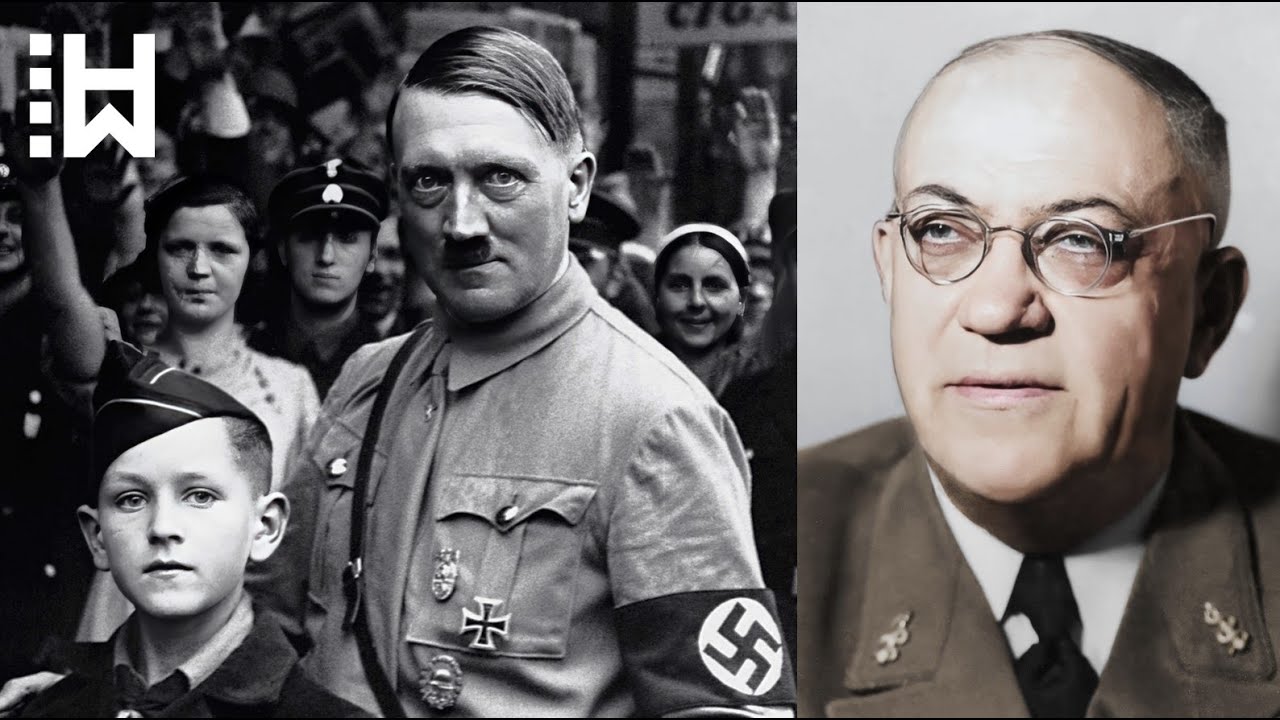
That doctor would inject Hitler up to 20 times per day with drugs, tonics, vitamins, and other substances for every one of his ailments. He remained with his Führer until the bitter end. His name was Theodor Morell.
Theodor Gilbert Morell was born on July 22, 1886, in Trais, a district of the town of Münzenberg, then part of the German Empire. He was the second son of a primary school teacher.
Morell studied medicine in Grenoble and Paris, then trained in obstetrics and gynecology in Munich in 1910. After completing his doctoral degree in May 1913, he was fully licensed as a physician.
Before the First World War began on July 28, 1914, Morell had served as a cruise ship's doctor for nine months. In 1915 he was drafted into the military and deployed as a medical officer.
He soon fell ill with kidney disease and spent the following years partly in military hospitals and partly as a doctor in prisoner-of-war camps. At the beginning of 1918 he was dismissed as unfit for service, settled in Berlin, and set up a practice for urology and electrotherapy.
In 1920 he married Hannelore Moller, a wealthy actress. The marriage remained childless. Through his wife's fortune, Morell furnished his office with the latest medical technology, targeting his unconventional treatments at an upscale market.
His practice became fashionable for the treatment of skin and venereal diseases. His services were requested by some of the world's royalty, including the Shah of Persia and the King of Romania.
In 1933 Morell joined the Nazi Party. In 1935 he moved his practice to Kurfürstendamm, one of the most famous avenues in Berlin, describing himself there as a specialist doctor for skin and venereal diseases.
His patients included many celebrities and politicians, as well as Hitler's personal photographer, Heinrich Hoffmann, whose gonorrhea he treated with various commercial preparations. In 1936 Hoffmann arranged for him to visit Hitler at the Berghof, Hitler's mountain residence on the Obersalzberg in the mountains of Bavaria.
Morell was able to help the Führer with gastrointestinal problems such as flatulence, which made most of his dinner parties intolerable. His farting was worst right after dinner, so Hitler would often get up from the table and leave for his private quarters, much to the surprise of his guests.
Behind his back, the Führer was known as "Der Furzer," meaning "The Farter." Morell managed to calm Hitler's flatulence and was appointed by him as his personal physician. Through Morell's prescriptions, a leg rash Hitler had developed also disappeared.
Hitler was convinced of Morell's medical genius, and Morell soon became part of his social inner circle. Some historians have attempted to explain this by citing Morell's reputation in Germany for success in treating syphilis, along with Hitler's own fears of the disease, which he associated closely with Jews. In Morell's records, Hitler always appears as "Patient A."
While the Führer was impressed by his new physician, other high-ranking Nazis had a different opinion. Hermann Göring, commander-in-chief of the Luftwaffe, and Heinrich Himmler dismissed Morell as a quack.
Hitler's chief architect Albert Speer, in his 1969 autobiography, said that when in 1936 his circulation and stomach rebelled, he called at Morell's private office. After a superficial examination, Morell prescribed intestinal bacteria, dextrose, vitamins, and hormone tablets.
For safety's sake, Speer afterward had a thorough examination by a specialist in internal medicine at Berlin University. The specialist told him he was not suffering from any organic trouble, but from nervous symptoms caused by overwork.
After Speer slowed his pace, the symptoms abated, and to avoid offending Hitler, Speer pretended he was carefully following Morell's instructions. Speer characterized Morell as an opportunist who, once he achieved status as Hitler's physician, became extremely careless and lazy in his work.
However, the Führer was satisfied with his physician, who had injections or pills for every one of his diseases. When Hitler was troubled with grogginess in the morning, Morell would inject him with a solution of water mixed with a substance from several small, gold-foiled packets, which he called "Vitamultin." Hitler would arise refreshed and invigorated.
When Hitler gave a packet to Himmler, Himmler immediately became suspicious and secretly ordered one of his SS physicians to have it tested in a laboratory. It was found to contain methamphetamine.
In low to moderate doses, methamphetamine can elevate mood and increase alertness, concentration, and energy in fatigued individuals. At very high doses, it can induce psychosis, breakdown of skeletal muscle, and cause seizures and bleeding in the brain.
Chronic high-dose use can precipitate unpredictable and rapid mood swings, stimulant psychosis such as paranoia, hallucinations, delirium, and delusions, and cause violent behavior. On at least one occasion, Hitler ordered his private train stopped so that Morell could inject him without worrying about the train jostling.
Hitler and his entourage used this train to visit various fronts and theaters of war. For safety, a front train and a rear train were used to prevent any possible attack.
Morell was not popular with Hitler's entourage, who complained about the doctor's crude table manners, poor hygiene, and body odor. Hitler's reaction to the last issue was, "I do not employ him for his fragrance, but to look after my health."
Hermann Göring, who himself was addicted to morphine, called Morell "Reich Master of Injections," and variations on that theme, implying that Morell resorted to drug injections when faced with medical problems and overused them.
Morell kept a medical diary of the drugs, tonics, vitamins, and other substances he administered to Hitler, usually by injection — up to 20 times per day — or in pill form. Most were commercial preparations, while some were Morell's own mixes.
The substances administered to Adolf Hitler included commercial poisons as well as psychoactive drugs such as heroin, cocaine, and adrenaline via eye drops, and methamphetamine. Since 1938, methamphetamine was marketed on a large scale in Germany as a nonprescription drug under the brand name Pervitin.
Pervitin became colloquially known among German troops as "Stuka-Tablets" and "Herman-Göring-Pills," a snide allusion to Göring's widely known addiction to drugs. However, the side effects, particularly the withdrawal symptoms, were so serious that the army sharply cut back its usage in 1940.
Historian Kamieński said, "A soldier going to battle on Pervitin usually found himself unable to perform effectively for the next day or two. Suffering from a drug hangover and looking more like a zombie than a great warrior, he had to recover from the side effects."
Some soldiers turned violent, committing war crimes against civilians; others even attacked their own officers. By 1941, usage was restricted to a doctor's prescription, and the military tightly controlled its distribution. Soldiers would only receive a couple of tablets at a time and were discouraged from using them in combat.
In 1939, Morell inadvertently became involved with the invasion of Czechoslovakia. Shortly after midnight on March 15, 1939, Czechoslovak president Emil Hácha met in Berlin with Adolf Hitler, who, six months after the annexation of the Sudetenland, wanted to occupy the Czech provinces of Bohemia and Moravia.
Hácha became so scared at Hitler's outburst that he fainted. Hitler's interpreter, Paul Schmidt, got scared and said, "If he dies here, the world will say we murdered him!" Theodor Morell checked the president's pulse and gave him a stimulating injection which woke Hácha up.

Although Morell claimed these were only vitamins, it is possible they also included methamphetamine. Hitler later recalled that the sixty-six-year-old Hácha immediately perked up to such an extent that "he turned against us with renewed energy… and showed a spirit of resistance that he had completely lacked before."
Hácha later recalled how Hermann Göring took his hand and gently persuaded him, asking if it was really necessary for the beautiful Prague to be razed to the ground in a few hours. Hácha gave in to the Nazi demands.
On the morning of the same day, March 15, 1939, in violation of the Munich Agreement, German troops entered the remaining Czech parts of Czechoslovakia, meeting practically no resistance. The following day, Hitler proclaimed the Protectorate of Bohemia and Moravia from Prague Castle, leaving Hácha as technical head of state with the title of State President, but real power was vested in Reichsprotektor Konstantin von Neurath, who served as Hitler's personal representative.
On September 23, 1941, Hitler relieved Neurath of his active duties and stripped him of his day-to-day powers. The reason was that, despite the persecution of Czech Jews and the harsh crackdown on protesting students, his rule overall was too lenient by Nazi standards.
Neurath still remained Reich Protector on paper, but real power was held by Reinhard Heydrich, who was named as his deputy on September 29, 1941. On May 27, 1942, Heydrich was in his convertible Mercedes when Czechoslovak paratroopers Jozef Gabčík and Jan Kubiš mortally wounded the Nazi architect of the Holocaust.
Morell was one of the doctors brought in by Heinrich Himmler to treat the badly wounded SS man. Probably due to Morell's reputation among high-ranking Nazis, his recommendation to treat Heydrich with sulfonamide, an early antibiotic, was ignored.
Instead, Karl Gebhardt, Heinrich Himmler's chief doctor, treated the Nazi architect of the Holocaust without antibiotic therapy. Reinhard Heydrich contracted an infection and died eight days after the attack.
On July 20, 1944, after a failed bomb attempt to assassinate Hitler on his airplane, Claus von Stauffenberg and other conspirators attempted to assassinate Adolf Hitler inside his Wolf's Lair field headquarters. Hitler was wounded but still kept his appointments, including a meeting with Italy's fascist leader Benito Mussolini the same day.
Morell used penicillin to treat Hitler. It is believed that he used Allied penicillin, as some of the pure penicillin sent to neutral countries like Spain, which was also pro-Axis, would have been misdirected and found its way to the physicians of high-ranking Nazis, including Theodor Morell.
By 1944, Morell developed a hostile rivalry with Dr. Karl Brandt, who had been attending Hitler since 1934. Though criticized by Brandt and other physicians, Morell was always "restored to favor" by his Führer.
The same happened in September 1944, when Hitler developed jaundice. That same month, Dr. Erwin Geising, an ear, nose, and throat specialist who had originally been brought in to treat the dictator after damage to his eardrums from the July 20 bomb explosion, began to be suspicious of Morell's treatment of Hitler.
Suspecting that he knew the cause of the jaundice, Geising deliberately dosed himself with some of the pills Morell had Hitler taking in large numbers every day, and found that they had mildly harmful effects. Having them analyzed, he found they contained strychnine and belladonna, the strychnine being the cause of the jaundice.
Geising reported his results to two of Hitler's other doctors, Karl Brandt and Hanskarl von Hasselbach, who in turn told other members of Hitler's retinue. When word of this finally reached Hitler, he was furious.
Declaring that he had total faith in Morell and his treatments, Hitler dismissed all three doctors — Geising, Brandt, and Hasselbach — even though the latter two had been with him since his early days in power.
Morell benefited financially from his relationship with Hitler. During the war years, he bought factories in which he had hormone preparations, vitamin concentrates, and a lice powder called "Russla" manufactured.
This lice powder, developed for the Wehrmacht by Morell himself, proved effective in a series of tests but was rejected by soldiers because it gave off an offensive odor and had to be used dry to be effective. Because of the simple packaging and the conditions under which soldiers lived, the remedy often got wet and was therefore ineffective.

On Hitler's instructions, the Wehrmacht bought the drug "Russla" on a large scale to prevent typhus transmitted by lice. Thanks to these businesses, which he made possible through his relationship with Hitler, Morell earned millions of Reichsmarks in addition to an annual salary of 60,000 Reichsmarks.
He owned villas not only in Berlin but also in the spa town of Heringsdorf on the Baltic Sea. Toward the end of the war, he even commissioned the construction of a third villa in Berchtesgaden, close to the Berghof, Adolf Hitler's mountain residence.
On January 16, 1945, Hitler took up residence in the Führerbunker under the Reich Chancellery, which became the center of the Nazi regime until the last week of World War II in Europe. One of the occupants of the Führerbunker was Hitler's loyal physician, Theodor Morell.
By April 1945, Hitler was taking many pills a day, along with numerous injections. Morell's personal notes describe how he treated Hitler over the years, including notations such as "injection as always" and "Eukodal," an early German trade name for the opioid oxycodone, a highly addictive and commonly abused drug.
Onset of pain relief from oxycodone typically begins within fifteen minutes and lasts up to six hours with the immediate-release formulation. Common side effects include euphoria, constipation, nausea, vomiting, loss of appetite, drowsiness, dizziness, itching, dry mouth, and sweating. Severe side effects may include addiction and dependence, substance abuse, depression or mania, irritability, or hallucinations.
While tremors and other signs of Parkinson's have been noted in newsreels of Hitler, Morell diagnosed Parkinson's only two weeks before Hitler died. On the occasion of his birthday on April 20, 1945, Adolf Hitler welcomed members of the Hitler Youth.
Some looked puzzled, even horrified, as the Führer, with his coat collar turned up and one arm shaking as a result of Parkinson's disease, worked his way down the line of these doomed children. Most would perish that day while holding the city against the Russians. It was also the last time Hitler would be photographed before he committed suicide in his Berlin bunker.
Adolf Hitler permitted Theodor Morell to leave the bunker, which he did by aircraft on a plane that left Berlin on April 23. However, Morell had left Hitler his medications, which Hitler continued to take until his bitter end.
On April 29, 1945, as Red Army troops fought their way into the center government district, Adolf Hitler married his longtime companion Eva Braun during a brief civil ceremony. She was 33 and he was 56 years old.
Less than forty hours later, they died by suicide in a sitting room of the bunker. Braun died by biting and swallowing a capsule of cyanide, and Hitler by a gunshot to the head.
When Morell was captured by American forces and interrogated on May 18, 1945, one of his interrogators was disgusted by his obesity, describing him as fat and lacking hygiene. Morell was then briefly held in US captivity in the Dachau internment camp and questioned because of his proximity to Hitler.
There, authorities investigated whether he had committed war crimes or crimes against humanity, but the investigations could not prove anything. During interrogation, Morell said that during the last days before the fall of Berlin, Hitler feared that he would be drugged and carried away forcibly from the capital.
During their last meeting, Hitler yelled at Morell, saying, "You think I am crazy. You will try to give me morphine. Get out of here; you are sacked. Get that medical uniform off. Go home and act as if you had never had anything to do with me."
On June 30, 1947, Theodor Morell, a doctor who for years administered psychoactive drugs and other substances to Adolf Hitler, turning him into a drug addict, was admitted to the Tegernsee district hospital with an aphasic speech disorder resulting from brain damage.
Grossly obese and suffering from poor health, Theodor Morell was 61 years old when he died in a Tegernsee hospital on May 26, 1948, three years after the death of Adolf Hitler, to whom, as many later claimed, Morell provided the medical care that his Führer fully deserved.
Until his very end, Morell did not believe that Hitler committed suicide because, as he said, "Hitler was not that type." There were no tears shed for Theodor Morell.