When the Soviet Army entered Auschwitz on January 27, 1945, the soldiers found more than 7,000 surviving inmates, most of them ill and dying. Auschwitz was the largest of the Nazi extermination centers, located in German-occupied Poland. It is estimated that at least 1.3 million people were deported there between 1940 and 1945, and that at least 1.1 million were murdered.
Not all prisoners died in the gas chambers or from starvation and disease. Some had been subjected to cruel and painful pseudo-medical experiments performed by Nazi doctors. One of the most sadistic of them was Carl Clauberg.
Carl Clauberg was born on September 28, 1898, in Volperhoff, then part of the German Empire. He was only 15 years old when the First World War began on July 28, 1914. From 1916 he served on the Western Front as an infantryman, and in 1917 he was captured by the British and became a prisoner of war.
After the war ended on November 11, 1918, Clauberg was released from captivity. In 1920 he began studying medicine at the University of Kiel, continuing at the University of Hamburg and the University of Graz. Upon graduating in 1924, he worked as an assistant at the Institute of Forensic and Social Medicine at the University of Kiel.
In 1925 he obtained a doctor's degree in medicine and began working as an assistant in a gynecological and obstetric hospital, where he specialized in research on sex hormones. After Adolf Hitler was appointed chancellor of Germany on January 30, 1933, Clauberg joined the Nazi Party and the SA on May 1, 1933, where he held the rank of senior medical officer.
Clauberg embraced racial science, the false theory of biological racism, and believed that Germans were biologically different from and superior to members of all other races. Racial science was a fundamental tenet of Nazi ideology, which Hitler used to justify the forced sterilization of persons with certain physical or mental diseases or deformities. The 1935 Nuremberg Race Laws, which among other things outlawed marriage between Germans and Jewish, Black, or Romani peoples, were also based on racial science.
In the 1930s Clauberg was regarded in Germany as an authority on hormone research, and his papers on infertility, castration, and hormonal treatment were published in specialist journals. He developed production methods for two hormone drugs, Progonon and Proluton, for the pharmaceutical company Schering-Kahlbaum, in which he held shares.
In August 1937 he was appointed associate professor by the University of Königsberg, carrying out research on female fertility hormones, particularly progesterone, and their application as infertility treatments. He obtained a habilitation for this work the same year.
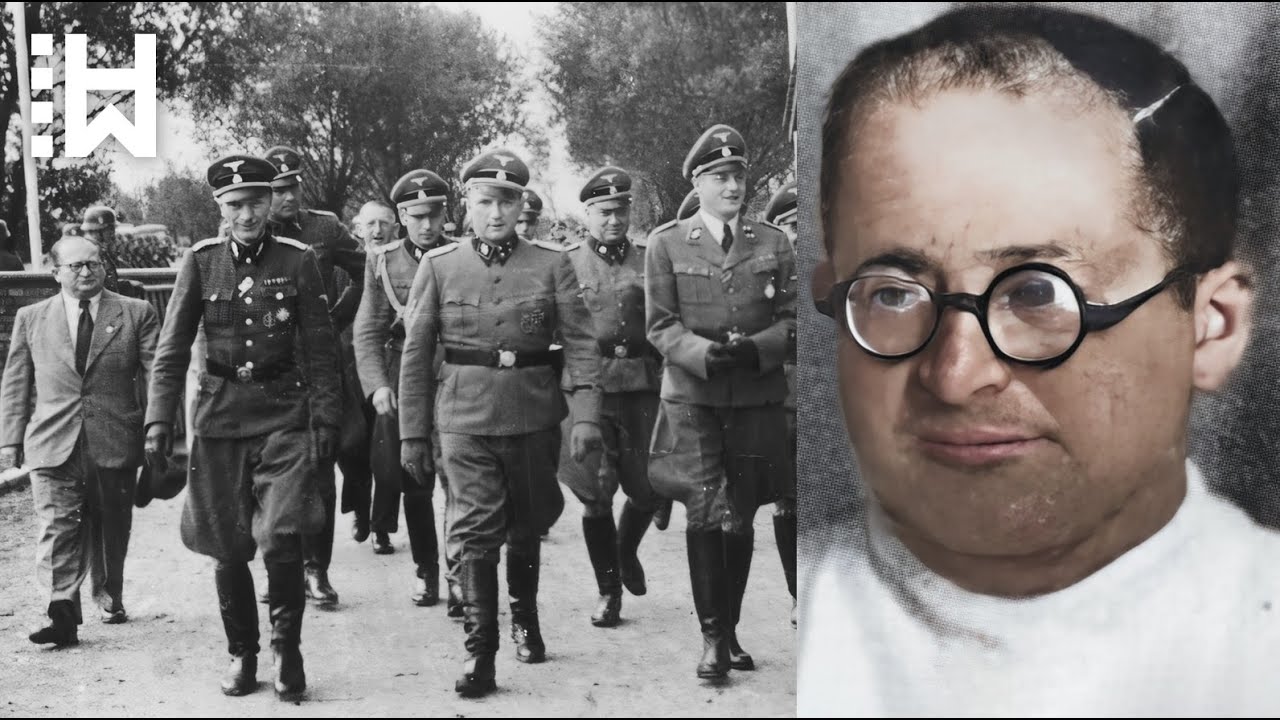
The Second World War began on September 1, 1939, when Nazi Germany invaded Poland. In 1942 Clauberg approached Heinrich Himmler, the head of the SS, who knew of him through the treatment of a senior SS officer's wife, and asked for an opportunity to perform mass sterilizations on women for his experiments. Himmler agreed, and in December 1942 Clauberg moved to Auschwitz-Birkenau.
Birkenau was the largest of more than 40 camps and subcamps that made up the Auschwitz complex. It was divided into 10 sections separated by electrified barbed wire fences and was patrolled by SS guards, including SS dog handlers after 1942. During its three years of operation it had a range of functions. Construction began in October 1941, when it was supposed to be a camp for 125,000 prisoners of war. It opened as a branch of Auschwitz in March 1942 and served at the same time as a center for the extermination of Jews. In its final phase from 1944, it also became a place where prisoners were concentrated before being transferred to labor in German industry.
As part of their camp duties, medical staff at Auschwitz performed so-called selections. The purpose was to identify people unable to work, whom the SS considered useless eaters and therefore murdered. When transports of Jews arrived at Birkenau, camp medical personnel selected some of the able-bodied adults for forced labor. Those not selected, including children and older adults, were murdered in the gas chambers. All visibly pregnant women and mothers of babies and young children were sent to the gas chambers upon arrival.
Auschwitz not only provided prisoners for human experiments conducted at various other camps, it also served as the site of a variety of human experiments. Because of the number of prisoners sent there, researchers looking for human subjects who met specific criteria could more easily find them at Auschwitz than at other camps. The SS sent 1.3 million men, women, and children from many different national and ethnic backgrounds to Auschwitz.
Clauberg was one of more than a dozen SS medical personnel who conducted experiments on people imprisoned at Auschwitz. One of his colleagues was the most notorious of the Nazi doctors, Josef Mengele. These doctors saw their appointment to Auschwitz as an exciting opportunity to advance their research.
The experiments in the concentration camps permanently maimed many victims or caused them to die. In some experiments, death was the intended outcome. The medical professionals who conducted experiments at Auschwitz did not seek the prisoners' consent or inform them of their treatment or possible effects.
The types of experiments conducted at Auschwitz included inflicting wounds on prisoners or infecting them with diseases to study the effects and test treatments, conducting unnecessary surgeries and procedures for research purposes or to train medical professionals, murdering and dissecting prisoners for anthropological and medical research, and testing methods of mass sterilization.
The Nazis wanted to exterminate all European Jews, but Germany needed them for forced labor as the war caused labor shortages. Out of approximately 10 million Jewish men and women, at least 2.3 million were fit for work. They were intended to be taken out and kept alive, but only on condition that they were sterilized and incapable of reproduction. This was one of the reasons Himmler was so interested in mass sterilization.

Clauberg's goal at Auschwitz was to find an easy and cheap method to sterilize women. On January 16, 1943, when all the machinery and equipment had been installed in Block 10, he started his pseudo-medical experiments on women.
Block 10 was a brick-built, one-story building located right next to Block 11, the so-called bunker where executions occurred until December 1943. All the time in the yard, these executions could be heard and seen from Block 10. This block housed the so-called experimental stations in which SS doctors performed various experiments. On the ground floor there were two large hospital rooms called sick rooms, an X-ray unit, an operating theater, a dental station, an office, an Institute of Hygiene, a nurses' room, a room for the SS, and a bath and toilets.
Dr. Carl Clauberg, only 1.55 meters tall, was first and foremost a businessman who worked under contract from the German chemical industry, which paid him a lump sum for every woman he used in his experiments. The women were put on the X-ray table, and then a thick, concrete-like fluid mass was injected into their uterus and urethra with an electric needle. The pumping of the mass was controlled by X-ray, and photographs were then taken.
The treatment was brutally performed. Due to the high pressure of the fluid mass injection into the women's uteri and due to the chemical properties of the fluid mass itself, the women used for the experiments suffered from inflammation of the uterus, ovaries, Fallopian tubes, and peritoneum. Admission to the room where the experiments took place was forbidden for everyone, even for SS women. However, during the experiments the patients' screams were so unbearable that on-duty SS women rushed to their rooms to ask what was going on.
After the photographs were taken, the women writhed in pain, often bled profusely, and excreted the thick fluid mass. Such experiments were conducted on the same women three to six times, at intervals of three or four weeks. Most of the female prisoners who went through the experimentation were sent to Birkenau to be gassed.
The experiments were conducted on women both elderly and young who had already given birth, and less often on virgins. To ensure that women were not able to get pregnant again, the treatments were aimed at preparing women for artificial insemination.
In May 1944 Clauberg sent a letter to Berlin in which he repeated his request for permission to put together prisoners, 400 men with 250 women who had already been X-rayed and prepared to accept artificial insemination. Some women were to be fertilized artificially, some naturally. From the day of sexual intercourse, the women were to be subjected to salpingography in order to obtain pregnancy photos in the earliest periods.
The prisoners were to be located in Block 1, which was built between July and September 1944, some 500 meters behind the wires of the Auschwitz camp. The model camp was to hold 3,500 women. There were shared toilets for men and women with a half-meter divider. The block was intended only for Clauberg's research work. However, though all the preparations were made, permission from Berlin did not come, and the experiment did not take place.

In the SS headquarters in Berlin, Clauberg's experiments on female prisoners raised great interest, as they were related to the Nazi plans for the biological extermination of entire nations. The course and results of Clauberg's sterilization procedures were closely followed. When Himmler wanted to know how much time it would take to sterilize 1,000 Jewish women, Clauberg's answer was satisfactory: one doctor with 10 assistants should be able to conduct sterilizations of a few hundred or even a few thousand Jews in one day.
The number of women Clauberg is believed to have sterilized in this fashion was estimated from 700 to several thousand. Sylvia Friedman, a nurse who was one of Clauberg's assistants at Auschwitz, later said that when a woman died after an injection, Clauberg showed absolutely no interest, no reaction, as though the matter did not concern him at all.
When the Red Army liberated Auschwitz on January 27, 1945, Clauberg was already at Ravensbrück, where he had fled to avoid capture by the Russians. Ravensbrück opened in May 1939 and was the only major women's camp established by the Nazis. While at Ravensbrück, Clauberg even arranged for some of his research victims from Auschwitz to be sent there, and despite the extreme chaos he continued with the sterilization experiments on at least 35 women.
With the approach of the Allied armies three months later, he fled again, this time to Schleswig-Holstein, seeking to join the last group of loyal SS leaders surrounding Himmler. Clauberg was the only Auschwitz doctor to do so. Himmler was captured and committed suicide, and Clauberg was captured by the Russians on June 8, 1945, exactly one month after the end of World War II in Europe.
Carl Clauberg was imprisoned in the Soviet Union for three years before being tried and convicted of war crimes and sentenced to 25 years imprisonment. Following Stalin's death in 1953, under the Adenauer-Bulganin prisoner exchange agreement, Clauberg was repatriated with other Germans in October 1955. He returned to West Germany, where he continued to work at his former clinic.
His behavior was grandiose and bizarre. He listed on his professional card various Nazi medical organizations and openly boasted of his achievements in developing a new sterilization technique at the Auschwitz concentration camp. When interviewed by the press, he spoke proudly of his work at Auschwitz and claimed, "I was able to perfect an absolutely new method of sterilization which would be of great use today in certain cases."
In 1955, after a public outcry from groups of survivors, Clauberg was rearrested. For a considerable time, the German Chamber of Medicine, the official body of the profession, resisted action against him that would divest him of his title of Doctor of Medicine. A group of former prisoner physicians of Auschwitz issued a declaration condemning Clauberg's actions there as being in total disaccord with the sworn duty of every doctor, and bitterly decrying the fact that such medical practitioners who put themselves at the service of National Socialism to destroy human lives were today in a position to practice once more the profession which they had profaned in such a scandalous manner.
In November 1955 an arrest warrant was issued. Shortly after, Clauberg had already been committed to a psychiatric hospital at the request of his wife, on a threat of murder and manslaughter. At the beginning of February 1956, the experts established his sanity but certified him as having an abnormal personality. In March 1957 the German Chamber of Medicine finally removed his license.
The five-foot-one Carl Clauberg was a severely obese alcoholic. He was 58 years old when he died suddenly and mysteriously in his prison cell on August 9, 1957. It is believed that he wanted to reveal the names at the top of the Nazi medical hierarchy, and that this consequently cost him his life. There were no tears shed for Carl Clauberg.