In May 1945, Europe was ending its long nightmare. Streets filled with people who cheered, cried, and embraced as the years of terror finally loosened their grip. Flags appeared in windows that had stayed shuttered through occupation, and church bells rang for the first time in years.
Yet beneath that wave of relief ran a darker current. Families searched for those who had vanished. Resistance fighters returned from forests and cellars with hardened eyes. Neighbors whispered the names of those who had betrayed them.
In villages and cities alike, some people celebrated while others looked for the men who had brought humiliation, suffering, and death into their homes. As joy and anger collided in the warm spring air, many believed justice had to come swiftly. They felt the ones who had enforced the terror deserved the harshest punishment.
At the center of these thoughts stood the organization feared across the continent: the Gestapo. It was the secret political police of Nazi Germany. During the Second World War, which began on September 1, 1939, it became one of the most feared institutions in all of occupied Europe.
Its activities were directed by Heinrich Himmler, the leader of the SS and chief of the German police, who placed the Gestapo under SS control and turned it into a key instrument of repression. Reinhard Heydrich, as head of the Reich Main Security Office, the Nazi intelligence service, supervised its operations and coordinated its role in crushing resistance and enforcing Nazi racial policy.
The Gestapo's arrival in a new town was often silent. A few officers stepped into a local administrative building, a new sign appeared on a door, a car parked outside a commandeered prison. Yet everyone understood immediately what this presence meant.
The Gestapo did not rely on large numbers or loud displays. It relied on fear and terror. Its officers knew they could act without law, without oversight, and without mercy.
Even before the Second World War began, the organization had grown into a tool shaped by years of political repression inside Nazi Germany. In the occupied territories, its power deepened even further. It saw itself not as a police force but as the guardian of the Nazi party's racial and political order.
That belief gave its officers the confidence to treat entire populations as subjects to be controlled and, if necessary, annihilated. Inside its offices and interrogation rooms, the brutality of the Gestapo revealed itself without disguise.
Prisoners were dragged in after sudden arrests, taken from their homes in front of their children, seized in the street, or handed over by neighbors whose motives ranged from fear to envy. Once behind the doors of a Gestapo building, the world narrowed to the demands of the interrogators.
The rooms were often small and stark, with a table, a chair, and a lamp that shone directly into a prisoner's eyes. Officers used beatings, slaps, kicks, and blows delivered with sticks or fists. But physical assault, harsh as it was, formed only part of the terror.
The Gestapo understood that psychological pressure could be equally devastating. Prisoners were kept awake for hours and sometimes days, denied water, or forced to stand until their legs threatened to give way. Officers shouted questions, repeated accusations, and offered twisted promises.
A light sentence, a message to a family member, a brief moment of rest — all were dangled if the prisoner simply cooperated. The cruelty extended beyond individual interrogations. Some prisoners were placed in cells next to rooms where others were being beaten.
They heard cries, crashes, and murmurs of suffering. The Gestapo knew that sound could break a prisoner's courage as effectively as blows. Prisoners awaiting questioning felt terror even before the door opened.
Others were told that members of their families had been arrested or were about to be taken to concentration camps or executed. Whether this was true or not did not matter. The threat was enough to loosen the resistance of the individual.
In many cases, the interrogation was not aimed at finding truth but at forcing prisoners to sign confessions already prepared, or to give names the Gestapo suspected but could not prove. Human dignity inside the building depended entirely on the officer in the room, and many officers had long since lost any sense of restraint.
In the occupied territories, the Gestapo adapted its brutal methods to local conditions. It built networks of informants, pressured local police into cooperation, and used collaboration to extend its reach. Collaboration by individuals proved especially destructive.
A neighbor's whispered accusation, a co-worker's grudge, or a political rival's betrayal could deliver a person directly into the hands of the Gestapo. These denunciations did not need evidence. A few words spoken with confidence were often enough to start an investigation.

The Gestapo welcomed such tips because they allowed it to work with greater speed and efficiency. In this way, the brutality of the organization spread beyond its own walls and began to poison social life itself.
People learned to speak cautiously, to avoid expressing opinions, to hide their feelings, and to trust only a few. Entire communities lived under the shadow of suspicion. The daily fear produced by the Gestapo became part of the occupation's unspoken language.
A knock at the door late at night made hearts race. A pause in conversation when a stranger entered a cafe caused silence to fall. Parents warned children never to repeat what they heard at home, for a single sentence spoken at school might reach the wrong ears and send an entire family to a prison or concentration camp.
The Gestapo did not need to arrest everyone to control society. Its power came from the knowledge that anyone could be taken at any moment, and no judge, lawyer, or neighbor could intervene and help. People disappeared into prisons and were seen again only months later, thinner and exhausted — or not seen at all.
This environment of fear made the Gestapo's cooperation with collaborators even more effective. Local police forces, administrative officials, and political groups often worked with German authorities, either out of ideology or a desire to protect their own positions. This cooperation strengthened the Gestapo's capacity to carry out arrests, deportations, and repressive actions.
Independent states that had aligned themselves with Germany also contributed. Their governments, seeking security or territorial advantage, helped supply the Reich with goods, labor, and political support. German diplomats encouraged these ties and frequently promoted policies that aligned with Nazi ideology. Collaboration reinforced every aspect of German power, and the Gestapo benefited from it at every level.
The most tragic result of this collaboration was the persecution of Europe's Jews. German diplomats and Gestapo officers pressured governments across the continent to adopt anti-Jewish measures. Where governments resisted, German experts arrived to supervise deportations personally.
The Gestapo controlled identity papers, tracked financial assets, and ensured that transports were filled. In some countries, local authorities willingly handed over Jews. In others, pogroms broke out even before German forces had secured full control.
Without this cooperation, the Gestapo could not have carried out its work on such a vast scale. Collaboration enabled genocide, and the German secret political police acted as one of its key instruments.
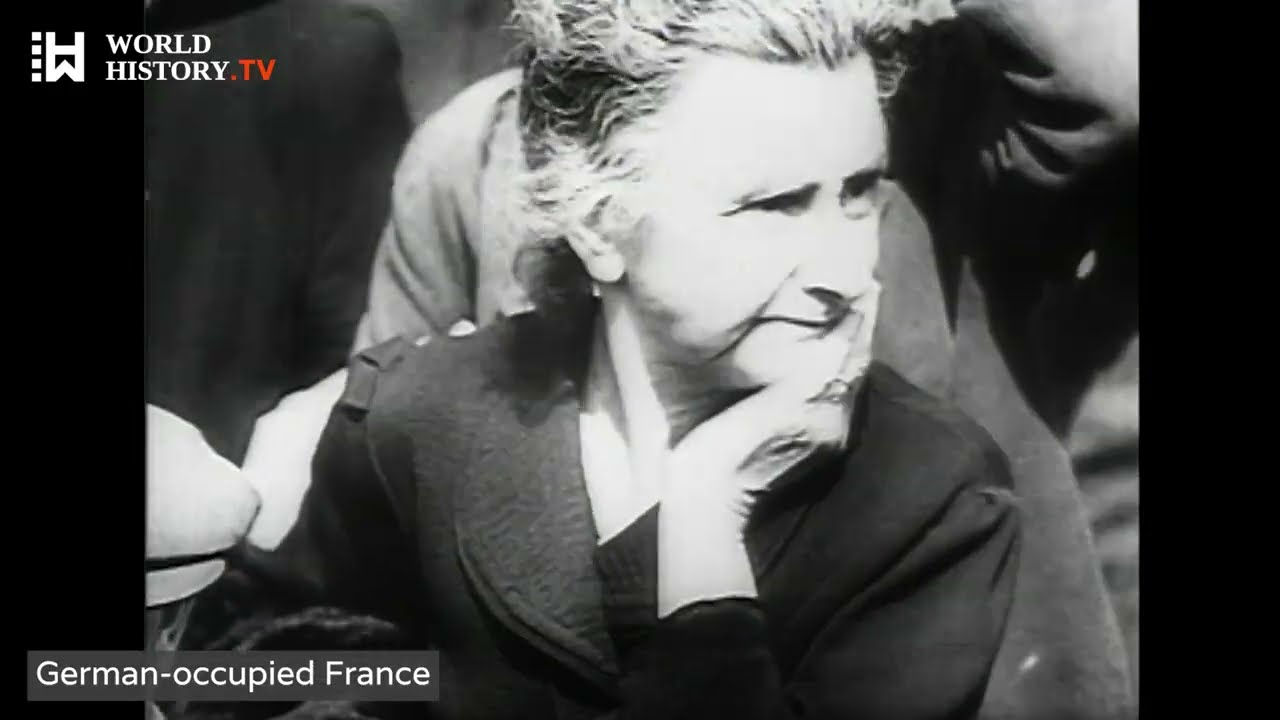
As the war continued, the Gestapo's brutality deepened. Partisan movements grew stronger, and the organization responded with mass arrests, public executions, and intensified torture. In rural areas suspected of supporting resistance fighters, the Gestapo conducted sweeping raids, burning homes, interrogating villages, and deporting whole families. Fear became part of the land itself.
Yet even under such conditions, many people continued to resist. They carried messages, hid fugitives, and risked everything to preserve some form of dignity. For these people, the Gestapo became the face of an enemy that ruled through humiliation and suffering.
When the war ended in 1945, the fall of the Gestapo came quickly, but the memory of its cruelty remained. At the Nuremberg trials, the Gestapo was declared a criminal organization, and senior officers were tried, convicted, and in some cases executed.
Many were extradited to countries where their crimes had been committed, including the Netherlands, France, Czechoslovakia, and Norway, and were executed there. Yet outside courtrooms, civilians and resistance fighters sometimes carried out their own form of justice.
They remembered the beatings, the deaths, and the disappearances. Some encountered former Gestapo officers attempting to flee or hide. The anger accumulated over years of Nazi occupation and terror exploded into open acts of retribution.
Former prisoners, resistance members, and grieving families finally had the chance to confront those who had terrorized them and their loved ones by ordering and enabling arrests, torture, and executions. Gestapo officers and informants now faced justice.
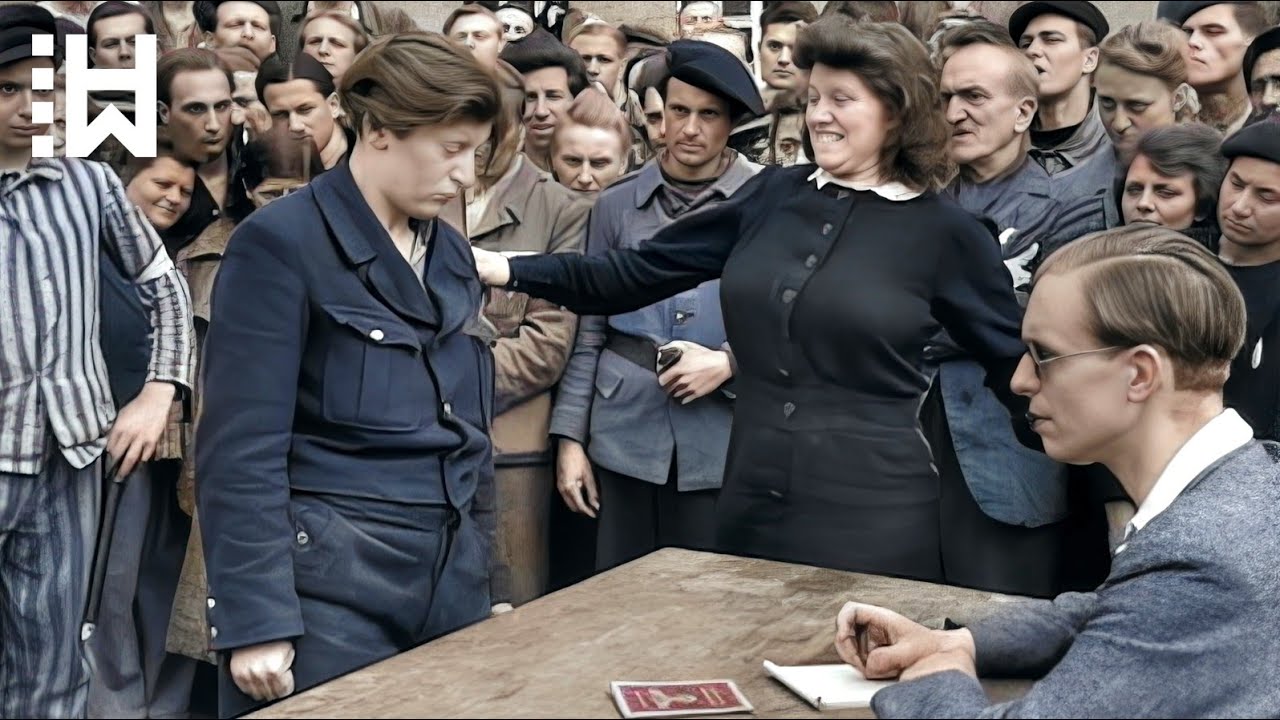
While some men struck or even killed the Gestapo agents and informants responsible for their suffering, women did not hesitate to slap Nazi collaborators, including other women whose denunciations had led to the deaths of their sons and daughters.
Similar scenes of reckoning unfolded in liberated concentration camps, where surviving mothers confronted female SS guards, beating or striking the very women who had tormented them and helped kill their children.
After years of terror, the desire for revenge was both understandable and, in the eyes of many, necessary. The Gestapo had ruled through fear, humiliation, and cruelty, leaving families shattered and communities broken. People who had seen their loved ones beaten, tortured, or taken away without a trace carried wounds that no court could fully heal.
When liberation came, the ordinary structures of justice were often slow or overwhelmed. Many civilians believed that allowing Gestapo officers to walk away without immediate consequences would have been a betrayal of the suffering they had caused.
For resistance fighters who had watched their comrades die under torture, and for families who had lost parents, children, or siblings, confronting former Gestapo officers felt like a final act of defense — a way to reclaim dignity after years in which they had been powerless.
Revenge in this context was not only an emotional response. It was also a deeply human attempt to restore a moral balance that had been destroyed by the brutality of the occupation.