Everyone in Fleet Street knew about it for more than three decades. The wife of a man who would become prime minister of the United Kingdom was openly in love with another man—a fellow Conservative politician, charming and reckless where her husband was careful and reserved. And not one newspaper printed a word while she lived. Lady Dorothy Cavendish was born on July 28, 1900, the third daughter of a family that had owned Chatsworth House in Derbyshire since 1549.
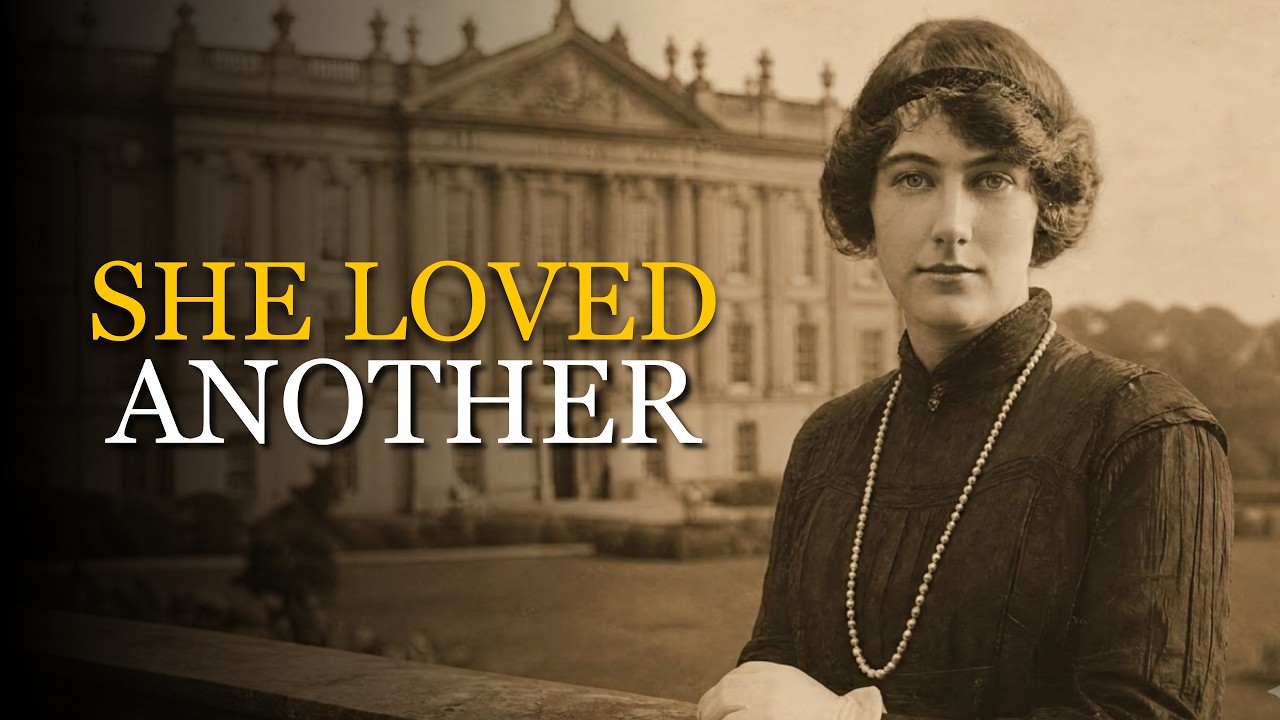
She was raised to expect that the ordinary rules of life would bend around her. In one astonishing way, they did. She married Harold Macmillan, a publisher’s son who would rise to the highest office in the land, and for more than 30 years she carried on a very public private affair with Robert Boothby—known to every editor in the country, and never reported. Dorothy’s childhood was defined by grandeur and decline.
Her father became the ninth Duke of Devonshire in 1908, moving the family into Chatsworth, a baroque palace with a west front that caught the setting sun and threw it back in gold. The family had once held some 200,000 acres across England and Ireland, with estates including Hardwick Hall, Devonshire House in London, Bolton Abbey in Yorkshire, and Lismore Castle in Ireland. But the agricultural depression, accumulated debt, and rising death duties forced a slow retreat. When the eighth duke died in 1908, more than £500,000 in tax fell due at once.
The family began selling land and treasures—including rare Shakespeare folios and tens of thousands of acres—to hold on to the houses themselves. In 1916, Dorothy’s father became Governor General of Canada, and the family moved to Ottawa. There, in 1919, she met Harold Macmillan, a young officer on the Duke’s staff recovering from a war that had nearly killed him three times. Macmillan had served with the Grenadier Guards and been wounded repeatedly.
He was clever, bookish, and shy—and, by the one measure that mattered most to a Cavendish, not quite one of them. The Macmillan fortune came from books: his grandfather had founded the publishing house Macmillan and Company in 1843. It was real money, but it was new, and it counted in tens of thousands of pounds, not hundreds of thousands of acres. Dorothy did not appear to care about the difference.
They married on April 21, 1920, at St. Margaret’s Westminster, in what the newspapers called the social event of the London season. But the marriage carried a fault line from the first day. To Dorothy’s relations, Harold remained the clever middle-class man who had married a duke’s daughter—admitted to the family, never quite absorbed by it.
His official biographer later recorded that he was often treated with condescension by his grand in-laws and that in the 1930s he cut a sad and isolated figure in the great rooms of Chatsworth. The couple had four children: Maurice in 1921, Caroline in 1923, Catherine in 1926, and Sarah in October 1930. Harold entered Parliament in 1924 as the Conservative member for Stockton-on-Tees, an industrial town hollowed out by the decay of British industry. The poverty he saw there marked him deeply, giving him a lifelong horror of unemployment.
Dorothy proved an extraordinary political asset—a natural campaigner who tramped the streets, learned voters by name, and brought a tireless warmth to the constituency. At the very end of the 1920s, into this rising and respectable life walked Robert Boothby. He was a fellow Conservative MP, born in Edinburgh in 1900, educated at Eton and Oxford, where his appetite for pleasure earned him a nickname borrowed from a famous London theater: his fellow undergraduates said he was “twice nightly. ” He was quick, funny, and fearless in debate, serving as parliamentary private secretary to Winston Churchill from 1926 to 1929.
But he was also greedy, financially disordered, and careless of the ordinary rules—the least safe man in Westminster. Dorothy fell in love with Boothby around 1929, and she stayed in love with him for the rest of her life. He was everything her husband was not: bold where Harold was shy, reckless and warm where Harold was wounded and watchful. She did not hide the relationship the way her world expected a woman to hide such things.
She made little secret of her love, arranged her days around his presence, and behaved in front of the people of her class like a woman living a second marriage. High society was offended precisely because she refused the decent lie that everyone else agreed to tell. In 1935, apparently deciding the relationship could lead nowhere, Boothby married Dorothy’s own first cousin, Diana Cavendish. The marriage was a mistake almost from the first day and was dissolved in 1937.
He returned to Dorothy, and from that point the arrangement hardened into permanence. He married for a second time only in 1967, the year after Dorothy died. Harold Macmillan faced the decision that would define his private life for the next 35 years: divorce Dorothy or hold the marriage together in form. He was counseled by his solicitor that divorce would be fatal to a public career, even for the innocent party.
In the England of the 1930s, the taint attached to the fact of divorce itself, not to guilt or innocence. Men close to Macmillan saw their own prospects damaged by exactly that shadow. So he chose to stay, and the marriage became a shell built around an arrangement. In private, from the early 1930s onward, he and Dorothy lived largely separate lives under the same roofs.
In public, they appeared together at every occasion that required it—flawless and united. The strain very nearly destroyed him. In 1931, at the point when the affair and the choice it forced on him were at their rawest, Macmillan suffered a nervous breakdown. He went abroad to recover out of sight and slowly rebuilt himself.
He almost never spoke of it afterward. The humiliation pursued him even into the grandest rooms of his wife’s world. At Chatsworth through the 1930s, he was observed as a sad and isolated figure, handled with faint condescension by the aristocratic in-laws who had never quite accepted him. The affair was not, in any real sense, a secret.
It was known to politicians on both sides of the House of Commons. It was known to civil servants and private secretaries. It was known to newspaper editors and lobby correspondents. It was known by later report inside the royal household itself.
And still, for the whole of Dorothy’s life, not one word of it reached the British public. Everyone knew, and no one printed it. The silence did not rest on secrecy. It rested on agreement.
Several forces worked together to make it hold. The first was the law, weighted heavily toward the person written about—an editor needed proof he could defend in a courtroom, and proof of a private affair was almost impossible to come by. The second was class: the proprietors and editors of the great newspapers dined at the same tables, shot on the same estates, and shared a settled instinct about what was and was not fair game. The third was a genuine conviction held across the governing order that the private lives of public people were a private matter unless they touched public money or the safety of the realm.
This affair touched neither, and so it was left alone. The cost of the arrangement fell hardest on the people around her. A daughter was born in October 1930, about a year after the affair began. Her name was Sarah, and from the beginning there were those in political society who murmured that her father was not Harold Macmillan but Robert Boothby.
The claim has never been proven. A serious modern biography of Macmillan published in 2010 by historian Richard Thorpe discounts Boothby’s paternity altogether. What is not in doubt is the human cost. Whatever the truth of her parentage, Sarah grew up at the center of an arrangement no adult in her life would openly name.
Her life was not a happy one. She married in 1953 but was troubled and leaned heavily on drink. She was unable to have children of her own, and she and her husband adopted two sons. She died in 1970 at the age of 40.
Whatever else the great silence protected, it did not protect her. Harold raised her as his own daughter, gave her his name, and never once cast her out or set her apart. The humiliation did not finish Harold Macmillan. It changed him.
The wounded, sensitive man learned to bury the wound so deep that nothing could reach it, and in the burying he became harder, cooler, and more ruthless than the rivals who had never been broken at all. The historian John Campbell has argued that the private pain was part of what forged the public steel. Through the Second World War, Macmillan served as the government’s minister on the spot in North Africa and handled it brilliantly, learning the cool, unreadable style that became his trademark. After the war he served as Minister of Housing, where he made his name by delivering 300,000 new homes a year, a figure his own civil servants thought impossible.
He served as Foreign Secretary and then as Chancellor of the Exchequer. In January 1957, after the collapse of Anthony Eden’s government in the wreckage of the Suez crisis, the prize fell to him. The wounded outsider of the 1930s walked into Downing Street as prime minister of the United Kingdom. At his side, as she had been at every public step of the long climb, stood Dorothy.
For the next six years, Dorothy moved through the highest circles on earth. The still center of those years was not Downing Street but Birch Grove, the Sussex house Harold’s mother had bought in 1906 for £13,000 and rebuilt in 1926, telling his children it would one day belong to the prime minister of England. Harold preferred it to Chequers, the official country residence, because Dorothy did not like weeding other people’s gardens. The guests those walls received read like a roll call of the entire midcentury world: Charles de Gaulle came in November 1961, his blood plasma kept in the coach house, police with dogs stationed through the garden.
Dwight Eisenhower stayed. Nikita Khrushchev stayed. Jawaharlal Nehru stayed. And in June 1963, President John Kennedy came for a summit Macmillan described to his cabinet as a meeting of the British and American governments almost as brothers.
Dorothy played hostess to the president of the United States, and every senior figure in that garden knew she had been for more than 30 years openly in love with another man. The machinery of silence was tested more than once and never broke. When Dorothy’s own brother, Edward Cavendish, the 10th Duke of Devonshire, died in November 1950 in the presence of a doctor named John Bodkin Adams—who would later stand trial for murder and was long suspected of hastening the deaths of others in his care—no investigation was made into the duke’s death. It has been argued by the writer Pamela Cullen that the authorities were reluctant to draw press attention to the family at a moment when the wife of a senior politician was conducting a well-known affair.
This is an interpretation, not a proven fact. But the very fact that serious writers have advanced it shows the logic everyone of the time understood without being told. In 1964, a newspaper prepared to expose Boothby’s association with the criminal underworld of London. Boothby denied the story and threatened to sue.
He was paid a large settlement, some £40,000, to make the whole matter disappear, and the editor who had pursued it lost his job. The silence around these people was not passive habit. When it was pushed, it could be actively enforced with money and with the threat of the courts. Dorothy died on May 21, 1966, of a heart attack in the hall of Birch Grove, at the age of 65.
Harold was there. So, in the years around her death, was Boothby, faithful in his own fashion to the end. She was buried in the churchyard at Hailsham in Sussex, in the family plot where Harold would one day be laid beside her. The obituaries recorded a devoted political wife, a duke’s daughter, a tireless worker in her husband’s northern constituency, a great and knowledgeable gardener.
They said nothing of Robert Boothby. They said nothing of the 30 years. Everyone knew, and no one printed it, even then. Harold lived another 20 years.
He never remarried and rarely spoke of his wife’s affair. He became a revered elder statesman, ennobled as the Earl of Stockton. He died at Birch Grove on December 29, 1986, at the age of 92 and was buried beside Dorothy. Boothby had died a few months earlier in the summer of that same year.
Within a single year, the three principles of the story were all gone. Chatsworth still stands on the east bank of the Derwent, magnificent and whole, still the seat of the Devonshires after all these centuries. But the survival was bought at a terrible price. When the 10th Duke died in 1950, a few weeks before a transfer of assets to his son would have escaped the tax, death duty was charged at 80 percent.
The bill came to £7 million, equivalent to more than £200 million in today’s money. Some advisers thought the situation hopeless and proposed handing Chatsworth to the nation. Instead, the family fought to keep it, selling tens of thousands of acres, handing over Hardwick Hall to the National Trust in place of tax, and selling major works of art. It took 17 years of hard negotiation to settle the account.
Today the house is owned by a charitable trust created in 1981, held for the benefit of the public, open to hundreds of thousands of visitors every year. Birch Grove also survives, but as a humbler thing entirely. The architectural guides call it substantial but inelegant. It passed out of the family in 1989, changed hands more than once, and was bought in 2011 for £25 million by a private owner.
It is not open to the public. The affair that was kept out of every British newspaper for 30 years is now told openly in biographies and documentaries. It can be told at all only because the world that once protected it has passed away completely. Lady Dorothy Macmillan was protected not by concealment but by consensus.
Her secret was safe precisely because it was known—because every person who might have exposed it belonged to the world it would have embarrassed. It was the silence of a thing agreed, a fact known to everyone who mattered and spoken of by none of them. It is, in the end, the record of a vanished arrangement between power and the press, a last age in which the private lives of the people who governed Britain were held by common and unspoken agreement to be none of the public’s business. The silence was a mercy to the powerful and a cruelty to the powerless.
It fell most gently on the people who needed it least and hardest on the one small person who needed protecting most.