On March 23, 1944, 16 members of the Italian Resistance concealed themselves along the Via Rasella in Rome. They were well armed with machine pistols and revolvers hidden under their clothing as they mingled with the Roman crowds.
One of them, disguised as a street cleaner, pushed a rubbish cart along the road. The trap was set and about to be sprung.
Down the street came the ring of jackboots on the cobbles. The heavily armed SS troops of the 11th Company, Third Battalion, Police Battalion Bozen marched in unison, their rifles and equipment jangling.
They were the arrogant overlords of Rome, the SS military police who did the bidding of their Gestapo masters in maintaining order in the Italian capital and hunting down enemies of the Reich. Ironically, most were German-speaking Italians born in the border province of Bolzano, hardened combat veterans who had volunteered for SS police duty in October 1943 to avoid another tour on the Eastern Front.
As the column marched up the street toward the concealed partisans, the man disguised as a street cleaner surreptitiously lit a fuse and disappeared into the crowd. Inside the cart was an improvised explosive device consisting of 12 kilograms of TNT packed into a steel case, placed inside a bag containing a further 6 kilograms of TNT and explosive-filled iron tubing.
The timing could not have been better. As the marching column drew level with the rubbish cart, there was a huge explosion. Windows in surrounding buildings imploded from the blast wave, and a great gout of fire and black smoke filled the street.
Human body parts littered the pavement or hung from burning trees beside the road. As the smoke began to clear, the concealed partisans opened fire with their small arms at the surviving SS men, the rattle of machine guns and revolvers echoing off the surrounding buildings.
After a few minutes the firing trailed off as the partisans quickly hid their weapons and disappeared into the confused and terrified crowds. Twenty-eight SS police lay dead on the Via Rasella, and many others were severely injured, including five who sustained mortal wounds. Two Italian civilians were also killed accidentally in the confusion.
Within minutes of the attack, the head of the SD and the Nazi Security Police in Rome, 36-year-old SS-Obersturmbannführer Herbert Kappler, had arrived on the scene to begin an investigation. The "Foxface" Kappler's job involved exporting Nazi terror into the heart of Rome, including rounding up Jews and other enemies of the state and putting them on trains to the camps. He was also responsible for suppressing the partisan groups that operated in the city.
Later that evening, Kappler met with the military governor of Rome, Luftwaffe Major General Kurt Mälzer. The German governor was outraged by this attack on the Reich's troops in the very center of Rome and demanded that reprisals be taken at once.
Kappler had no compunction about agreeing wholeheartedly with this illegal order, and between the two of them they decided that 10 Italians would be executed for every German soldier killed. General Mälzer went one further and even suggested that as a further reprisal a section of Rome should be burned down.
Mälzer's staff passed these proposals to the headquarters of the German Commander-in-Chief South, Luftwaffe Field Marshal Albert Kesselring, whose staff duly passed the request up the chain of command to the OKW in Berlin. That very night Adolf Hitler himself decided that the reprisal would go ahead within 24 hours, and the Führer order was transmitted to Kesselring.
The order to illegally murder hundreds of innocent Italians trickled down the German chain of command. Kesselring considered the order to be directly from Hitler himself and that it must be obeyed without hesitation or question. However, Kesselring had been led to believe that the men who were going to be shot were Italian criminals already under sentence of death for other crimes.
Kappler himself had lied and told Kesselring that he had sufficient criminals at hand, which was a case of wishful thinking. Kappler required 280 Italians in total to execute, and he had a grand total of just four men who had been condemned to death and were actually sitting in local jails in Rome.
Kappler turned to one of his subordinates, 30-year-old SS-Hauptsturmführer Erich Priebke. The young officer from Hennigsdorf in Brandenburg was ordered to create a death list of those to be shot.
In addition to the four condemned criminals, SD prisons contained another 17 men serving long sentences and 167 who were noted by the SD as being worthy of death. The SD had also managed to round up a couple of suspected partisans from the scene of the bombing to add to the total, but it was still not enough.
"The whole of that night we searched the records and could not find a sufficient number of persons to make up the number required for execution," Priebke recalled at his interrogation by the British Army in 1946.
Superior SS-Brigadeführer and head of the SD in Italy, Dr. Wilhelm Harster, suggested making up the numbers by including a group of Jews being held in Gestapo jails in the city. The suggestion was seized upon with alacrity by Kappler and Priebke.
By noon on March 24, Kappler and Priebke had assembled a list containing 271 men. By now the death toll from the bombing had risen to 32 as wounded Germans succumbed in hospital, so more Italians were now required to be shot as per Hitler's express order.
To make up the numbers of the condemned, the chief of fascist police in Rome, Pietro Caruso, offered some prisoners from his own jails. Mistakenly, the Germans actually ended up with 335 hostages, which was five too many.
Kappler called a meeting of the SS officers who would take part in the massacre. "He told us that the commander of the police regiment whose men had been killed declined to carry out the execution, that the men from the headquarters at Via Tasso were to be the executioners," recalled Priebke. "He said that this thing was a horrible thing to do and to show the men that they had the backing of the officers, all the officers were to fire a shot at the beginning and a further shot at the end."
The SS transported the condemned men, who ranged in age from the elderly down to teenage boys, to a rural suburb of Rome inside disused quarries at the Ardeatine Caves near the Via Ardeatina. The two officers charged with conducting the massacre inside the caves were Priebke and 32-year-old SS-Hauptsturmführer Karl Hass.
In groups of five, the hostages were led into the cave and each was shot at close range in the back of the head by SS troops, the idea being to use only one bullet per Italian. Most of the SS men had never killed anyone before, so Kappler had taken the step of ordering a large quantity of Dutch courage in the form of bottles of cognac, and the officers and men of the execution squads freely imbibed.
To save time, the soldiers forced the prisoners to climb on top of those who had been killed just minutes before, so that grisly piles of bleeding corpses were created. However, a combination of nervousness and alcohol meant that many of the executions were botched, and several men and boys dragged themselves off deeper into the cave system to die of their wounds, including a father and his son who were found in a death embrace a year later by Allied investigators.
During the executions, which dragged on for several hours, Erich Priebke encouraged his men and forced several to shoot victims. Armed with a Beretta machine pistol, the SS officer personally killed two victims.

Towards the end of the day, Priebke realized that he had five too many hostages, but instead of releasing the men he ruthlessly ordered that they too be shot, to leave no Italian witnesses to the terrible crime. German Army engineers arrived to set charges at the entrance to the caves and then detonated them, entombing the bodies inside. The Germans then packed up, boarded their trucks, and drove back to their barracks, confident that they had carried out Hitler's order to the letter.
Rome was liberated by the Allies on June 4, 1944, just two days before the Normandy landings in France. Like rats off a sinking ship, the SD and Gestapo officers still in the city tried to escape from justice.
Herbert Kappler fled to Vatican City, then as now a tiny independent and neutral nation, and begged for refuge. The Vatican wisely refused Kappler permission to enter, and he was soon captured by the Allies.
In the meantime, Priebke had fled and gone to ground elsewhere in Italy. Erich Priebke was arrested by the US Army on May 13, 1945, while living with his wife and two young sons in Bolzano, close to the Austrian border.
"My wife was with me and there was a knock on the door," Priebke recalled in an interview with British writer Guy Walters in Rome in 2007. "An American soldier said in half an hour come down with one suitcase and one blanket. They let my wife and children stay but I was sent off in a big truck. As we went along some Italian shouted 'Tedeschi, assassini' and made throat-slitting gestures."
Priebke was an inmate in several POW camps. On August 28, 1946, he was interrogated by the British at Camp Afragola outside Naples about the Ardeatine Caves massacre, during which Priebke fully admitted his role in the planning and execution of the crime, including his personal murder of two Italian hostages.
Priebke knew that it was only a matter of time before the Allies turned their attentions on him and a prosecution was made. At the time he could have expected the death penalty for his war crimes. This prospect undoubtedly led him to escape from his camp and become a fugitive from justice. He would be on the run for nearly 50 years.
Priebke's escape from a POW camp at Rimini was made possible by another Nazi war criminal who was to feature prominently in postwar hunts: SS-Obersturmbannführer Walter Rauff. Rauff was the officer responsible for inventing the gas vans used on the Eastern Front to murder Jews, among several of his crimes.
Rauff, who would most certainly have been executed if his case had ever been brought to trial, had managed to smuggle a pair of wire cutters into the camp. In the event, Rauff did not require the cutters, as he managed to hide under a mobile cinema truck that had visited the camp and escaped in this unorthodox manner.
Before he left, he sent the wire cutters to Priebke, who together with four other SS men who were also living on borrowed time made their way to the section of the camp that held SS POW troops captured in Italy. On New Year's Eve 1946, the small group of evaders escaped via the latrines and cut the fences before heading for the seaside town of Rimini.
Priebke and his companions first sought sanctuary with Luigi Santa, the bishop of Rimini, but the cleric was away and the Nazi fugitives were directed instead to an Augustinian convent. The following day, January 1, 1947, the group decided to split up and make their own ways out of Europe.
Priebke's wife and sons had moved to the northern Italian village of Vipiteno, located 30 miles northeast of Merano and very close to the Austrian border. Priebke arrived at the village by train and hid up for two weeks with the local priest, Father Johann Corradini, afraid to approach his family lest they were being watched by the Allies.
After two weeks, Priebke, now calling himself Otto Pape, summoned up the courage to chance his capture and rejoined his family. They would stay in Vipiteno until October 1948.
Priebke was right to be cautious, for although his family was not under surveillance, the British were actively hunting for him. Several of the SS officers who took part in the Ardeatine Caves massacre had already been caught and punished, and on September 26, 1947, the British War Crimes Group Southeast Europe had issued a list of Germans wanted in connection with the massacre. Priebke's name was at the top of the list.
Three of those listed, including Priebke, had escaped from POW camps, and the other two had never been caught. On October 21, 1947, the American War Crimes Branch Austria informed the British in Italy that they had reliable information that Priebke was living in Vipiteno. The British slated Priebke for arrest on October 31, but before they could move on him, Priebke received a warning and disappeared into another smaller village further up the mountains for a further four months.
The process by which Priebke ended up living comfortably in Argentina began on February 15, 1948, when Father Corradini wrote a letter to Bishop Alois Hudal, the ringleader of the Vatican-sponsored Nazi ratline that shipped fugitives out of Europe via the Italian port of Genoa, requesting that he help the Pape family.
Corradini wrote that the Papes had been in Vipiteno for three years, that Alice Pape and her two sons, Jorge and Ingo, were all good Catholics, but that the father Otto was not Pape. Priebke had told Corradini that he would convert to Roman Catholicism if the Church agreed to assist them. Hudal appeared to have made Priebke's conversion, in return for assistance, a condition.
Priebke's wife Alice also took matters into her own hands and contacted Father Piesch at the Franciscan Monastery in Bolzano. Piesch advised Alice that the family should try to obtain Red Cross documentation to help them. Piesch also wrote to Bishop Hudal in Rome.
A third avenue of assistance materialized when Priebke received a letter from an Italian fascist friend then living safely in Argentina, a man named Alfredo Reinhardt. The two men had originally met in April 1945. Reinhardt promised Argentinian visas for Priebke and his family if they could send him their details, which Priebke duly did. Soon after, a set of visas arrived in the name of Pape.
In the meantime, sympathetic elements within the Catholic Church in Rome were working secretly to aid the Priebke family's escape to South America. On July 26, 1947, the Pontifical Commission of Assistance issued a Vatican identity document in the name of Otto Pape. Hudal then used this document to obtain a Red Cross passport for the German fugitive.
The process was finally completed on September 13, 1948, when Priebke became a Roman Catholic. Shortly afterwards, Priebke visited Hudal in Rome, where the bishop handed him a blank Red Cross passport. In mid-October the whole Pape family went to Rome, where Hudal issued Priebke's wife and sons with their Red Cross passports. All of the documents were in the surname Pape.
From Rome, the Pape-Priebke family went to Genoa, the point of departure to their new free lives outside Europe and far from the tentacles of Allied justice. Just before departing for Argentina, the Papes suffered a minor setback in Genoa: there was a problem with some of the information on their documents, and by the time this had been sorted out by an agent working for the other great ratline creator, Croatian Father Krunoslav Draganović, the Papes had lost their berths.
Fortunately, Draganović's organization had reserved 10 berths on the steamer San Giorgio, and in return for practically all of Priebke's savings, four of these precious places were given to the family. On October 23, 1948, the Papes sailed from Genoa, destitute but free.
Argentina would prove to be Erich Priebke's salvation. His former boss at the SD headquarters in Rome, SS-Obersturmbannführer Herbert Kappler, was not to be as fortunate as his wily subordinate.
The British had arrested Kappler in May 1945 and handed him over to the Italians in 1947. The Italians placed Kappler before a military tribunal, which sentenced him to life imprisonment in a military prison at Gaeta for his role in the Ardeatine Caves massacre.

His first wife divorced him while he was in prison, but he later married a German nurse. In 1975, at the age of 68, Kappler was diagnosed with terminal cancer, and his wife was permitted to frequently visit him in private after he was transferred to a prison hospital in Rome the following year.
In one of the most incredible escapes of a Nazi war criminal, Kappler's wife Anneliese managed to stuff her extremely thin and underweight husband into a large suitcase and smuggled the senior SS officer out of prison. With some ingenuity, Anneliese spirited her husband across the Alps into West Germany and into a comfortable home.
Although the Italians attempted to have Kappler extradited back to Rome, the German authorities refused all such requests, as the German state on principle does not permit its citizens to be extradited. Herbert Kappler died at his home in Soltau in 1978 at the age of 70.
Soon after his arrival in South America, Erich Priebke had settled in the pretty Alpine city of San Carlos de Bariloche, 1,100 miles southwest of Buenos Aires in the Argentine Andes. Bariloche is a pristine ski town overlooking a large lake, set among pine forests and snowcapped mountains. Its resemblance to Bavaria or Austria is unmistakable, right down to the gingerbread houses and German shops and restaurants.
Today Bariloche still has several hundred Germans mixed in with its population of 100,000 people, many of them descendants of the town's German founders who had migrated to the area from neighboring Chile in the 1890s and created a little slice of home out of the wilderness.
Priebke had fitted in well in Bariloche. For decades he owned and managed a German delicatessen and had even taken an active public role when he was elected head of the local German-Argentine Cultural Association. Argentine citizens of the city called Priebke a good neighbor and a person of irreproachable conduct.
When Priebke was eventually arrested after living in Bariloche for almost five decades, over 200 local residents signed a petition calling for his release from custody. Priebke felt so secure in Argentina that he had not even bothered to change his name, nor had he sought Argentine citizenship. Instead, the arrogant former SS captain had retained his German passport and traveled to Europe on several occasions with impunity. He had even visited Italy without anyone being any the wiser.
But all of this changed in the early 1990s when another former Nazi, Reinhard Kopps, told the American television channel ABC News that Priebke, who was still a wanted man in Italy, was living quietly and comfortably in Bariloche.
Reinhard Kopps was a former officer in the Abwehr, the German military intelligence unit and rival of the Gestapo, and he had also escaped from an internment camp in the late 1940s carrying with him a list of Abwehr agents. Kopps had escaped down Bishop Hudal's ratline to South America, where he had become a public relations consultant to Chile's dictator General Augusto Pinochet and later to General Alfredo Stroessner in Paraguay.
Armed with this information, an ABC reporter named Sam Donaldson interviewed Priebke in Bariloche, where the elderly German admitted that he had taken part in the Ardeatine Caves massacre in 1944 and that he had personally shot two of the hostages. But Priebke attempted to justify his actions by claiming that he had merely been following Herbert Kappler's orders, orders that came directly from Adolf Hitler, and therefore he was without blame.
As with so many other wanted Nazi fugitives, the Nuremberg defense was normally proved to be their first legal tactic when pressed to account for their crimes. The lack of remorse that Priebke showed during the interview was to prove to be his downfall. His arrogance and contempt for those who had died sparked a campaign supported by several powerful Jewish groups to have Priebke arrested and extradited to stand trial for his crimes.
Researchers believed that as well as participating in the Ardeatine Caves massacre, Priebke had also been involved in the arrest and transportation to Auschwitz of 6,000 to 7,000 Italian Jews, and they had also been involved in the torture of Italian political prisoners during interrogations.
Argentina came in for some criticism for still allowing Nazi war criminals sanctuary, opening up an uncomfortable old historical wound in the nation. Italy pressed Argentina for Priebke's immediate extradition.
The reaction was mixed in Argentina. Many local residents opposed the move, and even President Carlos Menem stated that if Argentina was to extradite Priebke for war crimes, then Britain should extradite former British prime minister Margaret Thatcher to Buenos Aires to face charges over the sinking of the cruiser General Belgrano during the 1982 Falklands War, when the warship was outside the defined area of engagement.
Other Nazi fugitives living in Argentina in 1994 were confronted by reporters, drawing yet more unwanted press attention onto the country. Abraham Kipp, a 77-year-old former Dutch police officer who had been sentenced to death in the Netherlands on 23 counts of murder, said: "I don't want to talk about the past. It's all over." Kipp had escaped from a Dutch prison in 1949 before he could be put to death, fled to Argentina via a ratline, and had become a citizen in 1953. When asked whether he felt remorse for his crimes as a Nazi collaborator, Kipp answered emphatically: "What? No."
Another Nazi living in Buenos Aires, former SS-Obersturmführer Wilfred von Oven, had known both Dr. Josef Mengele and Adolf Eichmann when they were living in Argentina. The 76-year-old von Oven, a Belgian, was not a war criminal, but he had been an SS war reporter and collaborator on both the Eastern and Western Front and a Nazi propagandist. He claimed that Dr. Mengele had been a refined man who loved classical music and that his work was academic, to gauge the extremes of physical and mental hardships humans could endure, which was putting it lightly. Von Oven died in 2001.
The problem for the Argentine authorities was that it began to look as though they were willingly harboring a wanted Nazi war criminal, when such behavior, even in South America, was no longer acceptable. Priebke had entered Argentina using a false visa supplied by Bishop Hudal that the Vatican made out in the false name of Pape, and he was not an Argentine citizen. Extraditing Priebke was a way that Argentina could show that it was a very different place than the Nazi haven created by President Juan Perón four decades earlier.
After considerable Italian pressure, President Menem ordered Priebke's arrest in 1994. However, due to his advanced age, Priebke was placed under house arrest only. The arresting officer, Inspector Adalberto Ibera, had Priebke examined by a doctor who claimed that the old Nazi was suffering from depression.
Since he had publicly admitted his involvement in the Rome massacre, a great deal of soul-searching followed in the Argentine press about the nation's past as a haven for war criminals. "For Argentina, which opened its doors to Nazis fleeing postwar Europe, this is the season for exposing war criminals and debating whether 50 years after their crimes they should be brought to justice," wrote Nathaniel C. Nash in the New York Times.
Jewish groups were particularly vocal in calling for Priebke's extradition, as several dozen Jews had been shot alongside the other Italian hostages. "This man has to be extradited because extradition represents a no to the idea of impunity," said Beatriz Gurevich Rubel, research director of Proyecto Testimonio, a group studying Argentine national archives for Nazi migration. "It is important to delegitimize the idea of obeying orders when it deals with obeying criminal orders. The issue is not the personal punishment of this man but that he has put on trial in order to condemn what he represents, make people remember what happened and avoid a repeat of these crimes and conduct," she said.
The Italians were to be in for quite a wait before a body was delivered to them, as Priebke's defense lawyers went to work with various delaying tactics. Firstly, they demanded that all of the Italian documents pertaining to the case be translated into Spanish, a process which could have taken up to two years to complete. This request was later overturned by an Argentine court.
Several appeals against extradition were also filed with the court. Priebke's lawyers argued that there was no case to be made against their client since murder charges expire after 15 years, although this is true regarding basic homicide, war crimes and crimes against humanity are treated differently by the courts.
In March 1995, President Menem promised Italy that the case would be closed soon. The Supreme Court of Argentina decided to transfer the Priebke case back to the local court in Bariloche, opening the possibility of further delays. However, in May 1995 an Argentine federal judge accepted the Italian demand for extradition on the grounds that crimes against humanity could not expire.
But in a complete reversal of this legal position, in August another judge stated that Priebke could not be extradited because the charge had expired. This latest judicial development led to Germany also lodging a request for extradition. The Italians wanted to try Priebke for the entire Ardeatine Caves massacre, while the German courts wanted to prosecute Priebke for the personal murders of two of the hostages that he had shot in the back of the head with a machine pistol.
Finally, after 17 months of delays and prevarication, the Argentine Supreme Court decided that Priebke would be extradited to Italy. He was put on a direct flight to Rome from Bariloche to a military airfield.
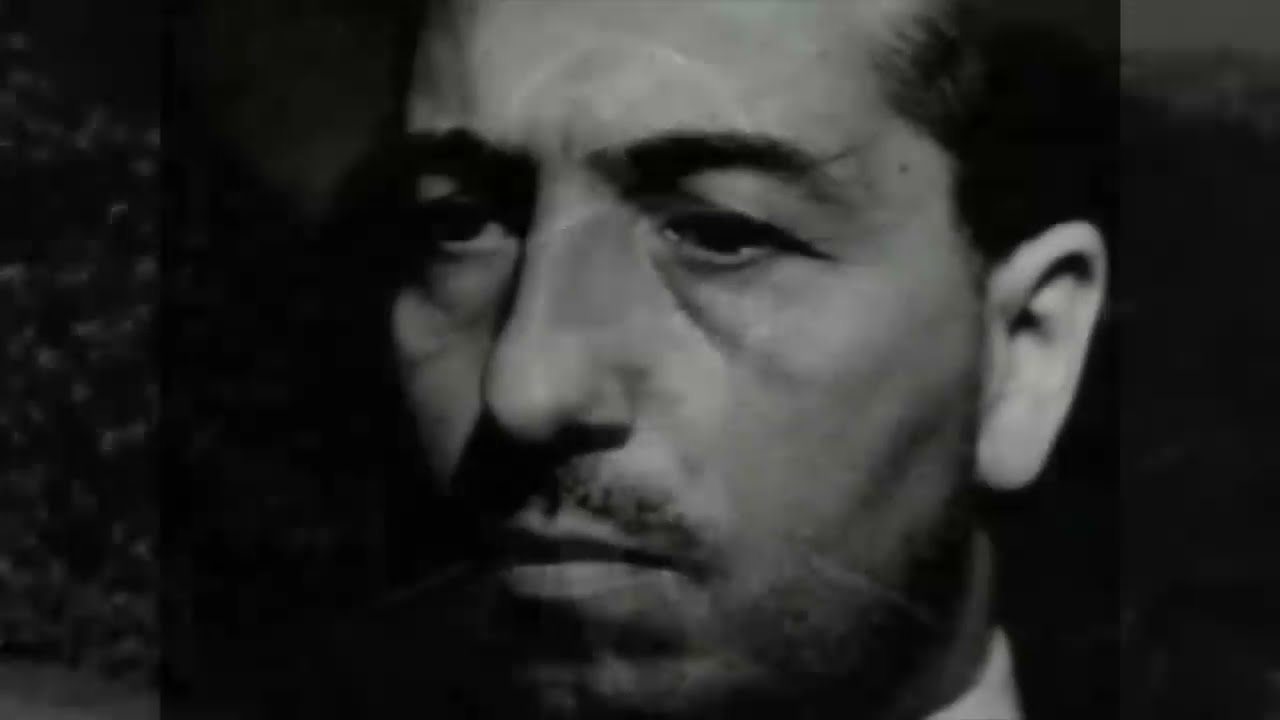
At his trial, Priebke claimed that he was not guilty of the charges. He denied that he was responsible for the massacre and argued instead that he was following a direct order from Hitler, an order that he believed at the time to be legitimate. However, it was clear from his 1946 interrogation by the British and from his 1994 ABC News interview that Priebke had admitted to actually murdering two of the hostages. This was undeniably a crime.
However, in a decision that caused widespread outrage and protest in Italy, the judge ruled that Priebke was not guilty because the case had expired. On August 1, 1996, the judge ordered that 83-year-old Priebke should be immediately released. The court was blocked for over seven hours by hundreds of enraged protesters.
It appeared to world opinion that the Italian judiciary was condoning the commission of war crimes, which was a very serious blow to the nation's prestige. The prosecutors appealed the case, and Germany requested that Priebke be kept in jail so he could be extradited to stand trial for the personal murders that he had committed.
Such were the howls of protest in the streets and in the press that the Italian Supreme Court was forced to intervene and declared that the original court was incompetent, and the prosecutor's appeal went through. Priebke was rearrested and placed back on trial.
The Nuremberg trial established that the plea of superior orders was invalid as a defense plea in cases of war crimes. Priebke's entire defense rested on his assertion that he had only followed a direct order from his commander-in-chief Adolf Hitler and was therefore not responsible for the murders of the Italian hostages.
The plea of superior orders is the most frequently raised defense in war crimes trials throughout modern history. Its rejection as a defense dates back to 1919, when an international commission was appointed to consider and report to the Allied powers on the question of the immunity of heads of state in respect to the conduct of the First World War. The commission stated: "We desire to say that civil and military authorities cannot be relieved from responsibility by the mere fact that a higher authority might have been convicted of the same offense."
The German code of military law stated that a soldier must execute all orders undeterred by the fear of legal consequences, but that this would not excuse him in cases where he must have known with certainty that the order was illegal. This ruling was upheld at the trial in Leipzig in 1921 of two U-boat officers who had ordered the machine-gunning of shipwrecked survivors in order to conceal the presence of their boat as per their orders. The court ruled that a soldier was liable to be punished if he knowingly obeyed an order that involved a contravention of international law.
Eric Priebke knew full well that rounding up largely innocent civilians and then shooting each one in the back of the head ran contrary to all accepted rules of war and of international law. However, Priebke was a member of an organization that considered itself to be above the law, and his hands were already red with the blood of Jews that he had illegally deported to be murdered in Poland.
But the law, and even German law of the period, expressly forbade soldiers and members of the paramilitary SS, may Priebke, a member of the German armed forces, from committing murder. The law was clear: "A subordinate who obeyed the order of his superior officer was liable to punishment if it were known to him that such an order involved the contravention of the law."
The German ruling in 1921 further demonstrates that any accusations that the Nuremberg trials were victor's justice are wrong. It was not a case of ex post facto legislation but merely an enforcement of already well-established international law.
No one doubts that the primary duty of any soldier is to obey orders, but a soldier has a right to disobey an illegal order. Priebke's defense, when challenged over this, fell back on the falsehood that if Priebke had refused to carry out the massacre he would have been punished.
In fact, several of the SS officers and men present around the Ardeatine Caves had grave doubts about what they were being asked to do, and some refused to shoot prisoners. They were not punished but simply allowed to step aside after some argument. In fact, in one case Priebke physically held an officer around the waist and forced him to point his weapon at a kneeling hostage and shoot him before releasing his grip. Priebke was a willing executioner and someone who coerced others into committing murder.
Another officer present at the massacre, 37-year-old SS-Obersturmführer G. Amon, had also refused to kill a hostage. "I raised my submachine gun but I was too afraid to fire," Amon later recalled. "The other four Germans fired one shot each into the backs of the necks of the other four prisoners who fell forward. Upon seeing the state in which I was in, another German pushed me out of the way and shot the prisoner I had been detailed to shoot." Amon was not punished in any way for his refusal to carry out this illegal order.
The Nazi war machine certainly encouraged its troops to commit despicable and illegal acts of murder on all fronts, in direct contrast to the behavior of most Allied troops. Lord Russell of Liverpool, author of the classic account of Nazi war crimes "The Scourge of the Swastika" and a former leading British military lawyer, drew an interesting comparison quite pertinent to the case of Erich Priebke and his cohorts: "If the soldier is to be regarded as nothing but an automaton, it follows that a young British platoon commander fighting in enemy territory was ordered by his colonel to march all the women and children into the village church, fill it with straw and then set it on fire as the Germans did in 1944 at Oradour, has no alternative but to obey. I have yet to meet an officer in the British Army who would not unhesitatingly refuse to carry out such an order and gladly face the consequences."
The accepted rules of war do grant commanders the right to take measures against partisans, but they expressly forbid arbitrary methods. Hitler's order to round up and murder Italian hostages was arbitrary in the extreme and therefore illegal under accepted and agreed international law.
The other officer who had been in command during the Ardeatine Caves massacre, SS-Hauptsturmführer Karl Hass, was called by the Italian court as a witness. Once it became clear that Hass also had the blood of innocents on his hands, prosecutors prepared to bring charges against him also.
In an extraordinary turn of events, Hass was discovered in agony in front of his hotel after an apparent attempt to flee from Italy had gone wrong. The 84-year-old had jumped from his first-floor hotel terrace and broken his pelvis. After recovering in hospital, Hass was placed on trial alongside Priebke.
At the conclusion of his trial, Erich Priebke was sentenced to 15 years imprisonment, immediately reduced to 10 because of his age. In March 1998 the Italian court of appeal condemned Priebke to life imprisonment. This decision was upheld in November 1998.
However, Priebke was not sent to prison to serve out his sentence. He was instead permitted to remain at home under house arrest in Rome. Hass received a 10-year sentence in 1997, which was reduced to only eight months, and he was released from custody immediately because of time served while on remand. Hass died a free man in Germany in 2004 at the age of 91.
In March 1997 it was decided not to extradite Priebke to Germany to stand trial for the personal murders of two partisans whom he had shot. Priebke had been extremely active in trying to appeal the sentences imposed upon him by the Italian court. He had a website that called for justice, and he received the very vocal support of several neo-Nazi groups in Germany.
Priebke appealed his sentence to the European Court of Human Rights in Strasbourg, where he claimed that he had no choice but to obey Hitler's order. But the fact that Priebke had also shot five more hostages than he was ordered to graphically and emphatically demonstrated his responsibility for the crimes committed in 1944, and his appeal was rejected.
Priebke was not shy in outlining his anger concerning the perceived injustice that he felt he had suffered at the hands of an Italian military court. He took issue with the entire war crimes process and remained very much an unreconstructed Nazi.
"Perhaps the most difficult thing is actually accepting one's destiny serenely," Priebke said in an interview in July 2004. "I believed to have understood the meaning of my life: to battle right up until the end in order to maintain high my self-esteem, the pride of belonging to my people, the Germans, who with their virtues and their defects I cannot and do not want to stop loving." Priebke continued: "A world planned from the Yalta conference, self-justified by the false trials of Tokyo, Nuremberg and others staged along the way against those who refuse to be manipulated into thinking in the new way."
When confronted by his crimes, Priebke always attempted to justify his actions. "Probably today's generations, those who had never fought a war, cannot understand," he said. "We had to shoot at the Ardeatine Caves. We didn't do it out of hatred," he boldly stated. "We had to do it following an unrefusable order which had come directly from Hitler himself. All I can say is that the reprisal was and is still today a legal practice in war."
Erich Priebke died in Rome on October 11, 2013, at the age of 100. His last request was that his body be returned to Argentina to be buried alongside his wife's, but the Argentine government refused. The Vatican also ordered that Priebke was to be denied a formal Catholic funeral ceremony.
A funeral was held during which neo-Nazis clashed with anti-fascists and the police. Priebke's coffin was later buried at a secret location near Rome.