Slim Pickens became one of Hollywood’s most recognizable cowboys, but almost everything about his public image was shaped by a series of accidents, misunderstandings, and a single mocking remark that gave him his name. He was not actually from Texas. Born Lewis Burton Lindley Jr. on June 29, 1919, he grew up in Kingsburg, California, a small farming community in the San Joaquin Valley.
His father, a dairy farmer born in Texas, passed along both his southern accent and his early exposure to horses. Slim was reportedly riding by age four. As a teenager, he wanted to escape farm life and compete in rodeo despite his father’s disapproval. His father issued an ultimatum: if Slim entered a rodeo using the family name, he would not be welcome home.
Slim went anyway. At the registration table, he explained his situation to the man handling entries. The man reportedly told him there would be “slim pickings” for a boy like him and wrote that phrase down as his name. Slim competed under the new name and reportedly won $400 at his very first event.
The rodeo career that followed was brutal. Slim competed in bareback bronc riding, saddle bronc riding, and Brahma bull riding, and also worked as a bull fighter, protecting thrown riders by drawing the animal’s attention away from them. He performed at major events including the Cow Palace, the Calgary Stampede, Cheyenne Frontier Days, and the Pendleton Roundup, using a Spanish-style cape that set him apart. The physical cost was enormous.
He fractured both wrists, broke an elbow, fractured his collarbone, broke his hand, broke his feet several times, suffered two broken skulls, broke his back twice, and endured a crushed chest and countless broken ribs. After one serious wreck, doctors found 17 broken bones on one side of his body alone. In 1942, money was so tight he reportedly pawned his own boots to pay a rodeo entry fee. When he enlisted during World War II, a misunderstanding reportedly shaped his military service.
Asked what he did for a living, he answered “rodeo. ” The clerk apparently heard “radio. ” Slim spent the war assigned to radio duties instead of working with horses. His film career began in 1950 when he was cast in Rocky Mountain alongside Errol Flynn, after a director spotted him at a rodeo.
Throughout the 1950s, he worked steadily in inexpensive westerns, often paired with singing cowboy Rex Allen. Producers valued his riding ability but mostly cast him as comic sidekicks and colorful supporting characters. A $150 purchase in 1954 became surprisingly important. Slim bought a blue roan Appaloosa gelding in Montana and named him Dear John.
He trained the horse to buck on command, sit down like a dog, and pull a blanket off his own back. He also developed stagecoach driving skills. Slim insisted that any production wanting to use Dear John also had to hire him, joking that the horse earned more money than he did. The horse performed riding work in The Big Country, where Slim doubled for Gregory Peck.
In 1961, Marlon Brando directed and starred in One-Eyed Jacks. Slim’s role as Deputy Lon Dedric gave him a chance to play a harder, more threatening character. During a jailbreak scene, he had to strike Brando with a rifle butt. The blow reportedly split Brando’s forehead and required stitches, though Slim was simply performing the action the scene required.
Stanley Kubrick had been involved with One-Eyed Jacks before Brando took over, and he remembered what Slim could do. For Dr. Strangelove, Kubrick needed an actor to play Major T. J.
“King” Kong, the B-52 commander riding a nuclear bomb. Peter Sellers was expected to take the role, but an ankle injury made it difficult. John Wayne and Dan Blocker were reportedly considered before Kubrick settled on Slim. At 44, Slim had never left the United States and needed his first passport to travel to England.
He reportedly arrived at Shepperton Studios wearing his own cowboy hat, boots, and western clothing. Some British crew members assumed he was a method actor staying in character. He was simply being himself. James Earl Jones, who appeared in the film, later recalled that Slim remained Major Kong even between takes.
His voice, mannerisms, and behavior never changed when the cameras stopped. In the famous bomb-riding sequence, Slim played the moment with complete seriousness, never signaling that it was supposed to be funny. That sincerity is what made the scene work. The production reportedly required over 100 takes of the sequence, and Slim maintained the same energy throughout.
A nuclear bomb in the film was even labeled “Dear John,” the same name as his horse. In 1973, Sam Peckinpah cast Slim as Sheriff Baker in Pat Garrett and Billy the Kid. It was a very different kind of role. After Baker is shot, the scene follows him as he slowly moves toward a river, sitting down near the water and accepting the end.
There is little dialogue. Bob Dylan’s “Knocking on Heaven’s Door” became closely associated with the scene, and Slim’s restrained performance showed audiences a quieter side he rarely got to display. The industry eventually recognized both halves of his career. In 1982, the National Cowboy and Western Heritage Museum inducted him into the Hall of Great Western Performers.
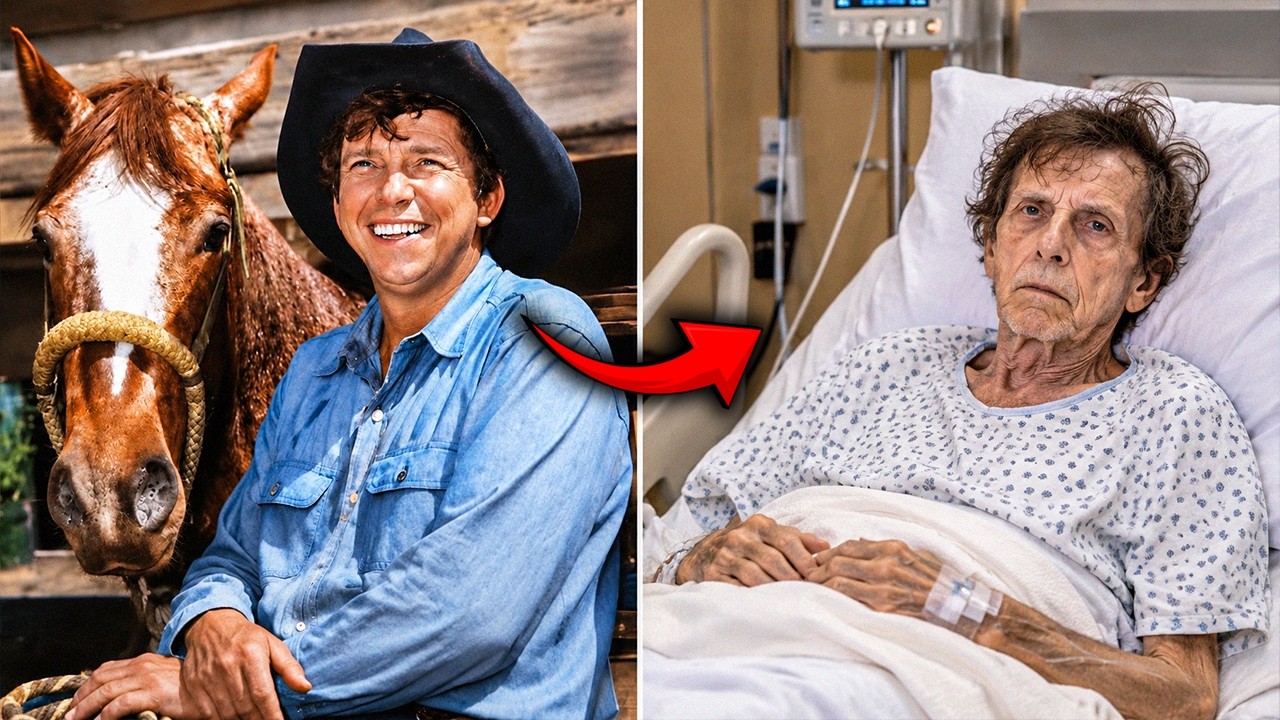
The Rodeo Hall of Fame followed in 1986, and the Pro Rodeo Hall of Fame also honored him. Slim had no plans to retire. But in August 1982, he underwent surgery to remove a brain tumor. Pneumonia followed, and his health declined.
Slim Pickens died on December 8, 1983, in Modesto, California, at age 64. His wife Margaret and his daughters were with him. He was cremated and his ashes were scattered over trails he had ridden during his life.