On June 23, 1972, Richard Nixon sat in the Oval Office as a secret tape recorder spun beneath his desk. H.R. Haldeman leaned forward, and Nixon gave the order that would eventually destroy his presidency.
The Watergate arrests had just been reported. Five men had been caught inside the Democratic National Committee headquarters. Among them were E. Howard Hunt, a legendary CIA operative and Bay of Pigs planner, and Bernard Barker, a Cuban exile who had run guns for the agency.
Nixon was not worried about a botched burglary. He was terrified of what the FBI might find if agents followed the money trails, phone logs, and cutout bank accounts back to Langley.
Nixon dropped his voice to a gravelly whisper. He told Haldeman to have Richard Helms at the CIA call off the FBI on national security grounds. The president believed the whole thing would open up "the whole Bay of Pigs thing" again.
That coded phrase was not about Cuba. According to the source material, it was Nixon's desperate signal that he knew the CIA had crossed the ultimate line in 1963, and that the same rogue machinery that failed at the Bay of Pigs had turned its deadly skills inward on an American president.
Nine years later, Nixon was trying to use that forbidden knowledge as leverage against the very agency he believed had orchestrated John F. Kennedy's murder.
The Watergate scandal consumed the next 26 months of Nixon's life. It ended with his resignation on August 9, 1974, making him the first and only president forced from office in disgrace.
But the history books miss something important, according to this account. Nixon did not stumble blindly into scandal. He walked straight into a trap laid by the same permanent power structure that removed Kennedy.
He had spent years quietly probing the CIA's darkest files. When he finally got too close to the truth about Dallas, the machine turned on him with ruthless efficiency. Same playbook, different target.
Richard Nixon's war with the CIA did not begin in 1972. It went back decades.
As Eisenhower's vice president in the 1950s, Nixon was the administration's loudest champion of aggressive covert action. He personally pushed for the 1954 Guatemala coup that overthrew a democratically elected government.
He was the point man on Cuba policy after Fidel Castro seized power in 1959. During the 1960 presidential campaign, Nixon helped shape the original Bay of Pigs invasion plan under Eisenhower.
He knew every detail: the training camps in Guatemala, the exile brigade, and the promised air support that never came. But Kennedy won the election by a razor-thin margin, inherited the half-baked operation, and the rest became official history.
On April 17, 1961, the invasion launched at dawn on Cuba's south coast. Some 1,400 Cuban exiles, trained, armed, and transported by the CIA, stormed the beaches at the Bay of Pigs.
For 72 brutal hours, the fighting raged. Then came total collapse. More than 1,200 fighters were captured, and the rest were dead or scattered. The CIA's two-year paramilitary masterpiece lay in ruins.
Kennedy was incandescent with rage. Publicly, he took full responsibility, delivering the famous line, "Victory has 100 fathers, and defeat is an orphan."
But privately, in a meeting recorded by aide Arthur Schlesinger, Kennedy exploded. He accused the agency of deliberately rigging the operation to fail unless he committed American air power and Marines, a move that would have dragged the United States into open war.
Kennedy's words, preserved in Schlesinger's private memorandum, were blunt: "Those CIA people thought they could bounce me into supporting the operation once it started. They were wrong, and they won't get the chance to do it again."
Kennedy had just declared open war on the most powerful unelected force in American history. Nixon, licking his wounds after the 1960 loss, watched every move from the sidelines.
He understood instantly what the public never would. The CIA did not accept failure. The anti-Castro operation simply went underground, morphing into a sprawling assassination program involving poisoned cigars, exploding seashells, contaminated diving suits, and mafia contracts through Sam Giancana and Johnny Roselli.
Nixon knew these plots because he had helped greenlight the earliest versions. By the time he reached the White House in January 1969, the CIA was already on guard.
Director Richard Helms was a career CIA aristocrat, loyal to Langley first and the president second. Nixon demanded control.
In 1971, he ordered his national security team to obtain the complete internal CIA history of the Bay of Pigs. Helms resisted, citing sources and methods.
Nixon pushed harder, telling aides he wanted the full file on every Cuba operation between Eisenhower and Kennedy. He suspected the whole Bay of Pigs thing was the threat that connected the failed invasion straight to Dallas, and he was determined to pull it.
In November 1961, Kennedy did not stop at firing Allen Dulles. In a single brutal week, he forced out Deputy Director Richard Bissell, the architect of the Bay of Pigs, and Charles Cabell, the head of covert operations.
Langley lost its director, its chief planner, and its operational linchpin in 72 hours. The agency reeled.
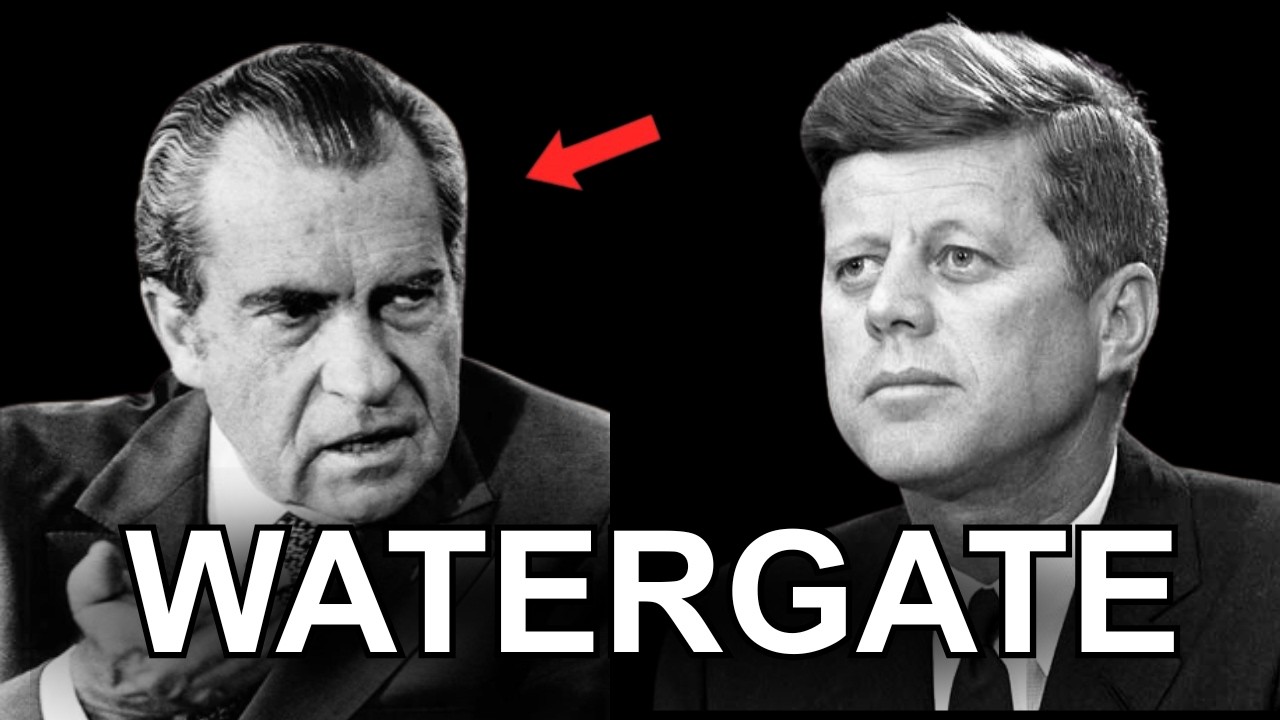
Allen Dulles did not fade quietly into retirement. He kept his network alive, attending Georgetown dinner parties, briefing journalists off the record, and whispering to old allies still inside the agency.
In private correspondence later published, Dulles wrote bitterly in October 1961 that the Bay of Pigs could have succeeded with proper support. He did not blame the CIA's planning. He blamed Kennedy's refusal to unleash American air power.
Dulles had spent eight years building an empire of shadows. Now that empire had been taken from him by someone he considered an amateur. He never forgave.
Kennedy installed John McCone as the new director, a conservative Republican businessman with no intelligence background. The message was clear: the White House wanted an outsider who would tame the beast, not feed it.
McCone arrived at Langley in November 1961 and quickly discovered something terrifying. The clandestine services division, the men who actually ran the covert ops, answered to no one.
They had their own black budgets, their own chains of command, and their own priorities. McCone was the figurehead. The operators were the real power.
That same month, Kennedy signed National Security Action Memorandum 100. It launched Operation Mongoose, the largest covert campaign ever authorized against Cuba.
The goal was to destabilize Castro, assassinate him if necessary, and overthrow the regime. Kennedy put his brother Robert in direct oversight and assigned Air Force General Edward Lansdale to run day-to-day operations.
Mongoose grew into a monster. Some 400 CIA officers staffed JM/Wave, the massive Miami station that became the world's largest CIA outpost outside Langley.
Speedboats, private aircraft, Cuban exile hit teams, and a $50 million annual black budget fed the operation. Plots included poison cigars, bacterial-laced food, and an exploding conch shell for Castro's skin diving hobby. None succeeded.
Every failure bred more desperation inside the agency. And desperation in intelligence circles is lethal.
Mongoose was not just about Cuba. It was a power struggle over who controlled American foreign policy. Kennedy created it to bring rogue Cuba ops under White House control, but the operators refused to be leashed.
Men like William King Harvey, chief of the CIA's Staff D division, were Langley legends. Harvey built the Berlin Tunnel to tap Soviet communications. He was ruthless, brilliant, alcoholic, and utterly loyal to the agency's permanent mission.
In 1962, Harvey decided Mongoose was moving too slowly, so he started running parallel assassination tracks without telling the Kennedys.
In October 1962, the Cuban Missile Crisis brought the world to the brink of nuclear annihilation for 13 days. Kennedy negotiated secretly with Khrushchev: US Jupiter missiles out of Turkey, no invasion of Cuba, and crucially, an end to all covert operations against Castro.
Robert Kennedy relayed this agreement to Director McCone on October 28. McCone ordered all Mongoose activities suspended immediately.
What happened next is one of the most revealing episodes in CIA history. The operations did not stop.
William Harvey kept his Cuba networks running through November and December 1962, even after the president had publicly pledged to end them. When Robert Kennedy discovered the insubordination in late November, he was incandescent with fury, according to meeting notes in CIA records.
He demanded Harvey's immediate removal. Harvey was yanked from JM/Wave and exiled to the Rome station, a humiliating demotion.
But before he left Miami, Harvey briefed his Cuban exile network. He told them the Kennedy brothers had sold them out to the Soviets. He planted seeds of betrayal in a community of armed, trained men who had already lost their homeland once.
Some of those men had been taught by the CIA exactly how to kill a head of state.
By 1963, Kennedy entered what would be his final year with three active, seething enemies inside the American intelligence and military establishment.
First were the ex-CIA operatives and Cuban exile fighters who viewed the missile crisis as ultimate betrayal. Men trained in assassination, sabotage, and regime change were now convinced Kennedy had handed Cuba to communism forever.
Second were the Joint Chiefs of Staff. In March 1962, they presented Kennedy with Operation Northwoods, a plan to stage false flag terrorist attacks on American soil, blame Cuba, and justify invasion. Kennedy rejected it outright and fired its principal author, General Lyman Lemnitzer, as chairman of the Joint Chiefs.
Third was Allen Dulles himself. By 1963, he was quietly briefing journalists, politicians, and old intelligence contacts about Kennedy's weakness on communism, his dangerous peace overtures, and his refusal to confront the Soviet threat head-on.
But 1963 was different. Kennedy was no longer just fighting Cuba ops. He was actively trying to end the Cold War itself.
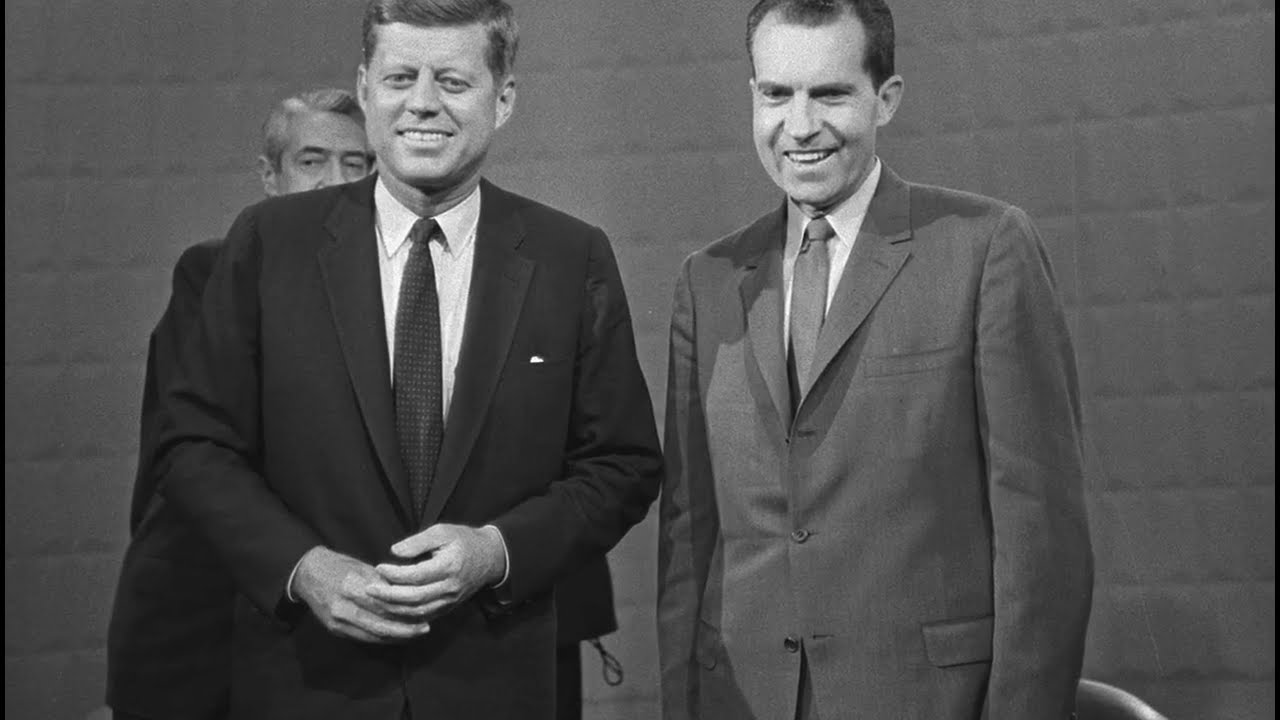
On June 10, 1963, at the American University commencement address, Kennedy called for a radical reexamination of US-Soviet relations. He spoke of the Russians with respect, not as existential enemies.
He announced a moratorium on atmospheric nuclear testing and proposed a hotline between Washington and Moscow. Inside Langley, the speech landed like a bomb.
Officers who had spent 15 years building the Cold War apparatus watched their justification erode in real time.
On September 7, 1963, Fidel Castro sat for an interview with Associated Press correspondent Daniel Harker in Havana. Castro knew the CIA was running active assassination plots against him through Operation AM/Lash, using Cuban defector Rolando Cubela as the asset.
Castro issued a public warning that barely registered in the American press. He said the leaders of the United States would be in danger if they contributed to efforts to oust Cuban leaders.
He added that if they assisted terrorists in eliminating Cuban leaders, they would not be safe themselves. "Let Kennedy and his brother Robert take care of themselves," he said, "as they too could become victims."
Seventy-seven days later, John F. Kennedy was shot dead in Dallas. The timing is not mythology, according to the source material. It is documented fact.
On the very same day Castro gave that warning, September 7, CIA officer Desmond Fitzgerald, the new head of Cuba operations, met with Cubela in Sao Paulo, Brazil, to plan Castro's murder mechanics.
On October 29, 1963, Fitzgerald met Cubela again at a CIA safe house in Paris. Cubela requested a high-powered silenced rifle. The agency refused.
Instead, they handed him a poison-tipped ballpoint pen, a hypodermic device loaded with Blackleaf 40, a compound that induces cardiac arrest within minutes. Fitzgerald personally approved the handover.
On November 22, 1963, at the precise moment that device changed hands in Paris, President Kennedy's motorcade turned onto Elm Street in Dallas.
CIA operational files recorded the Paris meeting with clinical detachment. No internal memo questioned the coincidence. No investigation was launched.
The agency that spent years perfecting foreign assassination produced not a single document asking whether its own machinery had been redirected at a domestic target.
At 12:30 p.m. Central Standard Time on November 22, 1963, three shots cracked across Dealey Plaza. President Kennedy slumped forward in the Lincoln Continental. Chaos erupted.
At CIA headquarters in Langley, the flash cable from the Dallas station arrived within minutes. Deputy Director Marshall Carter immediately telephoned Director John McCone, who was in California attending his stepson's funeral.
McCone boarded an emergency flight back east and landed at Langley around 8:00 p.m. His first act upon arrival was not to brief the new president. It was not to coordinate with the Secret Service or the FBI.
It was to order a comprehensive internal review of every single CIA Cuba operation: Mongoose, AM/Lash, the entire exile network. The purpose, according to declassified internal memos, was explicit: to determine what might surface if outsiders started digging.
A president had just been assassinated on American soil. The agency's immediate instinct was self-preservation, damage control, containment, and classification, not cooperation or transparency.
Lyndon Johnson assumed the presidency on Air Force One. Within days, he was privately convinced that Castro had retaliated for the endless CIA murder plots.
In a taped telephone conversation with Senator Richard Russell on November 29, 1963, later released under the JFK Act, Johnson said plainly, "I think the Castro thing is at the bottom of it." He told aide Bill Moyers the same.
Yet Johnson never pursued that theory publicly. Exposing Castro's motive would expose the CIA's unauthorized assassination machinery running in Kennedy's name.
Instead, he appointed a commission. And to sit on it, he chose Allen Dulles, the man Kennedy fired, the man with the clearest personal and institutional motive to bury any Cuba connection.
Dulles attended nearly every session of the Warren Commission. He shaped the questions. He controlled which CIA files were provided and which were withheld.
He knew precisely which lines of inquiry would expose the Bay of Pigs to Dallas pipeline. The commission never learned about AM/Lash, never saw the Paris poison pen handover on the day of the assassination, and never investigated the Mexico City impersonation where someone using Oswald's name contacted the Soviet and Cuban embassies six weeks earlier.
That discrepancy was acknowledged in the CIA's own cables but never pursued.
Nixon watched this unfold from private life. He ran for governor of California in 1962 and lost. He retreated to law practice, but he never stopped collecting intelligence.
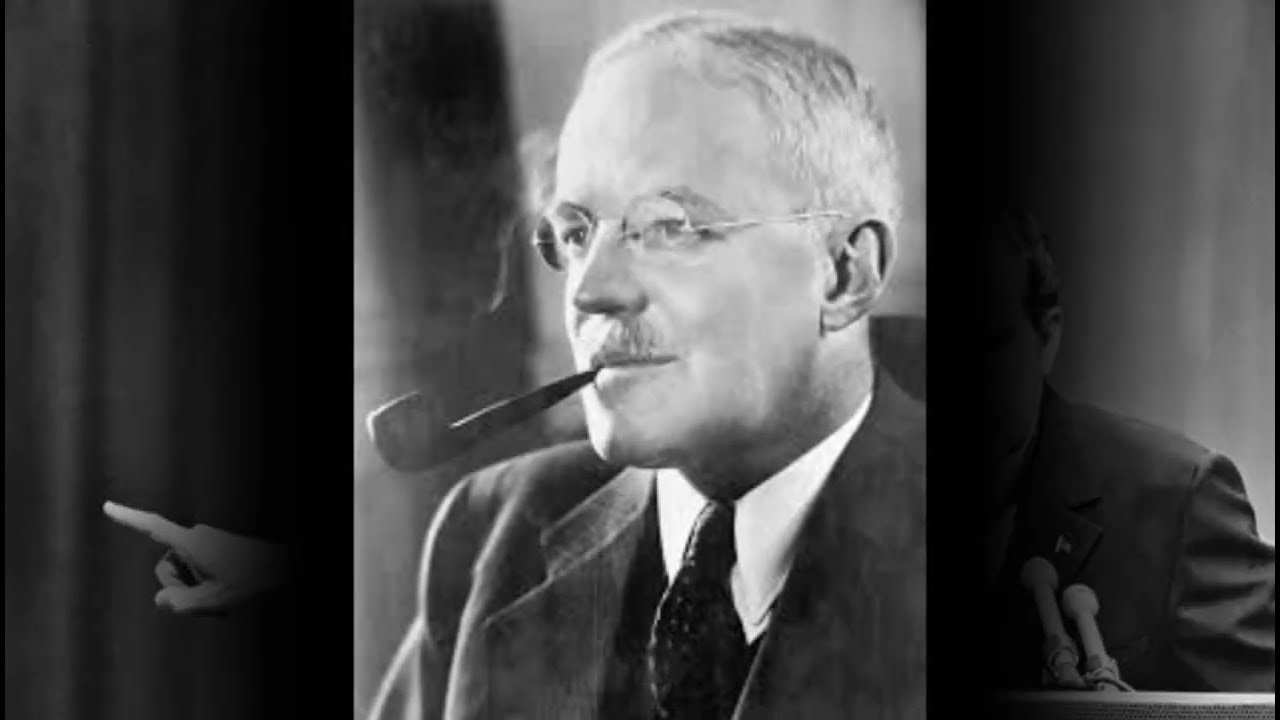
By 1968, when he won the presidency, Nixon had assembled a mental dossier. He knew the Warren Commission was structurally blind. He knew the lone gunman conclusion answered only who pulled the trigger, not who enabled it, who allowed it, or who benefited from it.
Nixon's growing understanding crystallized in 1971 and 1972. He repeatedly demanded the CIA's Inspector General reports on the Castro plots. Helms stonewalled.
In White House tapes from mid-1972, Nixon ranted to aides about the CIA boys and their disloyalty. He told H.R. Haldeman and John Ehrlichman that the agency feared exposure of what really happened in 1963.
He began using "Bay of Pigs" as shorthand, a quiet threat: back off or I go public with what I know about Dallas.
Then Watergate erupted. On June 17, 1972, five men were arrested inside the DNC. E. Howard Hunt was a Bay of Pigs veteran, CIA propaganda specialist, Mongoose planner, and Castro assassination plot coordinator.
Barker, Sturgis, Virgilio Gonzales, and Eugenio Martinez were all tied to the old JM/WAVE anti-Castro network. McCord, the team's electronics expert, was a former CIA security officer.
The break-in was not amateur hour. It was a black ops crew with deep agency roots.
Nixon panicked on June 23, the famous "smoking gun" tape. He ordered Haldeman to have Helms and Deputy Director Vernon Walters tell acting FBI Director Patrick Gray to halt the Bureau's probe on national security grounds.
"This is the Bay of Pigs thing," Nixon said repeatedly. Helms complied briefly. The CIA warned the FBI off certain leads, but the agency did not forget the attempted blackmail.
The parallel to Kennedy is exact. Kennedy fired Dulles, decapitated leadership, tried to leash the operators, and pursued peace that threatened the Cold War budget. The machine responded by letting events unfold, or worse.
Nixon probed the same files, threatened exposure of the same ops, and used the same knowledge as leverage. The response was the same: turn the machinery inward.
Watergate escalated not by accident. Leaks flooded the press. Deep Throat, later revealed as the FBI's Mark Felt, fed Woodward and Bernstein. But CIA fingerprints were everywhere.
Hunt's White House safe contained explosive documents, some related to Kennedy-era ops. When prosecutors demanded access, panic set in.
The Plumbers unit, created to plug leaks, was staffed by the same ex-CIA men now implicated in the burglary. Some researchers argue the DNC target was not random. It may have been to find or plant evidence tying Democrats to old Cuba scandals, or to silence probes into JFK files.
By early 1973, Helms retired. His replacement, William Colby, began compiling the infamous Family Jewels, a list of agency abuses including Castro assassination attempts.
Colby briefed Congress. More leaks followed. The pressure cooker intensified. Nixon's tapes were subpoenaed. The Supreme Court ruled against him in July 1974.
The June 23 conversation was released. Public outrage peaked. Nixon resigned on August 9, 1974.
Harry Truman never fully grasped what he warned about when he said the CIA was becoming an operational rather than intelligence agency in his 1963 Washington Post op-ed. Truman created the structure in 1947: black budget, compartmented ops, minimal oversight.
By 1963, it had outgrown presidential control. By 1962, it had learned how to defend itself against presidents who threatened its existence.
Nixon learned the same brutal lesson Kennedy did. Challenge the permanent apparatus, the intelligence community, the military-industrial complex, the Cold War bureaucracy, and it protects itself.
Not always with direct orders from a smoky room. Sometimes by withholding protection. Sometimes by deploying assets already in place. Sometimes by letting scandals metastasize.
After Nixon fell, every subsequent president internalized the message. Gerald Ford suppressed the most damaging findings of the 1975 Rockefeller Commission on CIA abuses.
Jimmy Carter campaigned on intelligence reform, then quietly abandoned it within a year. Ronald Reagan massively expanded covert action, with Iran-Contra being only the most visible example.
The files released in waves in the 1990s, 2017, 2022, and 2025 contain no single smoking gun memo that says, "Remove Nixon because he knows about JFK." That absence is the most damning evidence, according to the source material.
Institutions engineered for zero accountability leave no incriminating paper trail. That is the design.
The most haunting fact in this entire saga is not the assassinations or the resignations. It is the silence afterward.
No senior CIA officer ever faced charges connected to withholding JFK files from the Warren Commission. No internal investigation ever publicly examined why Watergate burglars were drawn from the exact same anti-Castro assassination networks.
The men who ran the most dangerous ops of the 1960s retired with pensions, honors, and reputations intact. And the institution they built endures today with the same structural independence Truman unwittingly created in 1947.
It carries the same operational secrecy Kennedy tried to shatter in 1961 through 1963, and the same immunity from accountability Nixon challenged in 1972. Some machines, once built, cannot be shut down. They can only be aimed.