On October 10, 1963, inside FBI headquarters in Washington, D.C., Director J. Edgar Hoover reviewed a top-secret memorandum summarizing months of surveillance on one of the most influential men in America.
The file included wiretaps, hotel recordings, and informants placed inside a civil rights organization. The subject was not a foreign spy. It was Martin Luther King, Jr.
Hoover read the final paragraph and wrote a note in the margin: "This man is the most dangerous negro in America."
With that, the FBI had effectively declared King a national security threat. Five years earlier, Hoover had reached a similar conclusion about another man, one who lived at 1600 Pennsylvania Avenue. His name was John F. Kennedy.
Official history tells two separate stories. In 1963, President Kennedy is assassinated in Dallas. Five years later, King is assassinated in Memphis. Two cities, two killers, two investigations.
But declassified intelligence files reveal a disturbing pattern. Before either man was killed, the FBI had already declared both of them threats — not to public safety, but to the stability of the American power structure.
The tactics used against them were almost identical: surveillance, character assassination, political sabotage, and institutional hostility.
To understand how that pattern formed, one must understand the man who controlled the most powerful domestic intelligence apparatus in American history.
J. Edgar Hoover had run the FBI since 1924. By the time Kennedy entered the White House in 1961, Hoover had already served under eight presidents. He had survived political scandals, world wars, and the rise of the Cold War intelligence state.
Presidents came and went. Hoover remained. Inside Washington, everyone understood a simple reality: the FBI director knew more secrets than any elected official, including the president.
By the early 1960s, Hoover believed the United States faced an existential threat — not from foreign armies, but from internal subversion. Communist infiltration, civil rights activism, and anti-war movements were, in his view, interconnected pieces of the same conspiracy.
In his mind, two men were accelerating it faster than anyone else: the President of the United States and the most influential civil rights leader in the country.
The conflict with Kennedy began almost immediately after the 1960 election. Kennedy was 43 when he took office, the youngest elected president in American history. Hoover was already 65 and had spent four decades building the FBI into an intelligence empire.
Kennedy represented something Hoover despised: change. Within weeks of the inauguration, the FBI director was quietly collecting information on the president's personal life — not through rumor, but through surveillance.
Hoover had access to tools few people understood even existed: illegal wiretaps, confidential informants, secret recordings. Inside the Bureau, these methods had become routine. Outside it, they were rarely discussed.
Kennedy presented a different problem. He was not simply a political figure; he was the commander-in-chief. And Hoover knew something that made the situation dangerous: Kennedy did not trust the intelligence agencies, especially the secretive culture inside the FBI and the CIA.
The tension between the White House and the intelligence community was already growing. The next crisis would push that conflict into the open.
In April 1961, the Bay of Pigs invasion collapsed on the beaches of Cuba. The operation designed to overthrow Fidel Castro failed spectacularly. More than a thousand Cuban exile fighters were captured, and international embarrassment followed.
Inside Washington, Kennedy was furious. Intelligence agencies began quietly shifting the blame. Hoover noticed something important: for the first time, the young president was openly challenging the authority of America's intelligence establishment.
At the same time, another movement was gaining momentum across the United States — the Civil Rights Movement — and at its center was a Baptist minister from Atlanta, Martin Luther King, Jr.
To millions of Americans, King represented hope and a peaceful challenge to segregation. Inside the FBI, analysts reached a different conclusion. They believed King's movement could destabilize the country and suspected communist influence inside the civil rights leadership.
Hoover was convinced of it. The investigation began quietly. FBI agents monitored King's closest advisors, examining travel records, financial connections, and phone calls.
Eventually, they identified one of King's associates, Stanley Levison, as a suspected communist sympathizer. That single connection became the justification Hoover needed. In the Cold War environment of the early 1960s, the accusation of communist influence changed everything.
In October 1963, the FBI received approval from Attorney General Robert Kennedy to wiretap King's phones. Officially, the purpose was to investigate possible communist infiltration. Once surveillance began, the mission changed.
Agents recorded everything: private conversations, strategy meetings, hotel rooms. Within months, the Bureau compiled hundreds of hours of recordings. Hoover believed those tapes could be used for something else — not intelligence, but leverage.
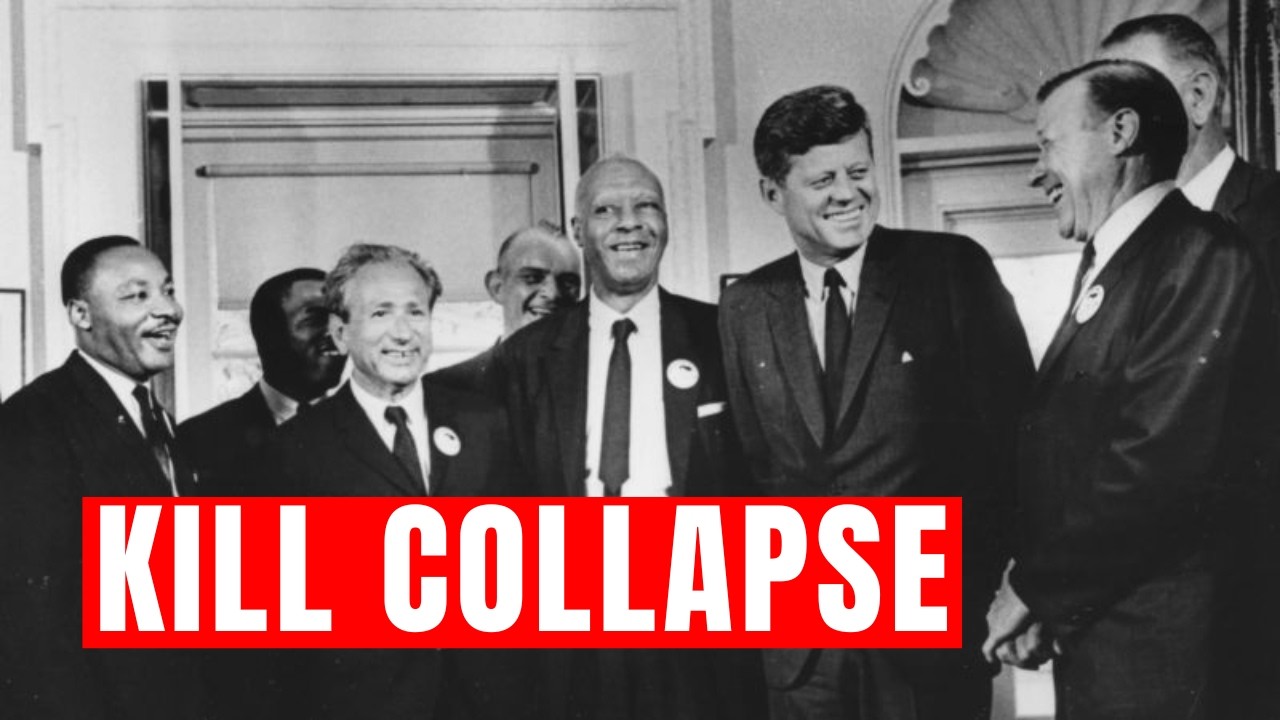
The FBI now possessed secret recordings of the most influential civil rights leader in America. No court had authorized them. No public official had heard them. And the man controlling the tapes had already declared King a national threat.
But King's growing influence was not Hoover's only concern. By 1963, another conflict was reaching a breaking point: the conflict between Hoover and the president himself.
Inside FBI headquarters, Hoover's strategy was becoming clearer. Neutralize threats before they become uncontrollable — not through arrest or prosecution, but through pressure, surveillance, reputation destruction, and psychological warfare.
Those methods would soon be formalized under a program that became one of the most controversial intelligence operations in American history: COINTELPRO.
The name stood for counterintelligence program, but the official title concealed the real purpose. COINTELPRO was designed to disrupt political movements the FBI considered dangerous.
Originally, the program targeted the American Communist Party. Over time, the definition of dangerous expanded: civil rights organizations, anti-war activists, black nationalist groups, student movements.
By the mid-1960s, COINTELPRO operations were running across the country, and Martin Luther King, Jr. had become one of its highest-priority targets.
The objective was not simply to monitor King. It was to discredit him. Internal memoranda described the goal with disturbing clarity: agents were instructed to prevent the rise of what they called a Messiah figure capable of uniting the civil rights movement.
King was considered the most likely candidate, which meant the Bureau needed to undermine him before his influence grew even larger. That instruction would shape everything that followed.
While Hoover's agents expanded surveillance on King, another confrontation was unfolding in Washington. The conflict between Hoover and the White House had reached an uncomfortable reality: Hoover possessed information about the private lives of powerful politicians, including the president.
Everyone in Washington knew it. Kennedy understood something most Americans did not. The FBI director had built a personal intelligence archive on the political elite — members of Congress, cabinet officials, journalists, even presidents.
The files were not always criminal evidence. Sometimes they were simply embarrassing details: affairs, private conversations, political deals made behind closed doors. Information powerful enough to influence careers or end them.
The president technically commands the executive branch, but the FBI director possessed secret files on the people who run the government. That kind of information is not simply intelligence; it is leverage. Hoover had been collecting it for nearly 40 years.
Kennedy's advisers were aware of the situation. Some quietly recommended replacing Hoover, but the political cost would be enormous. Hoover had cultivated allies throughout Congress. Removing him could trigger investigations, scandals, and public conflicts that would weaken the presidency.
So Kennedy tolerated the arrangement for a time. Meanwhile, the FBI's campaign against King was intensifying.
Surveillance recordings multiplied. Agents compiled reports detailing King's private life. Those reports were not sent only to Hoover. They were circulated to select government officials, sometimes anonymously, sometimes through intermediaries.
The goal was simple: erode King's credibility quietly and systematically.
In November 1964, King received a package in the mail. Inside was a tape recording and an unsigned letter. The letter accused King of moral hypocrisy and suggested he should take his own life before the information became public.
The message was chilling. It read like psychological warfare. Years later, congressional investigators would trace the operation back to the FBI — an attempt to force King into silence or resignation.
A federal law enforcement agency was conducting a covert psychological campaign against the most prominent civil rights leader in America, not because he committed a crime, but because his influence was considered politically dangerous.
At the same time, Hoover's relationship with the president was becoming more complicated. Kennedy was beginning to shift the political landscape in ways Hoover deeply distrusted.
In June 1963, Kennedy delivered a nationally televised address on civil rights. He called segregation a moral issue and announced that his administration would propose sweeping civil rights legislation.
Inside the FBI, reactions were mixed. Some agents privately supported the changes. Hoover saw the situation differently. He believed the civil rights movement was becoming a vehicle for radical political transformation, and the president appeared to be encouraging it.
At the same time, King was preparing for the largest demonstration in American history.
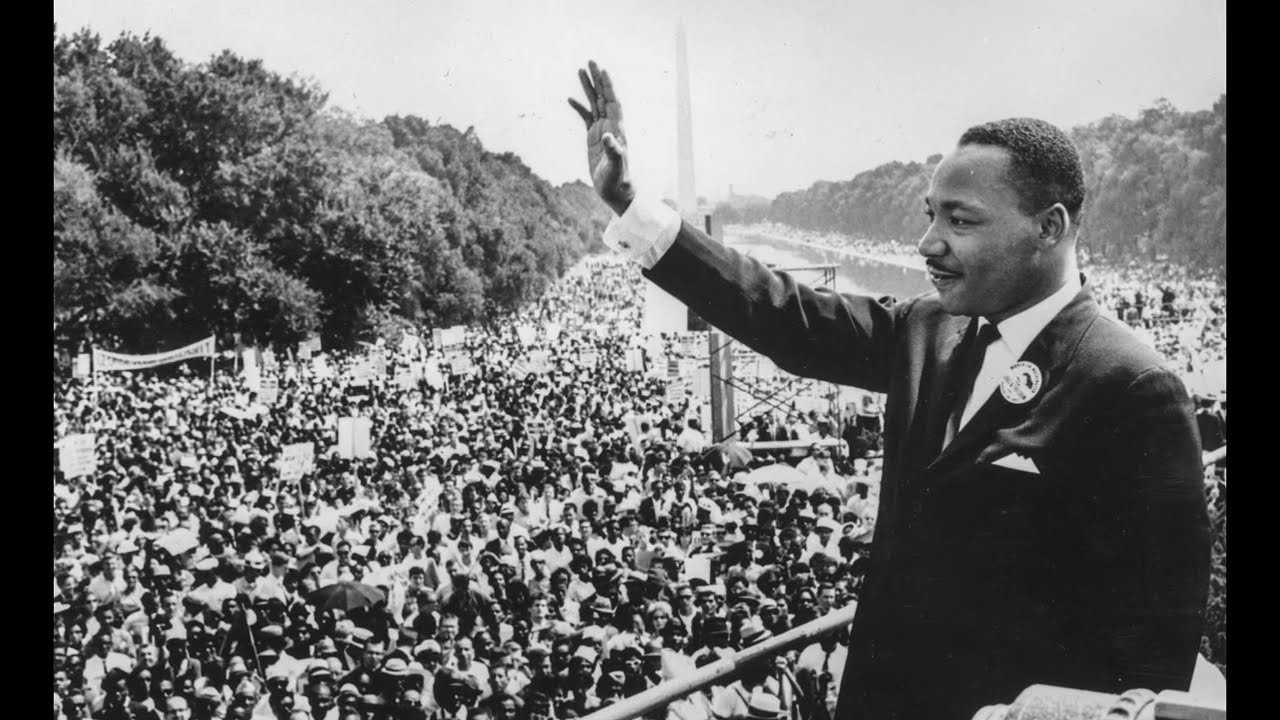
On August 28, 1963, more than 250,000 people gathered at the Lincoln Memorial for the March on Washington. King delivered the speech that would become one of the most famous in modern history: "I have a dream."

To millions watching across the country, it was a moment of hope. Inside FBI headquarters, analysts interpreted the event through a different lens. They saw it as a demonstration of King's growing power.
Power inside mass movements makes intelligence agencies nervous. Mass movements are unpredictable. They can reshape politics, destabilize institutions, and force governments to change policies.
For Hoover, that kind of influence was inherently dangerous. King's ability to mobilize hundreds of thousands of people proved something the FBI feared: he was becoming exactly the kind of Messiah figure COINTELPRO was designed to prevent.
Consider the timeline. In August 1963, King delivers the "I Have a Dream" speech. Three months later, in November 1963, the president who had just proposed sweeping civil rights legislation is assassinated in Dallas.
Five years later, in April 1968, King is assassinated in Memphis.
Officially, the two events are unrelated: different suspects, different investigations. But when historians later examined the FBI's internal files, they noticed something unsettling.
Both men had been under extensive surveillance before their deaths. Both had been labeled political threats by powerful institutions. Both had been targeted by intelligence operations designed to undermine them.
The deeper researchers looked into the FBI archives, the clearer a pattern became. The Bureau was not simply reacting to political movements. It was attempting to shape the outcome of those movements using tactics that blurred the line between intelligence gathering and political interference.
That raises a difficult question. If the FBI was willing to secretly undermine Martin Luther King, Jr., what else might it have been doing inside the political system of the 1960s? And who else might have been considered a threat inside the archives of the FBI?
Thousands of pages of memoranda from the 1960s reveal something historians did not fully understand at the time. The Bureau had developed a specific strategy for dealing with influential political figures: not prosecution, not public confrontation, but quiet neutralization.
The language appears repeatedly in internal files: neutralize the influence, prevent leadership consolidation, disrupt credibility. Those phrases were not theoretical. They were operational instructions under the authority of J. Edgar Hoover.
COINTELPRO units across the country began experimenting with tactics designed to fracture movements from within: anonymous letters, false rumors, informants planted inside organizations, fake documents leaked to the press.
The objective was simple: make movements collapse under the weight of suspicion and internal conflict. In the case of King, Hoover believed the strategy might work.
But mass movements often grow faster than intelligence agencies expect. After the assassination of President Kennedy in November 1963, the political atmosphere inside the United States changed dramatically.
The country entered a period of uncertainty. Questions about the stability of leadership began circulating quietly inside Washington, and civil rights activism intensified, because many Americans believed Kennedy's civil rights proposals must now be completed in his memory.
That momentum strengthened King's influence even further. For Hoover, that development was deeply troubling. King was no longer simply a civil rights activist. He was becoming an international symbol of social change.
In 1964, King received the Nobel Peace Prize. The award transformed him into one of the most recognized political figures in the world. Inside the FBI, analysts began asking a troubling question: what happens if King uses that influence to challenge the broader political system?
That concern became even more intense as the decade progressed. By 1966 and 1967, King began expanding his message beyond civil rights. He spoke openly about poverty, economic inequality, and the Vietnam War.
His speeches began criticizing American foreign policy. In April 1967, King delivered a controversial address at Riverside Church in New York. He called the war in Vietnam a moral disaster. That speech alarmed powerful institutions inside Washington.
The United States was deeply involved in a Cold War struggle with the Soviet Union. The Vietnam War was escalating. Political leaders insisted the conflict was necessary to stop communism. And one of the most influential public figures in America was now condemning the war itself.
To Hoover, this confirmed something he had suspected for years: King was becoming a political destabilizer.
Inside FBI offices, new memoranda began circulating. Agents were instructed to intensify monitoring of King's speeches and travel. Informants inside civil rights groups provided detailed reports on internal strategy meetings. The Bureau's surveillance apparatus expanded.
At the same time, the country itself was becoming more volatile. Urban riots erupted in multiple American cities. Political divisions deepened. The Vietnam War continued to escalate.
In that environment, the influence of a national leader can become extraordinarily powerful — and extraordinarily dangerous.
For intelligence agencies that prioritize stability above all else, that dynamic had already existed during the presidency of John F. Kennedy. Kennedy's policies had begun challenging entrenched Cold War institutions.
He had clashed with elements inside the intelligence community. He had proposed nuclear de-escalation agreements with the Soviet Union. He had publicly committed to civil rights reform. All of those positions disrupted established power structures.
Consider the pattern historians later began noticing. Before Kennedy was assassinated, intelligence agencies had been monitoring political tensions around his administration. Before King was assassinated, the FBI had been running one of the most extensive surveillance campaigns in American history.
In both cases, powerful institutions had already identified these men as destabilizing forces. That fact does not prove a conspiracy, but it reveals something about the political environment surrounding their deaths.
Intelligence institutions do not operate like ordinary organizations. They are built to manage risk, prevent instability, and protect national security as they define it. When individuals become powerful enough to reshape national policy, those institutions begin paying attention — sometimes very close attention.
After King's assassination in April 1968, the country erupted into grief and anger. Riots broke out in dozens of American cities. Political leaders called for calm. Investigations began immediately.
Authorities identified James Earl Ray as the gunman. He was arrested two months later at London's Heathrow Airport. The official conclusion became clear: Ray acted alone.
But within a few years, congressional investigations began examining the intelligence activities of the 1960s. The public learned about the existence of COINTELPRO. The details shocked many Americans.
The program had secretly targeted civil rights groups, political activists, and student organizations across the country. The idea that a federal agency had conducted covert political operations inside the United States raised serious questions about oversight, accountability, and the limits of intelligence power.
Those investigations produced thousands of pages of testimony and internal documents. Some operations were revealed. Others remain classified.
But one conclusion became increasingly clear: the intelligence institutions of the Cold War operated with far greater independence than most citizens realized. They possessed enormous surveillance capabilities, secret budgets, and operational autonomy.
That combination made them incredibly powerful — and very difficult to control.
Presidents serve four-year terms. Members of Congress face elections every two or six years. But intelligence agencies operate continuously across decades. Directors retire. Administrations change. The institutions themselves remain.
Their priorities evolve slowly. Their internal cultures persist. And the information they collect often remains hidden from the public for generations.
That is why historians studying the 1960s often reach a similar conclusion. The story of that decade cannot be explained simply through elections or public speeches. It must be understood through the secret machinery operating behind the scenes: surveillance programs, counterintelligence operations, institutional rivalries.
All of these forces shaped the political environment of the era, even when the public never saw them.
This brings the story back to the pattern that began it. Two men, two movements, two assassinations separated by five years. Officially, the cases are unrelated: different killers, different motives, different investigations.
But in both cases, powerful institutions had already concluded that these figures represented serious political threats.
John F. Kennedy challenged the direction of Cold War policy. Martin Luther King, Jr. challenged the structure of American society. Both had the ability to mobilize enormous public support. Both were capable of reshaping national policy. And both were operating in a political system where intelligence institutions had quietly accumulated extraordinary power.
Here is the crucial point historians continue debating. The documents released over the decades do not contain a single smoking gun. No memo ordering assassinations. No signed directive. No meeting transcript planning violence.
Instead, what the archives reveal is something more subtle: an institutional environment, a system designed to neutralize threats to stability, even when those threats came from within the political system itself.
When institutions become powerful enough, they no longer need direct orders. Their internal logic guides their actions. Their priority becomes protecting the structure they inhabit. Anyone who threatens that structure becomes a problem — sometimes a political problem, sometimes an intelligence problem, and occasionally something more dangerous.
In the world of intelligence operations, silence can be as revealing as documents. Investigations and files remain classified. Officials retire. History moves forward without complete answers.
The stories of Kennedy and King remain among the most examined events of the 20th century, yet many questions surrounding those years remain unresolved.
What is known with certainty is this: the Cold War produced intelligence institutions with immense power — institutions capable of surveillance, infiltration, and covert influence. Those institutions sometimes viewed political movements as threats, even when those movements were led by presidents or civil rights leaders.
Once institutions become powerful enough to defend their existence, their actions can become difficult to predict.
The tragedy of the 1960s is not only the loss of two historic figures. It is also the lesson their era revealed about power. Power does not always operate in public. Sometimes it operates quietly, inside offices, inside files, inside decisions that never appear in official histories.
In the end, the most unsettling truth about powerful systems is this: they rarely need explicit orders to protect themselves. They already know what must be done. And sometimes, the most dangerous machines are the ones no one fully controls.