On December 22, 1947, in Krakow, Poland, former staff of Auschwitz heard their sentences read. After a month of gruesome testimonies, it was revealed that many SS officers had taken part in inhumane torture and the mass murder of prisoners, often for pleasure. Their cruelty went far beyond what their superiors ordered them to do.
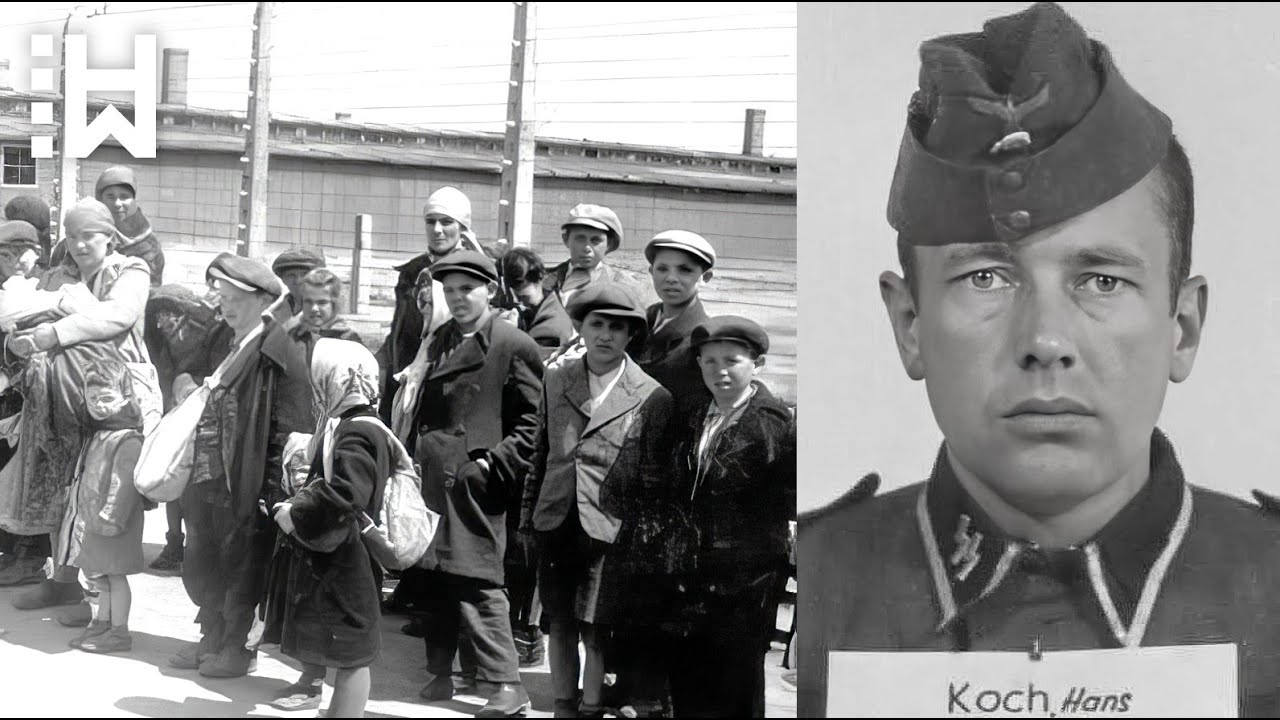
One of the perpetrators of this criminal Nazi regime was Hans Koch. He was born on August 13, 1912, in Tangerhütte, then part of the German Empire.
Like millions of Germans in the 1930s, Koch believed that Adolf Hitler and the Nazi Party would create a strong Germany, fix the economy, and put people back to work. Hitler and the Nazi Party rose to power due to the social and political circumstances of the interwar period in Germany.
Many Germans could not accept their country's defeat in World War I. They argued that "backstabbing" and weakness in the rear had paralyzed and eventually caused the front to collapse. The Jews, they claimed, had done much to spread defeatism and thus destroy the German army.
They interpreted the terms of the Versailles Peace Treaty and the steep compensation payments it entailed as revenge by the victors and a glaring injustice. This frustration, together with warnings about the growing danger of Communism, created fertile soil for the growth of radical right-wing groups in Germany, such as the Nazi Party.
On January 30, 1933, Adolf Hitler was appointed chancellor of Germany by German President Paul von Hindenburg. Immediately after Hitler came to power, Germany became a dictatorship, and the Nazi regime quickly began to restrict the civil and human rights of Jews.
The regime established its first concentration camps, imprisoning political opponents, homosexuals, Jehovah's Witnesses, and others classified as "dangerous." The first concentration camp, Dachau, was established in March 1933, less than two months after Hitler became chancellor.
Between 1933 and 1945, Nazi Germany and its European allies established more than 44,000 camps and other incarceration sites, including ghettos. The perpetrators used these locations for forced labor, detention of people deemed "enemies of the state," and the mass murder of millions.
The most notorious of these concentration camps was Auschwitz, located in German-occupied Poland. Hans Koch arrived there in 1940, the same year the camp was established by the Germans.
The longest-serving camp commandant, Rudolf Höss, stated in his autobiography that in 1941 he was summoned to Berlin. There, Heinrich Himmler, the head of the SS, informed him that the Führer had issued an order to solve the "Jewish Question" for good, and that the order was to be implemented by the SS.
Himmler told Höss: "The existing extermination places in the east are unsuited to a large scale, long-term action. I have designated Auschwitz for this purpose." Thus Auschwitz, the largest of the concentration and extermination camps established on Polish soil, served concurrently as a labor camp and as a center for the rapid extermination of Jews.
The process of selection and murder was carefully planned and organized. When a train stopped at the platform, the arrivals were lined up in two columns, men and boys in one, women and girls in the other. SS physicians such as Josef Mengele performed a selection.
The only criterion was the appearance of the prisoners, whose fate, for labor or for death, was determined at will. The veteran prisoners gathered the belongings of new arrivals in an area known as "Kanada," which consisted of several barracks used to store the stolen belongings of the prisoners.
At Auschwitz, Hans Koch worked in the medical department dealing with disinfection. It is believed that this was owing to his professional background, as he was a laboratory worker by profession.

Koch's commando, which consisted of around 20 prisoners, most of them Poles, was tasked with disinfecting the items taken off the prisoners arriving at the Auschwitz camp. The veteran prisoners would take the victims' clothes, shoes, and underwear to the disinfection chambers located near the premises of the Kanada warehouses.
There they would disinfect these items with a poisonous bluish agent contained in round tin cans. They later learned that it was Zyklon B, which was used to kill people in the Auschwitz Birkenau subcamp, the main center used to kill prisoners. Its crematorium contained a gas chamber and furnaces for burning corpses.
The commando also dealt with the disinfection of buildings as well as the clothes and underwear of the SS staff. Another of Koch's responsibilities at Auschwitz was to insert the Zyklon B into the gas chambers. This is the reason why he became known as the "Gasmeister."
On one occasion, at the beginning of fall 1942, about 200 male and female prisoners, all of them elderly Jews dressed in civilian clothes, were rounded up in front of the Birkenau crematorium. After they were brought into the building, the victims had to undress and then go inside the gas chamber.
After that, Koch and his two SS colleagues got to the flat roof of the crematorium and, having put gas masks on, opened the Zyklon B cans. Through the holes in the roof, they poured the contents into the gas chamber, after which they sealed the holes off.
Immediately after the gas was poured inside, the engine of a car parked in front of the building was started for a quarter of an hour to cover the screams of the victims. According to a witness who survived the Holocaust, this was not possible.
The witness testified that the "animal screams that were no longer human" were heard. He added that if he had not known that there were people in the crematorium, he would never have believed that those screams were made by humans. These horrific screams lasted a few minutes until everyone inside was dead.
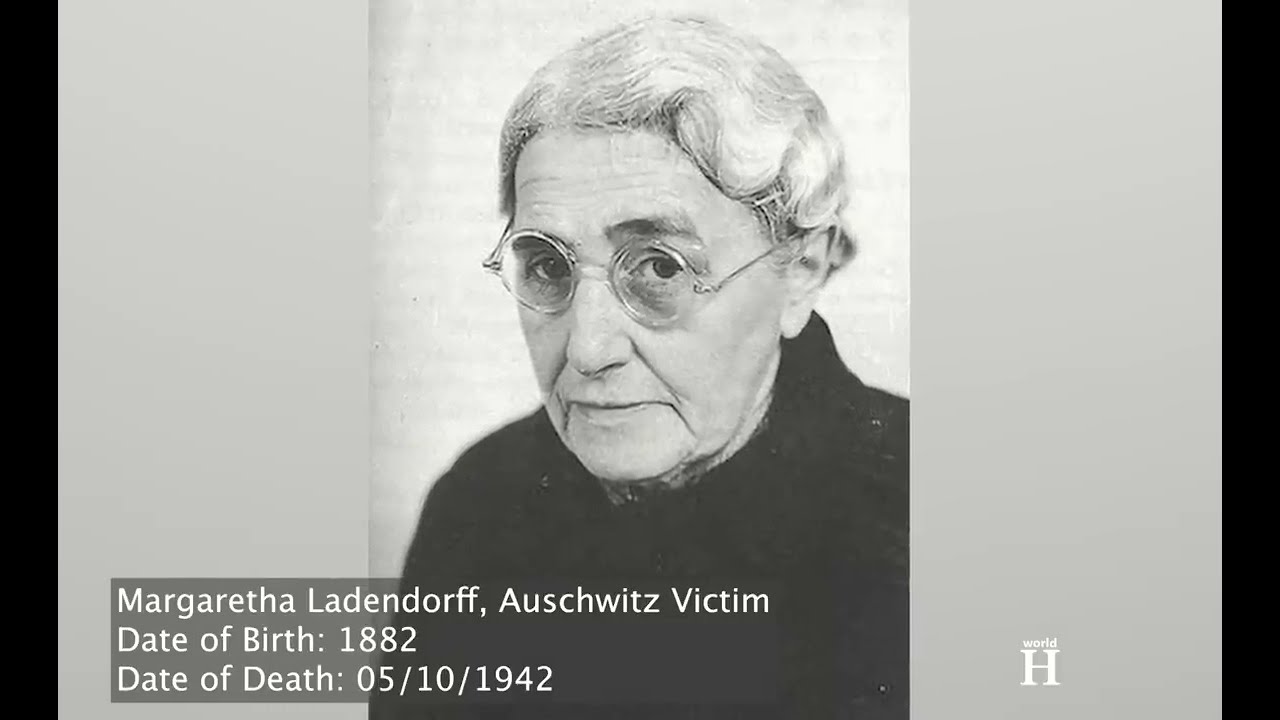
After the victims were murdered, their gold teeth were extracted, and women's hair was shorn by the Sonderkommando, groups of Jews forced to work in the crematorium. The bodies were hauled to the crematorium furnaces for incineration, the bones were pulverized, and the ashes were scattered in the fields.
One Auschwitz survivor who spoke German later testified that neither Hans Koch nor other SS men made any secret of how they gassed their victims and had loud conversations about it. The survivor often heard Koch complaining to his friends of being tired in the mornings because he had to gas so many prisoners that it had taken him all night.
Those prisoners were innocent men, women, and children whose only sin was that they were Jews or that they were considered "undesirable" and "enemies of the state." The Auschwitz camp complex was liberated by the Soviet Red Army on January 27, 1945.
By then approximately 1,000,000 Jews, 70,000 Poles, 25,000 Sinti and Roma, and some 15,000 prisoners of war from the Soviet Union and other countries had been murdered in the camp. After the end of the war, Hans Koch was finally to face justice and pay for his crimes.
He was tried at the Auschwitz Trial, which began in November 1947 and lasted one month. At the trial he did not deny either the existence of the gas chambers or his participation in killing the prisoners. He knew it would be of no help.
As numerous Auschwitz survivors claimed, the extermination procedure of Auschwitz prisoners and of new incoming transports in the Birkenau gas chambers was so commonly known and so widely discussed that it was absolutely impossible that a prisoner or an SS man from the camp could be found who would know nothing about it. Koch also claimed that after participating in the extermination operations, he could not sleep without first drinking a large amount of alcohol.
On December 22, 1947, the Polish Supreme National Tribunal in Krakow sentenced Hans Koch to life imprisonment as opposed to death. The court cited the orders given to him as attenuating circumstances, and another reason was that Koch did not commit any notable additional acts of brutality against the prisoners.
One Auschwitz survivor testified that Koch had paid no attention to prisoners because he was constantly preoccupied with the gassing, of either people, or clothing and underwear. Koch was 42 years old when he died on July 14, 1955, in a prison in Gdańsk. There were no tears shed for Hans Koch.