On the night of December 12, 1944, a manila folder crossed Dwight Eisenhower's desk at Supreme Headquarters in Versailles. It was stamped, summarized, and unremarkable on its face — just another G2 intelligence analysis in a war that generated thousands of pages every week.
But the single page inside exposed something Eisenhower had been avoiding for months. The Allies, it suggested, had been fighting the wrong war.
The report was built on prisoner interrogations and captured documents. One line in particular held his attention: German armored reserves were positioned against an anticipated Patton breakthrough, while Montgomery's sector was screened by adequate forces only.
He read it again. Then once more, more slowly.
The implication cut through months of planning, political compromise, and strategic assumption. Four and a half million Allied soldiers were under his command — the largest coalition army in history, supplied by chains stretching across oceans. Yet Germany's entire defensive posture appeared organized around fear of one fuel-starved general commanding less than a quarter of Allied strength.
By December 1944, Eisenhower was not simply commanding a war. He was conducting a perpetual negotiation between two generals who represented everything the other despised.
Bernard Montgomery held the north, his 21st Army Group driving toward the Ruhr industrial heartland as the official main effort of Allied strategy. He commanded priority logistics and received the lion's share of fuel and ammunition, carrying British prestige and Churchill's expectations into every decision.
In the south, George Patton commanded a very different kind of war. Third Army operated on scraps — fuel from lower-priority units, ammunition borrowed against future allocations, supply convoys diverted through unofficial channels. Yet his forces kept moving, applying constant pressure that forced German commanders to maintain defensive readiness even when logic suggested they should reinforce elsewhere.
The contrast was philosophical as much as operational. Montgomery planned battles like engineering projects: methodical preparation, overwhelming force concentration, minimal acceptable risk. Patton treated warfare as improvisation: exploit openings immediately, maintain momentum above all else, accept chaos as the cost of speed.
Behind each general stood a political force that made objective military judgment nearly impossible. Churchill watched Montgomery's campaign with personal investment, needing visible British success in an increasingly American-dominated coalition. American newspapers, meanwhile, celebrated Patton's aggressive reputation — his name sold war bonds and raised morale.
Eisenhower existed in the suffocating space between these pressures. Fuel sent north weakened American public confidence. Resources directed south strained British cooperation. The coalition held together not through harmony, but through carefully balanced dissatisfaction.
Now intelligence suggested the balance had been wrong from the start.
The pattern had emerged slowly. Ultra intercepts from late November showed Wehrmacht communications referencing the southern threat with unusual frequency — not specific battle orders, but defensive positioning guidance and requests for armored reserves to remain within rapid deployment range of Third Army's sector.
Then came the prisoner interrogations. German officers described Montgomery's forces with clinical precision: unit strengths, equipment quality, logistical capacity. Professional assessments from professional soldiers. But when the conversation turned to Patton, the language shifted. Unpredictable. Dangerously mobile. Requires constant reserve positioning.
One captured Panzer commander, interrogated on December 8, put it plainly: "We know when Montgomery will attack because his preparations announce it. With Patton, we know only that he will attack somewhere, sometime, and we must be ready everywhere."
Captured German maps told the same story. Defensive positions in Montgomery's sector showed linear preparation — fortified towns, prepared fallback lines, logical defensive depth. Maps from Patton's sector showed mobile reserve positions and multiple fallback options, flexibility prioritized over static strength.
The Germans were not just defending differently. They were thinking differently.
Then, on December 12, a new interrogation transcript arrived from a German staff officer captured near Saarbrücken. Unlike previous prisoners, this man had worked at Army Group headquarters. He understood strategic planning, not just tactical execution.
His statement was buried on page three, clinical and matter-of-fact. All operational reserve positioning since October, he said, had assumed Third Army as the primary breakthrough threat. Montgomery's forces were too methodical for rapid exploitation. Patton's temperament made containment impossible once penetration occurred.
The analyst who read it first underlined the passage twice, added no commentary, and sent it directly to Supreme Headquarters.
When it reached Eisenhower that evening, the accumulated pattern finally crystallized. The German officer's name did not matter — he was identified only as a staff officer captured near Saarbrücken. What mattered was his position. He had spent months studying how to stop the Allied advance.
His assessment read almost casually. Montgomery's method followed a predictable sequence: reconnaissance, artillery preparation, infantry advance with armor support, consolidation before the next phase. This allowed defensive response — identify preparation indicators, reinforce the threatened sector, establish fallback positions. Containment was achievable with adequate force.
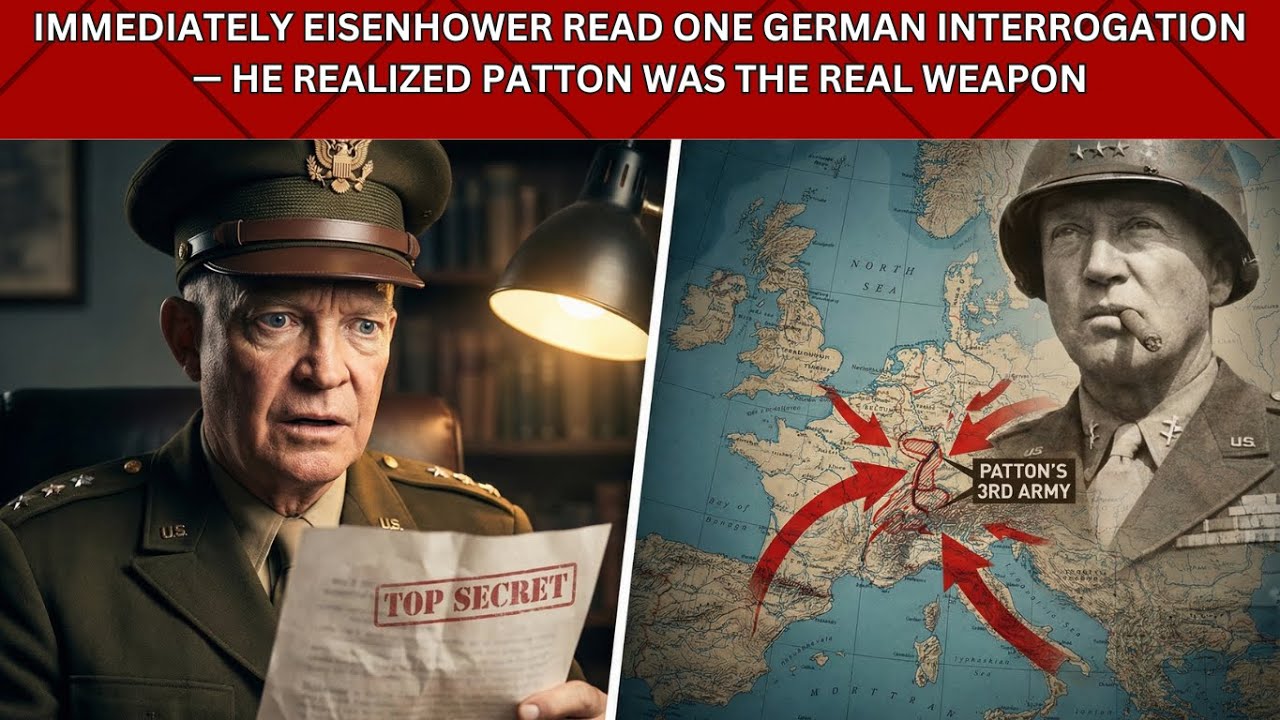
Third Army showed no consistent pattern. Patton attacked when logistics suggested he could not. He advanced through sectors considered secondary. He converted reconnaissance into breakthrough without a preparation phase. Defensive planning required mobile reserves held for rapid response rather than positioned for known threats. The psychological pressure of not knowing when or where he would strike forced constant readiness that diluted strength everywhere.
Eisenhower set the page down and stared at the wall map. The Germans were not measuring divisions or tank counts. They were measuring personalities.
For six months, he had allocated resources based on strategic geography, political necessity, and coalition balance. Priority logistics went to Montgomery because the northern route offered the most direct path into Germany. Limited support went to Patton because his southern sector was considered secondary terrain.
But Germany did not care about Allied logistics priorities or political compromises. Germany cared about what kept its commanders awake at night. And what kept them awake was not Montgomery's strength. It was Patton's unpredictability.
The realization formed slowly and uncomfortably. Eisenhower may have been fighting the visible war — divisions, supply tonnage, territorial objectives — while missing the invisible one. The enemy's fear had been shaping German strategy more than Allied strength. And if fear was the real weapon, he had been deploying it backwards.
He pulled the logistics summaries from September forward. Six months of decisions laid out in fuel allocation charts, supply priorities, and offensive authorization timelines.
In September, Montgomery received 1.4 million gallons daily for the northern thrust toward Arnhem. Patton's Third Army received 400,000 gallons — enough for limited operations, but insufficient for a sustained offensive. The strategic justification was geography: the northern route offered the shortest path to the Ruhr.
In October, after Arnhem failed, resources remained concentrated north. Patton's requests for offensive support toward the Saar were repeatedly delayed pending clarification of strategic priorities. The justification was political: maintain British confidence after a costly setback.
In November, fuel distribution adjusted slightly. Patton received marginal increases, but Montgomery retained overwhelming priority. Staff meetings focused on coordination and coalition cohesion above operational efficiency.
Every decision had made sense within the framework Eisenhower was using. But the Germans were using a different framework. Which Allied commander do we fear most?
The answer was not Montgomery's divisions or logistical superiority. It was Patton's temperament — the psychological wildcard that forced German reserves to remain mobile, flexible, and constantly prepared for a breakthrough from unexpected directions.
Eisenhower had been allocating strength. Germany had been reacting to threat perception. Two entirely different calculations, producing opposite strategic conclusions.
Now he faced an impossible equation. Military logic demanded correction: shift emphasis toward the general who created maximum enemy disruption, amplify the psychological pressure Germany already felt, turn their fear into operational paralysis. But political reality forbade it.
Any visible elevation of Patton would humiliate Montgomery publicly, enrage Churchill personally, and validate every British suspicion that Americans prioritized individual glory over coalition partnership. The alliance would fracture before the strategy could prove effective.
The truth was militarily correct and politically lethal.
So the correction had to be invisible. Not because honesty was wrong, but because honesty would destroy what it was meant to protect.
The changes began on December 13, nearly invisible unless you were watching for them. A logistics routing order adjusted fuel convoy priorities, moving Third Army from fourth to second in allocation sequence to "improve overall distribution efficiency." No strategic justification was offered. No command meeting debated the shift. It simply redirected 200,000 gallons daily toward Patton's sector.
In morning briefings, Eisenhower's questions changed tone. When staff presented northern sector updates, he nodded and moved on. When Third Army operations came up, he leaned forward. What was their fuel status? How quickly could they expand operations if supply increased? Was logistics or enemy resistance limiting their advance?
The questions sounded routine. They were reconnaissance, testing whether the command structure recognized what was changing beneath the surface.
On December 14, an authorization memo approved Third Army's request for additional bridging equipment "as available resources permit." The phrase was bureaucratic camouflage. Within 48 hours, engineering units received priority transport toward Patton's sector.
No staff officer commented on the pattern, because no single decision appeared significant. Eisenhower did not announce a strategic shift. He implemented it through accumulated marginal adjustments that only revealed their collective meaning when viewed together.
On December 15, during the evening command review, Eisenhower studied the southern sector map longer than usual. His chief of staff noticed but said nothing. Montgomery's liaison officer, present for coordination, missed it entirely. His attention remained fixed on the northern front, where official priority still resided.
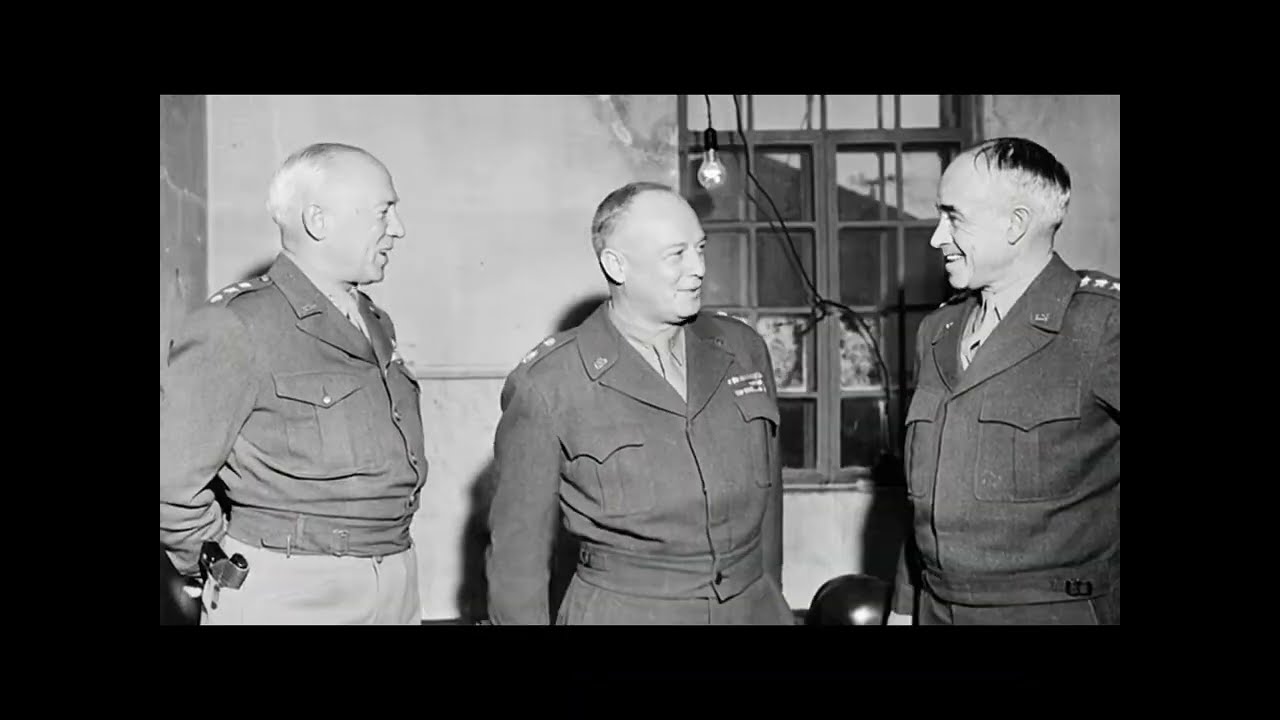
The atmosphere at headquarters felt strange — not tense exactly, but expectant, like the air before a thunderstorm when pressure drops and everything waits.
In another week or two, the accumulated shifts would have become undeniable. Patton would have had the fuel, equipment, and implicit authorization to execute the kind of aggressive operation that validated Eisenhower's intelligence insight.
But there was not another week.
At 0530 hours on December 16, German artillery opened fire across an 80-mile front in the Ardennes. Two thousand guns. Three Panzer armies. A quarter of a million men driving west through the weakest point in Allied lines.
The storm Eisenhower had been preparing for arrived from a different direction entirely. Suddenly, theory had to become action.
The first reports arrived fragmented and contradictory, as bad intelligence always does. By 0600, heavy German artillery was reported across the First Army sector, scope unclear. By 0645, enemy armor was penetrating through the Losheim Gap, estimated at battalion strength, possibly regimental. By 0730, multiple breakthrough points were confirmed, infantry units overrun, communications lost with forward positions.
By 0900, the scope was undeniable. This was not a local counterattack. Three full Panzer armies — Fifth and Sixth Panzer, plus Seventh Army — were driving west through the Ardennes Forest. The weakest sector of Allied lines, thinly held by exhausted divisions recovering from earlier fighting, now faced Germany's last strategic reserve.
Headquarters transformed into controlled chaos. Staff officers clustered around situation maps, marking enemy penetrations with red grease pencil. Each update extended the red deeper into Allied territory. Communications from forward units ranged from disciplined to panicked. Some reported orderly withdrawal. Others simply went silent.
The questions came rapid fire. Where were the German reserves coming from? How had intelligence missed this concentration? Could the breakthrough be contained locally, or did it require a strategic response?
And beneath every tactical question, the deeper one nobody asked aloud: was Eisenhower's realization about Patton too late to matter?
For five days he had been quietly repositioning emphasis, redirecting logistics, preparing to leverage the psychological weapon intelligence had revealed. Now Germany had seized the initiative first.
By midday, the situation stabilized into grim clarity. German penetration exceeded 20 miles in multiple sectors. Allied lines were not holding — they were collapsing. The northern and southern army groups risked being cut off from each other entirely. Months of offensive progress were threatened.
At 1600 hours, an emergency command meeting convened at Verdun. All senior commanders were summoned. The room carried tension like physical weight — careers, reputations, national prestige, and thousands of lives balancing on decisions made in the next hours.
Eisenhower addressed the group, his voice steady despite exhaustion. "The present situation is to be regarded as one of opportunity for us and not of disaster."
The words sounded almost absurd given the maps. But he was not speaking to the current situation. He was speaking to what came next.
His eyes found Patton across the table. "George, how soon can you attack north into their flank?"
The room went silent. Everything — all the intelligence, all the quiet preparation, all the invisible recalibration — converged on this single question.
Patton did not hesitate. "December 22nd. Three divisions."
The room erupted in murmurs. The operational impossibility was obvious to everyone present. Third Army currently faced east and south, away from the breakthrough. Reorienting three full divisions 90 degrees north, across winter roads, through disrupted supply lines, while maintaining combat readiness in 48 hours violated every principle of military logistics.
One British liaison officer spoke what others were thinking. "George, that's not physically possible."
Patton's response was flat and certain. "We'll be there."
Eisenhower watched the exchange without expression. But something shifted in his demeanor. This was the moment intelligence had predicted — not the content of Patton's answer, but the psychology behind it. The unreasonable confidence, the refusal to accept conventional limitations, the aggressive certainty that created fear precisely because it should not be possible.
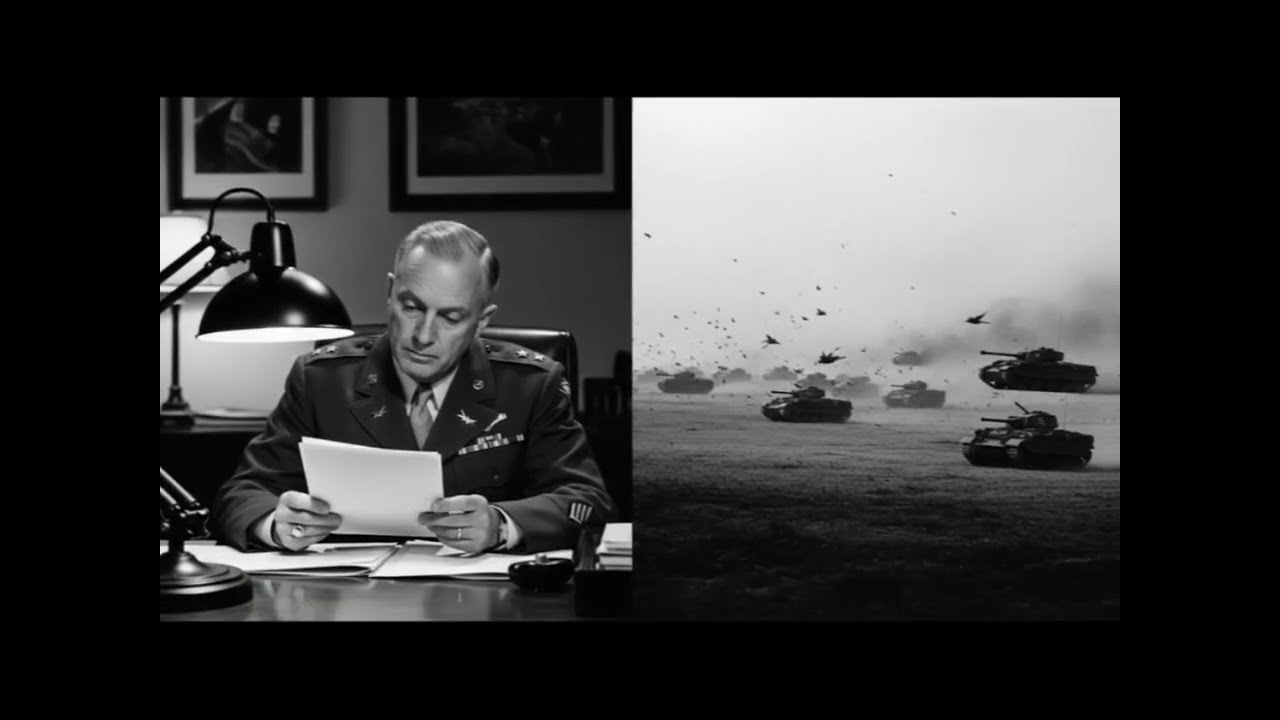
From December 19 through 21, Third Army executed what military historians would later call one of the war's most remarkable maneuvers. Entire divisions pivoted north in winter conditions. Supply convoys rerouted through ice and snow. Fuel that should have lasted days was consumed in hours maintaining movement. Communications networks reorganized while units were in motion.
By every reasonable calculation, the maneuver should not have worked. Units should have arrived piecemeal, disorganized, unable to attack cohesively. But Patton's operational tempo did not follow reasonable calculations. It followed aggression maintained past the point logic suggested was sustainable.
At 0600 on December 22, Third Army attacked into the southern flank of the German penetration. Not probing attacks or limited offensives — full divisional assaults hitting multiple points simultaneously.
The impact was not just physical. It was psychological. German commanders had calculated Allied response time based on Montgomery's methodical approach. They expected days of preparation, careful coordination, overwhelming but predictable counterstrokes. Instead, Patton arrived impossibly fast, attacking before German logistics could consolidate gains.
Intercepted German communications decoded through Ultra revealed the disruption. Enemy attack from the south stronger than anticipated. Third Army operational despite assumed supply constraints. Request immediate reserve redeployment to the southern sector.
The fear intelligence had predicted now shaped German decisions in real time. Reserves intended to exploit the breakthrough were diverted to contain Patton. Offensive momentum stalled as attention split. The psychological calculation that had positioned German armor against Patton's probable axis of advance became self-fulfilling. He became the threat they feared exactly when it mattered most.
By December 26, the Bulge's expansion stopped. By January, it began collapsing.
Eisenhower watched situation maps update daily, watching red arrows retreat. The victory was not Montgomery's methodical power or overwhelming Allied numbers. It was Patton's execution of exactly the kind of operation that had made German planners nervous in the first place.
The invisible weapon — fear — had just won a visible battle.
After the Bulge collapsed, Eisenhower's strategy shifted in ways never officially documented. Through January and February 1945, Third Army operations received subtle but consistent emphasis. Not the overwhelming priority that would trigger political backlash, but steady logistical support. Operational permissions granted quickly. Fewer restrictions on aggressive maneuvers.
The changes appeared reactive, supporting success where it emerged. But the pattern was deliberate, because Eisenhower now understood what intelligence had revealed in December. Patton's value was not just territorial gains. It was the reserves Germany had to hold ready against him. Every Panzer division positioned to counter Third Army's unpredictability was a division unavailable elsewhere.
Fear became operational constraint without firing a shot.
The psychological warfare remained unannounced. No staff papers explained the strategy. No command directives articulated the logic. Eisenhower simply continued deploying the weapon German interrogations had identified, letting Patton's reputation do work that would otherwise require additional divisions.
By April, when Allied armies converged on Germany from multiple directions, the final campaign unfolded with surprisingly limited German mobile resistance. Reserves that might have created catastrophic defensive battles remained dispersed, positioned against threats — particularly from Patton — that never fully materialized in expected ways.
The war in Europe ended on May 8, 1945.
Within months, the narrative simplified. Public memory celebrated unity, planning, and overwhelming Allied strength. Eisenhower was remembered for coalition leadership and steady judgment. Montgomery for professional competence and careful operations. Patton for aggressive tactics and a colorful personality.
The intelligence reports from December 1944 returned to classified archives. The interrogation transcripts explaining German fear never entered popular histories. The subtle logistic shifts that turned psychology into strategy remained buried in administrative records few historians thought to examine closely.
The truth became a footnote — interesting to specialists, invisible to everyone else.
But the truth mattered. The final six months of the European war were not shaped solely by divisions, firepower, or territorial objectives. They were shaped by what German commanders believed Patton might do next.
That belief, that fear, forced defensive calculations that diluted German strength across sectors, prevented concentrated resistance, and accelerated collapse.
Eisenhower understood this. On that quiet night in December, reading an interrogation transcript that contradicted six months of assumptions, he discovered something warfare rarely acknowledges: the enemy's imagination can be a more decisive battlefield than terrain.
Patton provided the reputation. Eisenhower weaponized it. And Germany never stopped reacting to the threat they had constructed in their own minds.
Sometimes the most powerful weapon in war is not an army, but the fear of one. And the commander who recognizes that truth first holds an advantage no logistics chart can measure.