In the early hours of September 13, 2018, police were called to a luxury apartment in Nonhyeon-dong, Seoul, by a man claiming to be the victim of a domestic assault. That man, hairstylist Choi Jong-bum, had just left the home of his girlfriend, K-pop star Goo Hara, after a violent confrontation. What Choi did not tell police was that he had kicked and punched Goo Hara, vandalized her property, and threatened her with a 30-second intimate video he had recorded during their relationship. He reportedly sent the clip to his own phone before alerting authorities, and he emailed the media outlet Dispatch, boasting he had breaking news that would destroy her career.
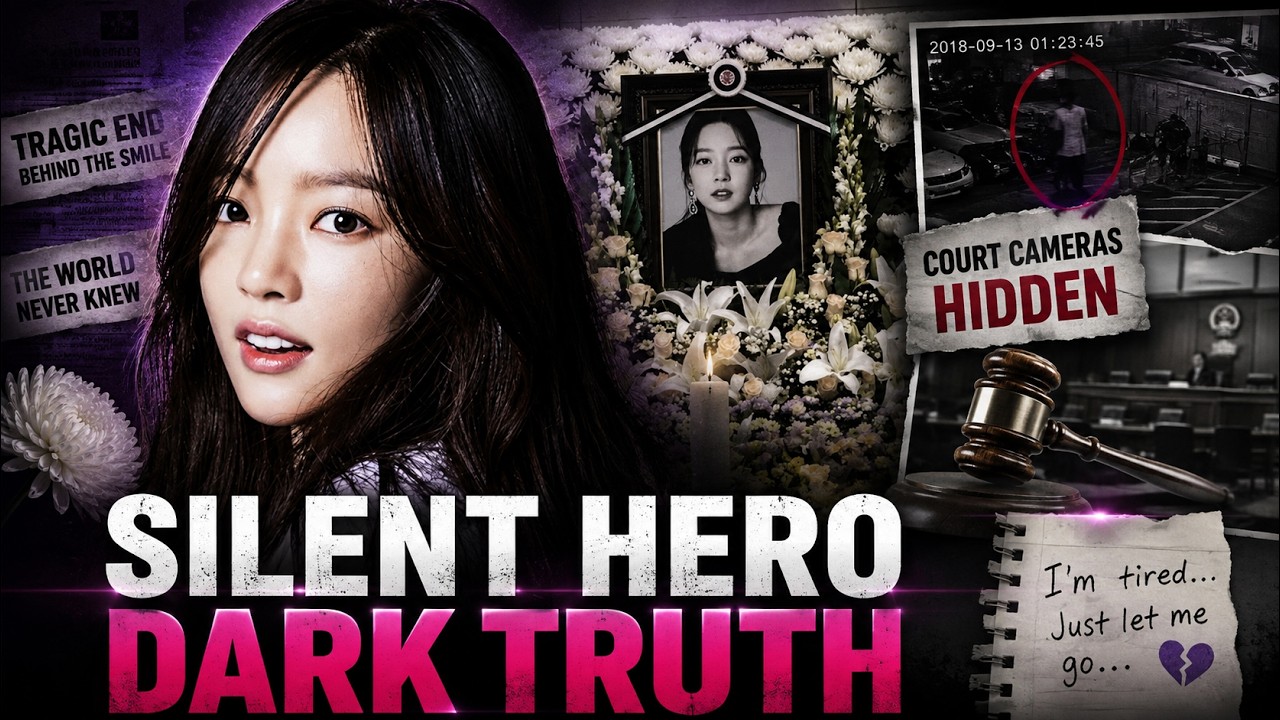
When police arrived, public opinion initially turned against Goo Hara. Headlines portrayed her as a violent celebrity who had attacked her ordinary boyfriend. But security footage later recovered from the building’s elevator told a different story. It showed Goo Hara on her knees, begging Choi not to leak the video to the press.
Hospital records from September 17, 2018, revealed the extent of the physical harm she suffered: internal bleeding in her uterus and vagina, a cervical spine sprain, and extensive bruising. On October 4, 2018, Dispatch published the elevator footage along with details of the extortion attempt, exposing Choi as the aggressor in a malicious digital sex crime. During police questioning, Choi insisted the video was filmed with Goo Hara’s consent. However, digital forensic examinations of his phone revealed a darker pattern: Goo Hara had previously caught him taking unauthorized photos and had demanded he delete similar files.
Before handing over his devices, Choi attempted to erase message records and alter timestamps to hide the direct threats he made on the night of the attack. He also deliberately omitted the extortion attempt from his initial police statement, knowing South Korean social norms would blame a female public figure while granting him sympathy as an injured citizen. The immediate impact of the public nightmare crushed Goo Hara. Major brands cut ties with her, entertainment companies canceled her television appearances, and broadcast networks quietly blacklisted her to avoid controversy.
Online platforms filled with millions of malicious comments accusing her of disgraceful behavior, demonstrating how entrenched stigma around non-consensual digital recordings silences victims while protecting perpetrators. Meanwhile, Choi benefited from the publicity. He hired prominent defense lawyers, opened a new, trendy hair salon in Seoul, and hosted lavish promotional parties while growing his social media following, showing a complete lack of remorse as legal proceedings dragged on. By late spring 2019, the weight of ongoing legal battles, public humiliation, and severe isolation pushed Goo Hara into acute clinical depression.
On May 26, 2019, she attempted to take her own life at her home in Gangnam, Seoul. Her manager raised the alarm after she posted a one-word message, “Goodbye,” on social media. Emergency responders arrived in time, and she survived. She later issued a public statement promising to stay strong and recover.
Behind closed doors, a significant judicial tragedy was unfolding at the Seoul Central District Court. During a crucial hearing in July 2019, Judge Oh Duk-sik issued a highly controversial order requiring the intimate video to be viewed in the judge’s private chambers to verify its nature. Goo Hara and her legal representatives fought the request, arguing that allowing anyone to view the illegal footage violated her privacy and inflicted unbearable psychological harm. The court refused to back down.
When Judge Oh Duk-sik delivered his verdict on August 29, 2019, the decision sent shockwaves across the country. He sentenced Choi Jong-bum to one year and six months in prison, but suspended the sentence for three years on probation, allowing him to walk free. More horrifically, the court acquitted Choi of the charge of unauthorized filming, reasoning that because Goo Hara remained in the relationship and did not immediately delete the video from his phone at the time it was taken, the prosecution could not definitively prove the recording lacked mutual consent. What the public did not know while Goo Hara was being systematically betrayed by the judicial system was her secret, heroic involvement in exposing one of the largest criminal corruption networks in South Korean history.
Throughout 2019, investigative journalist Kang Kyung-yoon had been working tirelessly to uncover the infamous Burning Sun scandal, a complex web of drug trafficking, sexual assault, and police bribery involving prominent male celebrities including Seungri, Jung Joon-young, and Choi Jong-hoon. The journalist had hit a dangerous wall because a high-ranking police official, later identified as Senior Superintendent Yoon Gyu-keun, was actively protecting the perpetrators and covering up their crimes. Goo Hara contacted the journalist directly and voluntarily came forward as an anonymous eyewitness. Having witnessed the suspicious behavior of these male stars firsthand, she used her personal connections to convince key figures, including her friend Choi Jong-hoon, to open their encrypted phone data and reveal the identity of the corrupt police officer to the press.
Her extraordinary courage shattered the police protection ring and brought down powerful figures. However, her vital role remained completely hidden from public view at the time, leaving her to face her own legal nightmare alone, without public support or institutional protection. The systemic bias of the judicial system became even more apparent when comparing how male perpetrators were protected while female victims were completely destroyed. High-paid defense lawyers exploited legal loopholes regarding digital sex crimes, portraying Choi’s actions as a simple personal dispute rather than a hostile crime.
While Choi enjoyed his freedom under probation and reopened his hair salon in Seoul, Goo Hara was left without protection from law enforcement or the courts. The court prioritized the perpetrator’s professional future over the victim’s safety, refusing to issue a prison sentence despite clear evidence of serious physical injuries, property destruction, and explicit digital extortion. The psychological burden reached a catastrophic breaking point in the fall of 2019. On October 14, 2019, Goo Hara received another devastating blow when her close friend, singer Sulli, took her own life after years of relentless online harassment and public scrutiny.
In grief and turmoil, Goo Hara held a live broadcast from Japan, promising her fans she would live with double the strength for her departed friend. But the relentless cyberbullying against her never stopped. Anonymous internet users continued to flood her social media pages with hateful comments, mocking her ongoing appeals against Choi and criticizing her appearance. The toxic combination of deep personal grief, severe trauma from her legal battle, the injustice of her attacker’s impunity, and endless cyberbullying broke her spirit.
On November 24, 2019, just weeks after completing a short promotional tour in Japan, Goo Hara was found dead at her home in Cheongdam-dong, Seoul. She was 28 years old. Her sudden death ignited a massive wave of national mourning and public outrage across South Korea. Hundreds of thousands of citizens signed online petitions submitted to the Blue House, demanding severe punishment for Choi Jong-bum and calling for extensive reforms within the judicial system regarding digital sex crimes and cyberbullying.
Citizens gathered outside the courthouse to protest the suspended sentence issued by Judge Oh Duk-sik, condemning the court’s failure to recognize extortion using private media as a devastating crime. In the aftermath of the tragedy, a fierce legal and political battle erupted over the singer’s estate, exposing deep systemic flaws in local inheritance laws. Shortly after the funeral, Goo Hara’s biological mother suddenly reappeared. She had abandoned Goo Hara and her older brother, Goo Ho-in, when Goo Hara was nine years old and had remained completely absent for over two decades.
Now she demanded half of her daughter’s multi-million-dollar fortune. Outraged by the mother’s exploitation of the tragedy, Goo Ho-in launched a relentless campaign in March 2020 to create a landmark legislative petition known as the “Goo Hara Law. ” The proposed law aimed to amend the civil code to exclude parents who flagrantly neglect or abuse their children from claiming any share of their inheritance after death. Despite massive popular support and petitions signed by hundreds of thousands of citizens, the bill faced years of bureaucratic delays and political gridlock within the National Assembly.
While her family fought for legislative change, the criminal justice system moved through the appeals courts to reassess the original trial verdict. On July 2, 2020, the Seoul Central District Court overturned the controversial suspended sentence issued by Judge Oh Duk-sik, ruling that Choi Jong-bum’s actions had caused irreparable psychological suffering to the victim. The appeals judge immediately revoked the probation period and sentenced Choi to one year in actual prison, ordering his immediate arrest inside the courtroom. On October 15, 2020, the Supreme Court of South Korea formally upheld the one-year prison sentence.
Although imprisonment represented a partial victory, the Supreme Court maintained the lower court’s previous ruling acquitting him of the unauthorized filming charge, confirming that the recording without consent could not be definitively proven under current evidence standards. This left activists completely unsatisfied with the final legal outcome. Seeking accountability beyond the limited criminal penalties, Goo Hara’s family filed a civil lawsuit against Choi Jong-bum for driving the young artist to her death. On October 12, 2022, the Northern Seoul District Court issued a historic civil ruling, finding Choi Jong-bum civilly responsible for indirectly causing her death through severe psychological coercion, assault, and extortion.
The judge ordered him to pay 78 million won in financial compensation to her surviving family members. Although the court formally recognized the direct link between digital harassment and suicide, critics and fans noted that a fine of approximately $60,000 and one year in prison were completely inadequate punishments for a crime that ultimately led to the loss of a human life. The case highlighted how the legal system repeatedly minimized the severity of gender-based cybercrimes. Further legal analysis reveals numerous illogical elements and systemic contradictions that still make this case highly controversial today.
The original court’s reasoning that a victim’s failure to immediately discover and delete an illegal recording on the perpetrator’s device implied consent demonstrated a fundamental failure to understand the dynamics of partner violence, intimacy, and coercive control. Furthermore, the court’s insistence on reviewing the private footage in deliberation chambers ignored the immense secondary trauma inflicted on victims during trial proceedings. The case revealed a double standard within the entertainment industry. While male perpetrators often received lenient legal treatment and were allowed to resume their business ventures, female victims faced immediate public ostracism, contract cancellations, and career destruction.
This exposed how public anger in South Korea was disproportionately directed against women involved in scandals. Goo Hara’s legacy ultimately forced historic legal reform. Although the reform came long after her death and after years of passionate advocacy by her brother Goo Ho-in and civil rights lawyers, the National Assembly finally passed the “Goo Hara Law” in August 2024, set to take full legal effect on January 1, 2026. The newly enacted law formally stripped inheritance rights from negligent parents who abandon their parental duties while raising their children.
Today, her story remains a powerful symbol of the ongoing global struggle against digital sex crimes, cyberbullying, and judicial indifference. It serves as a permanent reminder of the devastating human cost when institutions fail to protect vulnerable victims from predatory abuse. Goo Hara’s story is more than a tragic memory; it is a brutal revelation of a decaying judicial system and a merciless industry that failed to protect its most vulnerable members. From her secret whistleblower heroics to the historic enactment of the “Goo Hara Law,” her legacy continues to break silent taboos and force real-world change.
The battle against digital violence and systemic injustice is not over.