A young Jewish resistance member was publicly executed by pole hanging in occupied Yugoslavia on November 25, 1941, in a brutal display designed to terrorize the local population into submission, according to historical accounts of the incident.
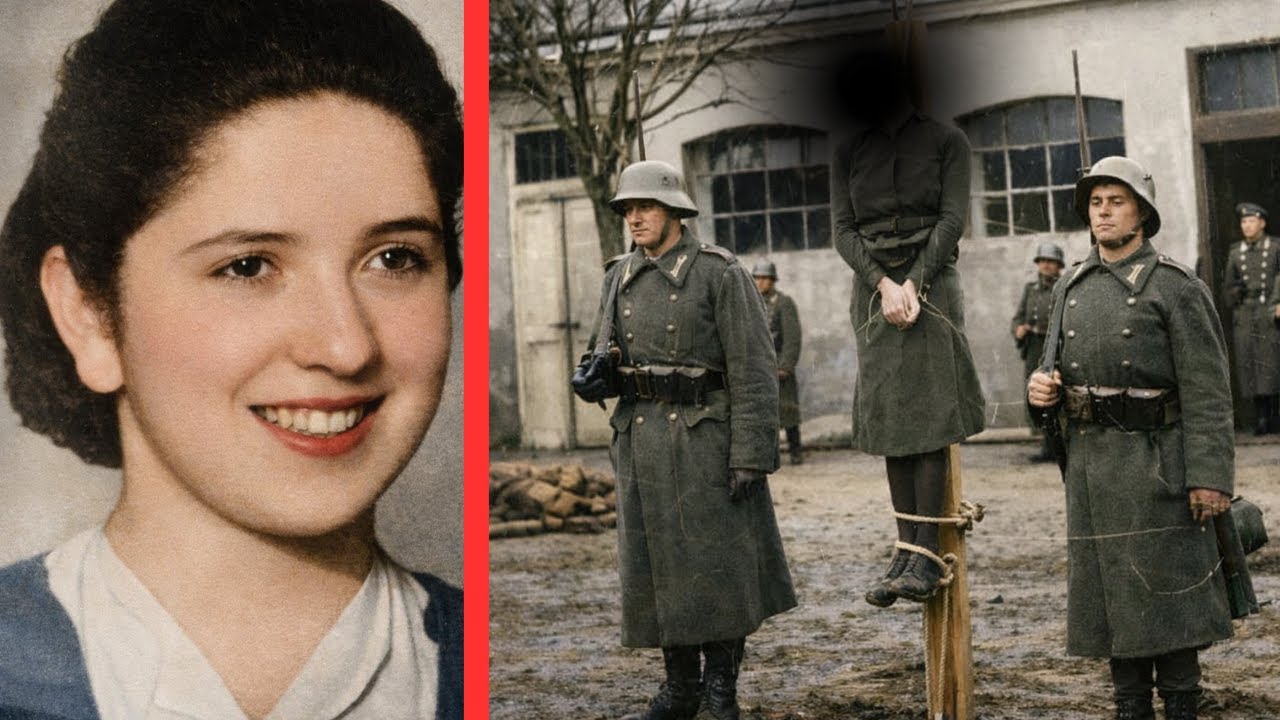
Lili Böhm, described as a young Jewish woman who grew up in Yugoslavia and was a member of the Jewish youth organization known as Young Guards in the Novi Sad region, was arrested by Hungarian military police on September 20, 1941, accused of carrying a weapon and involvement in resistance activities against the Hungarian authorities occupying her region.
Her execution, carried out outside a military barracks before hundreds of onlookers, was not merely a punishment but a calculated act of psychological warfare intended to send an unmistakable message to the local population about the consequences of defying the occupation.
The method used — Hungarian pole hanging — was a distinctive form of execution employed by nations that had fallen under the former influence of the Austro-Hungarian Empire. It involved a three-meter pole or post to which the condemned person was secured via a chest sling, with a system of ropes passed around the top and bottom of the post through pulleys.
The executioner stood behind the post. When the chest sling was released, the condemned person dropped a short distance while the executioner attempted to force the head to one side in an effort to snap or dislocate the neck. It was a rough ordeal performed publicly, designed to maximize both physical suffering and psychological impact.
Böhm had been held on death row for several months following her arrest and trial before a military court, which deemed her dangerous and actively involved in resistance efforts. She was sentenced to death, and the method chosen was pole hanging — a technique the Hungarians had mastered and deployed deliberately to strike fear into the hearts of the local population.
According to historical records, it remains unknown whether Böhm was betrayed or handed over to the occupiers by an informant who collaborated with the authorities. What is clear is that she was seized as she was said to have been carrying a weapon, a charge that during wartime was treated with extreme severity by the occupying forces.
At the time of her arrest in 1941, the Axis powers were very much in the ascendancy during World War II. German and Axis forces had invaded parts of Yugoslavia, and Böhm, despite her Jewish heritage, had become involved in resistance activities against the Hungarian authorities tasked with occupying her region.
She was also involved in sabotage groups in the region who caused constant problems for the occupiers, according to accounts of her activities. Her involvement in such groups, combined with her membership in the Young Guards, marked her as a significant threat in the eyes of the occupation authorities.
The decision to execute her publicly was part of a broader strategy of ruling by immense fear. Throughout World War II, inside many occupied lands and countries, German forces and their allies executed and terrorized huge numbers of people, accusing them of damaging the occupation and working with the resistance.
Public executions took place in front of thousands of people. Even teenagers and women were condemned in this way. Böhm was one of those young women who suffered a terrifying fate during the conflict, her execution immensely public and her body left up on the execution structure for some time to strike fear into the hearts of the population.

Executioners at the time deemed pole hanging to be a method that was relatively quick and humane. They believed it could bring about death within just a matter of seconds, and they considered it much more humane than even using a traditional gallows with a trap door.
The reality, however, was far different. Often the method went wrong, leaving the condemned slowly strangling on the post, struggling for some time before death finally came. Because the executions were so public, large numbers of people witnessed the struggle, making the experience deeply harrowing for those forced to watch.
The sight of Böhm suspended on the post was meant to horrify and terrify people into submission. It was a deliberate tactic of deterrence, intended to discourage others from joining resistance groups or defying the occupation in any way.
But at the heart of the story was just a young woman who suffered persecution and who wanted to try to do her bit to rid the occupiers from her country. Her surname suggests she may have been referred to as an ethnic German, and her family may have had German roots. However, because she was Jewish, she was seen in the eyes of the Nazis as someone who should be persecuted.
This dual identity — a young Jewish woman with possible German roots, living in Yugoslavia, resisting Hungarian occupiers — illustrates the complex and perilous circumstances faced by countless individuals across occupied Europe during the war.
The use of pole hanging as a method of execution was specifically tied to the legacy of the Austro-Hungarian Empire. Countries that fell under its former influence utilized this method, and the Hungarians who condemned and executed Böhm were experts in its use.
They performed it not only to punish but to send a very clear message to people in the local area not to defy their occupation. The public nature of the execution, with hundreds gathered to watch outside a military barracks, was central to its purpose.
Böhm’s story represents one of countless acts of resistance and subsequent reprisal that occurred across occupied Europe during World War II. Her arrest on September 20, 1941, her months on death row, and her eventual execution on November 25, 1941, form a timeline of persecution and defiance that ended in a brutal public spectacle.
The fact that she was a member of the Young Guards, a Jewish youth organization in the Novi Sad region, and that she became involved in resistance activities and sabotage groups, demonstrates the active role that young Jewish women played in opposing the occupation, despite the extreme risks involved.

Her execution was meant to serve as a warning. It was meant to deter others from following her path. It was meant to demonstrate the overwhelming power of the occupation forces and the terrible consequences of resistance.
But it also revealed the lengths to which occupying authorities would go to maintain control through fear.
The pole hanging of Lili Böhm stands as a stark reminder of the brutality of occupation during World War II and the courage of those who resisted, even when the cost was their own lives. Her story, like so many others from that dark period, deserves to be remembered and told.
Historians continue to study the methods and motivations behind public executions during the war, seeking to understand both the mechanics of terror and the human stories behind the statistics. Böhm’s case offers a window into both — a young woman’s resistance, a military court’s judgment, and a public execution designed to terrify a population into silence.
The details of her final moments — the three-meter pole, the chest sling, the executioner standing behind, the drop, the attempt to snap the neck — are grim and specific. They paint a picture of a method that was intended to be quick but often was not, and that was performed publicly to maximize its impact on the watching crowd.
That crowd, gathered outside a military barracks, witnessed not just an execution but a message. The message was clear: resist, and this is what awaits you. Collaborate, and you may survive.
The occupation authorities hoped the sight of Böhm’s body left hanging on the execution structure would haunt the local population into submission.
But the story of Lili Böhm also raises questions about identity, persecution, and resistance. She was Jewish, and therefore targeted by the Nazis and their allies. She was possibly of German ethnic background, which may have complicated her position.
She was a member of a Jewish youth organization and a resistance fighter. She was arrested, tried, sentenced, and executed.
Her fate was not unique. Across occupied Europe, thousands faced similar fates. But each story is individual, each life lost a singular tragedy.
Böhm’s story is one of a young woman who chose to resist, knowing the risks, and who paid the ultimate price in a manner designed to be as public and terrifying as possible.
The use of pole hanging specifically, rather than a firing squad or a traditional gallows, was a deliberate choice rooted in regional history and calculated to produce a particular psychological effect. It was a method the Hungarians knew well and used to send a message.
 That message was received by hundreds who watched and by countless others who heard about it. The occupation authorities hoped it would break the spirit of resistance in the region. Whether it succeeded is a matter of historical debate, but the fact that Böhm’s story is still told today suggests that her sacrifice was not entirely in vain.
The broader context of World War II occupation saw German forces and their allies execute and terrorize huge numbers of people across occupied lands. Many were accused of damaging the occupation and working with the resistance. Public executions were a tool of control, a way to rule by immense fear.
Teenagers and women were not spared. Böhm was one of them. Her execution on November 25, 1941, was a public spectacle, a brutal act, and a clear message.
But it was also the end of a young life dedicated, in its final months, to resisting the occupation of her country.
As the war continued and the tide eventually turned against the Axis powers, the occupation forces’ grip on their territories weakened. But for Böhm and countless others, the end came too soon, their stories ending in public executions designed to terrify and subdue.
The legacy of Lili Böhm is one of courage in the face of overwhelming power, of resistance in the face of persecution, and of a young woman who wanted to do her bit to rid the occupiers from her country. Her story, though tragic, is a testament to the human spirit that refuses to be broken, even when the cost is everything.
Historians and educators continue to document and share stories like hers, ensuring that the lessons of World War II and the horrors of occupation and persecution are not forgotten. The pole hanging of Lili Böhm is a reminder of what happens when hatred and fear are allowed to rule, and of the courage required to stand against them.
Her execution was meant to send a message to the local area to fall into line, to deter people from joining resistance groups. But it also sent another message, one that resonates through the decades: that even in the darkest times, there are those who will resist, who will fight for what is right, and who will sacrifice everything for their beliefs.
The details of her life and death — her membership in the Young Guards, her involvement in sabotage groups, her arrest on September 20, 1941, her months on death row, her execution on November 25, 1941 — form a narrative of resistance and repression that is both specific to her time and place and universal in its themes.
As the world continues to grapple with issues of occupation, resistance, and the use of public violence as a tool of control, the story of Lili Böhm serves as a powerful reminder of the human cost of such tactics and the enduring spirit of those who oppose them.
Her name, her story, and her sacrifice are remembered. And in that remembrance, there is a form of justice that no executioner’s rope can erase.