In the pre-dawn darkness of June 4, 1944, the most important weather forecast in history was about to be delivered. At 4:15 a.m., inside a conference room at Southwick House in Portsmouth, England, Supreme Allied Commander Dwight Eisenhower sat surrounded by his senior staff. Montgomery commanded ground forces, Ramsay commanded naval forces, and Leigh-Mallory commanded air forces.
Outside, 150,000 men were loaded onto ships waiting for the order to cross the English Channel and invade Hitler's fortress Europe. The invasion was supposed to have launched three hours earlier. It did not, because one man had walked into the room the day before and told Eisenhower the weather would kill them.
Group Captain James Stagg stood at the front of the room. He was 44 years old, a Scottish meteorologist who looked more like a university lecturer than a military officer. He was not a general. He held no combat command and controlled no divisions, fleets, or air wings. But at that moment, he controlled whether D-Day would happen.
Stagg delivered his forecast in a calm, measured voice. The storm system he had predicted the day before had arrived exactly on schedule. Winds across the Channel were gusting to 30 knots. Cloud cover was total from ground level to 10,000 feet. Waves in the Channel were running four to six feet, rough enough to swamp the smaller landing craft.
If the Allies had launched that morning as originally planned, the airborne divisions would have scattered across Normandy in the darkness and wind, landing miles from their drop zones. Naval guns would have fired blind through the clouds, hitting nothing. Amphibious troops would have drowned before reaching the beaches.
Eisenhower looked at the meteorologist who had just saved him from disaster and asked the question that would determine the fate of the war: When can we go? Stagg's answer would make him the most important weatherman in military history, and it would destroy his career.
There was a break coming, Stagg said. June 6. A narrow window, perhaps 36 hours. After that, they were looking at late June before the tides and moon aligned again.
The room erupted in controlled chaos. Senior meteorologists from the US Army Air Force and the Royal Navy were present. They had been looking at the same data and saw no break in the weather. Their forecasts showed June 6 would be just as bad as June 5, possibly worse.
Colonel Donald Yates, chief meteorologist for the US Strategic Air Forces, spoke up. The American weather models did not support Stagg's forecast. There was no indication of any break in the storm pattern. Commander Kenneth Wolfe, a Royal Navy meteorologist, agreed. His analysis showed continued poor conditions through at least June 8.
Three senior military meteorologists were in the room. Two thought Stagg was wrong. One thought Stagg was right. Eisenhower had to choose who to believe.
Trust the British meteorologist who saw a narrow window that might not exist, or trust the American forecasters who saw nothing but continued storms. The consequences of being wrong were catastrophic either way. Launch into bad weather and the invasion fails, costing tens of thousands of lives. Wait too long and the Germans discover the plan, costing the war.
Eisenhower asked Stagg how confident he was. Stagg did not hesitate. The break was coming. June 6 was the day.
At 9:45 p.m. on June 4, after hours of deliberation, Eisenhower made his decision. "Okay, we'll go." The invasion would launch on June 6 based on one meteorologist's forecast that half the experts in the room thought was wrong.
What nobody in that room fully understood yet was that this decision would expose a fundamental problem in military meteorology. The Americans and British were not just looking at different data. They were using completely different methods to predict weather, and only one of those methods actually worked.
James Stagg became chief meteorologist for Supreme Headquarters Allied Expeditionary Force in 1943. It was one of the worst jobs in the military. His responsibility was to provide weather forecasts for the largest amphibious invasion in history. Get it right and you are a footnote. Get it wrong and you are the man who killed D-Day.
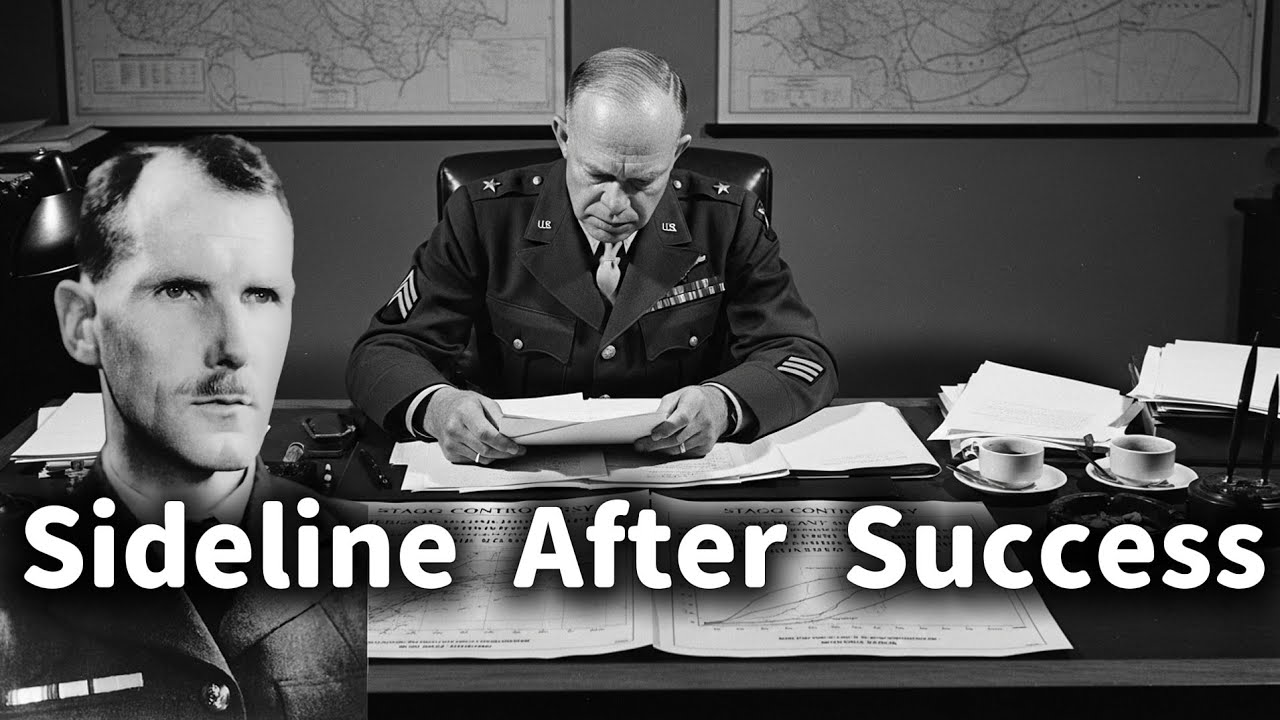
But there was a deeper problem. Stagg did not actually make forecasts himself. He had to reconcile the competing predictions of multiple meteorological services that used fundamentally different methods and consistently disagreed with each other.
The Americans used statistical forecasting. They analyzed historical weather patterns for the English Channel in June and predicted what would most likely happen based on past data. It was scientific, methodical, and completely divorced from what was actually happening in the atmosphere at that moment.
The British Meteorological Office used synoptic forecasting. They tracked actual weather systems as they developed, including high pressure areas, low pressure areas, fronts, and storms, and predicted where those systems would move. It required reading current conditions and understanding atmospheric dynamics in real time.
The two methods produced completely different forecasts consistently. The Americans would predict clear skies while the British predicted storms, or vice versa. And Stagg had to stand before Eisenhower and deliver one unified forecast.
Throughout 1943 and early 1944, this tension simmered beneath the surface. The American meteorologists thought the British were overthinking it. The British thought the Americans were ignoring reality in favor of statistical models. Then came May 1944, and the tension exploded.
The invasion needed specific conditions. Low tide at dawn so the beach obstacles would be visible. A late-rising moon the night before for airborne operations. Those conditions occurred only a few days each month. In June 1944, the windows were June 5, 6, and 7, then nothing until late June.
As May turned to June, the forecast diverged catastrophically. American meteorologists predicted acceptable weather for June 5. Their historical models showed June was typically stable over the Channel. The statistical analysis indicated a 70 percent probability of conditions within acceptable parameters.
Stagg's team, tracking actual weather systems, saw something completely different. A massive low pressure area was forming west of Ireland. It was moving east. By June 5, it would be sitting directly over the English Channel, bringing exactly the kind of weather that would destroy an amphibious invasion.
Stagg had to tell Eisenhower that the Americans were wrong. On June 3, Stagg delivered his forecast. The weather on June 5 would be catastrophic. Winds above 25 knots, complete cloud cover, rough seas. The invasion had to be postponed.
The American meteorologists pushed back hard. Colonel Yates insisted the storm Stagg was predicting would not materialize. The statistical models did not support it. Commander Wolfe from the Royal Navy agreed with Yates. Two against one.
But Stagg had support from the British Meteorological Office. His team had been tracking this low pressure system for days. The data was clear. The storm was coming.
Eisenhower faced an impossible decision. His own chief meteorologist was telling him to postpone, but two other senior forecasters were saying that chief meteorologist was wrong. Eisenhower chose to trust Stagg. The invasion was postponed 24 hours.
By the morning of June 4, the storm had arrived exactly as Stagg predicted. Winds howled across the Channel, waves ran six feet high, and cloud cover was total. If they had launched on June 5, it would have been a massacre. The American meteorologists had been completely and undeniably wrong. Their statistical models had predicted acceptable weather. Reality delivered a storm.
But Stagg was not vindicated yet, because now he had to make an even more dangerous prediction: When could they go?
At the 4:15 a.m. meeting on June 4, Stagg delivered the forecast that would define his career. He had identified a break in the weather systems, a narrow gap between the current storm and the next one forming behind it. That gap would open on June 6 and last approximately 36 hours.

It was a razor-thin window. The weather would be marginal at best. Not good, just barely acceptable. Paratroopers could jump, but would face high winds. Naval guns could fire, but through broken clouds. Landing craft could reach the beaches, but in rough seas.
The American meteorologists looked at the same data and saw no such gap. Colonel Yates stated flatly that conditions on June 6 would be no better than June 5. The statistical models showed continued storms through June 8 at minimum. Commander Wolfe was slightly more optimistic than Yates, but still predicted conditions below acceptable thresholds.
Stagg stood alone. One meteorologist telling Eisenhower there was a window. Two others saying there was not.
Think about what Eisenhower was being asked to do. Launch 150,000 men across the Channel based on one man's forecast that contradicted both the statistical models and the other experts in the room. If Stagg was wrong, the invasion would fail and Eisenhower would be the commander who destroyed the largest military operation in history by trusting the wrong weatherman.
But if Stagg was right and Eisenhower waited, they would miss the tide and moon window. The next opportunity would not come until late June. By then, the Germans might discover the plan. The element of surprise would be gone.
Eisenhower asked Stagg directly how confident he was. Stagg's answer was unequivocal. The window was there. June 6.
At 9:45 p.m. on June 4, Eisenhower gave the order. "Okay, we'll go." The invasion would launch in 28 hours.
On June 6, 1944, at 6:30 a.m., the first wave of Allied troops hit the beaches of Normandy. The weather was exactly as Stagg predicted. Marginal but manageable.
Winds were 15 to 20 knots, strong but not catastrophic. Cloud cover was broken at 3,000 to 5,000 feet, enough for naval gunfire observers to see their targets. Seas were rough at three to four feet, challenging for landing craft but not impossible.
The airborne drops the night before had scattered due to winds and clouds. Paratroopers landed miles from their drop zones, but they landed alive and could regroup. Naval bombardment was less accurate than planned due to cloud cover, but the guns could fire and did suppress some German positions.
Amphibious troops faced rough seas crossing the Channel. Some landing craft swamped. Many soldiers were seasick, but the majority made it to the beaches. It was the worst possible conditions to conduct an invasion, except for every other day in June.
If they had gone on June 5, as the American forecasters suggested was acceptable, the storm would have scattered the airborne divisions hopelessly, rendered naval guns useless, and drowned thousands before they reached the beach. If they had waited until late June for the next tide and moon window, the marginal weather of June 6 would have looked like paradise. But by late June, German intelligence might have discovered the plan. Rommel would have returned from leave. Panzer reserves would have been repositioned.
June 6 was the only day, and Stagg was the only meteorologist who saw it. By June 7, the weather window closed exactly as Stagg predicted. Storms returned. If the invasion had been delayed even 24 hours more, it would have faced the same catastrophic conditions Stagg had warned about for June 5.
James Stagg had made the most accurate weather forecast in military history. He had contradicted senior American meteorologists and been proven right. He had identified a 36-hour window that nobody else could see. He had saved the invasion. His reward was the end of his career.
It did not happen immediately. Eisenhower publicly praised Stagg's work. The British press ran stories about the meteorologist who made D-Day possible. For a brief moment, Stagg was celebrated as a hero. Then the institutional backlash began.

The American military meteorologists had been proven catastrophically wrong. Their statistical models had failed. Their forecasts had been the opposite of reality. If Eisenhower had listened to them instead of Stagg, D-Day would have been a disaster. That kind of public failure does not get forgiven in military bureaucracies. It gets buried, and the best way to bury it is to bury the man who exposed it.
Colonel Yates and the USAAF meteorologists began a quiet campaign to discredit Stagg's methods. They argued that Stagg had been lucky, not skilled. The synoptic method he used was subjective and unreliable compared to their statistical models. The fact that Stagg had been right and they had been wrong was an anomaly, not a pattern.
The Royal Navy meteorologists, embarrassed by Commander Wolfe's failed forecast, distanced themselves from the entire controversy. They neither defended Stagg nor attacked him. They simply stopped including him in planning for future operations.
Eisenhower faced a political problem. He had American meteorologists who wanted Stagg removed for making them look incompetent. He had British superiors who wanted the whole controversy to go away. And he had James Stagg, who had been right when everyone else was wrong, but whose continued presence reminded everyone of that fact.
The solution was elegant and cruel. Promote Stagg publicly. Remove him operationally. In August 1944, Stagg was appointed to a senior position in the British Meteorological Office. It sounded like a promotion. It was actually a removal from field operations. He would never again provide forecasts for major military operations.
By September 1944, American meteorologists had regained control of weather forecasting for Allied operations in Europe. They did not use Stagg's synoptic methods. They returned to their statistical models, the same ones that had failed to predict the June storms.
Stagg watched from his new office in London as the same forecasters who had been wrong about D-Day continued making predictions for Operation Market Garden, the Battle of the Bulge, and the Rhine crossings. Some of those forecasts were accurate. Many were not. But they were American forecasts, and that mattered more than accuracy.
The institutional lesson was clear. Being right does not matter if you make the wrong people look bad.
By 1945, Stagg's contributions to D-Day were already being minimized in official accounts. American histories of the invasion mentioned weather as a factor but downplayed the controversy over forecasts. British accounts praised Stagg but carefully avoided discussing how American meteorologists had been wrong.
Stagg retired from the Meteorological Office in 1960. He wrote a book about his D-Day forecast called Forecast for Overlord. It was published in 1971 and sold poorly. Most reviewers treated it as a curiosity, one man's account of a technical detail in a much larger story.
What nobody wanted to acknowledge was that Stagg's technical detail had saved the invasion. That his synoptic method had proven superior to American statistical models. That the largest amphibious operation in history had succeeded because one meteorologist had the courage to stand alone against institutional consensus.
The irony is that by the 1970s, military meteorology had quietly adopted Stagg's methods. The synoptic approach, tracking actual weather systems rather than relying on historical statistics, became the standard. Modern weather forecasting uses exactly the techniques Stagg employed in 1944. But by then, Stagg was an old man watching from retirement as the military finally admitted he had been right. The vindication came 30 years too late to save his career.
James Stagg died in 1975 at age 75. His obituaries mentioned his D-Day forecast but treated it as a footnote to a long career in meteorology. None of them mentioned how he had been systematically removed from operations after being proven right. None of them discussed the institutional backlash against the man who saved the invasion.
Today, historians studying D-Day acknowledge Stagg's critical role, but he remains largely unknown outside academic circles. Ask most people who made D-Day possible and they will name Eisenhower, Montgomery, maybe Ramsay. They will not name the Scottish meteorologist who told them when to go.
The lesson of James Stagg is not about weather forecasting. It is about institutions and how they respond to being proven wrong. Stagg exposed that American military meteorology was using inferior methods. He demonstrated that statistical models could not predict actual conditions. He showed that understanding atmospheric dynamics in real time was more accurate than analyzing historical patterns.
All of that was true. All of it was proven on June 6, 1944. And none of it mattered, because institutions do not reward people who expose their failures, even when those failures could have cost the war. Eisenhower made the right call by trusting Stagg, but he also made the politically safe call by removing him afterward, keeping the man who was right from embarrassing the people who were wrong.
The man who helped save D-Day was quietly removed from operations for being right. What does that reveal about how institutions choose between truth and politics?