On March 26, 1945, US Army units advancing toward Central Germany liberated Hadamar, a psychiatric clinic that had served as one of six killing facilities in the Nazi so-called euthanasia program. What the soldiers found was catastrophic. More than 500 patients were starved and weakened by systematic neglect and targeted malnutrition.
Although the US Army provided medical care and additional rations, for many the help came too late. Several patients died in the days and weeks following the liberation as a result of inadequate care.
The US Army launched an investigation immediately after the liberation. Key members of the hospital management still on site were taken into custody and interrogated. Among the staff arrested was a deputy head nurse named Karl Willig.
Karl Willig was born in 1894 in the town of Grevenac, then part of the German Empire. Between 1930 and 1933, the mood in Germany was grim. The worldwide economic depression had hit the country hard, and millions of people were out of work.
Many Germans linked the depression to the nation's humiliation after defeat in World War I. The parliamentary government coalition was widely perceived as weak and unable to alleviate the crisis. Widespread misery, fear, and anger offered fertile ground for the rise of Adolf Hitler and his Nazi Party.
Karl Willig, whom one of his co-workers later described as a fanatical National Socialist, joined the party in 1932. On January 30, 1933, Adolf Hitler was appointed Chancellor of Germany by President Paul von Hindenburg.
Many of Nazi Germany's racial policies were shaped by theories of eugenics, or racial hygiene, a scientific movement of the late 19th and early 20th centuries that aimed to improve the genetic quality of the human population. Medical professionals implemented many of these policies and targeted individuals the Nazis defined as hereditarily ill, including those with mental, physical, or social disabilities.
The Nazis claimed these individuals placed both a genetic and a financial burden on society and the state. One of the first eugenic measures they initiated was the 1933 law for the prevention of offspring with hereditary diseases, known as the Hereditary Health Law.
The law mandated forcible sterilization for nine disabilities and disorders, including schizophrenia. As a result, 400,000 Germans were ultimately sterilized in Nazi Germany. Hitler also personally decriminalized abortion in cases where fetuses had racial or hereditary defects as determined by doctors, while abortion of healthy, pure German Aryan unborn remained strictly forbidden.
Eugenic beliefs also shaped Germany's 1935 Marital Hygiene Law, which prohibited the marriage of persons with diseased, inferior, or dangerous genetic material to healthy German Aryans. Eugenics not only provided the basis for compulsory sterilization but also underpinned the murder of the institutionalized disabled in the clandestine euthanasia program.
The euthanasia program, the systematic murder of institutionalized patients with disabilities in Germany, started in 1939, about two years before the Nazis began systematically murdering Europe's Jews as part of the Final Solution. It aimed to eliminate what eugenicists and their supporters considered life unworthy of life.
Nazi propaganda falsely portrayed these mass murders as euthanasia, or mercy deaths. In the spring and summer months of 1939, planners began to organize a secret killing operation targeting disabled children.
The Second World War began on September 1, 1939, and euthanasia planners quickly envisioned extending the killing program to adult disabled patients living in institutional settings. In the autumn of 1939, Adolf Hitler signed a secret authorization to protect participating physicians, medical staff, and administrators from prosecution.
The authorization was backdated to September 1, 1939, to suggest the effort was related to wartime measures. The program's functionaries called their secret enterprise T4. According to Hitler's directive, Führer Chancellery Director Philipp Bouhler and physician Karl Brandt led the killing operation.

Under their leadership, T4 operatives established six gassing installations for adults. One of them was the state hospital of Hadamar. Founded in 1883 as a correctional institution for released prisoners, Hadamar converted into a mental health facility in 1906.
During the early years of the Nazi regime, conditions steadily deteriorated due to overcrowding, poor food rations, and reduced nursing care. In late August 1939, Hadamar ceased operating as a mental health facility and was turned into a military hospital. In November 1940, it was remodeled for use as a euthanasia facility.
Code-named Anstalt E, meaning facility E, Hadamar went into operation as a killing center in mid-January 1941. For the next eight months, busloads of patients arrived daily, and a staff of approximately 100 ran the killing operation.
After the victims were offloaded, they were ushered into a reception room where they were weighed and photographed before being led to a gas chamber disguised as a shower room in the cellar. Pure bottled carbon monoxide gas was used. T4 functionaries burned the bodies in crematoria attached to the gassing facilities.
Hadamar workers took the ashes of the cremated victims from a common pile and placed them in urns to send to relatives. Families or guardians received an urn along with a death certificate and other documentation listing a fictitious cause and date of death. Between January and August 1941, some 10,000 institutionalized mentally and physically disabled persons had been gassed there under Operation T4.
Since July 1941, Karl Willig had worked in Hadamar as an orderly and then as a deputy head nurse. When the staff celebrated the cremation of their 10,000th patient in the summer of 1941, they celebrated with beer and wine. Because the crematorium ovens were often filled with two corpses at a time, the process was less than perfect, often resulting in a thick, acrid smog that hung over the town.
Mass murder operations were temporarily halted in August 1941, but they were reinstated in the summer of 1942, and Hadamar medical personnel again began to murder disabled patients. From 1942 until the end of the war in May 1945, the facility claimed the lives of an additional 4,400 victims by lethal overdoses of medication.

Willig, together with other nurses and chief physician Adolf Wahlmann, had been involved in the selection and killing of victims by overdoses of medicine or food deprivation. The victims included German patients with disabilities, mentally disoriented elderly persons from bombed-out areas, half-Jewish children from welfare institutions, psychologically and physically disabled forced laborers and their children, German soldiers, and foreign Waffen-SS soldiers deemed psychologically incurable.
Karl Willig was regarded as a particularly brutal caregiver who also abused patients. As he admitted after the war, he worked in Hadamar of his own free will. No one ever threatened him with a concentration camp if he lost his work there.
He had no other job anywhere else and never tried to get himself fired. Only once did he ask to be transferred to another facility, but the request was denied. He later explained that the reason he chose to become a mass murderer was that he would have lost his pension if he had left his job.
The victims in Hadamar included not only German citizens but also people of other nationalities. Before the Poles and Russians came to Hadamar the first time, all the male employees, including Karl Willig, were called together. Chief administrator Alfons Klein told them that foreign workers with tuberculosis were coming there in trucks and had to be liquidated.
After this, a transport of Russians and Poles from the nearby town of Limburg an der Lahn arrived in two loads. Willig was the one who went to Limburg to accompany the second load. All the people from the first load had been given injections and Veronal or chloral to drink and were asleep when Willig came back with the second load. The same was done with the people of the second load, and Willig gave them sedatives to drink.
The next morning, Hadamar chief physician and medical director Adolf Wahlmann came and examined the Poles and Russians after they were dead. The euthanasia program continued until the last days of World War II, including a wide range of victims, geriatric patients, bombing victims, and foreign forced laborers. Historians estimate that the euthanasia program in all its phases claimed the lives of 250,000 individuals.
In March 1945, the US Army liberated Hadamar, and Willig was taken into custody. American authorities were initially eager to try Hadamar physicians, nurses, and bureaucratic staff for the murders of the nearly 15,000 German patients killed at the institution, but quickly discovered they had no jurisdiction to do so under international law. US military officials could not try German nationals for murdering their fellow citizens.
American prosecutors, however, found a loophole. There were 476 Soviet and Polish forced laborers suffering from tuberculosis who had been sent to their deaths at the facility in the last months of the war. As these civilian forced laborers were citizens of countries allied to the United States, American prosecutors were able to open proceedings against seven Hadamar defendants associated with the murders of the Eastern workers.
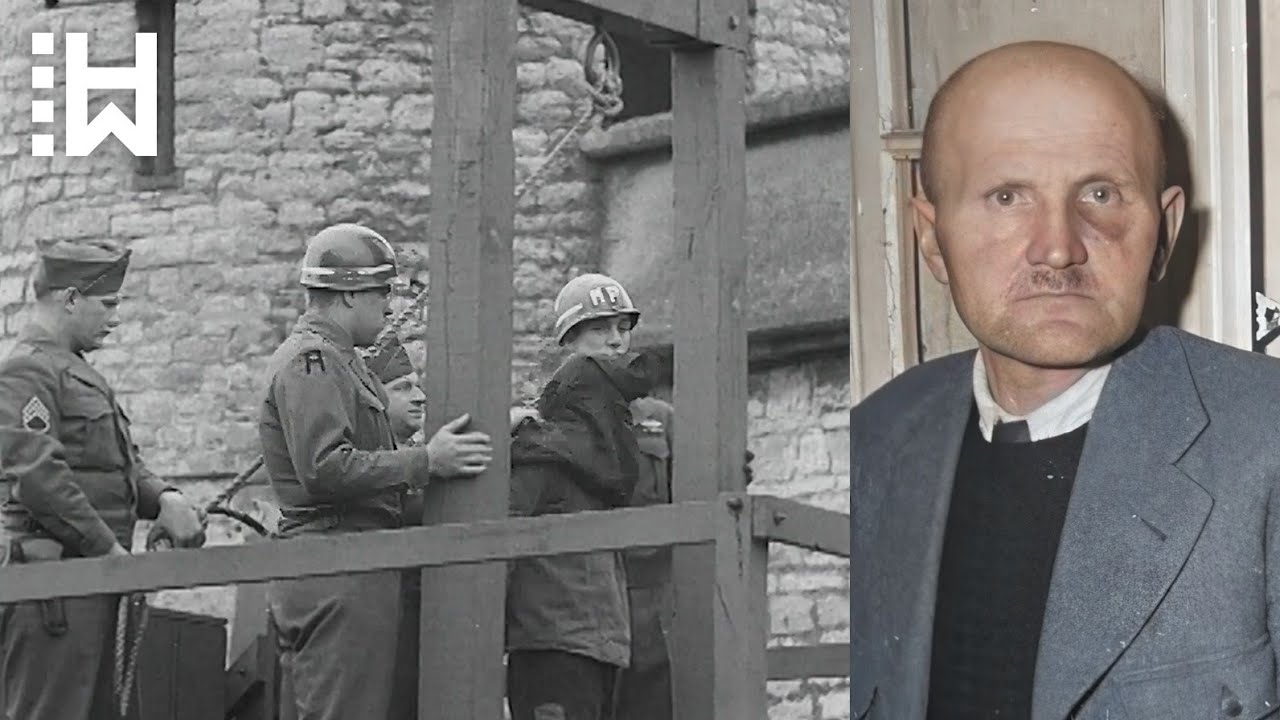
On October 15, 1945, chief prosecutor Leon Jaworski, who gained fame in the 1970s as the Watergate special prosecutor, won convictions for all of the accused. The six-man US military tribunal prescribed death by hanging for Hadamar chief administrator Alfons Klein and two male nurses, Heinrich Ruoff and Karl Willig.
On March 14, 1946, they went to the gallows. As he was led to his execution, Karl Willig, who had personally killed hundreds, if not thousands, of people at Hadamar, said, "I did my duty as a German official. God is my witness." Willig was 51 or 52 years old when he was executed by hanging in Bruchsal prison. There were no tears shed for Karl Willig.