In October 2002, a 66-year-old woman entered the witness box at Court Number One of the Old Bailey in London. She leaned on a walking stick, her gray hair neat, her hands not entirely steady as she placed them on the rail. She had traveled from a small island off the west coast of Scotland to be there. While she was gone, burglars would break into her house and steal her jewelry. She did not know that yet.
What she knew was that she had been called to testify in the trial of her dead daughter's butler. The barrister was about to ask her a question whose answer she had carried in private for five years. The courtroom was quiet. The wood of the witness box was dark and polished.
Under oath, Frances Shand Kydd confirmed what the world had suspected but had never heard stated so plainly. Her daughter Diana had returned her letters unopened. They had not spoken for the final four months of Diana's life. The most famous mother-daughter relationship in the world had ended in silence. The letters came back sealed.
The woman in that witness box was born into one of the most privileged households in England. She had married a viscount at Westminster Abbey at 18, with the Queen in attendance. She was a Spencer, a Fermoy, a product of the innermost circle of the British aristocratic world. And that world — her mother, her class, her husband, the courts — stripped her of her children when she tried to leave it.
To understand how Frances Shand Kydd ended up in that witness box, confirming under oath that the most famous daughter in the world had died without speaking to her, one must go back a long way. Not just to Diana, not just to the royal wedding or the Spencer divorce or the tabloid years. One must go back to the world that made Frances — the world that raised her, married her, judged her, and then closed its doors against her.
That world was built on two families: the Spencers and the Fermoys. Both were so deeply embedded in the English aristocracy that leaving it was not simply a personal decision. It was an act of treason against an entire order.
The Spencers were one of the oldest and most established aristocratic families in England. Their seat, Althorp, is a great honey-colored house set in over 500 acres of parkland in Northamptonshire. It had been in Spencer hands since 1508, when Sir John Spencer, a wool merchant whose fortune was enormous by Tudor standards, purchased the estate and began the family's transformation from trade to title.
Over the centuries, the family accumulated not merely land and title but a kind of permanent symbolic weight. Paintings by Reynolds, Gainsborough, and Van Dyck lined the galleries. The library held first editions that most museums would envy. The Spencers had intermarried with dukes and earls for generations. The family tree was so thickly entangled with the English establishment that pulling on any branch would disturb half the peerage.
By the 20th century, the grandeur was partly a facade maintained under strain. Pictures had been sold. Death duties, the tax levied on inherited estates, which in the post-war period could reach as high as 75 or even 80 percent, had bitten deep into the Spencer fortune. The sheer cost of keeping a house like Althorp standing, heated, staffed, and open to a world that increasingly wondered whether such places had a future was a source of quiet, relentless anxiety.
But the name endured. The title endured. And the expectation that the family would continue to produce heirs, manage the estate, serve the Crown, and present a face of continuity to the world endured most of all. In the Spencer universe, what mattered was not happiness. What mattered was permanence.
On January 24, 1924, Edward John Spencer was born at the family's London residence in Sussex Square, Bayswater. Known to everyone as Johnny, he was the only son and younger child of Albert Spencer, the seventh Earl, and his wife, the former Lady Cynthia Hamilton, daughter of the third Duke of Abercorn. His godfather was the future King Edward VIII, a man who would within a dozen years abandon the throne for love in the most spectacular violation of duty the British establishment had ever witnessed.
Johnny Spencer was educated at Eton, then at the Royal Military College at Sandhurst, and then at the Royal Agricultural College — the standard trinity for an heir who would one day be expected to command men, manage land, and represent his family in the rituals of the county and the court. During the war, he served as a captain in the Royal Scots Greys, landed in France the day after D-Day, led a unit in an operation to liberate two small French towns, and was mentioned in dispatches.
After the war, he served as aide-de-camp to the governor of South Australia, then as equerry to the young Queen Elizabeth II at the beginning of her reign. He was awarded membership of the Royal Victorian Order for his service. By every outward measure, he was exactly what the Spencer system was designed to produce: beautiful, decorated, connected to the Crown, and destined to inherit one of the great estates of England.
But Johnny Spencer was not simply the genial, steady aristocrat that the official record suggested. He was, by several later accounts, a man of considerable temper. The gossip columnist and biographer Penny Junor would later write that he could be violent and that Frances felt she and her children would be safer out of the home. Their daughter Diana would recall years afterward seeing her father slap her mother across the face while Diana hid behind a door listening to her mother cry.
These are details that emerged only after the marriage had ended and the family's public facade had cracked beyond repair. In the early 1950s, none of that was visible. What was visible was that Viscount Althorp, as Johnny was then styled, was one of the most eligible men in England, and he needed a wife.
The woman he found came from the other side of the same small, court-adjacent world. Frances Ruth Roche was born on January 20, 1936, at Park House, a substantial 10-bedroom Victorian residence standing in its own grounds on the Royal Sandringham Estate in Norfolk. Her birth fell on the same day as the death of King George V, a coincidence that later biographers would note with a certain unease.
Her father was Maurice Roche, the 4th Baron Fermoy, an Anglo-Irish peer who had been a friend of George VI and a Conservative member of parliament for King's Lynn. The Fermoy barony was relatively recent, created in 1856, and the family's fortune was partly American in origin. Frances's paternal grandmother was Frances Ellen Work, a New York heiress whose marriage to the third Baron Fermoy had been one of those late Victorian transatlantic alliances between old-world title and new-world money.
But whatever the Fermoys lacked in the deepest kind of English pedigree, they more than compensated for in proximity to the Crown. Park House itself sat on land leased from the royal family. The Fermoys were not merely neighbors to royalty. They were tenants occupying a grace-and-favor position that wove them into the fabric of the court world as intimately as any old title could.
And then there was Frances's mother, Ruth Roche, Baroness Fermoy, born Ruth Gill in Aberdeen in 1908. She was a woman whose significance in this story cannot be overstated. She was not merely a parent. She was the bridge between domestic tragedy and the establishment that would later enforce its consequences.
In her youth, she had been a pianist of genuine promise. She studied under Alfred Cortot at the Paris Conservatoire in the 1920s, and decades later she still performed publicly, playing alongside Yehudi Menuhin at the Royal Albert Hall in 1950 and with Sir John Barbirolli and the Hallé Orchestra at King's Lynn in 1966. But her musical career had been curtailed when she married the much older Lord Fermoy in September 1931.
In the years that followed, she refashioned herself as something altogether different: a fixture of the royal household, a woman whose identity was inseparable from her devotion to Queen Elizabeth, the Queen Mother. Lady Fermoy served as a lady-in-waiting to the Queen Mother for over 30 years, eventually holding the title of Woman of the Bedchamber. She founded the King's Lynn Festival in 1951, persuaded the Queen Mother to become its patron, and was appointed an officer of the Order of the British Empire for her work.
She lived in her later decades at 36 Eaton Square in Belgravia, one of the most prestigious addresses in London, and moved through a world in which one's place in the hierarchy was not merely a social fact but a moral imperative. She was by every account a woman of formidable propriety, fierce loyalty to the institution of the Crown, and an absolute conviction that the social order in which she operated was not a system one could question but a framework one was obliged to uphold at any personal cost.
Ruth Fermoy did not merely observe the rules of this world. She enforced them. And when the time came, she would enforce them against her own daughter with a coldness that still has the power to shock.
A mother who would later testify against her own child in a custody dispute is not simply cold. She is a woman for whom the preservation of order has become more important than the preservation of the maternal bond itself. In Lady Fermoy's case, the evidence suggests she was not heartless. She was a true believer. She believed in marriage, in duty, in the sanctity of one's station, and in the absolute wrongness of a woman who left her husband — especially one who left a Spencer.
That belief would devastate Frances. It would shape Diana. And it would echo through three generations of women like a fault line that nobody in the family ever managed to seal. Lady Fermoy died in July 1993 at her home in Eaton Square, aged 84. She is not reported to have expressed regret about her testimony.
There is one more figure who must be introduced here, though her full entrance into the Spencer story comes later. Raine McCorquodale was the daughter of Dame Barbara Cartland, the romantic novelist who published over 700 books and whose name became synonymous with a particular kind of lavish sentimental Englishness. Raine inherited her mother's confidence and her instinct for social positioning.
She married the ninth Earl of Dartmouth, became active in London politics as a Conservative councillor, and moved through the establishment world with an assurance that some found impressive and others found grating. In 1976, she would marry Johnny Spencer, becoming the children's stepmother, and the household at Althorp would acquire a new presiding female presence — one that the Spencer children would resist with a ferocity that was at bottom not really about Raine at all. It was about the absence of Frances.
Diana would later call her "Acid Raine." The name was meant to wound. It did.
This is the inheritance that Frances carried into her marriage. Not money alone, though there was money. Not title alone, though there was title. But a code of discretion, of duty, of public steadiness, of maternal obligation, of the absolute primacy of family continuity over personal happiness.
The Fermoy household at Park House and the wider Spencer world at Althorp operated on the same set of assumptions: that women married well, bore heirs, maintained appearances, and subordinated private feeling to the demands of lineage. The code was never written down. It did not need to be. It was in the architecture, in the servants, in the deference, in the way a room fell silent when certain subjects were raised. It was the air Frances breathed from birth.
She was educated at Downham School in Essex. By her late teens, she was precisely the kind of young woman the system was designed to produce and to deploy: well-bred, attractive, socially confident, groomed for a marriage that would consolidate position and generate heirs. But there was something in Frances even then that suggested she might not remain inside the lines forever — a restlessness, an appetite for feeling, a directness that the world she inhabited treated as an inconvenience at best and a danger at worst.
She was tall, fair, with strong features that Diana would later inherit so strikingly that the resemblance became one of the most remarked-upon likenesses in English public life.
On June 1, 1954, Frances Roche and John Spencer, Viscount Althorp, were married at Westminster Abbey. She was 18 years old, the youngest bride to marry at the Abbey since 1893. The Bishop of Norwich officiated. Queen Elizabeth II attended along with the Duke of Edinburgh, the Queen Mother, and Princess Margaret. The congregation was a roll call of the English aristocracy.
It was by every measure a society wedding of the first order. Two families of rank and royal proximity joining in the most public of ceremonies, in the most symbolically charged of settings. The photographs show a young woman in white, radiant, composed, walking out of the great west door on the arm of a man she would spend the next 13 years trying to live with and the rest of her life trying to live without.
What the photographs did not show was the weight of what that marriage actually meant. Frances was not simply becoming a wife. She was becoming a vessel of continuation. The Spencer system required heirs. The Spencer system required a son. And the Spencer system was not patient about it.
Johnny was 30, an established man with a war record and a royal appointment behind him. Frances was barely out of girlhood. The age gap was 12 years, which in most contexts would have been unremarkable for the period, but which in this particular case meant that Frances entered the marriage with far less experience of the world, far less understanding of what was being asked of her, and far less power to resist the expectations that would close around her almost immediately.
The first years were spent at Park House on the Sandringham estate, where Frances had grown up and which Johnny and Frances now occupied as a married couple, leasing it from the Crown in the same arrangement that the Fermoys had maintained for decades. Park House was comfortable, spacious, set in quiet Norfolk countryside with the royal estate as its neighbor and the rhythms of upper-class county life as its daily structure.
There were nannies, cooks, housekeepers, gardeners. There were shooting weekends in season and church on Sundays and the social calendar that had governed families like theirs for generations. To an outsider looking in, it would have seemed a life of extraordinary privilege, which it was. But privilege and happiness are not the same thing. And the household at Park House was already beginning to reveal the gap between how the Spencers looked and how the Spencers lived.
Sarah was born on March 19, 1955, less than a year after the wedding. Jane followed on February 11, 1957. Two healthy daughters in three years. In most families, that would have been cause for uncomplicated joy. In the Spencer household, it was the beginning of a particular kind of pressure — quiet, unspoken, understood by everyone in the family and everyone around it.
The title, the estate, the earldom itself all passed through the male line. Without a son, the Spencer inheritance would pass sideways, away from Johnny and Frances's branch entirely, and the purpose of the marriage in the dynasty's terms would remain unfulfilled.
On January 12, 1960, Frances gave birth to a son at Park House. They named him John after his father. The baby lived for 10 hours. He died on the same day he was born and was buried in the churchyard at Sandringham. The cause was not widely discussed at the time. In the world of the Spencers and the Fermoys, such things were borne privately, grieved within the walls of the house, and then absorbed into the ongoing rhythm of duty and obligation.
There was no extended public mourning. There was no visible break in the performance of family life. What there was behind the doors of Park House was devastation. The death of a child is always devastating. But in this family, in this world, the death of this particular child carried a second devastation layered on top of the first. The heir was gone. The son the system demanded had arrived and been taken away in the same day.
The grief was real and terrible, and it was also inescapably entangled with dynastic failure. Frances had lost a baby, but in the Spencer calculus, she had also lost the only thing the marriage had been designed above all else to produce. Later accounts, including those from Charles Spencer himself, suggest that the pressure surrounding the quest for a male heir damaged both parents profoundly, that it corroded the marriage from within, turning private mourning into a kind of ongoing accusation that Frances had failed at the one task the Spencer world considered essential.
Diana Frances Spencer was born on July 1, 1961. Another daughter, another girl when a boy was wanted. Some accounts suggest that her parents had been so certain the baby would be male that no girl's name had been chosen for her — that for the first days of her life, the child who would become the most photographed woman on the planet did not even have a name.
Whether that detail is precisely true or simply indicative of a deeper truth, the emotional texture is the same. Diana arrived into a household already carrying grief, pressure, and the unspoken suggestion that three daughters and a dead son were not enough.
Charles Edward Maurice Spencer arrived on May 20, 1964. He was the longed-for male heir, the boy who would carry the title and one day inherit Althorp and everything it contained and demanded. His arrival relieved the dynastic pressure, but by then the damage had already been done.
To look at each of the Spencer children in the mid-1960s is to see the same family pressure refracting differently through each young life. Sarah, the eldest, was already nine when Charles was born — old enough to understand the household's hierarchy, old enough to absorb its rules about composure and appearance, and old enough to sense that something was wrong between her parents, even if she could not yet articulate it.
She was spirited and direct, a Spencer through and through, and in adulthood she would be the sibling who most visibly carried the family's royal connection before Diana eclipsed everything. It was Sarah who in the late 1970s would briefly date the Prince of Wales, and Sarah who would introduce him to her younger sister, setting in motion a chain of consequences that nobody in the family could have foreseen and nobody would escape.
Jane, two years younger, was quieter, more contained, less visible. She would grow up to be the most private of the Spencer siblings, the one who moved through the establishment world with a minimum of public disruption. In 1978, she would marry Robert Fellowes, a man who rose through the royal household to become the Queen's private secretary, one of the most sensitive and powerful positions in the British establishment.
That marriage would place Jane inside the palace apparatus at the very moment her sister Diana's royal marriage was falling apart, creating a conflict of loyalty so exquisite that it could only have been produced by the kind of small, incestuous social world in which the Spencers and the Fermoys had always operated. But in childhood, Jane was simply the second daughter — steady, reliable, overlooked in the way that middle children of large families often are.
Diana, at three and four years old, was the child most present in the daily life of Park House during the years when the marriage was deteriorating. She was young enough that the specifics of adult unhappiness would remain unclear to her, but old enough that the emotional atmosphere — the tension, the raised voices, the silences that were worse than shouting — would imprint itself on her nervous system in ways that no amount of later privilege or public adoration could erase.
Diana would spend her adult life talking about this period, circling it in interviews and private conversations, returning again and again to the foundational wound of her parents' divorce as the event that explained everything else about her. Whether that interpretation was entirely fair to both parents is a question the story must hold open. What is not in dispute is that the experience marked her permanently.
The little girl hiding behind the door listening to her mother cry after being struck — the image, which Diana herself provided, became one of the defining anecdotes of her biography. And it began here, in this supposedly idyllic setting of Park House on the Royal Sandringham estate.
Charles, the youngest, was barely a toddler when the family began to fracture. He would have no conscious memory of the household as it existed before the separation. His experience of the divorce would be different from his sisters' — less a rupture of something remembered than an absence woven into the fabric of his earliest understanding of the world. Mother was not there. Mother had left. That was simply how things were, and the reasons for it would take years to become clear.
In adulthood, Charles Spencer would become the custodian of Althorp, the keeper of the Spencer name, and the public voice of a family whose private complexities he understood better than almost anyone alive. His observation that their mother was not cut out for maternity — a remark that has been quoted and recorded in the decades since — belongs to a later period. But the conditions that produced it were already forming in the mid-1960s in the rooms and corridors of Park House, where a young mother's unhappiness was becoming impossible to conceal.
The marriage that had begun with such ceremony at Westminster Abbey was hollowed out from within. Frances was 28 years old, the mother of five children, one of them dead. She was living on the Sandringham estate, married to a man whose temper darkened the household, embedded in a social world that measured women by their composure and their children.
Her mother, Lady Fermoy, was a short drive away, a constant presence and a constant reminder of the standard Frances was expected to maintain. The Queen Mother herself was a regular visitor to the area. The eyes of the court-adjacent world were always watching, always measuring, always ready to judge a woman who showed the slightest crack in the performance of her role.
And Frances was cracking. Not publicly, not yet. But the internal pressure was building. She was not the compliant, self-effacing wife the system required. She was alive with feeling in a world that treated feeling as a weakness. She wanted warmth from a husband who offered control. She wanted tenderness from a social order that demanded only duty.
She was, in the language her class would later use against her, beginning to bolt. Though the bolting itself was still months away, and when it came, it would be less an act of reckless abandonment than the final desperate movement of a woman who could no longer bear the weight of a life she had never truly chosen.
Peter Shand Kydd entered the story in 1966 at a dinner party in London. He was the heir to a wallpaper fortune based in Australia. His family's business was prosperous, established, and utterly without the trappings of the aristocratic world. Peter was not titled. He was not court-adjacent. He was not Eton and Sandhurst and the Royal Scots Greys. He was in virtually every respect from outside the system that had held Frances since birth.
His half-brother William Shand Kydd was a champion amateur jockey and, through marriage, the brother-in-law of the seventh Earl of Lucan, a connection that would later acquire its own dark notoriety. But Peter himself carried none of the Spencer-Fermoy establishment credentials. He was married with children of his own, and he was by all accounts charming, warm, and interested in Frances not as a Spencer appendage but as a woman in her own right.
What Frances saw in Peter, what she felt, what she permitted herself to feel, was the first real alternative to the life she had been assigned. He was not a way out in any simple sense. He was married. She was married. The consequences of acting on whatever was growing between them would be catastrophic within the world they both inhabited.
But the existence of that feeling — the simple fact that someone outside the Spencer system saw her and wanted her and made her feel something other than obligated — that was enough to change the internal geometry of Frances's life permanently. That is the first turn. Not the affair itself, not yet. But the existence of a door that did not lead back into the Spencer household.
Whether Frances would walk through it, and what walking through it would cost her — her children, her name, her place in the only world she had ever known — was a question that would take years to answer. And the answer, when it came, would be more devastating than anything the Spencer or Fermoy code had ever been designed to contain.
What life looked like at Park House in the years before the fracture was something close to the English aristocratic ideal rendered in miniature. It was not Althorp — that vast ancestral pile in Northamptonshire would come later, when Johnny inherited the earldom — but Park House had its own considerable grandeur. Ten bedrooms, spacious reception rooms, manicured gardens running down to the edge of the Sandringham estate, and beyond them the flat, open Norfolk landscape stretching toward the sea.
The royal family was quite literally next door. The Spencer children played with the younger princes, Andrew and Edward, on the lawns and paths that connected the houses of the estate. Christmases at Sandringham meant that the great rituals of the British monarchy — the church service at St. Mary Magdalene, the walk past the crowds, the private gatherings inside the big house — were not distant spectacles watched on television but part of the fabric of ordinary life. For the Spencer children, royalty was not mythology. It was the neighbors.
The household itself ran on the invisible machinery that all such households required: nannies who managed the children's daily routines, cooks who prepared the meals, housekeepers who maintained the standards, gardeners who tended the grounds. Frances presided over this world with an energy and attentiveness that several later accounts credit as genuine.
She was not a distant, delegating mother in the manner of some upper-class women of her generation. She was present, affectionate, involved in the daily texture of her children's lives in ways that the aristocratic code did not strictly demand but that her own temperament insisted upon. She took the children on outings. She read to them at bedtime. She knew their moods and their fears and their preferences with the particular intimacy that belongs to mothers who are paying attention.
This matters. It matters enormously, because everything that came later would be used to paint Frances as a woman who abandoned her children without a backward glance. The reality was more complicated than the accusation that followed her for the rest of her life. She was a woman who loved her children deeply and who also could not survive the marriage that came with them.
The social world surrounding Park House was a close and comfortable circuit. There were dinner parties with the other county families, the Cooks, the Pratts, the neighbors whose names recurred in the same guest books generation after generation. There were the rituals of the season: Ascot, Henley, Goodwood, the Chelsea Flower Show, which the Spencers attended as a matter of course, appearing in the right marquees at the right times, wearing the right clothes, saying the right things to the right people.
There was shooting in season, which Johnny enjoyed, and which brought parties of men in tweed and Wellington boots through the Norfolk landscape with the regularity of weather. There was church on Sundays at St. Mary Magdalene, where the Spencer family occupied their expected pew with the dutiful regularity that the Church of England expected of its most prominent parishioners. There were the weekends when the royal family was in residence at Sandringham, and the particular hush of social alertness that descended on the estate when the sovereign was near.
And there was woven through all of it the quiet understanding that everything about this life — the house, the staff, the social calendar, the proximity to the Crown — existed because the family had maintained its position across centuries and would be expected to maintain it for centuries more. This was not simply a household. It was a performance of continuity staged daily, and everyone in it had a role to play.
Frances's role was wife, mother, hostess. She was expected to manage the domestic sphere with competence and grace, to produce heirs and raise them in the image of the class, to support her husband's social obligations, and to present at all times the face of a woman for whom this life was not merely acceptable but natural. The fact that it was becoming increasingly unnatural for her was not something the performance allowed her to express.
For the children, the best years meant something simpler and more precious: stability, routine, the presence of both parents under the same roof, and the vast green expanse of a Norfolk childhood in which the boundaries of the known world were the estate walls and the village beyond. Diana, in particular, would later describe aspects of her early childhood at Park House with a warmth that contrasted sharply with everything that followed.
There were pets — guinea pigs, a cat named Marmalade, various dogs that roamed the house with the proprietary air of animals who have never been told they do not belong. There was the swimming pool where the children splashed on summer afternoons. There was the freedom to run and explore that comes from growing up on land your family effectively controls, where every path is familiar and every field is home.
These were the golden years, and they were golden not because the family was without its problems but because the problems had not yet broken through the surface into the kind of visible, irreversible destruction that children cannot ignore or explain away. But the cracks were there. They were always there. And by the mid-1960s, the evidence of the marriage's failure was becoming impossible for either partner to conceal, even from themselves.
Johnny Spencer was by temperament and upbringing a man who expected the household over which he presided to function on his terms. He had been raised in a world where authority flowed downward through clearly defined hierarchies — from the earl to his heir, from the master of the house to his wife and children and staff. And he inhabited that authority with a naturalness that could, when challenged or frustrated, shade into something harder and more dangerous.
The accounts of his temper, which emerged fully only after the divorce, paint a picture not of a monster but of a man whose capacity for anger was amplified by the pressures of a marriage that was not giving either party what they needed. He wanted a compliant wife who would manage the household, raise the children, and accept the terms of the Spencer compact without question. What he had was Frances — bright, restless, emotionally hungry, and increasingly suffocated by the role she had been assigned at 18 and was now, at 30, struggling to breathe inside.
The biographer Penny Junor's later assessment that Frances felt she and her children would be safer out of the home carries an implication that extends well beyond ordinary marital unhappiness. It suggests a household in which the primary emotion was not disappointment but physical danger. And Diana's own recollection of watching her father strike her mother's face confirms that violence was not merely a possibility in the Spencer marriage but a fact of it.
Frances, for her part, was discovering in her late 20s and early 30s that the life she had married into at 18 was not one she could sustain without cost to everything she was. The succession pressure had taken its toll — years of pregnancies measured not by the joy of new life but by the dynasty's demand for a particular kind of new life, a male heir whose arrival would validate the marriage's purpose.
The social isolation of living on a rural estate, surrounded by beauty and servants but starved of the kind of intellectual or emotional engagement that matched her own restless capacity, was grinding her down slowly, invisibly, in the way that privilege grinds — not with the obvious cruelty of poverty but with the suffocating gentleness of a cage lined with silk. And Johnny's temper was creating an atmosphere in the home that no amount of beautiful gardens or well-laid tables could disguise.
Whether the marriage might have survived had there been no Peter Shand Kydd is one of those questions that biography cannot answer and should not pretend to. What is certain is that by 1966, when Frances met Peter at a dinner party in London, the marriage was already a shell held together by convention, children, and the sheer social impossibility of admitting that a union blessed by the Queen and solemnized at Westminster Abbey had failed. Peter did not break the marriage. He offered Frances a way to acknowledge that it was already broken.
In 1967, Frances left. The precise sequence of events is not fully agreed upon by all sources, but the core facts are well documented. Frances moved to London with the two youngest children, Diana and Charles. She took a flat as a base from which, for a brief period, it appeared possible that the separation might be managed with the kind of discreet, civilized arrangement that the upper class preferred when marriages ended.
Johnny remained at Park House with the staff, the estate, and the older girls, who were away at school for much of the time. Diana, who was six, and Charles, who was three, were with their mother in London. For those months, the youngest children were with the parent who had left. And for Diana in particular, the experience of being with Frances, of having her mother present and daily and close, would make what came next immeasurably harder.
And then came Christmas 1967. Frances sent Diana and Charles to Park House for the school holidays, as separated parents do, expecting them to return to London when the break ended. When the holidays were over, Johnny Spencer refused to let the children go back. He kept them. He had the house, the staff, the means, and, crucially, the backing of a legal system and a social class that viewed the departing wife as the party at fault.
Frances had left the marital home. Frances had taken up with another man. In the moral arithmetic of the late 1960s, in a world that was still decades away from modern assumptions about shared parenting, the mother who left was the mother who lost. And from that moment, the separation was no longer a private negotiation between two unhappy people. It was a custody war.
Diana would later describe the sound of her mother leaving — the footsteps on the gravel, or was it the car on the drive? The specifics shift between tellings, as childhood memories always do, but the emotional core remains constant and devastating. The sound of departure, the mother going, the child remaining, the sense that something fundamental had been taken away and that nobody was coming to give it back.
That sound — or rather the memory of that sound, burnished and sharpened by years of returning to it — would become one of the defining sensory details of Diana's biography. It was the moment the fairy tale ended. Not the one about the prince, but the one about the family that was supposed to hold together.
Frances was named as the other woman in Janet Shand Kydd's divorce proceedings against Peter. The scandal was public, messy, and devastating in a world that still judged women with a severity it did not apply to men for the violation of marital vows. Frances was not merely a wife who had left her husband. She was a wife who had left her husband for another woman's husband, and in the moral vocabulary of the English upper class, that made her the guilty party in every subsequent question — including the question of who was fit to raise her own children.
The custody case that followed was the crucible in which the family's future was forged. It was a full adversarial legal contest in which the private wreckage of a marriage was laid out before barristers and a judge with a thoroughness that left no room for the discretion the Spencer-Fermoy world normally demanded. Johnny Spencer made his case with the full weight of his name and his position.
He had the house, the estate, the title, the income, the social network, and the support of a world that viewed him as the wronged party. And he had something else, something more devastating than any of those advantages. He had Frances's own mother.
Lady Fermoy testified against her daughter in the custody proceedings. The precise content of her testimony has never been made fully public, but its effect is a matter of settled record. It helped Johnny Spencer win. The courts granted him custody of all four children. Frances was not forbidden from seeing them, but she had lost the daily, irreplaceable life of motherhood — the breakfasts, the bedtimes, the homework, the casual, unplanned moments that make a parent a parent rather than a guest.
She had lost them because she had left a marriage in which she was unhappy and afraid, and because the world in which she had been raised — the world embodied and enforced by her own mother — had decided that leaving was worse than staying, no matter what staying cost.
The betrayal was not impulsive. It was ideological. Lady Fermoy testified against Frances not out of personal cruelty but out of a conviction so deep that it functioned as a moral system. In her understanding of the world, Frances had violated the most fundamental compact of her class. She had left a Spencer publicly, scandalously, for a man without title or appropriate standing. She had brought shame upon the family name.
And in Lady Fermoy's calculus, the children's welfare was better served by remaining within the stable, titled household of their father than by following their mother into what Lady Fermoy considered disgrace. That this required a mother to help strip her own daughter of her children in a courtroom under oath in front of strangers reveals the full force of the code that governed this world and the human cost it was willing to pay to uphold itself.
Frances and Peter Shand Kydd were married on May 2, 1969, shortly after Frances's divorce was finalized in April. They moved to the Scottish island of Seil, a small, windswept place off the west coast near Oban, and bought an 18th-century farmhouse called Ardencaple. They also kept a sheep farm in Yass, New South Wales, and divided their time between Scotland, Australia, and London.
It was a life that offered Frances something she had never had in her first marriage: freedom and choice. But it did not offer her what she had lost. The children remained with Johnny. Park House remained Johnny's domain. And Frances, at 33, was a remarried woman living on a Scottish island, separated from her children by geography, by legal ruling, and by the judgment of a class that had decided she was unfit.
The children absorbed a new reality in different ways. Sarah, the eldest, channeled her distress into a fierce independence that masked but did not erase the damage beneath. She would later develop anorexia, a condition that several biographers have connected to the emotional turbulence of these years. Jane, quieter and more contained, retreated into the steadiness that would define her adult life — the Spencer sibling who moved through the world with a composure so thorough it could be mistaken for indifference, which it was not. It was a survival strategy, and it worked.
Diana was old enough for the wound to settle into the deepest foundations of her personality but too young for the analytical distance her older sisters could summon. She would spend the rest of her life returning to this period as the source of everything that went wrong. And Charles, the youngest, would grow up in a household shaped by his mother's absence, and would later, in his memoir "A Very Private School," published in 2024, reveal the depth of the trauma the Spencer children carried — not only from the divorce but from the boarding school system into which they were sent at brutally young ages.
He arrived at Maidwell Hall at 8 years old, a small boy already carrying more loss than most adults, and the school's culture of cruelty only compounded what the family had begun.
The narrative that formed within the Spencer household was shaped by the parent who stayed. In that narrative, Frances had bolted. The word "bolter" carried a particular cruelty in the lexicon of the English upper class. It reduced a complex human decision to a single animal impulse and left no room for the possibility that a woman might leave a marriage for reasons that were not selfish but desperate. Once it attached itself to Frances, it stuck for decades.
Johnny settled into the role of the steady parent. In June 1975, his father died and Johnny became the eighth Earl Spencer. The family moved from Park House to Althorp — from a 10-bedroom house on the Sandringham estate to one of the great stately homes of England, with over 90 rooms, galleries lined with old masters, and grounds that announced permanence. Diana was 14.
And then, on July 14, 1976, Johnny married Raine, Countess of Dartmouth, the daughter of Dame Barbara Cartland, the romantic novelist whose name was synonymous with pink chiffon and melodrama. The children were not consulted. Raine arrived at Althorp with the force of a personality accustomed to command. And the Spencer children experienced her presence not as a new beginning but as a desecration — another woman in their mother's place, in their mother's house.
They called her "Acid Raine." They united in hostility with a ferocity that went beyond ordinary stepfamily difficulty. None of it was really about Raine. It was about Frances. It was about the hole she had left and the impossibility of filling it.
In September 1978, Johnny suffered a massive cerebral hemorrhage. He was hospitalized for eight months. Raine took charge of his care with a tenacity that even the children grudgingly acknowledged. She fought with the medical staff, insisted on experimental treatments, refused to accept the prognosis. When Johnny recovered, slowly and incompletely, it was Raine who had pulled him through. The children hated her. She had saved their father. Both things were true. Neither canceled the other.
Frances, on Seil, maintained what contact she could. The children visited, and some of those visits were genuinely restorative. Diana's bodyguard, Ken Wharfe, later described a week on Seil in August 1989 as one of the finest holidays the princess and her sons ever took, painting a picture of Frances as humorous, intelligent, and kind — a woman who revived her daughter's spirits over long dinners at her kitchen table.
But the visits were visits. They were not daily life. And Frances knew the difference. What she did not yet know was that Diana's entry into the royal family would pull Frances and the wound they all carried onto the largest stage in the world. The mother who had been cast out by her class was about to become the mother of the most famous woman alive. And the private damage of the Spencer divorce was about to become public property on a scale that not even the Fermoy code of silence could hope to contain.
Frances was not a woman who left her children lightly, and the story must not suggest that she did. The custody arrangement allowed her access — weekends, holidays, the structured visiting times that family courts impose on separated parents — and she used that access with a consistency that her critics rarely acknowledged. The children spent time on Seil. They spent time in London. They spent school holidays in Scotland and, for a period, in Australia.
Frances wrote to them. She telephoned. She was present in the ways that a non-custodial parent can be present, which is to say partially, inadequately, in a manner that is always measured against the full-time presence of the other parent and always found wanting.
But the emotional landscape of those visits was never simple. The children arrived from Althorp carrying the household's narrative — the narrative of the bolter, the mother who left. And Frances had no power to revise that narrative without criticizing their father, which she was reluctant to do. She was caught in the particular trap of the non-custodial parent: wanting to explain, unable to explain without causing further damage, forced to absorb the children's anger and confusion while offering only limited reassurance.
They could not possibly compete with the daily, settled reality of life with Johnny at Althorp. The weekends ended, the holidays ended, the children went back, and Frances was left on Seil with the knowledge that she had given them what she could and that what she could give was not enough.
The 1970s were for Frances a decade of rebuilding on a foundation of loss. She and Peter made a life on Seil that by all accounts was genuine. They were active in the local community. They maintained the farmhouse and the grounds. They established themselves as residents rather than refugees.
Frances was known on the island for her warmth, her directness, and her willingness to participate in the ordinary rhythms of a small Scottish community that had no use for the hierarchies of the English county world. She attended local events. She shopped in the village. She walked the coastal paths with the kind of regularity that suggested a woman who had found, in the physical landscape of Seil, a peace that the human landscape of her earlier life had never provided.
But the peace was incomplete. The children were growing up without her. Sarah was becoming a young woman. Jane was steady and private and increasingly her own person. Diana was navigating the particular loneliness of a child whose parents have separated — a loneliness that was not about material deprivation, because she lacked nothing material, but about the absence of the one person whose presence she needed most. And Charles was being formed year by year into a young Spencer heir whose understanding of his mother was shaped more by her absence than by her presence.
The British media, which would later become the dominant force in the family's story, took relatively little interest in Frances during the 1970s. She was a divorced viscountess living in Scotland, a former society figure whose scandal was more than a decade old and whose relevance in journalistic terms had faded. The press would rediscover her with violent intensity in 1981, when Diana's engagement to the Prince of Wales made every member of the Spencer family a figure of global interest. But for a decade, Frances lived in a relative obscurity that was both merciful and isolating.
Merciful because it spared her the scrutiny that would later be unbearable. Isolating because it confirmed that the world had moved on from her story while she was still living inside it.
The turn came when Diana entered the royal orbit in the late 1970s. Sarah Spencer had a brief relationship with the Prince of Wales, a connection that brought the Spencer sisters back into the social world from which their family's divorce had partly excluded them. Sarah was vivid and outspoken, and her candor with a journalist about the relationship effectively ended it. But before it ended, Sarah introduced Charles to her younger sister.
Diana was 17. She met the prince at a shooting weekend at Althorp in November 1977, and the impression she made was apparently unremarkable at the time. It would take another three years for the connection to reignite. But when it did, the consequences were total.
Frances watched all of this from a distance — the distance of Seil, the distance of a mother whose access to her children's lives was partial and whose ability to influence their choices was limited by the custody arrangement and by the accumulated emotional damage of the years since 1967. She had concerns about Diana's readiness for royal life. She had lived inside a constraining marriage herself and knew what it cost a young woman to be installed in a role that demanded public composure and private self-erasure.
Whether she expressed those concerns to Diana, and how Diana received them, is not fully documented. What is documented is that Frances was supportive of the match publicly and present at the wedding, and that she carried into that occasion all the complex, contradictory emotions that a mother in her position could be expected to feel: pride, worry, hope, and the knowledge that her daughter was entering a world that might damage her in ways she could not prevent.
The wedding itself — the spectacle at St. Paul's, the global audience, the glass carriage, the dress — has been described so often and so thoroughly that there is little left to add except what it meant for Frances specifically. She was there. She was the mother of the bride. And she was watching her youngest daughter walk into an institution that had been adjacent to the Spencer-Fermoy world for generations but that was now, for the first time, claiming one of its own.
The fairy tale belonged to Diana, but its roots were in the same soil that had produced Frances's own story: the intersection of aristocratic ambition, royal proximity, and the particular vulnerability of young women who were recruited into the system before they had the experience to understand its demands.
After the wedding, Frances returned to Seil. The world moved on to the next chapter of the fairy tale, and Frances was left once again on the margins — present in spirit, absent in daily fact. The mother whose story was always being told as a subplot to someone else's narrative rather than as a narrative in its own right.
The private Spencer wound and the public royal fairy tale were now on a collision course. Diana carried into her marriage the emotional inheritance of her parents' divorce — the abandonment anxiety, the need for reassurance, the fear that love was conditional and could be withdrawn without warning. And the royal household was spectacularly ill-equipped to address any of those needs.
Charles was emotionally reserved. The palace was structured around protocol, not empathy. And Diana, who had grown up watching the gap between how her family appeared and how it actually functioned, was now living inside the widest such gap in the world.
For Frances, the years that followed would bring a bitter irony. The daughter who had grown up defined by her mother's absence was now being defined by the absence of love in her own marriage. The pattern was repeating. The inheritance that was not money — the silence, the performance, the injuries carried forward across generations — was doing its work. And Frances, who understood that inheritance from the inside, could only watch as it claimed her daughter, just as it had claimed her.
In the summer of 1980, Lady Sarah Spencer invited her younger sister Diana to a weekend at a friend's house in Sussex. The Prince of Wales was among the guests. Sarah had dated Charles briefly a couple of years earlier, a relationship that ended when she spoke candidly to a journalist about it, violating the first commandment of royal courtship: never talk to the press. But she remained on friendly terms with the prince, and the weekend was social rather than strategic.
Diana, then 19, was living in a flat in Coleherne Court in Earl's Court, working part-time as a nursery assistant at the Young England kindergarten in Pimlico. She was young, photogenic, well-born, and crucially without a romantic past that the tabloids could excavate. She was, in the language the palace used when evaluating potential brides, suitable.
The courtship was swift. By the autumn, Diana's name was in the newspapers. By February 1981, the engagement was announced. And on July 29, 1981, Diana Frances Spencer married Charles, Prince of Wales, at St. Paul's Cathedral in a ceremony watched by an estimated 750 million television viewers worldwide.
The dress had a 25-foot train. The carriage was glass. The Archbishop of Canterbury officiated. The congregation included heads of state, European royalty, and the entire apparatus of the British establishment. It was by any measure the most public wedding in history, and it transformed not only Diana but every person connected to her into figures of global interest — including Frances.
For Frances, Diana's royal marriage was a double-edged development of extraordinary sharpness. On one side, it brought vindication of a kind — proof that the woman the world had labeled a bolter had produced a daughter whom the most important family in England had chosen as its future queen. On the other side, it intensified the scrutiny of Frances's own past beyond anything she had experienced during the original divorce.
The British press, which had treated the Althorp divorce as a county-level scandal, now reframed it as backstory for the fairy tale. The mother who left. The childhood marked by rupture. The girl who grew up without her mother and then married a prince. The media made comparisons between Frances and Diana. Both were young women thrust into demanding marriages to older, more powerful men. Both were vivid, attractive, emotionally intense. And those comparisons, while not unkind, ensured that Frances's history was continuously, publicly rehearsed.
Frances attended the wedding. She was present at the great public spectacle of her daughter's elevation, and in the photographs she looks composed, even proud. But she was there as a guest, not as a central figure. Johnny, as the bride's father, walked Diana up the nave — the slow, halting walk that took three and a half minutes, his body still bearing the residual damage of the stroke three years earlier.
Frances occupied a different role: the other parent, the one whose place in the family narrative was marked by absence and scandal rather than by the steady, unbroken line of paternal custody that Johnny could claim. The wedding was not Frances's vindication. It was a reminder that the family order she had disrupted had reconstituted itself without her at the center.
What followed the wedding belongs to the wider history of the monarchy, but its relevance to Frances's story is precise and devastating. Diana's marriage was unhappy almost from the beginning. The public saw the shy princess in the sapphire engagement ring, the young mother holding William and then Harry, the radiant figure at state banquets and hospital visits. The private reality — which Diana herself would eventually make public in Andrew Morton's book, in the Panorama interview, in a hundred whispered confidences to friends and staff — was of loneliness, eating disorders, self-harm, and a husband whose emotional attention was directed elsewhere.
Diana's marriage, in other words, reproduced the essential structure of her parents' marriage: a public performance of unity covering a private reality of isolation and pain. And for Frances, who understood that structure from the inside, who had lived through her own version of it and been destroyed by the consequences of trying to escape it, watching her daughter go through it again must have been a particular kind of agony. The agony of recognition.
During the 1980s, as Diana's marriage deteriorated and her public profile grew, Frances occupied an uneasy position. She was supportive of her daughter in private — the holidays on Seil, the long telephone conversations, the gentle urging to try to save the marriage for the sake of the boys. Frances knew better than most people alive what it cost a mother to leave a marriage and lose her children. And she did not want Diana to face that same arithmetic. She counseled patience, endurance, hope.
She was, by the accounts of those who witnessed the relationship during this period, a good mother to an adult daughter in crisis — empathetic, experienced, present in the ways that distance and custody had prevented her from being present during Diana's childhood.
But Frances's own life was also shifting. In June 1988, Peter Shand Kydd left her. The separation was not as publicly explosive as the first divorce — Frances had long since been displaced from the society pages by her daughter's global fame — but its emotional impact was severe. Peter, the man for whom she had left Johnny, for whom she had sacrificed custody and reputation and her place in the Spencer world, eventually moved on. In 1993, he married Marie-Pierre Palmer, a French woman who ran a champagne importing business in London.
Frances was left on Seil alone. The romantic rescue narrative — the passionate affair that justified the terrible cost of leaving — was stripped away. The man she had given up everything for had not stayed. That left Frances with the full, undiluted weight of what she had lost: her children's daily presence, her social standing, her family's approval, and now the relationship that was supposed to make it all worthwhile.
The late 1980s and early 1990s were years in which the paths of the Spencer siblings diverged sharply, each shaped by the original fracture in different ways. Sarah had married Neil McCorquodale in 1980. Her husband was, in a detail almost too perfectly circular, a second cousin once removed of Raine Spencer, and the couple settled into a private county life that drew the minimum of public attention.
Jane had married Robert Fellowes in 1978, and by the time Diana's marriage was visibly collapsing, Fellowes was serving as the Queen's private secretary — arguably the most sensitive administrative position in the entire royal apparatus. Jane was thus caught between her sister's anguish and her husband's professional obligation to the institution that was, in Diana's telling, the source of that anguish. The conflict was never resolved publicly, and Jane navigated it with the same careful, private composure that had characterized her since childhood. She remained, as she had always been, the sister who did not make waves.
Charles Spencer, meanwhile, was growing into his role as the Spencer heir. He had attended Eton and then Magdalene College, Oxford, where he read modern history. He worked for NBC News in the United States as an on-air reporter, and he would go on to write a succession of well-received history books. He was articulate, media-savvy, and deeply attached to both Althorp and to Diana.
Of all the siblings, Charles was the one whose bond with Diana was most publicly visible and most emotionally intense. They were the two youngest, the two who had been together in London with Frances before the Christmas that changed everything, and they shared a closeness forged in that shared early trauma. Charles would later describe their childhood as one marked by damage and disconnection. And his public statements about their mother — including the observation that she was not cut out for maternity — reflected the interpretation of events that the Spencer household had developed in Frances's absence.
Whether that interpretation was fair is a question the story must hold open. What is not in question is that Charles believed it, and that the belief carried the weight of lived experience.
Johnny Spencer died of a heart attack on March 29, 1992, at the Wellington Hospital in London. He was 68 years old. He had been hospitalized for pneumonia shortly before his death. Diana was at Kensington Palace when the news came. Charles became the ninth Earl Spencer and inherited Althorp, the title, and everything that came with both.
Raine was no longer the Countess Spencer. The children who had loathed her were now the masters of the house she had occupied for 16 years. And within weeks of Johnny's death, Raine's belongings were removed from Althorp with a swiftness that spoke of old grudges finally given room to act.
Frances attended Johnny's funeral. The man she had married at Westminster Abbey in 1954, the man she had left in 1967, the man who had taken her children — he was gone. Whatever remained unresolved between them would stay that way. The death of an ex-husband with whom you share children and decades of entangled pain is not a simple grief. It is a compound of relief and sorrow and the recognition that certain doors have closed forever.

And Diana, at 30, was now the most famous woman in the world, trapped in a royal marriage that was disintegrating publicly in real time. The fairy tale was over. The separation from Charles would come in December 1992. The divorce would follow in August 1996. And in the space between those two dates, the relationship between Diana and Frances — already complicated, already carrying the weight of everything that had happened since 1967 — would fracture for the final time.
The strain between mother and daughter in Diana's adult years did not come from a single cause. It accumulated layer upon layer over years of interactions that were never quite right, never fully healed, never free of the undertow of the original abandonment. Frances could be critical. She had opinions about Diana's choices, her relationships, her public behavior, and she was not always careful about how she expressed them.
Diana, for her part, was a woman whose emotional responses were shaped by the childhood wound of maternal absence, and she could interpret even well-meant criticism from Frances as a repetition of the original rejection. The dynamic was one in which both women were trapped by the past: Frances trying to be the mother she had not been allowed to be, Diana unable to fully trust the mother who had not been there.
The specific trigger for the final, devastating breach came in May 1997. Frances gave an interview to Hello magazine in which she said it was "absolutely wonderful" that Diana had lost her title of Her Royal Highness following the divorce from Charles. The remark was intended, by some interpretations, as a comment on Diana's freedom from royal constraint — a mother expressing happiness that her daughter was no longer bound by the institution that had caused her so much misery.
But Diana did not receive it that way. She experienced it as a public betrayal — a mother taking the side of the system that had punished her. And the result was a rupture so complete that Diana stopped taking her mother's calls and began returning her letters unopened. The letters came back sealed.
That detail — the physical image of correspondence posted, received, and sent back without being read — is the most devastating single image in the entire story. It is a mother reaching out and a daughter refusing even to look at what was written. It is an act of closure so total that it leaves no crack for reconciliation to enter through. And it is the image that Frances would carry for the rest of her life, through the final summer of 1997, through the horror of what came next, and through the long, diminished years that followed.
They were not speaking when Diana left for Paris in August 1997. They had not spoken for four months. The most famous mother-daughter relationship in the world had ended — not with a dramatic confrontation, but with silence. The particular, annihilating silence of letters returned unopened, of telephone calls that went unanswered, of two women who shared blood and history and damage and love but who could not, in the end, find a way through the accumulated weight of everything that had gone wrong between them.
During the 1980s, as Diana's public profile grew to a scale that nobody in the Spencer family could have anticipated, Frances occupied an uneasy and often painful position in the wider family narrative. She was Diana's mother — the most basic and irreducible fact of their relationship. But she was also the mother who had left, the mother who had lost custody, the mother whose past was now being re-examined by a global press corps that treated every detail of Diana's biography as public property.
The tabloid comparisons between Frances and Diana were inevitable and relentless. Both had married young. Both had married men who were older and more powerful. Both had been thrust into public roles they were not prepared for. Both had experienced the particular cruelty of being visible and vulnerable at the same time. The parallels were genuine, but they also flattened Frances into a cautionary tale — the earlier version of the same story, the mother whose fate was supposed to illuminate the daughter's.
Frances tried during these years to be the mother that the custody arrangement and the passage of time had prevented her from being during Diana's childhood. The holidays on Seil, the telephone conversations, the letters. She maintained a maternal presence that was genuine, if complicated. Diana, for her part, oscillated between closeness and distance, between the warmth of the Seil visits and the older, deeper resentment that never fully dissolved.
Their relationship was not as strained during the 1980s as it would become in the 1990s. It was rather a relationship under permanent negotiation — two women trying to build something functional on a foundation of damage, each bringing to the effort a set of emotional needs that the other could not fully meet.
The arrival of William in June 1982 and Harry in September 1984 added a new dimension to the relationship. Frances was a grandmother now, and the grandmotherly role offered a way of being present in the family that was less fraught than the motherly one. She could enjoy the boys without the weight of the old custody battle hanging over every interaction.
The holidays on Seil, when Diana brought William and Harry to the farmhouse, were by all accounts among the happiest periods in both women's lives. The grandmother who was kind and funny and unconstrained by protocol. The mother who could relax in the company of her own mother in a way that she could never relax inside the palace. The boys who were free to run and play on the island without bodyguards hovering and photographers lurking.
These were good years for Frances and Diana — or at least the closest thing to good years that they had. But the structural pressures were building. Diana's marriage was deteriorating. The affair between Charles and Camilla Parker Bowles was an open secret within the royal household and increasingly within the broadest circle of people who knew the family.
Diana was struggling with bulimia, with self-harm, with the relentless scrutiny of the press, and with the particular loneliness of being the most watched woman on earth and feeling simultaneously invisible within her own marriage. She turned to Frances for advice and support, and Frances gave it, urging her daughter to fight for the marriage, to think of the boys, to endure what could be endured. Frances knew what it cost to leave. She did not want Diana to pay the same price.
Peter Shand Kydd's departure in June 1988 stripped away the last of Frances's romantic attachments and left her fully, finally alone on Seil. The man for whom she had left everything — Johnny, Park House, the children, the Spencer world — was gone. He had not died. He had simply left, as Frances herself had once left Johnny. The symmetry was almost unbearable.
In 1993, Peter married Marie-Pierre Palmer, a French woman who ran a champagne importing business in London, and the second marriage that was supposed to have been Frances's reward for the sacrifice of the first was revealed in retrospect as another loss in a life that had been defined by them.
The early 1990s brought the death of Johnny Spencer and the public dissolution of Diana's marriage. Both events altered the family dynamics in ways that were impossible to predict and impossible to control. Johnny's death on March 29, 1992, removed the parent who had been the children's primary anchor for 25 years. Charles Spencer became the ninth Earl at the age of 27 and inherited Althorp, the title, and the full weight of the Spencer legacy.
Diana, at 30, was already deep into the crisis of her royal marriage. The separation from Charles was announced in December 1992. The divorce was finalized in August 1996.
Diana's post-divorce life was a period of enormous visibility and enormous vulnerability. She was no longer a member of the royal family. She had lost the HRH style as part of the divorce settlement — a detail that carried immense symbolic weight in the world she had inhabited. But she remained the most recognizable woman on the planet, the mother of the future king, and a figure whose every movement was tracked by a press apparatus of staggering scale and relentless appetite.
She was also, for the first time in her adult life, free to make her own choices about how she lived and whom she loved. She dated the heart surgeon Hasnat Khan. She became involved with Dodi Fayed, the son of Mohamed Al Fayed, the owner of Harrods. She conducted her personal life in the full glare of the flashbulbs, and Frances, watching from Seil, had opinions about what she saw.
The strain between mother and daughter intensified during Diana's post-divorce years. Frances was not a woman who kept her opinions to herself, and her opinions about Diana's choices — her relationships, her public conduct, her decisions about the boys — were sometimes critical and sometimes expressed in ways that Diana experienced as hurtful.
The precise content of their arguments is not fully documented, but the available evidence from biographers, from friends of both women, and from the fragments that emerged during the Burrell trial suggests a pattern of escalating tension in which Frances's concern was received as judgment and Diana's defensiveness was received as ingratitude.
The dynamic was one in which both women were trapped by the past: Frances trying to be the protective mother she had not been allowed to be during Diana's childhood, Diana unable to fully trust the protection because the original betrayal — the departure, the custody loss, the absence — had never been fully healed.
The breaking point came in May 1997, and it came with a tabloid interview. Frances told Hello magazine that it was "absolutely wonderful" that Diana had lost the HRH style following the divorce. The remark was intended, by the most charitable interpretation, as a comment on Diana's liberation from the constraints of royal protocol — a mother expressing relief that her daughter was no longer trapped inside the institution that had made her miserable.
But Diana did not hear it that way. She heard her mother calling the loss of her royal status wonderful. She heard a public betrayal. And she responded with the most absolute form of rejection available to her. She stopped talking to her mother entirely. She stopped taking Frances's calls. She returned Frances's letters unopened. The letters came back sealed.
That image — a mother's correspondence posted, received, and sent back without being read — is the most devastating single detail in the entire story. It is a rejection so total that it allows no ambiguity, no reinterpretation, no softening in retrospect. Frances sent letters. Diana sent them back. The communication was over.
They were not speaking when Diana left for Paris at the end of August 1997. They had not spoken for four months. Whatever remained to be said between them — the apologies, the explanations, the simple acknowledgment that they loved each other and had failed each other and wanted, despite everything, to find their way back — would remain unsaid. The time for saying it was about to run out.
The children's paths had by this point diverged sharply. Sarah McCorquodale, the eldest, had married Neil McCorquodale in May 1980 and settled in Lincolnshire. She had three children and lived a life of determined privacy — the Spencer sibling who had decided early and firmly that the public attention which had defined her family's existence was something she would resist at every opportunity.
She appeared at major family occasions and maintained close relationships with her nieces and nephews, including William and Harry. But she did so on her own terms and without the vulnerability to press intrusion that had characterized Diana's life. Sarah's strategy was, in effect, the opposite of Diana's: where Diana used visibility as a weapon and a shield, Sarah used invisibility, and it worked.
Jane Fellowes had married Robert Fellowes in 1978, and their marriage had placed her at the precise intersection of the Spencer family's private world and the royal family's institutional apparatus. Fellowes served as the Queen's private secretary from 1990 to 1999, a period that encompassed Diana's separation, divorce, death, and the public recriminations that followed.
Jane was thus required to navigate a conflict of loyalty so acute that it would have been impossible for anyone to manage without damage. Her sister on one side, publicly and bitterly at war with the royal institution. Her husband on the other, professionally obligated to serve that institution's interest. Jane navigated it with the same quiet composure that had defined her since childhood. She did not break. She did not speak publicly. She did not choose sides in any visible way. She endured in the particular manner that the Spencer-Fermoy code demanded of its women, and the cost of that endurance was invisible.
Charles Spencer, the youngest, had by the 1990s established himself as both the custodian of Althorp and a public figure in his own right. He had worked as a journalist for NBC News in the United States, where his aristocratic manner and his connection to the most famous family in England gave him a particular appeal to American audiences. He had married Victoria Lockwood in 1989, and the marriage would produce four children before ending in divorce in 1997 — a timeline that mirrored with eerie precision the collapse of Diana's own marriage.
Charles was the sibling with whom Diana remained closest throughout her adult life. They spoke frequently by telephone. They shared a bond forged in the original trauma of their parents' divorce — the two youngest, the two who had been with Frances in London before Christmas 1967, the two who had been together when the world split apart. And that bond sustained them both through the turbulence of their respective adult lives.
When Diana needed someone to confide in, someone who understood the family's emotional architecture from the inside, she turned to Charles. And Charles, who understood that architecture better than anyone, tried to be what she needed.
Lady Fermoy, who had been the most powerful background figure in the family's history, died on July 6, 1993, at her home at 36 Eaton Square in Belgravia. She was 84 years old. She had served a queen mother for over three decades. She had founded the King's Lynn Festival. She had testified against her own daughter in a custody case and helped shape the course of several lives in ways that would reverberate for decades after her death.
Whether she had regrets about the testimony, she never said publicly. Some later accounts suggested that she had counseled Diana against the royal marriage, telling her that the royal lifestyle was different and might not suit her — a warning that, if it was given, went unheeded.
Lady Fermoy's death removed from the family one of its most formidable and most troubling figures: a woman who embodied the code that had governed the Spencer-Fermoy world and who had enforced it with a conviction that brooked no exception, not even for her own daughter. Frances's reaction to her mother's death is not documented in the public record with any specificity. The relationship between them had never recovered from the custody testimony. There is no evidence of reconciliation.
Lady Fermoy died as she had lived: inside the code, loyal to the institution, certain of her choices. Frances was left to carry the weight of the maternal betrayal without the possibility of resolution, just as she would later carry the weight of Diana's estrangement without the possibility of reconciliation. The pattern was the same. The person who could have closed the wound died with it still open.
Diana, in the summer of 1997, was living a life of extraordinary contradiction. She was free of the royal marriage, free of the HRH style that had defined and constrained her for 15 years, and free in theory to build a new life on her own terms. She was also the most pursued woman on earth, tracked by photographers and reporters whose appetite for images and stories had not diminished with the divorce but had, if anything, intensified.
She was involved with Dodi Fayed, the son of Mohamed Al Fayed, and their relationship was being conducted in the full glare of the Mediterranean sun — photographed on yachts, in restaurants, on beaches, with a level of intrusion that was, even by the standards of the mid-1990s tabloid press, extraordinary.
Frances, on Seil, was out of reach and out of contact. The mother could not reach the daughter. The letters had come back. The phone calls were not answered. And whatever Frances felt about Diana's choices — about Dodi, about the press, about the direction of her daughter's life — she had no way of expressing it. The channel was closed. The relationship was frozen in the position it had occupied since May: a strange, silent seal.
What nobody knew, what nobody could have known, was that the time remaining was measured in weeks. By the end of August, Diana would be dead, and the silence between mother and daughter would become permanent. The door that Frances could not open would close forever, and the question of whether reconciliation was possible would become, overnight, the most painful, unanswerable question in Frances's life.
On the evening of August 30, 1997, Diana, Princess of Wales, and Dodi Fayed left the Ritz Hotel in Paris in a black Mercedes driven by Henri Paul, the hotel's deputy head of security. They were being pursued by paparazzi on motorcycles. Shortly after midnight, in the Pont de l'Alma tunnel on the north bank of the Seine, the car struck a pillar at high speed.
Dodi Fayed and Henri Paul were killed almost instantly. Diana was alive when the emergency services reached her but suffered massive internal injuries. She was taken to the Pitié-Salpêtrière hospital. At 4:00 in the morning, Paris time, she was pronounced dead. She was 36 years old.
The news reached England in the small hours. The details of who was called first, and in what order, and by whom, vary between accounts, but the essentials are these: the Prince of Wales was at Balmoral with William and Harry and was among the first to be told. The Spencer family was notified through channels that remained partly private. Frances, on Seil, learned that her youngest daughter was dead.
There is no adequate language for what that moment contained. A mother's grief at the death of a child is the most absolute human experience, and it does not require elaboration or decoration to convey its weight. What it does require, in Frances's case, is context. Because Frances did not lose a daughter with whom she was at peace. She lost a daughter with whom she was estranged.
The letters were still returned. The telephone was still silent. The last four months of Diana's life had been lived without her mother in them. And now those months were the final months, and the silence was permanent. And there was nothing Frances or anyone else could do to reverse it. The grief was compounded by regret. And the regret was compounded by the knowledge that the world was watching and the world would judge — as the world had always judged Frances — by the public performance rather than the private reality.
The week that followed Diana's death was one of the most extraordinary periods in modern British history. The public outpouring of grief, the flowers piled against the gates of Kensington Palace, the crowds in the streets, the demand that the flag at Buckingham Palace fly at half-mast — all of this has been extensively documented and analyzed.
What is less often examined is what that week was like for the Spencer family — for Frances, for Charles, for Sarah and Jane — for the surviving members of a family that had been carrying its own private grief for three decades and was now required to perform its newest and most devastating grief on the largest possible stage.
Charles Spencer flew to Paris in the immediate aftermath. He was 33 years old, the head of the Spencer family, the custodian of Althorp, and now the public face of a family that the world expected to provide a counter-narrative to the royal response, which was widely perceived as cold and inadequate. Charles was angry — at the press, at the paparazzi, at the circumstances of his sister's death — and that anger would find its most powerful expression at the funeral, in a eulogy that became one of the defining public addresses of the decade.
The funeral was held at Westminster Abbey on September 6, 1997 — the same Abbey where Frances had married Johnny Spencer in 1954, where Diana had been a schoolgirl in a fairy tale that had long since turned into something else entirely. Two thousand people attended. Elton John performed a reworked version of his song "Candle in the Wind," retitled for the occasion. The streets of London were lined with mourners watching on screens. The world was watching.
And Frances was there — the mother of the dead woman, sitting in the congregation in a state of private devastation that no public ceremony could either contain or console.
Charles Spencer's eulogy was extraordinary. He spoke of Diana as "the most hunted person of the modern age." He pledged, on behalf of the blood family, that William and Harry would be raised with the freedom to pursue their mother's legacy. He did not mention the royal family by name, but the implication — that the Spencers, not the Windsors, would protect Diana's sons — was unmistakable, and drew applause that began outside the Abbey among the crowds watching on screens and rippled inward through the congregation like a wave.
It was a statement of defiance against the institution that the Spencers had been adjacent to for generations and that had, in Charles's telling, failed his sister utterly.
Frances, in a passage from her own reflections that was shared after the funeral, described the day with a restraint that belied its emotional charge. She called it, strangely and movingly, the proudest day of her life. Proud of Diana. Proud of her elder daughters, who were "rock steady" in their readings. And proud of her son, who gave "the ultimate tribute of brotherly love."
The word "proud," used four times in a passage about a funeral, is not what one would expect. It suggests a mother who had spent decades being defined by failure and shame and who found, in the worst moment imaginable, a counter-narrative — not of vindication exactly, but of family solidarity. Her children had performed with dignity. Her son had spoken with courage. And Frances, for all that she had been excluded, for all that she had lost, was still their mother. And she was proud.
But the pride, if it was pride, could not last. What followed the funeral was not a reconciliation or a resolution but the long, slow process of being left behind by a story that the world would not stop telling.
The immediate aftermath of Diana's death was dominated by the public response — the flowers, the memorials, the political reckoning that forced the monarchy to modernize its public manner. For the Spencer family, the aftermath was more personal and more difficult. Charles Spencer oversaw the creation of a memorial on the grounds of Althorp: Diana's burial site on an island in the middle of an ornamental lake, accessible only by boat, surrounded by trees and silence.
The estate was opened to the public during the summer months, and the memorial became a pilgrimage site. Diana was not buried in the churchyard at Great Brington, where generations of Spencers lay. She was set apart, on her own island, in a gesture that was either protective or isolating, depending on your interpretation.
Frances was not at the center of any of these decisions. She was on Seil, grieving, and the public machinery of Diana's death — the memorials, the inquests, the conspiracy theories, the endless re-examination of who Diana was and what she meant — proceeded largely without her input or involvement. She was the mother, but she was also the mother who had been estranged. And the world's narrative of Diana's death had limited room for a figure whose relationship with the dead woman had been so publicly complicated.
In the years after Diana's death, Frances retreated further into the life she had built on Seil. She converted to Roman Catholicism — a significant step for a woman raised in the Church of England tradition that was so deeply embedded in the Spencer-Fermoy world — and devoted herself to Catholic charities, including the Hosanna House and Children's Pilgrimage Trust and the Royal National Mission to Deep Sea Fishermen.
She attended mass regularly. She walked the lanes of Seil with the slow, deliberate pace of someone who had decided that the world beyond the island had nothing more to offer her and nothing more to take. She was well-liked in the local community, respected for her directness, her humor, and the quiet dignity with which she bore a level of private loss that most people could not imagine.
But the world would not leave Frances alone entirely. In 1996, before Diana's death, she had been banned from driving after a conviction for drunk driving — a detail that the tabloids treated with the particular relish they reserved for any Spencer embarrassment. Frances denied she had a problem with alcohol. The conviction stands in the public record as one more piece of evidence that the decades since the custody battle had not been kind, and that the accumulated losses — the children, the marriages, the reputation, the scrutiny — had taken a toll that manifested in ways Frances herself may not have fully acknowledged.
And then came October 2002, and the Old Bailey, and the Paul Burrell trial. Burrell, Diana's former butler, had been charged with stealing 310 items from Diana's estate, valued at an estimated £4 million. The trial was the latest episode in the long, strange afterlife of Diana's death — a legal proceeding in which the private possessions of the dead princess became the subject of public examination, and in which the people who had been closest to Diana were called to testify about what had happened to her things.
Frances, at 66, made the journey from Seil to London to give evidence. Her testimony lasted nearly two hours. From the witness box, leaning on the walking stick she now needed to support herself, Frances confirmed what the tabloids had long suspected but what had never been stated so plainly under oath in a public forum. She and Diana had been estranged at the time of Diana's death. They had not spoken for four months. Diana had returned her letters unopened.
Frances rejected the suggestion put to her by the defense barrister, Lord Carlile, that the estrangement had been caused by a disagreement about Diana's private life and the company she was keeping. She did not elaborate on what had caused it. She simply confirmed the fact of it. The breach was there. It was total. And it was still in place when Diana died.
While Frances was in London giving this testimony, burglars broke into her home on Seil and stole her jewelry. The detail is almost too cruel to belong to reality. The mother travels to London to testify about her dead daughter's estrangement. And while she is gone, someone enters her house and takes what little of value she has left. It is the kind of detail that a screenwriter would reject as too on the nose, too perfectly calibrated to the theme of loss compounding loss. But it happened.
The Burrell trial itself collapsed days later, after the Queen intervened with a recollection that Burrell had told her he was holding Diana's items for safekeeping, which undermined the prosecution's case. The legal outcome was, in the end, irrelevant to Frances's story. What mattered was the testimony. What mattered was the elderly woman in the witness box confirming under oath what the most famous daughter in the world had done: sent the letters back, refused the calls, died without making peace.
Frances returned to Seil. She would not return to the public eye. The final years were marked by declining health — she had been diagnosed with Parkinson's disease, and there were reports of brain cancer — and by a seclusion that went beyond preference into something closer to physical inability. The walks grew shorter. The world grew smaller.
The woman who had once been the youngest bride at Westminster Abbey, who had danced at the greatest wedding of the century, who had loved and lost and been judged by an entire class and then by an entire world, was dying quietly on a Scottish island, attended by the faith she had chosen in midlife and by the memory of everything she had survived.
She was 68 years old. She had outlived one child by four decades and another by seven years. She had been a viscountess, a mother, a bolter, a grandmother, a Catholic convert, a charity worker, a courtroom witness, and a woman whose name the world knew only because of the daughter she had lost in every sense the word could carry.
And the letters — the letters she had sent to Diana, the letters that came back sealed — were still with her, or their absence was. The weight of what was written and never read does not diminish with time. It only changes shape.
The public response to Diana's death was unlike anything modern Britain had experienced. Within hours of the announcement, flowers began to appear at the gates of Kensington Palace. First handfuls, then armfuls, then a tide of cellophane and stems that eventually stretched for hundreds of meters along the railings and into the surrounding gardens. The Mall filled with people. The public parks near Buckingham Palace became makeshift shrines. Grief counseling lines were established. Radio stations played nothing but somber music.
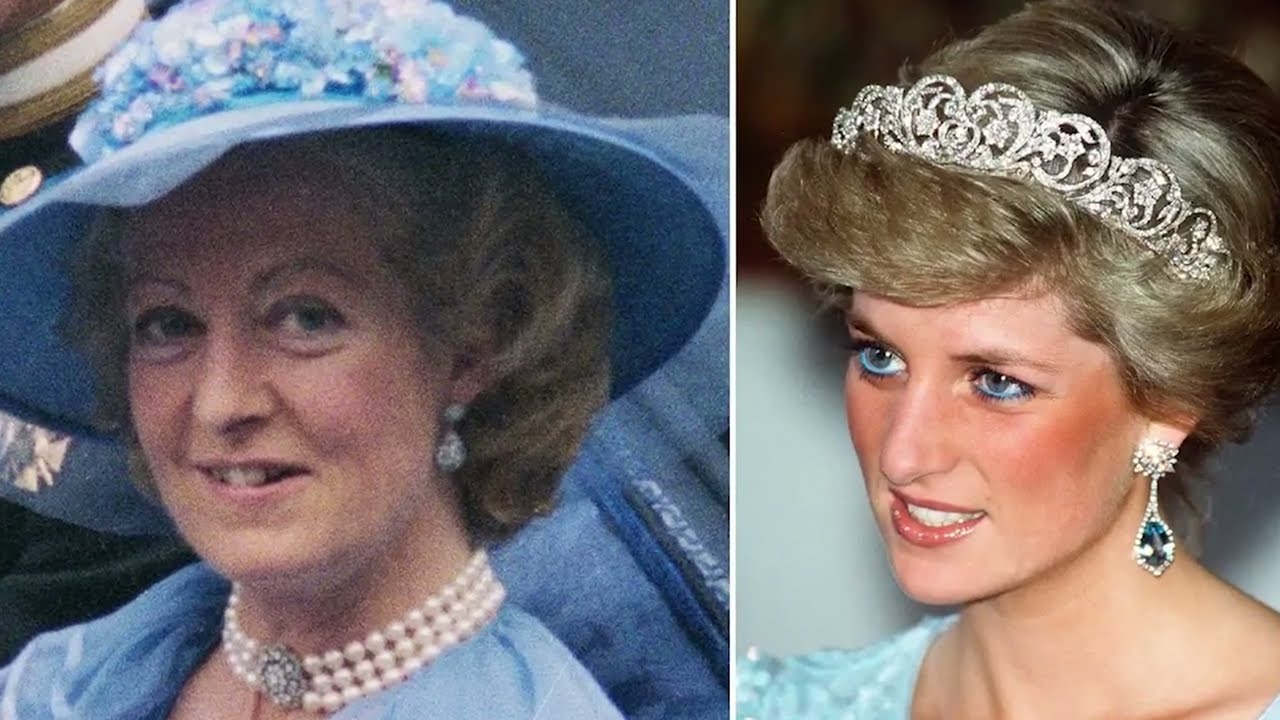
The scale of the mourning was so vast and so spontaneous that it caught the government, the media, and the royal family entirely off guard. For the Spencer family, the public grief was both a testament to Diana and a complication. The world was mourning a princess, a global icon, a symbol of compassion and vulnerability. The family was mourning a daughter, a sister, and a mother — a real woman whose life had been far more complicated than the icon the public was mourning.
The gap between the public Diana and the private Diana had always been the central tension of her life. And in death, that gap widened rather than closed. The world wanted a saint. The family knew a human being. The negotiation between those two versions of the same woman would define the weeks, months, and years that followed.
Charles Spencer's role in the funeral was the most publicly visible act of Spencer family agency in the entire saga. His eulogy, delivered from the pulpit of Westminster Abbey with a control that barely masked the fury beneath it, was a direct challenge to the institution that had, in his telling, failed Diana and was now attempting to manage the narrative of her death.
He spoke of her as "the most hunted person of the modern age." He described her warmth, her compassion, her gifts as a mother. And he made a pledge — a public, binding, unmistakable pledge — that the blood family would see to it that William and Harry were raised in a way that honored Diana's legacy of imagination, duty, and kindness.
The implication was clear. The Spencers, not the Windsors, understood Diana and would protect what she had stood for. The applause started outside the Abbey, among the crowds watching on the giant screens erected in Hyde Park and along the funeral route, and it traveled inward through the open doors and windows of the building, growing louder as it moved through the congregation until it filled the nave.
It was an extraordinary moment — applause in a church during a funeral, breaking every convention of Anglican decorum — and it was directed at Charles Spencer, who had said what the public felt: that Diana had been failed by the institution she had married into, and that her family would not fail her again.
Frances was in the congregation. She heard the applause. She heard her son's words. And she sat with the knowledge that the family solidarity Charles had proclaimed was, in her case, incomplete. She was Diana's mother. She had been Diana's mother since July 1, 1961. And the last four months of that motherhood had been silence.
The applause was not for her. The eulogy did not mention her by name. The public narrative of Diana's death had room for a grieving brother, grieving sons, a grieving nation. It had less room for a grieving mother whose relationship with the dead woman had ended unrepaired over a magazine interview.
In the weeks and months after the funeral, the Spencer family retreated to the painful private work of absorbing the loss. Charles oversaw the creation of Diana's memorial at Althorp — the island burial, the museum in the stable block, the public opening during summer months. The memorial was both tribute and brand management, a way of honoring Diana while maintaining the Spencer family's control over her memory and preventing it from being entirely subsumed by the royal narrative.
The island in the ornamental lake, accessible only by boat, surrounded by trees, was designed to be a place of peace and contemplation. In practice, it became a pilgrimage site, visited by thousands of people every summer, and its existence ensured that Althorp — the Spencer seat, the house that had been the family's anchor for five centuries — remained in the public consciousness as a place connected to Diana rather than merely a country house with good paintings.
Frances was not centrally involved in these decisions. The memorial was Charles's project, at Charles's estate. Frances's domain was Seil — the farmhouse at Ardencaple, the garden she tended, the mass she attended at the local Catholic church, the long walks along the coastal paths where the wind came off the Atlantic and the sky was gray more often than it was blue.
She had retreated into a life of seclusion that was both chosen and enforced. Chosen because she genuinely preferred the quiet of Seil to the noise of the world. Enforced because the world had made it clear, over and over, that her role in the public story was marginal. She was the mother. She was also the mother who had been estranged. And the public's appetite for the Spencer family story did not extend with any particular enthusiasm to the complicated, unglamorous figure of the mother who had been absent.
The conversion to Roman Catholicism was a significant and deliberate act of spiritual reinvention. Frances left the Church of England — the church of the Spencer family, of the Fermoy family, of the establishment world in which she had been raised — and entered the Roman Catholic communion, with its different rituals, its different understanding of confession and forgiveness, its different relationship to the English social order.
The conversion was not a rejection of her past in any simple sense, but it was a statement of distance from it. She was no longer the Honorable Frances Shand Kydd, Church of England, Park House, Sandringham. She was a Catholic woman on a Scottish island, answerable to a different spiritual authority and practicing a faith that the Spencer-Fermoy world would have regarded at best with polite incomprehension.
She devoted herself to Catholic charities — the Hosanna House and Children's Pilgrimage Trust, the Royal National Mission to Deep Sea Fishermen — and found in that work a purpose that her earlier life, with its emphasis on social position and family obligation, had never provided.
The drunk driving conviction in 1996 — she was banned from driving after being found over the limit — was treated by the tabloids as further evidence of decline. Frances denied she had a problem with alcohol, and the truth of the matter is not something the public record can definitively resolve. What the conviction does suggest is that the accumulated losses — the children, the marriages, the reputation, the daughter's death, the estrangement — had taken a toll that manifested in ways Frances may not have fully acknowledged to herself. The body keeps the score. The decades of loss had to go somewhere.
And then came October 2002, and the Paul Burrell trial at the Old Bailey. The trial was the latest episode in the long, strange afterlife of Diana's death — a legal proceeding in which the private possessions of the dead princess became the subject of public examination, and in which the people who had been closest to Diana were called to testify about the most intimate details of her life and her things.
Burrell, Diana's former butler, had been charged with stealing 310 items from Diana's estate, valued at an estimated £4.5 million. The prosecution's case rested on the claim that Burrell had taken the items for personal gain. Burrell's defense was that he had been safeguarding them on Diana's behalf. The trial was, in effect, a public audit of Diana's private life, and the witnesses who were called to testify were required to expose under oath the details of relationships that had been conducted behind closed doors.
Frances, at 66, made the journey from Seil to London. She traveled alone, or nearly so. She was no longer the young viscountess who had swept into society events on the arm of Viscount Althorp. She was an elderly woman with a walking stick and a terminal diagnosis. And the journey from the west coast of Scotland to the Old Bailey in central London was not a short one.
She was there because she had been called. She was there because the law demanded her testimony. And she was there because, five years after Diana's death, the wound of their estrangement was being opened again in the most public of settings.
Her testimony lasted nearly two hours. From the witness box, Frances confirmed what the tabloids had long suspected but what had never been stated with such plainness in a public forum. She and Diana had not spoken for the last four months of Diana's life. Diana had returned her letters unopened.
Frances rejected the suggestion put to her by the defense barrister, Lord Carlile QC, that the estrangement had been caused by a disagreement about Diana's private life and the company she was keeping. She did not offer an alternative explanation. She simply confirmed the fact of the breach. It was there. It was total. And it was still in place when Diana died.
She also addressed the characterization of Burrell as Diana's "rock," a phrase the butler had used to describe his relationship with the princess. Frances, with a directness that carried the weight of a mother's authority, told the court that the term was one Diana used regularly and with many people. "She called me her rock," Frances said. These terms were used to many people, including him, but not only him.
The correction was small but precise. It reclaimed something for the mother — the knowledge that she had been important to her daughter, that the terms of endearment had not been Diana's gift to the butler alone — while simultaneously challenging the narrative that Burrell had constructed around his relationship with the dead princess.
While Frances was in London giving this testimony, burglars broke into her home on Seil and stole her jewelry. The timing was cruel in a way that seemed almost designed to illustrate the thesis of her life: that loss followed loss, that even the act of confronting one form of suffering created the conditions for another. She returned to Seil to find her home violated, her possessions taken, her privacy breached yet again.
The Burrell trial itself collapsed a few days later. The Queen intervened with a recollection, communicated through her private secretary, that Burrell had told her he was holding Diana's items for safekeeping. The prosecution's case fell apart. Burrell was acquitted. The legal outcome was, in the end, irrelevant to Frances's story. What mattered was the testimony. What mattered was the elderly woman in the witness box confirming under oath what she had lived with for five years: her daughter had died without forgiving her.
Frances returned to Seil for the last time. The remaining years — there were fewer than two of them — were marked by the steady advance of the illnesses that would kill her. The Parkinson's disease that had been diagnosed some years earlier was progressing, and there were reports of brain cancer. The walks grew shorter. The world grew smaller. The garden that she had tended with such care became harder to manage.
The woman who had once danced at her own wedding in Westminster Abbey, who had survived a brutal divorce and a public scandal and a lifetime of being judged by the harshest possible standards, was dying on an island off the west coast of Scotland, far from Althorp, far from Park House, far from everything she had once been.
She was not alone. She had friends on the island, members of a church community, people who knew her as Frances rather than as the mother of Diana or the woman who bolted. She had her faith. She had the landscape she had chosen — the sea, the hills, the wind, the light that came through the windows of Ardencaple in the mornings. She had whatever peace she had managed to make with a life that had asked more of her than it had given back.
On June 3, 2004, Frances Shand Kydd died at home. She was 68 years old. The long illness was over. The longer story — of love and loss and duty and defiance and the terrible, irreversible consequences of leaving — was over too. The letters that had come back unopened were still somewhere, unread. The silence that had settled between mother and daughter in May 1997 was now permanent in a way that went beyond estrangement. It was the silence of death, which forgives nothing and heals nothing and simply is.
The relationship between Diana and Raine Spencer underwent an unexpected transformation during these years that is worth noting, because it illuminates something important about the Spencer family's capacity for revision and forgiveness — and, by contrast, the failure of that capacity in the relationship between Frances and Diana.
In the early 1990s, Diana began to soften toward Raine. The woman she had once pushed down the staircase. The woman she had called "Acid Raine." The woman who had represented everything Diana loathed about the replacement of her mother. Raine became, in Diana's later years, something approaching an ally. They lunched together. They spoke on the telephone. Diana found in Raine a practical, unsentimental wisdom about the management of difficult men and difficult institutions that she could not find in many other places.
The reconciliation was not complete, and it carried the scars of the years of hostility. But it was real. Diana was capable of revising her judgment of Raine. She was not, it seemed, capable of revising her judgment of Frances — not in time.
That asymmetry is one of the cruelest details in the story. The stepmother was forgiven. The mother was not. And the reason, if there was a single reason, lay in the depth of the original wound. The relationship with Raine had been hostile but relatively uncomplicated. Raine was an intruder. And when Diana no longer needed to defend her mother's absence by hating the woman who occupied her mother's place, the hostility could dissipate.
The relationship with Frances was different. It was the foundational relationship, the first attachment, and its rupture in 1967 had created a wound so deep that every subsequent interaction — every visit to Seil, every telephone call, every attempt at closeness — was shadowed by the original injury. Diana could forgive Raine because Raine had never been her mother. She could not forgive Frances because Frances was her mother. And the betrayal of a mother is experienced as an injury of a different order entirely.
The final months of 1997 were, for Diana, a period of apparent liberation and underlying fragility. She was free of the royal marriage. She was free of the HRH style. She was conducting a very public relationship with Dodi Fayed. She was cruising the Mediterranean on the Fayed family yacht, photographed in swimsuits and sundresses, smiling in the summer light.
The images suggested freedom, happiness, a woman who had finally broken loose from the constraints that had defined her adult life. Whether the reality matched the images — whether Diana was genuinely happy or merely performing happiness for a press corps that would not leave her alone — is a question that her death would make unanswerable.
Frances, watching from Seil, could not reach her daughter and could not stop watching. The estrangement was total. The letters were still coming back. And the mother who had once been Diana's "rock" — her word, used under oath in the Burrell trial — was now a stranger to the daughter who was living her final summer in the full glare of the world's attention, surrounded by people but profoundly, structurally alone.
The parallel with Frances's own life — the isolation, the invisibility, the performance of contentment masking private anguish — was so exact that it might have been scripted by the same hand that had written the first act of this family's tragedy.
Frances Shand Kydd died on June 3, 2004, at her home on the island of Seil. She was 68 years old. The cause was the long illness she had been fighting for years: Parkinson's disease, complicated by what was reported as brain cancer. By the end, she was no longer able to walk or speak with ease. The vibrant, restless woman who had once been the youngest bride at Westminster Abbey had been reduced by illness and time and the accumulated weight of a life lived under extraordinary pressure to someone who could barely manage the short distances between rooms.
Her funeral was held on June 10 at St. Columba's Cathedral in Oban, the Roman Catholic cathedral that served the community Frances had joined when she converted in the years after Diana's death. The choice of church was itself a quiet statement of distance from the world she had been born into. Not the Church of England. Not the great churches of the English establishment. But a Scottish Catholic cathedral in a west coast fishing town.
The congregation included her surviving children — Sarah, Jane, and Charles — and her grandchildren, including Princes William and Harry. William gave a reading. Harry was present. The two boys who had lost their mother in 1997 were now saying goodbye to their grandmother, the woman whose own maternal losses had shaped the family that shaped them.
Their father, Prince Charles, was not there. He was traveling to Washington to represent the royal family at the state funeral of the former American president Ronald Reagan, which was to take place the following day. The absence was logistical rather than hostile, but it carried its own symbolic weight. The heir to the throne was attending to duty elsewhere, while the woman whose family had once been so intimately connected to the Crown was buried without him.
Frances was buried at Pennyfuir Cemetery on the outskirts of Oban in Argyll and Bute. Not at Althorp, where Diana lay on her island in the ornamental lake. Not at Great Brington, where generations of Spencers rested in the churchyard beneath the gray Northamptonshire sky. Frances was buried in Scotland, in the community she had chosen, among the people who had known her not as a Spencer or a bolter or a royal mother-in-law but as a local woman who attended mass and walked her dogs and kept a beautiful garden.
The burial was simple and Catholic and final, and it marked the end of a life that had begun in one of the most privileged households in England and ended in one of the most remote corners of the British Isles.
The surviving Spencer siblings moved forward in the ways that people do when the last parent dies — with grief, with relief, with the complicated accounting of what was owed and what was given and what remains unpaid. Sarah McCorquodale continued the quiet, private life she had maintained since her marriage in 1980. She and her husband Neil lived in Lincolnshire, away from public attention, appearing at family occasions connected to Diana's memory but otherwise keeping her own counsel with the thoroughness of a woman who had decided decades earlier that privacy was not merely a preference but a survival requirement.
Jane Fellowes, whose husband Robert had retired from his position as the Queen's private secretary, maintained a similar discretion. She was created Baroness Fellowes of Shotesham in 2022, a life peerage that placed her in the House of Lords and acknowledged, in the quiet, coded way of the British honors system, both her public service and her family's enduring connection to the establishment that had been both home and adversary.
Charles Spencer remained at Althorp. He was, by the time of his mother's death, the ninth Earl Spencer, the custodian of the estate, the public keeper of the Spencer name, and a figure whose own life had become increasingly public through his writing, his journalism, his marriages and divorces, and his willingness to speak about the family's past with a candor that earlier generations of Spencers would have found incomprehensible.
His memoir, "A Very Private School," published in 2024, described the trauma of his childhood at Maidwell Hall boarding school — the physical and sexual abuse he alleged, the culture of cruelty, the devastating loneliness of an 8-year-old boy sent away from a household that was itself a place of emotional damage. The book was a bestseller and was widely praised for its honesty. It also functioned as a kind of indirect reckoning with the Spencer family story — an acknowledgment that the damage done to the children of the 1960s divorce had not been confined to the divorce itself but had been compounded by every institution, every boarding school, every social expectation that treated emotional need as weakness and silence as strength.
Charles also continued to open Althorp to the public during the summer months, and the estate's presentation emphasized both the family's 500-year history and Diana's memorial. Visitors walked through the galleries where the Van Dycks and Gainsboroughs still hung, through the rooms where generations of Spencers had lived and quarreled and died, and then made their way to the lake and the island where Diana was buried. It was a strange, circular journey from the dynasty's grand public face to its most famous private loss, with the gift shop at the end. Whether the arrangement honored Diana or commodified her depended on the visitor's disposition. What it undeniably did was keep the Spencer name in the public consciousness, which is what great houses have always been designed to do.
The cultural afterlife of the Spencer-Fermoy story has been substantial, though it has rarely centered Frances herself. "The Crown," Netflix's sprawling dramatization of the reign of Elizabeth II, brought the Spencer family into popular circulation with considerable force. The fourth season, broadcast in 2020, introduced Diana as a character and depicted the courtship and early royal marriage. Lady Fermoy appeared as a supporting figure — a stiff, formidable presence whose loyalty to the Queen Mother was rendered with the kind of shorthand the television drama requires.
The series necessarily compressed and simplified the wider family dynamics, but it captured the essential emotional architecture: a young woman entering a world she was not equipped for, shaped by a family that had already been damaged by the same codes of duty and silence that the palace would later impose upon her.
What "The Crown" did not explore — what it had neither the time nor the structural space to explore — was Frances's own story as a tragedy bearing a protagonist rather than a background figure. The film "Spencer," released in 2021 and starring Kristen Stewart as Diana, went further into the psychological territory of the Spencer family's dysfunction, focusing on a single Christmas weekend at Sandringham in 1991 and rendering Diana's crisis as a kind of Gothic entrapment.
The film was not about Frances directly, but it drew its power from the same well: the sense that the Spencer women were caught between the demands of institutions and the needs of their own hearts, and that the institutions always won. The ghost of Anne Boleyn, which appeared in the film as a kind of spiritual companion to Diana, was a metaphor for the fate of women who challenged the royal order. But it could just as easily have been a metaphor for Frances, whose challenge to the Spencer order had been punished with equal finality, if less violence.
Maxine Riddington's 2001 biography, "Frances: The Remarkable Story of Princess Diana's Mother," remains the only book-length treatment of Frances as a subject in her own right rather than as a supporting character in Diana's story. The book's existence is itself a comment on the dynamics of public memory. The mother's story was published four years after the daughter's death — as if Frances only became interesting, only became visible, once the more famous narrative was complete and people began looking for the roots of what had happened.
What remains now, more than two decades after Frances's death, is not reconciliation. It is structure. Althorp remains. The Spencer name continues. The earldom passes, as it has passed for centuries, through the male line. Diana's global symbolic power remains immense — her face on magazine covers, her story retold in film and television and biography, her memory invoked whenever the conversation turns to the cost of fame or the cruelty of institutions or the gap between how the powerful appear and how they actually live.
William and Harry, Frances's grandsons, have become public figures in their own right, their own lives shaped by the same forces that shaped their mothers and their grandmothers: the weight of expectation, the hunger of the press, the impossibility of being both a private person and a public symbol.
Frances herself survives in fragments. Wedding photographs from 1954. Courtroom testimony from 2002. The occasional biographical aside in books about Diana. A few lines in the obituaries. The farmhouse on Seil, which still stands. The cemetery at Pennyfuir, where her grave lies far from Althorp, far from Park House, far from Westminster Abbey, far from everything she once was and everything she lost.
In the public memory, she remains both central and strangely secondary — the mother whose story explains so much and yet who is always introduced through her daughter rather than in her own right. Even now, she is Frances Shand Kydd, mother of Diana. Not Frances Shand Kydd, a woman who lived.
Lady Fermoy died in July 1993 at her home in Eaton Square, Belgravia. She was 84. She is not recorded as having expressed regret about testifying against her daughter. The Queen Mother, her closest confidant, lived until 2002, dying at the age of 101. Raine Spencer survived Johnny by many years, remarried twice — first to a French count, then to a former Cambodian ambassador — and died in 2016 at the age of 87. In the years before her death, she and Diana had reached a partial reconciliation, a softening that began in the 1990s when Diana, older and more experienced in the ways that families wound each other, began to see Raine not as the enemy but as another woman who had been doing her best inside an impossible arrangement. The reconciliation was not complete. But it was more than Frances ever got.
Peter Shand Kydd, the man for whom Frances had left Johnny, the man whose arrival had detonated the first family order, died in 2006, two years after Frances. He had remarried the French woman Marie-Pierre and lived quietly. His death received minimal press attention. He had been a catalyst, not a protagonist, and the story had moved on without him long ago.
Johnny Spencer's grave is in the churchyard at Great Brington, beside the other Spencer earls. Diana lies on her island at Althorp. Frances lies in Pennyfuir. The family that began together at Park House, in the ordered, beautiful, constrained world of the Sandringham estate, is scattered in death across three countries and two faiths. Their resting places are as disparate as the lives they lived.
The strongest pattern in this story is the one that nobody planned and nobody escaped. Women punished for stepping outside the assigned role. Frances for leaving. Diana for refusing to remain inside the royal marital script. Even Raine, in her way, for occupying a place in the children's emotional order that was not hers to occupy.
Another pattern running alongside the first is maternal fracture passing downward. Frances loses custody. Diana grows up defined by that loss. Adult Diana then dies estranged from Frances. The damage was not inherited like a title. It was inherited like a wound — invisible, cumulative, and never treated in time.
This family story is not really about whether Frances was a bad mother or Diana an unforgiving daughter. It is not about whether Lady Fermoy was right to testify or Johnny right to fight for custody or Raine right to stand her ground. It is about what happens when inheritance passes down not only houses, titles, land, and names, but silence, role-playing, and injuries nobody is allowed to name in time.
The Spencer world endured. Althorp endured. The public image endured. What did not endure, at least not intact, was the ordinary private bond between a mother and a daughter — a bond that required only honesty and time and a willingness to sit with discomfort, and that was denied all three by a family system that valued permanence above everything and paid for it with the people inside.
There is no neat moral. There is only the small, unbearable fact of the letters that came back unopened, and the silence that followed, and the years that did not come.
The Seil community's memory of Frances remains warm and specific. She was known for her love of gardening — the grounds of Ardencaple were maintained with a care that spoke of someone who found in the physical work of tending plants a peace that the human world had not provided. She was known for her long walks along the island's coastal paths, walking sticks in hand even before the Parkinson's made them necessary, a familiar figure against the gray-green landscape of the west coast.
She was known for her attendance at mass, her participation in local events, and her willingness to be, on Seil, simply a neighbor rather than a figure from a national drama. The islanders respected her privacy and valued her presence. And in that small, windswept community, Frances found something that the Spencer world, the Fermoy world, and the royal-adjacent world had never offered her: acceptance without conditions.
Peter Shand Kydd died in 2006, two years after Frances. He had remarried and lived quietly in the years after his divorce from Frances. His death received minimal press attention. The wallpaper fortune, the Australian connection, the dinner party in 1966 — these were details from a previous chapter, and the world had no further use for them.
Raine Spencer survived Johnny by many years. She remarried twice after his death — first to Jean-François Pineton de Chambrun, a French count, and then to Suleiman Raschid Kishin, a former Cambodian ambassador to the Court of St. James's. She died in 2016 at the age of 87. In the years before her death, the relationship between Raine and the Spencer children had evolved in ways that would have been unimaginable during the "Acid Raine" era. The hostility had faded, replaced by something more nuanced — not warmth exactly, but a recognition that Raine had been doing her best inside an impossible arrangement, and that the fury the children had directed at her had always been about someone else.
Lady Fermoy, who had set so much in motion with her testimony in the custody case, who had believed so completely in the social order she served, who had chosen that order over her own daughter — Lady Fermoy died in July 1993 at her home in Eaton Square, aged 84. The Queen Mother, her closest friend and the woman to whom she had devoted her adult life, died in March 2002 at the age of 101.
The world they had inhabited together — the world of ladies-in-waiting and the Court Circular, of King's Lynn festivals and careful hierarchies — had already been receding into history when they died, and their deaths accelerated the recession. The code they had lived by still existed in fragments, in the social habits of certain families, in the institutional memory of the palace, in the unspoken rules that govern life in the great houses. But its power to compel obedience, to override maternal love, to dictate the terms on which women live their lives, was diminished.
Frances had been one of the first women in her world to defy that code. She had paid for the defiance with everything she had. And the world she defied had outlasted her, as it always does.