In 1973, a 29-year-old Black man from North Carolina vanished with $20 million in cash, leaving behind a wife, three sons, a Staten Island mansion, and a drug empire spanning 21 states. The FBI offered a $20,000 reward for his capture, the highest since John Dillinger. More than five decades later, the bounty remains uncollected, with no arrest, no confirmed sighting, and no informant coming forward. His name was Frank Matthews, known as “Black Caesar.
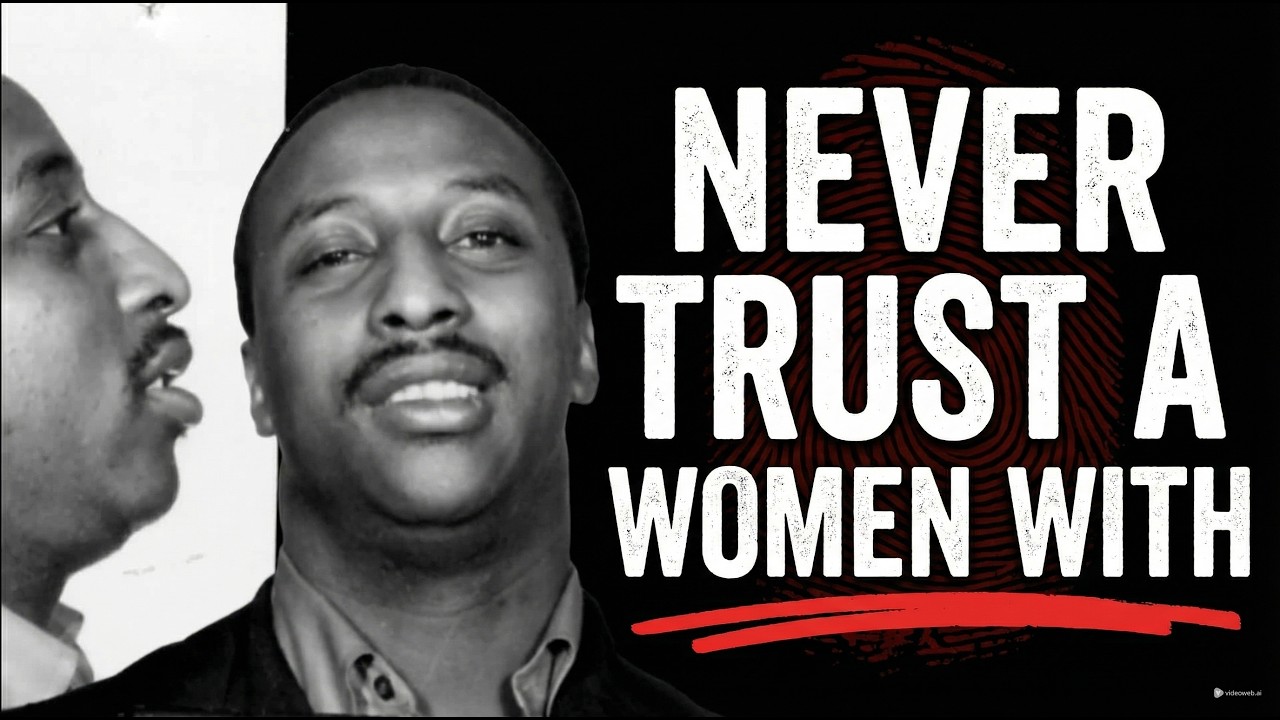
” He remains the only major kingpin in American history who disappeared and was never found. Matthews entered the drug trade at 21 and built his operation through a strict set of principles that kept him alive and eventually allowed him to vanish without a trace. Matthews kept his inner circle extremely small. Even though he operated across 21 states and supplied dealers from Boston to Alabama, only a handful of people understood the full scope of his operation.
Each lieutenant knew only his own territory and numbers, and a dealer in Baltimore had no idea what was happening in Ohio. This compartmentalization meant that even after his disappearance, no one in his organization could give authorities useful information. He also understood the value of separating public image from true importance. Matthews lived lavishly, with a mansion, luxury cars, mink coats, and frequent trips to Las Vegas.
But that visible wealth was a decoy. The real money, $20 million in cash, was hidden in locations unknown to the government. When the IRS claimed he owed back taxes on $100 million earned in a single year, he did not panic, knowing they could only seize what they could find. For years, federal law enforcement did not even know Matthews existed.
He was only discovered because a neighbor, a New York City police detective, noticed expensive cars coming and going from his Brooklyn home and began writing down license plates. Even after being discovered, Matthews did not panic or flee. He continued operating calmly while quietly preparing for the day he would need to disappear. When that day came, no one saw him leave.
Matthews was there one day and gone the next, with no goodbye, no announcement, and no trail. Matthews paid his people well, understanding that loyalty is cheaper than betrayal. He paid couriers, including airline stewardesses, $1,000 per delivery to smuggle packages in their flight bags. His dealers made more money working with him than with anyone else, and his lieutenants were trusted and rewarded.
He knew that a person who feels cheated is a person who calls the police, and every betrayal starts with resentment. His reputation was built on results rather than words. When the Philadelphia Black Mafia challenged his operation, the consequences were severe. On Easter Sunday 1972, a gunfight erupted at a nightclub in Atlantic City, killing five people and injuring 26.
Nearly 800 people were in the building, yet not a single one came forward as a witness. That silence was not just fear; it was respect built over years of consistency, keeping his word, and delivering quality product. Matthews ran his empire like a corporation. He franchised his operation the way a fast food chain franchises restaurants, with point men identifying local dealers who had the territory and skill to move product.
His product was so pure that dealers could cut it multiple times and it would still sell. Payments were strict and on time, with clear terms agreed upon before anyone entered an arrangement. He also built alliances from strength, never from need. In 1971, he organized a summit in Atlanta, inviting major Black and Hispanic dealers from across the country to discuss breaking the Italian Mafia’s monopoly on importation.
A year later, he held another summit at the Sands Hotel in Las Vegas during the Muhammad Ali versus Jerry Quarry fight. But Matthews never needed anyone in that room; he had the supply they wanted, and the alliance was an advantage, not a lifeline. When the Gambino and Banano families rejected him, Matthews did not beg. He walked away, found his own supplier, built his own pipeline, and created his own distribution network.
He then bought a mansion directly across the street from the head of the Gambino family, turning rejection into an empire. Matthews also knew when to walk away from the table. At 29, he was making the equivalent of $77 million a year. When he was indicted in 1973, his bail was set at $5 million, the highest in American history at the time, before being reduced to $325,000.
On July 2, 1973, he was supposed to appear in a Brooklyn courthouse, facing 50 years in prison. He never showed up. He took the $20 million, took Cheryl Denise Brown, the one person he trusted enough to disappear with, and left behind his wife, his sons, the mansion, and the empire. More than 50 years later, no one has given him up.
Not his wife, not his lieutenants who were arrested and pressured by federal agencies, not the dealers who attended his summits, not the stewardesses who carried his packages, and not Cheryl Brown. In a world where loyalty often lasts only as long as it is convenient, no one broke the code that Matthews built. That silence, lasting half a century, is his real legacy. A seventh-grade dropout from Durham, North Carolina, rejected by the mafia at 21, built an empire bigger than theirs by 25, and at 29, he picked up his money, took the one person he trusted, and disappeared forever.
No arrest, no trial, no prison, no snitch, no body, and no grave.