Every morning at Versailles, the most powerful man in Europe woke to a room full of the proudest men in France, all competing for the honor of handing him his shirt. The palace of Louis XIV was built as more than a home. It was a machine for controlling the nobility. Before he became the Sun King, Louis was a scared child driven out of Paris twice by revolts of the great families.
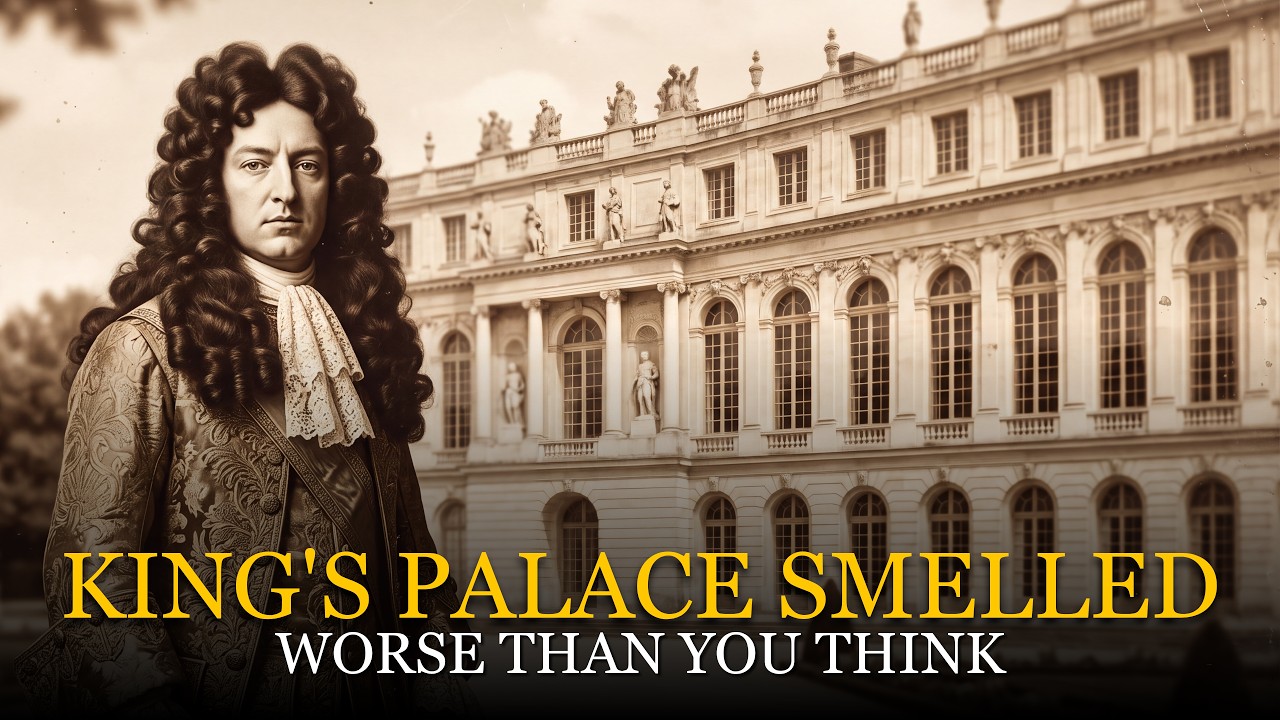
He never forgot what a mob could do. When he took power, he decided to gather those dangerous nobles into one place, keep them busy competing for his favor, and drain their independent wealth until they could never threaten his throne again. He chose his father’s hunting lodge on a marshy patch of ground southwest of Paris and turned it into the largest and most famous house in Europe. Over decades of building, it grew to roughly 2,300 rooms, with fountains, gardens, and the famous Hall of Mirrors containing over 350 separate mirrors.
In 1682, he moved the court and the government of France there. The palace became a crowded city under one roof. As many as 10,000 people lived there at once. A lodging at court was one of the most prized possessions in the kingdom, and families schemed for years to win even a freezing attic room in the palace.
To be absent from court was to be forgotten, and to be forgotten was to lose everything. The king’s day was a public performance from dawn to midnight. Courtiers were admitted to his rising in waves, each rank entering through the door at a specific time. The greatest honor was handing the king his clean shirt.
The first servant of the chamber, who slept on a cot at the foot of the royal bed, controlled access to the king and became one of the most powerful men in France. Etiquette ruled everything. Only the king and queen could sit in an armchair. A padded backless stool, granted to duchesses, was a fiercely fought privilege.
Courtiers scratched at doors with a long fingernail instead of knocking. The king granted the right to wear red heels to a chosen few. To break any of these rules marked a person as an outsider. Below the glittering court, thousands of unnamed servants kept the machine running.
They carried water up endless stairs, hauled firewood, lit candles by the thousands, and washed mountains of linen. The food carried from distant kitchens often arrived at the king’s table lukewarm. The laundry alone was an industry. The servants themselves left almost no trace in the record.
The palace had a problem it could never solve. With no real plumbing, only a hundred or two of its residents had easy access to a proper latrine. Close stools were emptied into corridors, stairwells, and gardens. The king’s sister-in-law wrote that the air of the court in the morning carried the unmistakable smell of emptied chamber pots.
The doctors of the age believed that bathing opened the pores and let disease into the body. So the court kept clean by changing linen shirts several times a day instead of washing. Perfume filled the halls to cover the smell of unwashed bodies and overflowing drains. The palace was also nearly impossible to heat.
Its high ceilings and tall windows let the warmth escape. In the great frost around 1709, the coldest winter Europe had known in 500 years, wine froze solid in bottles stored beside the fires. The king’s sister-in-law wrote that she shivered by a roaring fire, wrapped and bundled, never once having seen a winter like it. The cold killed hundreds of thousands across Europe.
The palace was expensive on purpose. The king ordered everyone to dress in the height of fashion, and the gambling tables could drain a family fortune in a single night. Great offices of the court were bought and inherited at staggering prices, and their real return was nearness to the throne. The building of Versailles cost on the order of 25 million livres, but the wars the king fought were far more ruinous, with single years of war running deficits of around 170 million livres.
The palace was also strangely open. State rooms were semi-public, and crowds of strangers drifted through the corridors. Thieves worked the press of bodies, lifting purses and jewels. Nothing a person owned was entirely safe.
For a hundred years, the trap worked. No great noble raised an army against the king. But the court grew so absorbed in its own rituals that it stopped looking outward at the country beyond the gates. A nobleman who retired to his estates was said to be met with the cold remark by the king that he did not know him.
The end came on October 6, 1789. Thousands of Parisians, many of them women from the city’s markets, marched 12 miles to Versailles, driven by the soaring price of bread. They forced their way into the palace, overwhelmed the guards, and took the royal family back to Paris. The court dispersed in a single day, and the ancient ceremony never ran again.
Versailles was nearly torn down, but it was saved by being turned into a museum of the nation’s glories. The Hall of Mirrors later hosted the proclamation of the German Empire in 1871 and the signing of the Treaty of Versailles in 1919. Today it draws millions of visitors every year. On his deathbed, after 72 years on the throne, Louis XIV warned his five-year-old successor not to imitate him.
He said he had loved war too much, and urged the child to be a peaceful prince who cared for his people. The palace he built to make his throne forever safe became the symbol of the excess that tore that throne down. The magnificence and the misery were never separate things; they were built from the same stone.