Joe Masseria, one of the most feared mobsters in New York City during the early 20th century, rose to the top of the American Mafia through violence and brutality before his reign ended at the hands of his own trusted lieutenant, Charles “Lucky” Luciano. His murder paved the way for Salvatore Maranzano to briefly become the first official “boss of bosses” of the American Mafia. Masseria was born on January 17, 1886, in Menfi, in the province of Agrigento, Sicily, into a tailoring family. He later moved to Marsala in the province of Trapani while still young.
In 1902, he arrived in the United States, where he eventually joined the Morello crime family, based in Harlem and parts of Little Italy in lower Manhattan. His criminal record began early. He was convicted of burglary and given probation in 1909, then sentenced to four to six years in prison for third-degree burglary on May 23, 1913. Around the same period, Giuseppe Morello was imprisoned in 1910, and Salvatore D’Aquila, an early captain in the family, broke away to establish his own crime family based in East Harlem and the Bronx.
By the end of the 1910s, Masseria and D’Aquila were competing for power, and they were at war by the early 1920s. Masseria hired Lucky Luciano as one of his gunmen during this conflict. D’Aquila, in turn, employed gunman Umberto Valenti, who was directed to kill Masseria. On May 7, 1922, Vincenzo Terranova, boss of the Morello-Terranova crime family, was killed in a drive-by shooting.
Hours later, Valenti’s men fatally shot Terranova’s underboss, Silva Tagliagamba, in lower Manhattan. The next day, Valenti and his men attacked Masseria near police headquarters on Grand Street. Masseria escaped, though the gunmen shot four men and two women in the chaos. Masseria threw away his pistol and was apprehended while fleeing the scene.
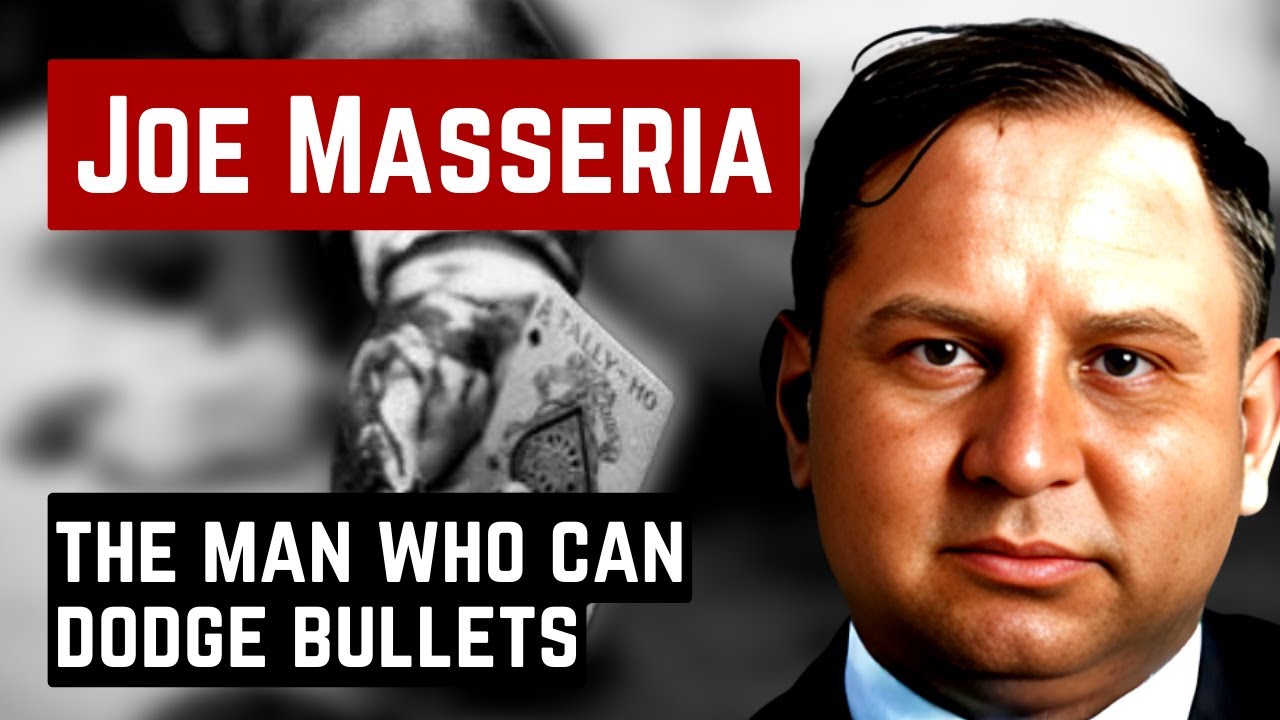
On August 9, 1922, Masseria walked out of his apartment at 82 Second Avenue and was rushed by two armed men who opened fire. He ducked into a nearby store as they shot through the front window. The gunmen fled across Second Avenue to a getaway car, but they plowed through a crowd and fired randomly, injuring six people. Masseria survived, and police found him upstairs in his bedroom, shell-shocked, dazed, and still wearing a straw hat with two bullet holes in it.
The incident earned him a new reputation among gangsters as “the man who can dodge bullets,” and his stature grew as D’Aquila’s declined. On August 11, 1922, Valenti attended a meeting at a cafe on the corner of Second Avenue and East 12th Street, where he was murdered as he tried to flee. With D’Aquila losing his aura of invincibility, Morello sensed his own time had passed and became a consigliere to Masseria, prospering under him throughout Prohibition in the 1920s. D’Aquila was murdered by gunmen on October 10, 1928, while standing next to his car.
Manfredi Mineo, who had recently aligned himself with Masseria, almost certainly played a direct role in planning the killing of his own boss. Mineo’s position at the top of the D’Aquila family was cemented after he declared his allegiance to Masseria, demonstrating his loyalty by betraying his former leader. Nicolo Schiro, a Sicilian-born mobster who became the boss of what later became the Bonanno crime family in 1912, had been allied with the Morello family in the war against D’Aquila. Schiro tried to remain neutral in the growing conflict with Masseria, but was strongly opposed by Salvatore Maranzano and Buffalo boss Stefano Magaddino.
Schiro provoked Masseria’s anger after warning San Francisco boss Frank Lanza about a mafia plot to kidnap him. Vito Bonventre, a leading member of the Bonanno family, was assassinated at his home on July 15, 1930. Bonventre had become a target as members of Schiro’s gang began threatening Masseria’s domination over mafia gangs. Masseria claimed Schiro had violated the rules and demanded he pay $10,000 and step down as leader of his crime family.
Schiro agreed. This led to Maranzano being promoted to boss, which soon resulted in a conflict with Masseria and his allies. The war, known as the Castellammarese War, lasted from 1930 to 1931. During the war, Masseria and Morello fought against a rival group led by Maranzano and Joseph Bonanno in Brooklyn.
Morello, a seasoned killer, was appointed as Masseria’s war chief and strategic advisor. Morello became one of the war’s first victims, killed on August 15, 1930, while collecting cash receipts in his East Harlem office with associate Joseph Perriano. Joe Valachi, the first made man in the American Mafia to turn state’s evidence, identified Morello’s killer as a Castellammarese gunman he knew only as “Buster from Chicago. ” Some claim Buster was gangster Sebastiano Domingo, while Bill Bonanno, son of Joseph Bonanno, has said the man participated in the war.
Others have charged that Buster was a character created by Valachi to evade responsibility for various killings. Mineo was named Masseria’s new war chief and strategist after Morello was killed. As the war continued, Mineo realized the Castellammarese were gaining support and ground. He believed the only way to end the war and re-establish control was to find and kill Maranzano before Maranzano could kill Masseria.
Mineo and his lieutenant Steve Ferrigno were murdered on November 5, 1930, in the courtyard of an apartment building on Pelham Parkway in the Bronx. Maranzano’s men had seen Masseria entering the building earlier in the week, so they rented a first-floor apartment there. When they saw Mineo and Ferrigno in the garden, they took advantage of the situation and shot both men from the apartment window. As the war turned against Masseria, Lucky Luciano secretly approached Maranzano about switching sides.
In a secret deal, Luciano agreed to engineer the death of his boss, Masseria, in exchange for receiving Masseria’s rackets and becoming Maranzano’s second-in-command. By 1930, Joe Adonis had joined the Masseria faction. When Masseria learned of Luciano’s betrayal, he approached Adonis about killing him. Adonis, however, forewarned Luciano about the murder plot.
On April 15, 1931, Luciano lured Masseria to a meeting at the Nuova Villa Tammaro restaurant on Coney Island. While they were playing cards, Luciano allegedly excused himself to use the restroom. The gunmen were reportedly Albert Anastasia, Vito Genovese, Joe Adonis, and Benjamin “Bugsy” Siegel. Ciro “the Artichoke King” Terranova drove the getaway car, but legend has it that he was too shaken to drive away and had to be pushed out of the driver’s seat by Siegel.
Masseria was allegedly seated at a table playing cards with two or three unknown men when he was shot from behind. He died from gunshot wounds to the head, back, and chest, according to the autopsy report. No one was convicted in his murder, as there were no witnesses, and Luciano had an alibi. Police brought Luciano in for questioning but also suspected a gangster named John “Silk Stockings” Giustra of being one of the gunmen, based on a confidential informant’s report and the identification of a coat found at the murder scene as belonging to him.
After Giustra was murdered on July 9, 1931, the case was dropped. Masseria’s death marked the end of the Castellammarese War and cleared the way for Maranzano to declare himself the first boss of bosses of the American Mafia, a position he would hold only briefly before being killed himself later that year.