Jesse James was one of the most relentlessly pursued outlaws in American history. Born in Missouri, he formed a close partnership with his brother, and together they created the infamous James-Younger Gang. The duo were staunch Confederate bushwhackers and were accused of committing violent acts against Union soldiers during the war, including a series of audacious robberies. James was not only an outlaw but also a guerrilla fighter, a mastermind behind bank and train robberies, a gang leader, and a murderer.
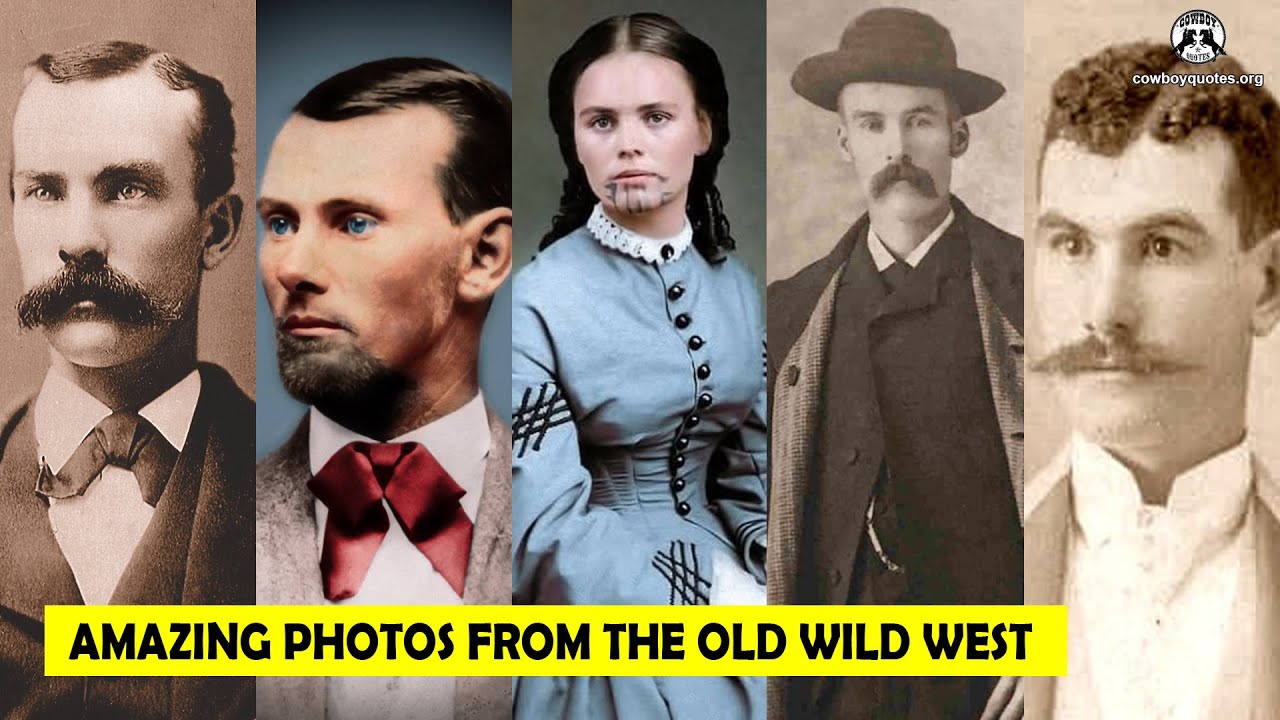
A rare photograph shows Olive Oatman, whose harrowing story began in 1851 when her family, originally from Illinois, was attacked. At just 14 years old, Olive and her sister were captured by the Tolkapaya tribe from present-day Arizona, and were later sold to the Mojave people. Olive’s sister tragically died from starvation after several years with the Mojave. Olive eventually returned to American society after spending five years in captivity.
The striking tattoos on her face, applied by the Mojave, became a focal point of media coverage long after her release. Her story was dramatically retold in speeches, novels, plays, movies, and poetry. Photographs also captured the Apache Spirit Dancers, who came from various Native American tribes in the southwestern United States. These tribes had to adapt to harsh conditions and relied on the land for sustenance.
The dancers believed their rituals could summon protective spirits from the underground realm, serving as guardians for the Apache people. One of the most celebrated spectacles of the era was Buffalo Bill’s Wild West Show. William Frederick “Buffalo Bill” Cody, a scout and bison hunter, played a central role in these traveling exhibitions that romanticized frontier life. The shows featured thrilling reenactments, including the dramatic incident of War Bonnet Creek, and operated like a dynamic circus designed to entertain everyone.
Rose Dunn, also known as Rose of the Cimarron, became a legend at just 15 years old when she became romantically involved with outlaw George “Bitter Creek” Newcomb. Her beauty and calm demeanor endeared her to the gang. When Newcomb’s gang clashed with U. S.
marshals in a deadly shootout, they were forced into hiding. According to legend, Newcomb and another gang member later returned to visit Dunn, a decision that proved fatal. Dunn’s own brothers confronted and shot the outlaws on the spot, then claimed the $5,000 bounty offered for Newcomb, dead or alive. Some stories suggest Dunn may have helped set up his return, but the full truth remains uncertain.
Fanny Porter stood out among brothel owners in the Old West. A former street walker herself, she earned deep respect from criminals for her warmth, sincerity, and strict discretion. She never betrayed her customers, which earned her unwavering loyalty. The Wild Bunch gang, including Butch Cassidy, Kid Curry, and the Sundance Kid, were among her frequent visitors.
She also introduced other women, such as Laura Bullion, to the dangerous world of outlaws. The first saloon in the Old West traces its roots to Wyoming in 1822. The phenomenon spread rapidly across the frontier, and by 1880, saloons were among the most popular establishments in the West. They were more than just bars, offering gambling, accommodations, and sometimes even opium dens.
Bartenders were revered figures who took pride in their establishments and their ability to serve discerning clientele. Charging Thunder, a Lakota chief, joined Buffalo Bill’s Wild West Show at age 26. During his time with the show, he married an American horse trainer, forming a connection that crossed cultural boundaries. After the show, he became a British citizen and worked as an elephant trainer at Manchester’s Belle Vue Circus.
Eventually, he grew tired of circus life, became a factory worker, and adopted the name George Edward Williams. A Native American man named Mman, a member of the Mojave community, worked as a guide and interpreter for photographer Timothy O’Sullivan in Colorado during the 1870s. O’Sullivan was known for photographing Native Americans in natural environments rather than studio settings. He also captured striking nature scenes and documented Civil War battlefields.
One of O’Sullivan’s photographs, “Aboriginal Life among the Navajo Indians near Old Fort Defiance, New Mexico,” dates to 1873. The image shows corn crops and traditional looms used to create distinctive blankets. The Navajo were considered one of the wealthiest indigenous tribes in the United States. Doc Holliday was known as a gunfighter, but he was also a dentist and gambler.
He became a dentist at age 20, but his life took a drastic turn when he was diagnosed with tuberculosis. He relocated to Arizona and turned to gambling, eventually gaining a deadly reputation as a gunman. He carried that reputation until the end of his days. Timothy O’Sullivan was born on Staten Island, New York, and began his photography career during the Civil War.
In 1871, he joined a geological survey team, traveling extensively across the United States to document landscapes and cultures. His photographs authentically captured the rugged beauty and spirit of the American frontier. The Pagosa Hot Springs in Colorado have remained a lasting attraction. In the past, these springs played an important role in personal hygiene and well-being, as people believed in the healing properties of the natural minerals in the waters.
Photographer John C. H. Grabill captured images primarily in the Dakota Territory while also operating a studio in Chicago. One of his famous photographs shows the Deadwood Coach, a renowned stagecoach featured by Buffalo Bill in shows across America and Europe.
Another Grabill photograph shows the rugged frontier life of Sturgis, South Dakota, preserved in the Library of Congress. The Dakota Territory was home to prospectors, cowboys, hunters, and teams of oxen. The rodeo was not just for cowboys. Brave women, known as rodeo cowgirls or rodeo queens, joined in the action.
Famous cowgirls of the era included Calamity Jane, Dale Evans, and Annie Oakley. Bill Doolin was a notable outlaw and leader of the Wild Bunch gang. Born in Arkansas in 1858, he engaged in numerous bank and train robberies across Oklahoma. His life of crime ended on August 25, 1896, in a dramatic shootout with U.
S. deputy marshals in Lawson, Oklahoma. A photograph captures the Utah Big Cottonwood Power Station near Salt Lake City, showing the Pelton Wheel in action. The surrounding canyon remains a paradise for nature enthusiasts, offering fishing and unspoiled natural beauty.
Johnny Ringo, along with his gang known as the Cochise County Boys, was considered one of the most notorious outlaws of the Old West. Their involvement in a famous shootout with Wyatt Earp and Doc Holliday cemented their fearsome reputation in Tombstone, Arizona. A photograph showing the village of Brule near Pine Ridge, South Dakota, from 1891, depicts an impressive Indian camp dotted with teepees. Railroads also played a major role in the Old West, but construction relied on the tireless efforts of workers.
Due to labor disputes and financial challenges, many companies failed to provide suitable accommodations for Chinese workers, leading to excessive workloads and harsh conditions. Fortune-telling was a popular pastime in the Old West, commonly associated with Gypsies or Romani people. Methods included tarot card reading, palm reading, and crystal ball gazing, many of which are still practiced today. Prostitution was prevalent in the Old West despite being mostly illegal.
Brothels operated openly, and some respected madams contributed a significant portion of their earnings to the community. Given the solitary and harsh conditions in the gold mines, these establishments provided companionship and comfort to many. These photographs offer a rare glimpse into a bygone era filled with rugged landscapes, daring outlaws, and resilient pioneers.