Major General John S. Wood was a paradox. In private, he was quiet, thoughtful, and almost scholarly. His subordinates called him "Professor" or "P Wood." He read military history, studied tactics, and believed in the science of armored warfare.
On the battlefield, he became something else entirely. His men called him "Tiger Jack." He was aggressive, fearless, and relentlessly demanding. He commanded from the front, often flying ahead of his columns in a light Piper Cub observation aircraft and landing near advancing tanks to deliver orders in person.
Wood was not a West Point socialite. He graduated in 1912, served in World War I, and spent the interwar years studying the new art of armored warfare. In May 1942, he assumed command of the 4th Armored Division.
He trained his men relentlessly in rapid movement, decentralized command, and aggressive tactics. He believed tanks were weapons of speed — that they should never stop, never dig in, and never slow down.
By July 1944, Wood's division was ready. They had trained for two years and practiced every maneuver, every logistical challenge, every possible combat scenario. Wood had built one of the most lethal fighting machines in the American army.
The 4th Armored Division landed at Utah Beach on July 11, 1944. They entered combat near Périers on July 17. It was brutal close-quarters fighting in the Norman bocage, the dense hedgerows that had turned the campaign into a grinding infantry war.
Wood's tanks could not move freely. They were channeled into narrow roads and ambushed by German anti-tank weapons. But Wood adapted. He used infantry to clear the hedgerows and artillery to suppress German positions. He was learning the terrain, preparing for the moment when the blockage would end and the open country would begin.
That moment came on July 25, 1944, with the launch of Operation Cobra. The American First Army had finally broken through the German lines. The road to the south and east lay open.
Wood's 4th Armored Division was assigned to the exploitation force. Their objective was to drive through the breach and penetrate deep into German rear areas. The order was simple: go as fast as possible, go as far as possible, go until you run out of fuel or resistance.
Wood's division moved with breathtaking speed. On July 28, they captured Coutances, 18 miles from their starting positions. On July 30, they reached Avranches, a vital communications hub. The German defenders were caught completely off guard. General Paul Hausser, commander of the German 7th Army, was forced to flee his own headquarters on foot.
On August 1, Wood's tanks completed a 40-mile dash to Rennes, unhinging the entire German left flank. In just four days, the 4th Armored Division had shattered the German defensive line in Normandy and opened the door for the Third Army to race across France.
George Patton was elated. He had waited months for this moment. He had been sidelined in England, denied command of the invasion forces, and forced to watch as Bradley and Montgomery took the lead. Now at last his Third Army was activated, and his spearhead was Wood's 4th Armored Division.
Patton wrote in his diary that the 4th Armored Division was the finest division in the American Army. But even then, a tension was forming. Wood was not the kind of commander who followed orders blindly. He was independent, aggressive, and often insubordinate — and that independence would soon bring him into conflict with the most demanding commander in the American military.
The first major disagreement came over strategy. Wood believed the 4th Armored Division should drive east toward Paris, trapping the retreating German 7th Army. He argued that the Brittany Peninsula was a secondary front, a logistical dead end.
But Patton, constrained by Eisenhower's orders, was forced to send Wood's division west into Brittany to secure the ports. Wood obeyed, but he was vocal in his frustration. He told colleagues, "They are winning this war the wrong way. We ought to be going toward Paris."
Patton privately sympathized with Wood. He also wanted to drive east. But Patton was under intense scrutiny. He had been publicly humiliated for slapping soldiers in Sicily and had given a controversial speech at Knutsford that almost cost him his command. He was in the doghouse with Eisenhower and Bradley. He could not afford to defend a subordinate who openly questioned orders.
Patton was forced to enforce the very directives he personally disagreed with.
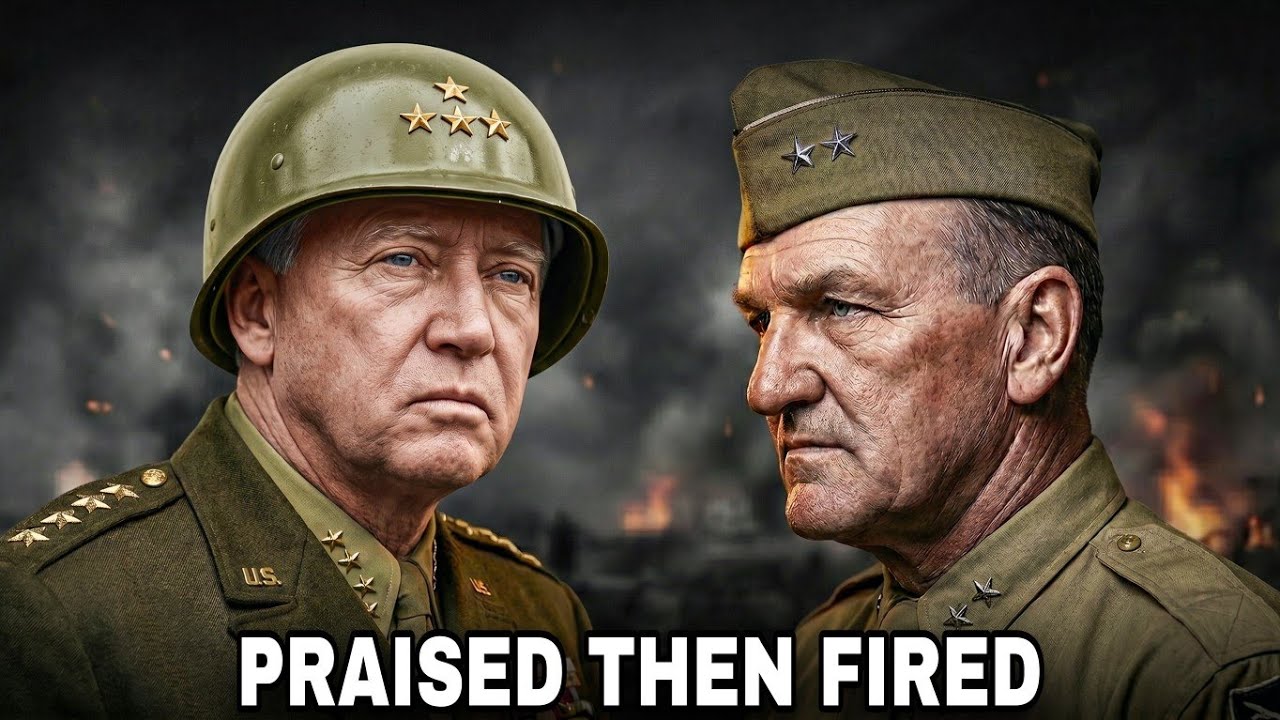
Wood continued his drive into Brittany. He captured Vannes on August 5, covering 70 miles in seven hours. He secured Nantes on August 12, completing the isolation of the Brittany Peninsula. But the ports of Lorient and Saint-Nazaire remained in German hands.
The 4th Armored Division, the most mobile unit in the army, was being used as a siege force. It was a grinding, static war — exactly the kind of warfare Wood despised.
The strain was beginning to show. Wood's division had been in continuous combat since July 17. They had advanced hundreds of miles, captured thousands of prisoners, and destroyed dozens of German tanks. But they were exhausted, their equipment was worn out, their casualties were mounting, and the supply lines were stretched to the breaking point.
On August 31, 1944, the 4th Armored Division ran out of fuel outside Metz. The division halted, waiting for supplies. The golden opportunity had slipped away. The German 7th Army had escaped. The road to the Rhine was blocked.
Wood was furious. He had been forced to waste his division in Brittany, then forced to wait for fuel that never came. He began to question the entire Allied strategy. He began to doubt his superiors — and that doubt would soon poison his relationship with Patton, Bradley, and the entire chain of command.
Wood's division resumed its advance in September 1944, pushing into the Lorraine region. On September 16, they completed a brilliant double envelopment around Nancy, linking up with other American forces and trapping thousands of German troops. It was a textbook armored maneuver. Wood had proven once again that his division was the finest in the army.
But the strain was growing. The terrain was changing. The open fields of France had been replaced by the dense forests and muddy roads of Lorraine. The weather was turning cold and winter was approaching. Wood's tanks, designed for speed and maneuverability, were now fighting in mud and rain. They were being used as infantry support, attacking heavily fortified defensive lines.
It was the kind of war Wood despised. He was an armored commander. He believed in mobility, not attrition. And he began to openly question the orders he received.
The tensions came to a head in October 1944. Patton visited Wood's division headquarters, trying to boost morale. He declared publicly that the 4th Armored Division was the finest armored division in the U.S. Army. Wood appreciated the praise, but it was not enough. He was exhausted, frustrated, and increasingly insubordinate.
Wood began to cross boundaries. He routinely crossed designated corps boundaries, bypassing objectives he deemed strategically unimportant. He openly criticized the infantry support tactics he was ordered to follow. He argued with corps commanders, sometimes openly, sometimes contemptuously. He was a man at the end of his rope.
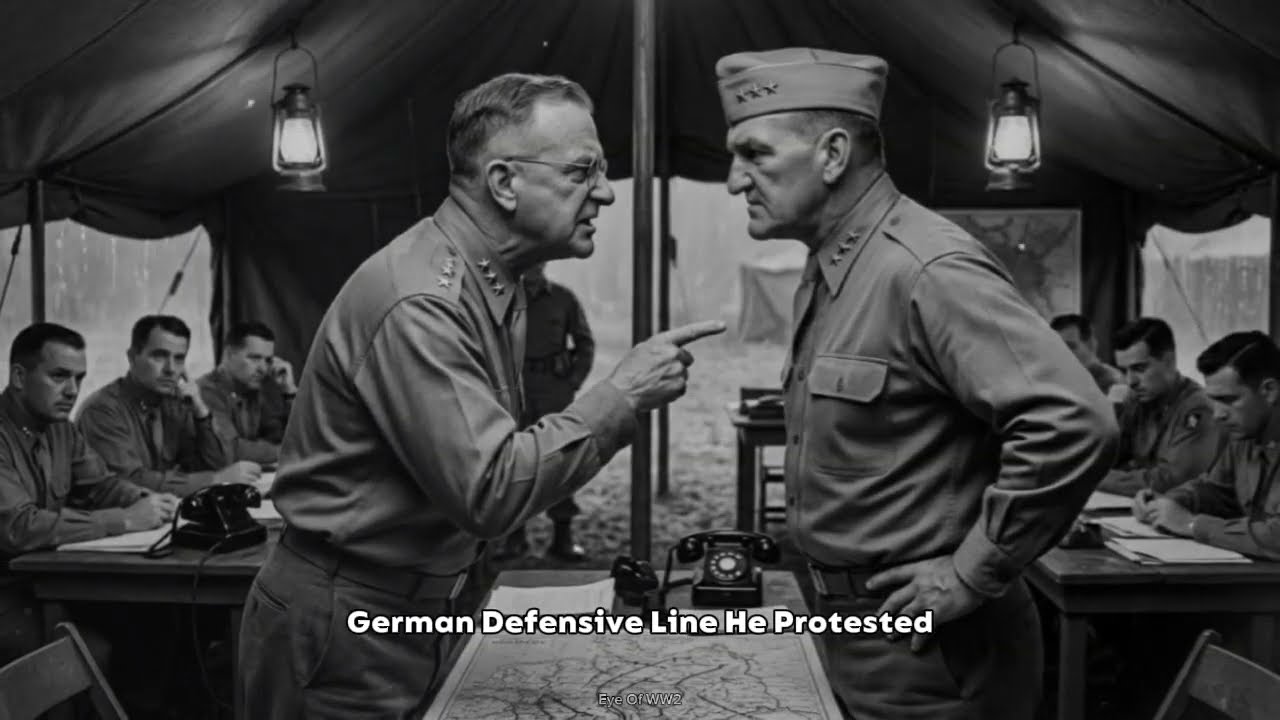
The climax came in November 1944. The 4th Armored Division was assigned to support the crossing of the Saar River. The division was exhausted, under strength, and short of supplies. Wood was ordered to attack across a heavily fortified German defensive line. He protested, but he was overruled. He launched the attack, but his division suffered heavy casualties.
Wood was furious. He confronted his corps commander, Major General Manton S. Eddy, and accused him of using his division as cannon fodder. Eddy responded by accusing Wood of blocking the roads of other divisions and failing to press the attack with sufficient aggressiveness. Wood exploded. He shouted, "My men have paid for every foot of ground with their blood," and walked out of the room.
It was a complete breakdown in command discipline. Eddy immediately called Patton and reported that Wood had become impossible to control.
Patton had a decision to make. He knew Wood was one of his best division commanders. He knew Wood's division had outperformed every other division in the army. But Patton also knew Wood had become a liability. His insubordination was poisoning the morale of the entire corps. His exhaustion was affecting his judgment. His open contempt for his superiors was undermining the chain of command.
Patton called Bradley and explained the situation. Bradley approved the relief. Patton then called Eisenhower and requested that Wood be sent home under the administrative cover of a 60-day detached service to protect his reputation. Eisenhower agreed.
Patton had made the decision. John Wood was going to be fired.
On December 3, 1944, Patton formally relieved Wood of command. He wrote in his diary, "I hate to do this as he is one of my best friends, but war is war."

Wood was replaced by Major General Hugh J. Gaffey. The 4th Armored Division would go on to spearhead Patton's drive to relieve the 101st Airborne Division at Bastogne later that month.
Wood visited Patton's headquarters to say goodbye. Patton later wrote that his old friend seemed relieved to escape the strain of combat command. But the relief would not last. Wood was bitter, resentful, and deeply hurt. He had given everything to the army. He had led the most successful division in the American army, and he had been fired for doing exactly what Patton had always demanded: moving fast, taking risks, and winning battles.
The relief of John Wood raises uncomfortable questions about American military leadership. Was Wood a victim of his own success? Was Patton forced to fire him by political pressure? Or had Wood simply become too difficult to control?
The answer is not simple. Wood was not an easy commander. He was independent, aggressive, and often insubordinate. He openly questioned orders he considered strategically flawed. He crossed boundaries his superiors had established. He was a difficult man to command.
But he was also the most successful division commander in the American army. His division had broken the German lines in Normandy. His division had raced across France. His division had captured thousands of prisoners and destroyed hundreds of tanks. And for all of that, he was rewarded with relief.
Patton faced an impossible dilemma. He admired Wood's tactical brilliance and considered him a personal friend. But Patton was also a man under enormous pressure. He had been publicly humiliated, investigated, and nearly dismissed. He could not afford to defend a subordinate who openly defied orders.
He had to choose between loyalty to a friend and loyalty to the chain of command. He chose the chain of command — but the cost was enormous.
Wood's relief left a permanent stain on Patton's reputation. Historians have debated the decision for decades. Some argue Patton was right to remove an insubordinate commander. Others insist Wood was sacrificed to satisfy Patton's political ambitions. The truth is likely somewhere in between.
What is certain is this: John Wood was one of the most talented division commanders of World War II. His 4th Armored Division was, by any measure, one of the most successful units in the American Army. But Wood's career ended in December 1944 — not because he failed, but because he succeeded too well. He had pushed too hard, asked too many questions, and challenged too many superiors. He was a casualty of the very system that had produced him.
On December 3, 1944, Major General John S. Wood walked out of Patton's headquarters for the last time. He had been relieved of command. The official reason was exhaustion. The real reason was something far more complex.
Wood had become a liability — not because he was incompetent, but because he was too competent, too independent, and too willing to question orders he considered strategically flawed. Patton had made his choice, and Wood was now a casualty of that choice.
But the story did not end there. Wood's relief triggered a cascade of consequences that would shape the final months of the war in Europe. The 4th Armored Division, now under Major General Hugh J. Gaffey, would go on to achieve even greater fame. They would spearhead Patton's drive to relieve the 101st Airborne Division at Bastogne during the Battle of the Bulge. They would cross the Rhine, capture dozens of German cities, and end the war in Czechoslovakia.
But Gaffey was not Wood. The division had lost its soul.
Wood's relief was a tragedy, but it was also a warning. It demonstrated that even the most talented commanders could be sacrificed if they challenged the system. Wood had been a brilliant tactician. He had trained his division to perfection. He had led them through some of the most difficult fighting of the war — and he had been fired for his success.
Patton's decision was not made in a vacuum. He was under intense pressure from Eisenhower and Bradley. He was still being watched for any sign of insubordination. He could not afford to defend a subordinate who openly questioned orders. But that did not make the decision right. It only made it inevitable.
What if Patton had refused to fire Wood? What if he had defended him, protected him, and allowed him to continue commanding the 4th Armored Division? The alternate reality is worth considering. Wood's division might have been even more effective in the Battle of the Bulge. Wood's aggressive tactics might have broken through the German lines even faster. Wood might have been the one to relieve Bastogne, not Gaffey.
But that was not what happened. Patton made his choice. He chose the chain of command over loyalty to a friend. He chose political survival over military brilliance. And the war continued without John Wood.
Wood's relief also revealed something deeper about the nature of command in wartime. The American army had a problem with its most aggressive commanders. The army valued discipline, obedience, and hierarchy. It did not always value creativity, independence, or strategic insight. Wood was a victim of this cultural bias. He was too independent for the system. He asked too many questions. He pushed too hard.
Patton himself had faced similar pressures. He had been humiliated, investigated, and nearly dismissed for his own aggressive behavior. He understood what it was like to be under constant scrutiny. But instead of protecting Wood, he sacrificed him. It was a decision Patton would later regret.
After the war, Wood retired from the army. He did not write a memoir. He did not defend his actions in public. He lived quietly in New York, surrounded by the memories of a brilliant career that had ended too soon. He died on January 2, 1966, at the age of 78. His funeral was simple, attended by only a few friends and family members. The army he had served for more than three decades barely noticed his passing.
Why did Wood never write a memoir? Why did he never defend his reputation? The answer is simple. He was too proud. Wood believed his actions spoke for themselves. He believed his record would stand as the best defense of his career. And in many ways, he was right.
The historical record provides several key quotes that shed light on the Wood-Patton relationship. Patton, writing about Wood in his diary, noted that in a rapid-moving advance, "he is the greatest division commander I have ever seen." But when things got sticky, Patton wrote, Wood was "inclined to worry too much, which keeps him from sleeping and runs him down and makes it difficult to control his operations."
On the day of Wood's relief, Patton wrote, "I hate to do this as he is one of my best friends, but war is war."
Wood, when informed of his relief, reportedly exclaimed, "Why have they relieved me? I can kill Germans. I can kill them by the thousands."
Bradley later wrote in his memoir, "A Soldier's Story," that Wood "seemed to worry too much about the other corps commanders, and whether they were doing better than he, too." Bradley added that Wood "was not nearly as audacious as Patton" and, in the advance from Avranches, "worried constantly about the Third Army's flanks, which Patton had left to the XIX Tactical Air Command to secure."
War correspondent S.L.A. Marshall, who was present with Wood during his final command crisis, noted that he was "as jumpy as a bed bug." But Wood's operations officer, Lieutenant Colonel John B. Sullivan, strongly disputed this. Wood was, he said, "as mentally and physically sound as at any time since I had known him."
The relief of John Wood was a tragedy, but it was not the end of his legacy. The soldiers he commanded remembered him. They remembered his courage, his aggression, and his relentless pursuit of victory. They remembered the speed and precision of his tactics. They remembered his nickname, "Tiger Jack," and the fearlessness that inspired them.
And they remembered his final lesson: that even the most talented commanders can be sacrificed by the system they serve. That obedience is not always the highest virtue. That sometimes the best soldiers are the ones who ask questions, challenge assumptions, and refuse to accept mediocrity.
Wood's story is also a reminder of the human cost of command. Wood was not a machine. He was a man. He felt exhaustion, frustration, and bitterness. He gave everything to the army, and the army gave him nothing in return. He died forgotten and uncelebrated.
But his soldiers remembered him. His legacy lives on in the tactics, the training, and the determination of the soldiers who followed him.
Major General John S. Wood was one of the most talented division commanders of World War II. He was aggressive, fearless, and relentlessly demanding. He trained his division to perfection. He led them to victory after victory — and he was fired for it.
Patton's decision to relieve Wood was one of the most controversial of his career. It was a decision born of political pressure, strategic necessity, and personal loyalty. It was a decision Patton would later regret, but one he could not avoid. It was a decision that revealed the dark side of the American military system — a system that valued obedience over brilliance and conformity over creativity.
But Wood's story is also a story of resilience. It is a story of a commander who refused to be silenced. It is a story of a man who believed in his soldiers, his mission, and his own abilities. It is a story that deserves to be remembered.
So the question remains: was John Wood a victim or a hero? The answer is both. He was a victim of the system that produced him. He was a hero to the soldiers he led. And his story is a reminder that history is not always fair. Sometimes the best soldiers are the ones who are never remembered. Sometimes the greatest sacrifices are the ones that go unnoticed.