A week before the Duchess of Windsor married the man who gave up the British throne for her, a single document settled the rest of her life. Issued under the authority of King George VI, the Duke’s younger brother, it granted the Duke the style of Royal Highness “for his own personal use and enjoyment alone,” but it declared that his wife would not share that rank. The woman who had cost a king his crown was told, in writing, that she would never be royal. She married him anyway, six days later.
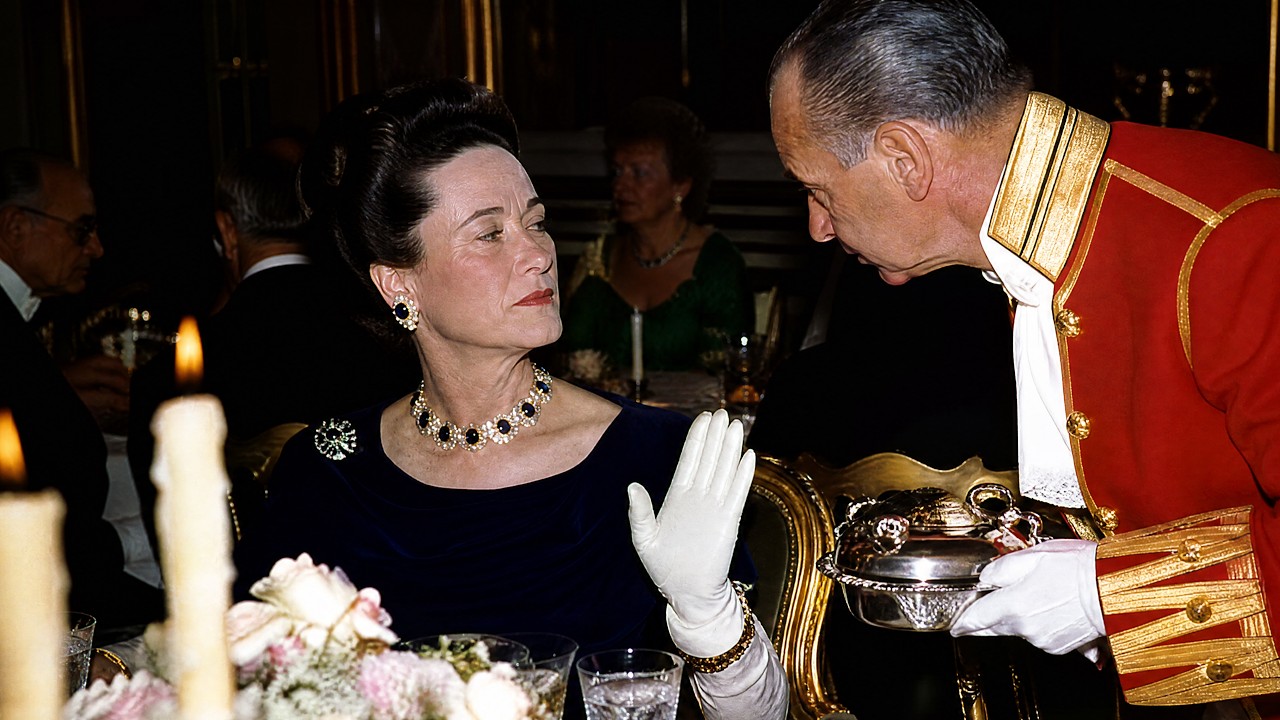
And for the next five decades, she built a court of her own in exile, with servants who curtsied to her, addressed her as Her Royal Highness, and kept a household so immaculate that it rivaled any palace in Europe. The servants who lived inside that world left behind a very different portrait of the woman than the romantic legend the world knew. Their accounts, gathered in memoirs, interviews, and biographies, describe a woman of ferocious standards who counted the spoons, kept a notebook of faults, and rehearsed her dinners like a director rehearsing a play. Born in Pennsylvania in 1896, Wallis was raised poor on the charity of a wealthy uncle, always the poor relation inside grand houses that were not her own.
Biographers have traced her adult obsession with the perfect household directly to that childhood. After two marriages, she met Edward, Prince of Wales, at a country house weekend in London. In December 1936, after less than a year as king, Edward VIII abdicated rather than reign without her. He was created Duke of Windsor, and they married in France the following June.
What the world saw as the greatest love story of the century, the people who worked for them saw very differently. The Duke was, in the words of his own official biographer, “slavishly dependent” on his wife. He could not bear to be parted from her even for an afternoon. The butler remembered him waiting by the lift while she was at the hairdresser.
One servant, a butler named Alan Fischer who later served the Prince and Princess of Wales, believed the Duchess never truly loved the Duke at all. He called her a “queen dictator” and remembered throwing the words “You can stick your job” at her during a row. After the war, the couple settled in Paris. The house they lived in was a 14-room villa on the edge of the Bois de Boulogne, leased from the city of Paris for a token rent of around $50 a year, with free security and exemption from income tax.
The Duke called it “the ship,” and he called his wife “the cruise director. ” She ran everything. The household employed around 15 to 20 indoor servants, including footmen in scarlet and gold royal livery, with another five gardeners at their country mill. The Duchess ruled with a level of control that startled even people accustomed to grand houses.
She moved through the rooms with a small notebook, writing down every fault she found, then tore out the pages and handed them to the staff for correction. The servants called it “the grumble book. ” Dinners began at nine precisely. Napkins were changed twice during a single meal.
The menus were argued with the chef three or four days in advance. She forbade onion and garlic, which she declared poisoned to the Duke and herself. She recorded every dinner she ever gave in a ledger: who came, what was served, how the table was arranged. This perfectionism, her biographers argue, was not vanity but grief dressed in the clothes of vanity.
The refusal of her title was a wound that never healed. In the house, her servants bowed and curtsied to her every day and called her by a style no law recognized as hers. The curtsy England would not give her, her servants gave her every day. The household existed as a kingdom built to cover that wound.
The Duke died of throat cancer in May 1972. The valet who had dressed him every morning for thirty years, a Bahamian man named Sydney Johnson who had entered their service as a sixteen-year-old beach attendant in Nassau, was called to choose the suit for his master’s burial. When the body was being prepared, the undertakers told him the suit would not be needed. As the Duke came into the world, so he would leave it, they said.
He was buried naked. Within about a year of the Duke’s death, Johnson was gone from the household. The accounts differ on whether he resigned or was dismissed. The most repeated version holds that his own wife had recently died, leaving him with four children, and he asked for a change to his hours so he could care for them.
The household refused. Dismissed or pushed out, a man who had given thirty years of loyalty was let go at the moment he most deserved kindness in return. The Duchess herself was already failing, slipping into a dementia that would take everything from her. In 1973, a formidable Parisian lawyer named Suzanne Blum took power of attorney over her affairs.
From that point until the Duchess’s death thirteen years later, all roads to the old woman ran through Blum. The hostile accounts, published after Blum’s death, describe a criminal exploitation: friends were told the Duchess was too ill to see them, locks were changed, financial papers were burned, staff were dismissed. Blum’s defenders maintain she acted out of genuine loyalty to a helpless old woman. The truth likely lies somewhere in the shadow between the two readings.
By the early 1980s, the Duchess could no longer speak. For roughly her last six years, she lay in her bed in the Paris house, unable to move or feed herself. The household kept up its perfect motions around her. The silver was still polished for a woman who would never see it shine.
The rooms were still dressed for guests who were turned away at the door. The most controlling woman of her age had become the most helpless creature in the building. One biographer wrote that she was “powerless and trapped in a body that did not know how to die. ”
She died of pneumonia on April 24, 1986, two months short of her ninetieth birthday.
Her funeral was held at St. George’s Chapel at Windsor, with around 175 people in attendance. The Queen Mother, the woman who had most fiercely ensured Wallis never received royal rank, attended the service but did not follow the coffin to the grave. On the coffin, the silver plate read simply “Wallis, Duchess of Windsor.
” Not the style she had been denied in 1937. Not the initials her servants had been made to speak to her at every meal for thirty years. Even in death, the family withheld what she had wanted her whole life. She was buried beside the Duke at Frogmore in the royal burial ground.
After the funeral, the Princess of Wales told others it was the only time she ever saw the Queen weep. The jewels went to auction in Geneva a year later. The collection, estimated at around seven million dollars, sold for roughly fifty million. The love gifts of a king were converted into cash for a French medical charity the Duchess had never shown the slightest interest in.
The house on the Bois de Boulogne returned to the city of Paris. A wealthy Egyptian businessman took a long lease, spent an enormous sum restoring it, and brought Sydney Johnson back as its keeper. Johnson, who had been turned out of the household more than a decade earlier, returned to watch over the rooms he had served in for thirty years. He died in Paris in January 1990, aged 69.
The household that had taken fifty years to build was dismantled and sold inside a decade. The desk on which the Duke had signed away his throne was auctioned in New York. The rooms were made into a museum. The servants scattered, and the knowledge in their hands, the last living practice of a vanished world of great service, died with them.
In the end, the servants gave the Duchess the only reign she ever had. They bowed, they curtsied, they called her by the style the crown had refused. They did it ten thousand times in the ordinary business of ordinary days.
And their testimony is the only true record of what that household really was: not a palace, not a marriage the world could envy, but a wound kept immaculate by a staff of fifteen for a woman who could never once be told that she was enough.