Newly surfaced historical accounts are casting a stark light on one of the most overlooked chapters of the Second World War: the story of Second Lieutenant Reba Zitella Whittle, a young flight nurse from Texas who became the only American servicewoman captured by German forces on the Western Front, held for four months in the heart of the Third Reich, and then quietly erased from the official record of prisoners of war for nearly four decades after her death.
Whittle’s ordeal began on the morning of September 27, 1944, when she boarded a C-47 Skytrain at RAF Grove in England for what was supposed to be a routine medical evacuation mission to an advanced landing ground at Saint-Trond, Belgium. The aircraft carried supplies and a surgical technician, and was scheduled to load stretcher cases for the return flight. Somewhere over occupied Europe, a navigational error sent the unarmed transport some 46 miles off course, directly into the airspace above Aachen, one of the most heavily defended cities in western Germany.
Whittle was asleep in the rear of the fuselage when the German flak batteries opened fire. The detonations were deafening. Shrapnel tore through the cabin, wounding the surgical technician, Sergeant Hill, in the arm and leg.
The port engine burst into flames. As the crippled aircraft plunged toward the ground, Whittle began to pray. The pilot managed to crash-land the burning C-47 in a snow-covered field roughly two and a half miles outside Aachen, but the landing killed one pilot and left the other with multiple injuries.
Whittle herself suffered a concussion and deep lacerations to her face and back.
The survivors crawled from the wreckage and initially believed the soldiers approaching across the fields were British. They were German. One soldier immediately wrapped a bandage around Whittle’s bleeding head.
The enemy troops were visibly stunned to discover that one of their American prisoners was a woman officer, a situation for which the entire German prisoner of war system had no protocol whatsoever.
What followed was a harrowing journey through the German rear areas aboard a cold, filthy army truck, with frequent stops in villages and towns while officials debated what to do with their unprecedented captive. Whittle was eventually taken to a hospital, where an army doctor delivered a line that would define her captivity: “Too bad having a woman as you are the first one and no one knows exactly what to do.”
Whittle was moved to the central Luftwaffe interrogation center at Oberursel near Frankfurt, where captured Allied aircrew were routinely questioned for intelligence before being sent to prison camps. After a polite interrogation, she was transferred to the hospital attached to the center. German authorities ultimately decided that an American nurse could be useful in caring for Allied prisoners, and on October 6, 1944, she arrived at Stalag 9C, specifically its detached reserve hospital at Obermasfeld.
On October 19, she was transferred again, this time to Reservelazarett 9CB, part of the wider camp complex at Meiningen, where she assisted camp doctors in treating burn victims and amputees.
 Her presence in the German camp system drew the attention of Switzerland, the protecting power for American interests, and the International Red Cross, whose inspectors regularly visited POW camps. The Red Cross relayed details of Whittle’s location and status to the US State Department, which opened negotiations through Swiss intermediaries for her repatriation. Under the Geneva Convention, prisoners deemed too ill, injured, or psychologically unfit for further military service could be exchanged via Switzerland, and such repatriations occurred regularly throughout the war.
Whittle was perfectly fit and could have resumed nursing duties immediately if released, but German authorities found the housing and administration of a single Allied female soldier to be more trouble than she was worth. They preferred to send her back. On January 25, 1945, she was placed on a train with a batch of repatriated cases and shipped to Switzerland, then flown to England and onward to the United States.
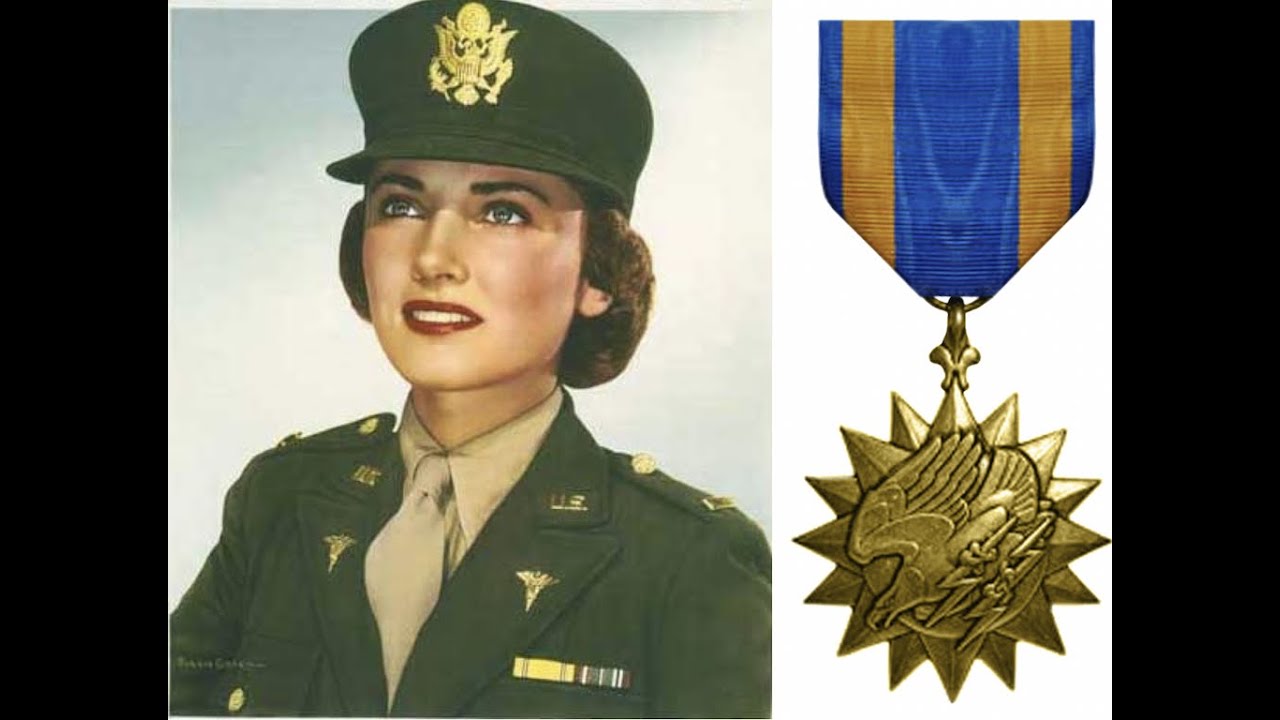
For her ordeal, Whittle received the Purple Heart for wounds sustained in the crash and the Air Medal for her 41 evacuation missions aboard C-47s. She was promoted to first lieutenant in March 1945. President Franklin D.
Roosevelt sent her a personal telegram thanking her for her service and recognizing her four months as a German prisoner of war. But the concussion she suffered in the crash left lasting damage. Though she returned to active duty in Miami Beach, Florida, debilitating headaches forced the suspension of her flight status, and she was reassigned as a ward nurse at an Army hospital in California.
Whittle married, was honorably discharged on January 13, 1946, and attempted to build a civilian life. But her post-army years were marked by persistent physical and psychiatric problems, and she relied on several payments from the US Veterans Administration following lobbying on her behalf. Reba Whittle died of cancer in 1981, officially unrecognized as a World War II prisoner of war despite the president’s telegram.
Only in 1983, two years after her death, was that recognition finally accorded to her.
Her story forms part of a broader and largely forgotten history of women who served in harm’s way during the Second World War. On the Western Front, Allied armies did not ordinarily permit women to enter the line of fire. With the exception of female members of the British Special Operations Executive and the American Office of Strategic Services who parachuted behind enemy lines to support the French Resistance, servicewomen rarely saw a shot fired in anger.
In Britain, women manned searchlight batteries and anti-aircraft guns, and large numbers served in auxiliary army, air force, and naval services, performing supporting roles from administration to vehicle maintenance in order to free men for frontline duty.
 Another critical task performed by women in Britain and America was ferry piloting, moving replacement aircraft to frontline squadrons, a dangerous job in which none were actually shot down by hostile aircraft. But the one role that placed women squarely in harm’s way was nursing. British and American military nurses often came under artillery, mortar, and sniper fire as they manned aid stations and field hospitals close to the front.
In the days following D-Day on June 6, 1944, more than 500 British and American Army nurses came ashore to help handle the enormous volume of Allied casualties during the bitter fighting in Normandy.
Among the most dangerous nursing assignments was the flight nurse program. The US Army Air Force created the first training program in autumn 1942, and the first 39 flight nurses graduated in February 1943. Many more passed through the new School of Air Evacuation at Randolph Field, Texas, before the war’s end.
In Britain, a similar program drew volunteers from the Women’s Auxiliary Air Force, nicknamed the Flying Nightingales after Florence Nightingale. The US Navy established its own school at Naval Air Station Alameda, California.
Unlike their British counterparts, all US Army nurses were commissioned officers, a deliberate policy designed to ensure better treatment if captured. Flight nurses underwent six to nine weeks of military training that included map reading, field survival, camouflage, ditching and crash-landing procedures, and instruction on parachute use, though they did not actually perform parachute jumps. Training emphasized physical fitness, acclimation to the noise of weapons, living in the field, and responding to simulated enemy attacks, because the airfields they flew into were frequently under fire.
US medical air evacuation squadrons were divided into four flights, each led by a male flight surgeon with six teams of flight nurses and male surgical technicians. Flight nurses wore a flight surgeon’s wings with a maroon N for nurse. Evacuation missions used specially modified C-47 and C-46 aircraft configured internally for stretchers.
In flight, the nurse was the senior medical authority aboard, commanding a male surgical technician and managing intravenous lines, oxygen, and emergencies including shock, hemorrhage, and the need for sedation.
Flying itself was perilous. Flight nurses saved lives when aircraft ditched in the ocean or caught fire, loading patients onto life rafts at sea and evacuating burning planes after crash landings in the North African desert. They loaded stretcher cases under Japanese fire in Burma, and one flight nurse parachuted clear of a stricken aircraft over China.
In one famous incident, a C-47 carrying 13 nurses and no patients became lost on a flight from Sicily to Italy and crash-landed in Albania behind German lines. Saved by Albanian partisans and Allied personnel parachuted in to assist, the nurses, flight crew, and surgical technicians walked for two months through mountainous, snow-covered terrain, hunted by German patrols, before being rescued.
In total, 16 American flight nurses were killed during World War II. Crucially, both British and American aircraft flying medical evacuation missions were not marked with red crosses, so they could also carry military supplies and bring wounded out. That decision meant the aircraft were legally targetable by German fighters and flak, adding another layer of mortal risk to every mission.

Reba Whittle was born in Rocksprings, Texas, in 1919 and became an Army Reserve nurse in San Antonio. College-educated and five feet seven inches tall, she was actually under the required weight but was accepted because of her educational background and assigned to active duty in 1941. Until early 1943, she worked as a general duty war nurse at various base hospitals in New Mexico and California before volunteering for the School of Air Evacuation.
She completed six weeks of training in October 1943 and was assigned overseas to the 813th Medical Aeromedical Transportation Squadron at RAF Grove in England. Between January and September 1944, she flew 40 missions in C-47s, logging 500 hours in the air, including 80 in combat.
Historians and veterans’ advocates say her case exposes how unprepared the wartime bureaucracy was for a female prisoner of war, and how the military’s recognition systems failed her for decades afterward. The German camp system was built entirely for male captives. The only Allied women held by the Germans were civilians interned in special camps in old castles, citizens of enemy nations.
Whittle was an anomaly, a commissioned American officer in a system with no place for her.
Her treatment after repatriation reflects the era’s limited understanding of trauma. The concussion she sustained in the crash produced headaches that ended her flying career and, according to accounts of her life, contributed to psychiatric and physical struggles that persisted for decades. She lobbied for and eventually received additional Veterans Administration payments, but the full recognition of her status as a prisoner of war eluded her while she lived.
Whittle’s story also underscores the broader contribution and sacrifice of women in the Allied medical services, whose courage in the face of artillery, snipers, and hostile aircraft has often been overshadowed by the more celebrated exploits of frontline infantry and airmen. From dodging German mortar fire at forward airfields to flying unmarked aircraft through contested skies, these women accepted risks that military planners had never intended for them.
The belated recognition of Reba Whittle in 1983, two years after her death from cancer, stands as a corrective to an official record that had simply failed to account for her. It also serves as a reminder that the history of the Second World War continues to yield stories of service and sacrifice that were, for too long, left untold.