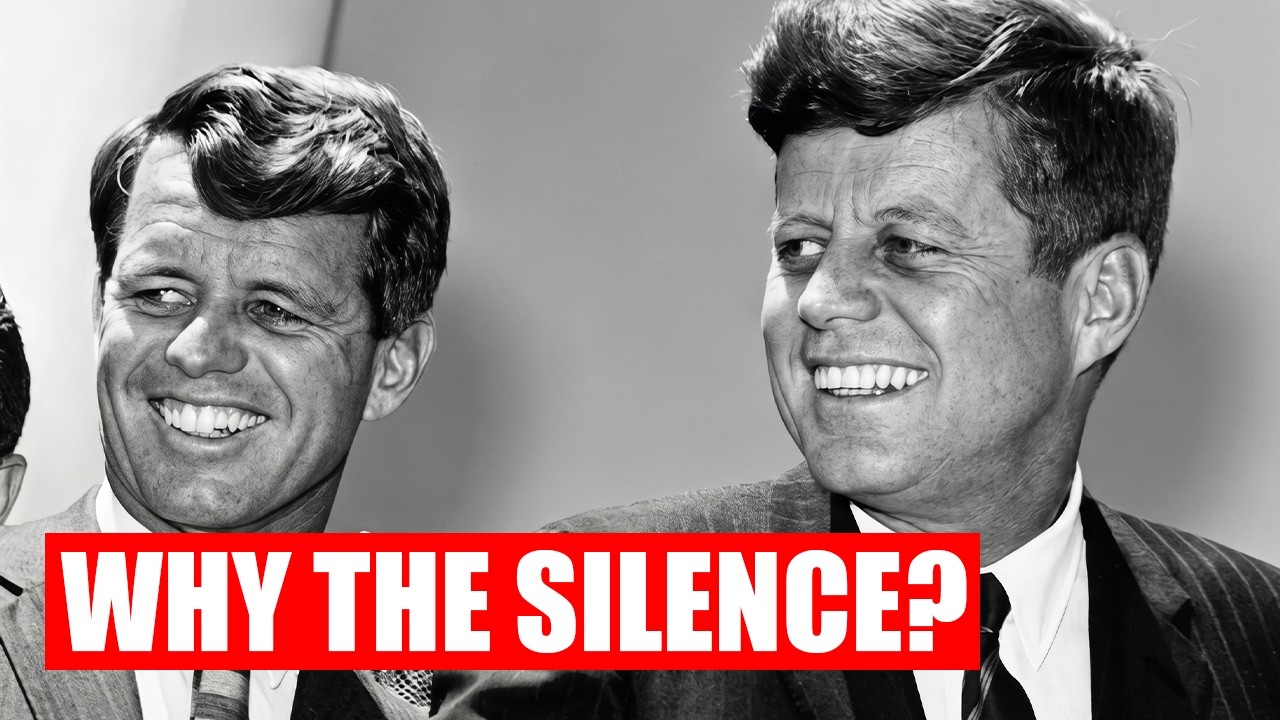
When President John F. Kennedy was shot in Dallas on November 22, 1963, the nation looked to one man to deliver justice. That man was his brother, Attorney General Robert F. Kennedy, the president's most trusted confidant and one of the most powerful law enforcement officials in American history.
Bobby Kennedy had built the Justice Department into an instrument of extraordinary reach. The 1963 organizational chart placed him at the apex, with direct lines running to the heads of the FBI, the Criminal Division, the Civil Rights Division, and the Antitrust Division. Below him stood the Office of the Solicitor General, the United States Marshals, and a web of special units.
No other Attorney General in modern history had wielded such consolidated power. That same year, Kennedy launched the Organized Crime Strike Force, a unit that quickly became the sharpest spear in the government's arsenal against the Mafia.
In May 1963, a directive signed in his own hand instructed every United States Attorney to prioritize racketeering cases and coordinate with the FBI's Mafia Task Force. Newspapers including the New York Times and the Washington Post echoed his promise to drive organized crime from American life.
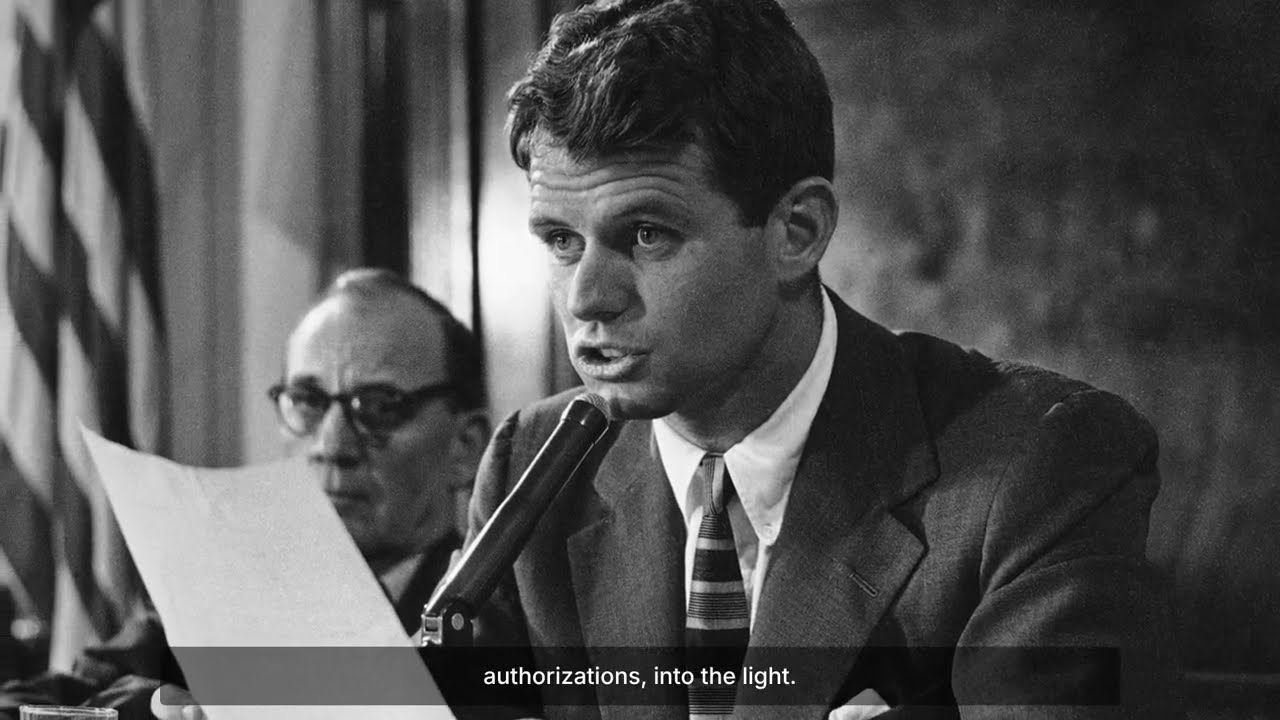
His authority was not just legal but personal. He handpicked prosecutors, signed off on surveillance authorizations, and issued budget directives that shifted millions into covert operations and special prosecutions. Internal memos show that even senior FBI officials, including J. Edgar Hoover, were required to submit status reports on high-profile cases directly to his office.
In the public eye, Bobby Kennedy was the nation's most relentless lawman. Press coverage painted him as a crusader who would stop at nothing to root out corruption, a man who made enemies of mobsters, union bosses, and even foreign dictators. The expectation was clear: if anyone could lead the hunt for a president's killer, it was Robert F. Kennedy.
Yet the silence that followed would only deepen the sense of contradiction and unease.
At 12:44 p.m. on November 22, 1963, Robert F. Kennedy's phone log records the first blunt news from Dallas that the president had been shot. From that moment, every move from the Attorney General's office was documented, timed, and measured.
As the world waited for a sweeping federal response, Kennedy's orders grew cautious. The log shows a flurry of calls, but the instructions that followed were sharply limited. There was no public release of investigative leads until after the funeral, and all intelligence reports were sealed in the Attorney General's file.
A directive issued on November 24, later referenced as Warren Commission exhibit 176-A-1, formally deferred criminal prosecution. It stated the Department of Justice would provide records and testimony but would not act until the commission's final report.
A letter dated November 24, 1963, sent to President Johnson, echoed the same restraint. The department stood ready to assist, it said, but would withhold further action pending presidential direction. Preserved in the national archives, these words read less like the battle cry of the nation's most feared prosecutor and more like a careful retreat.
The very channels Kennedy once used to launch aggressive campaigns against the Mafia now served to contain the investigation of his brother's murder. Instead of unleashing the full force of federal law enforcement, Kennedy imposed a silence of his own making. The directives, some written and some whispered, drew invisible boundaries around the case.
The Attorney General, known for his relentless will, became the architect of caution. The question lingers: what risk did he fear exposing if the machinery of justice ran at full speed?
Layers of secrecy had wrapped themselves around the Justice Department in the months before Dallas. Operation Mongoose, the clandestine campaign to topple Castro, moved forward with the Attorney General's signature on every authorization.
Declassified CIA memos dated March, May, and June 1961 list John Roselli, Santo Trafficante Jr., and Sam Giancana as the agency's chosen intermediaries, men whose names were already notorious in FBI files. Expense vouchers surfaced later showing government funds routed through these Mafia contacts for sabotage and assassination plots.
The Justice Department's own correspondence, now unsealed, shows that RFK approved a joint task force to provide legal cover for these operations, shielding them from congressional oversight. On October 11, 1962, a memo from the Criminal Division noted the Attorney General's consent to collaborative efforts with non-governmental assets for Cuban operations, language that barely conceals the Mafia's role.

RFK's diaries, released decades later, describe his reluctant acceptance of these arrangements and his warning that exposure would be politically catastrophic. Mongoose files detail meetings where the Attorney General, CIA officers, and mob liaisons sat at the same table trading favors and immunity for results.
A full investigation into the president's murder would have forced open this covert web. Any aggressive probe risked dragging the Mafia intermediaries, and by extension RFK's own authorizations, into the light. The possibility that the same men trusted to fight Castro might be entangled in Dallas made the boundaries between justice and conspiracy dangerously thin.
The silence that followed was not only personal. It was a shield protecting the fragile machinery of state secrecy and the Attorney General's own hand in its darkest operations.
J. Edgar Hoover's grip on the Justice Department did not loosen in the wake of Dallas. The files that could have fueled a sweeping investigation remained locked behind Bureau doors.
On November 23, 1963, a letter from Hoover's office to the DOJ refused to surrender the complete Oswald file, citing national security. The memo's language was blunt: no release without a formal request through the interagency review board.
Days later, another internal memorandum ordered FBI deputies to delay all assassination-related disclosures until the Attorney General clarified his intentions, and until the Bureau could be certain the public story would not veer from the Warren Commission's line.
Hoover's authority was more than bureaucratic. Over decades, he had amassed personal dossiers on the Kennedy family, including surveillance, private scandals, and political secrets, giving him silent leverage. On December 18, an airtel warned that any attempt by RFK to reopen the case would risk exposing sensitive intelligence operations, including those that blurred the lines between the FBI, the CIA, and organized crime.
The threat was unmistakable. The Bureau could unleash what it knew about covert anti-Castro activities, some of which carried the Attorney General's own signature.
Congressional oversight offered little relief. The Church Committee's 1975 report described the FBI's file control as a barrier to transparency, noting that the Bureau routinely withheld evidence from other agencies and even from the Justice Department itself. The House Select Committee on Assassinations, in its final pages, concluded that the FBI's institutional interests often outweighed the pursuit of full disclosure.
These findings did not surface until years after the fact, but they cast a long shadow backward, revealing the practical boundaries that hemmed in even the nation's most powerful prosecutor. For Robert Kennedy, the machinery he once commanded now formed a wall. The power to investigate existed on paper, but in practice the files, the evidence, and the levers of federal law enforcement were guarded by a director who could threaten exposure and stall any inquiry at will.
The result was a stalemate, shaped not only by grief but by the hidden architecture of secrecy and control that defined the era.
Two images of Robert Kennedy stand in silent opposition. One is the Attorney General at the center of power, his signature on orders that sent federal agents against the Mafia, his directives reshaping the nation's legal machinery. The other is the brother left wordless by an assassin's bullet, his office issuing only careful, limited instructions, his voice absent from the public demand for justice.
On one side, headlines and internal memos document a man who forced open the doors of secrecy, who demanded status reports from the FBI, who signed off on covert operations that blurred the line between law and conspiracy. On the other, a paper trail of restraint: files sealed, leads deferred, the investigative engine he once drove now idling in place.
The contradiction sharpens with every document. The crusader against organized crime becomes the author of silence. The man who once threatened the underworld with exposure now draws the curtain over his own house.
Two explanations stand in stark opposition, each leaving its own shadow. Some historians see a brother broken by loss, unable to summon the will to confront the machinery he once commanded. They point to diary entries, the silence in cabinet meetings, and the sudden retreat from public view, a grief so deep it numbed even the sharpest instincts for justice.
Others argue that the silence was not born of sorrow but of calculation. In this view, Robert Kennedy knew that a true investigation would have forced him to expose the covert world he helped build: the Mafia intermediaries, the secret authorizations, the alliances that blurred law and conspiracy. One expert calls it a tragedy of power. Another calls it a necessary act of self-preservation.
The record refuses to settle the question. Was Bobby Kennedy's stillness the helplessness of a grieving brother, or the deliberate quiet of a man who understood that the truth could destroy more than just himself? The answer remains locked behind sealed files and the silence of the grave.
Today, the official story still names a reason for the silence. But the shadow of unasked questions lingers, fed by secrets that outlive their makers. In a world where power and guilt intertwine, how many truths remain buried, not just by fear, but by the hands that built the labyrinth?