On April 1, 1967, a classified document was prepared at CIA headquarters in Langley, Virginia. Its code was 1035-960, and its title was "Countering Criticism of the Warren Report."
The document was not an attempt to establish truth. It was a set of instructions for managing public opinion, and it would shape how Americans talked about the Kennedy assassination for more than 50 years.
The memo opened by acknowledging a problem. "From the day of President Kennedy's assassination on, there has been speculation about the responsibility for his murder," it read. "This trend of opinion is a matter of concern to the US government, including our organization."
In other words, too many Americans doubted the official story, and that threatened the government's credibility. The solution was to weaponize language, discredit critics, and control the narrative.
By 1967, the Warren Commission's credibility was collapsing. The report, released in September 1964, concluded that Lee Harvey Oswald acted alone and that there was no conspiracy.
Americans were not buying it. A 1966 Gallup poll found that only 36 percent believed Oswald acted alone, while 50 percent suspected a conspiracy.
Books questioning the Warren report became bestsellers. Mark Lane's "Rush to Judgment," Edward Epstein's "Inquest," and Josiah Thompson's "Six Seconds in Dallas" all drew wide attention.
Lane's book sold over 140,000 copies in months. He appeared on 175 television and radio programs, and European broadcasters paid $45,000 for the rights to his documentary.
In New Orleans, District Attorney Jim Garrison had launched a criminal investigation, indicting Clay Shaw and alleging CIA involvement in Kennedy's murder. The official narrative was under siege, and the CIA panicked.
On April 1, 1967, the CIA Chief of Clandestine Services sent document 1035-960 to all CIA stations and bases worldwide. Its purpose was explicit.
"The aim of this dispatch is to provide material countering and discrediting the claims of the conspiracy theorists, so as to inhibit the circulation of such claims in other countries," the memo stated.
The language itself was part of the strategy. The term "conspiracy theorist" dated back to the 1860s, but the CIA weaponized it, turning a neutral descriptor into a pejorative and an accusation of irrationality.
The document explained why this mattered. "Just because of the standing of the commissioners, efforts to impugn their rectitude and wisdom tend to cast doubt on the whole leadership of American society."
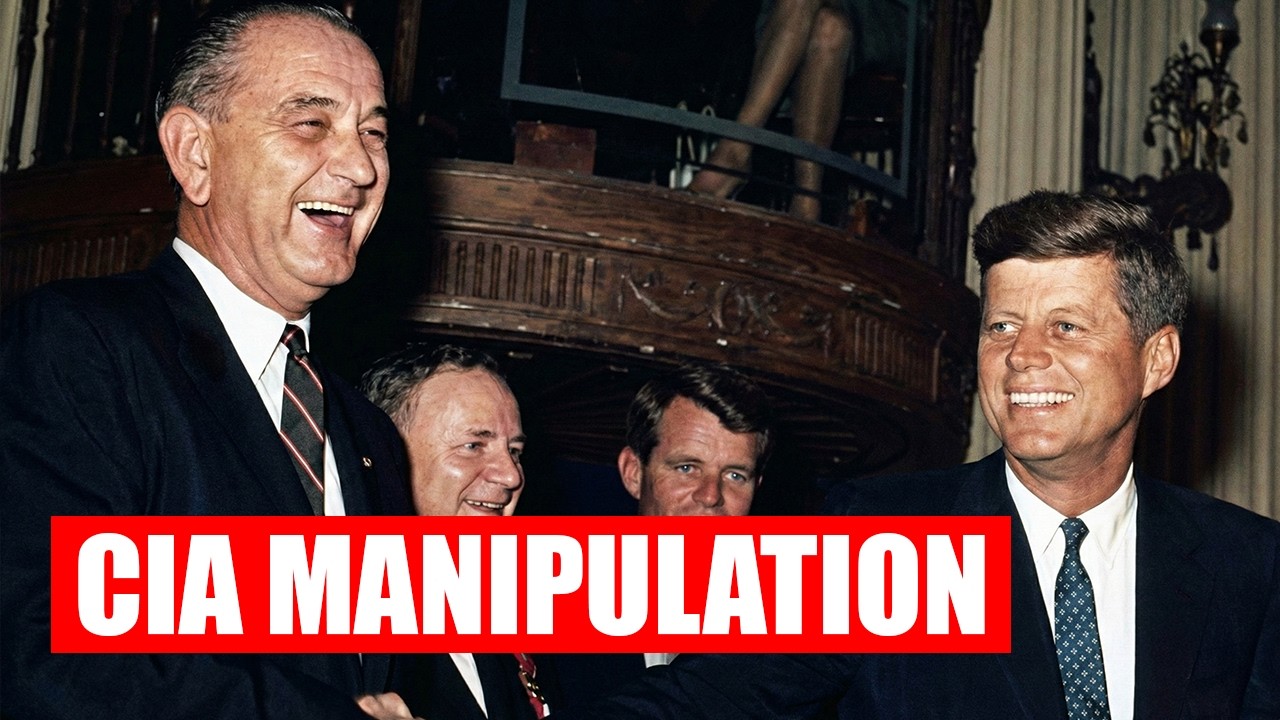
The Warren Commission included Chief Justice Earl Warren, Senator Richard Russell, Congressman Gerald Ford, and former CIA Director Allen Dulles. Attacking the commission meant attacking the entire American establishment.
The document hinted at something even more dangerous. "Moreover, there seems to be an increasing tendency to hint that President Johnson himself, as the one person who might be said to have benefited, was in some way responsible for the assassination."
People were questioning Lyndon Johnson, and the CIA could not allow that.
The document provided detailed instructions for destroying critics. The first step was to deploy media assets.
"To employ propaganda assets to answer and refute the attacks of the critics," it read. "Book reviews and feature articles are particularly appropriate for this purpose."
Propaganda assets meant journalists, editors, and publishers the CIA had cultivated through Operation Mockingbird, its infiltration of American media. The agency had assets at major publications including the New York Times, the Washington Post, CBS, NBC, Time, and Newsweek.
The second step was to attack the messenger rather than the message. "Our ploy should point out, as applicable, that the critics are wedded to theories adopted before the evidence was in, politically interested, financially interested, hasty and inaccurate in their research, or infatuated with their own theories."
The strategy was to avoid addressing evidence and instead attack critics' motives, character, and mental state.
The third step was to use elite contacts. "To discuss the publicity problem with liaison and friendly elite contacts, especially politicians and editors," the memo read, pointing out that the Warren Commission made as thorough an investigation as humanly possible and that the charges of critics were without serious foundation.
Behind the scenes, CIA officers would contact politicians and media executives to remind them to support the official story and discourage critical coverage.
The fourth step was to suggest a communist connection. "Point out also that parts of the conspiracy talk appear to be deliberately generated by communist propagandists."
It was the ultimate Cold War smear: anyone questioning the government was helping the Soviets.
The campaign worked immediately. When Garrison arrested Clay Shaw in March 1967, one month before document 1035-960, the national media destroyed him.

Newsweek wrote that "the case appears to rest primarily on the testimony of a convicted narcotics peddler and a witness who has told his story only under hypnosis and drugs." Time magazine mocked Garrison's investigation as a publicity stunt.
NBC sent Walter Sheridan, a former NSA recruit and Justice Department official, to produce a critical piece. Sheridan interviewed Garrison's witnesses, offered them money to recant, and pressured them to change testimony. All of it was documented.
CIA minutes from 1967 show the agency feared Garrison might win a conviction, so it deployed media assets to ensure he did not.
Several key witnesses died under various circumstances before trial. David Ferrie was ruled to have died of a brain aneurysm. Eladio del Valle was murdered. Guy Banister died of a heart attack in 1964. Whether these deaths were suspicious or coincidental has been debated for decades, but they fed the paranoia surrounding the case.
Garrison's own methods gave the media plenty of ammunition. His star witness, Perry Russo, only connected Shaw to Oswald and Ferrie after being administered sodium pentothal and hypnotized, raising serious questions about the reliability of his testimony.
The jury acquitted Shaw in less than an hour. By then, Garrison's reputation was destroyed, and the national media had branded him a conspiracy theorist, a paranoid, and a charlatan.
Decades later, declassified documents proved some of what Garrison alleged. Shaw did have CIA connections, confirmed by CIA Director Richard Helms in 1979. Shaw was a DCS contact. Anti-Castro networks were involved in intelligence operations, and the CIA had a presence in New Orleans.
But Garrison's flawed case, combining real suspicions with questionable evidence and methods, made it easy for the CIA's media assets to dismiss everything he uncovered.
CIA assets also wrote scathing reviews of critical books. They attacked motive, claiming authors were financially motivated and pointing to book sales. Critics claimed Lane was profiteering from tragedy, ignoring that he had spent two years researching at his own expense.
They attacked competence, citing hasty research and inaccurate claims. Reviews cherry-picked minor errors and ignored overwhelming evidence of Warren Commission failures.
They attacked character, calling authors infatuated with their own theories. Edward Epstein's "Inquest," a measured academic analysis, was dismissed as the work of a young graduate student seeking attention.
Meanwhile, books defending the Warren report received glowing reviews. Wesley Liebeler, a Warren Commission attorney, wrote a defense praised as balanced and authoritative. Jacob Cohen's "Honest Verdict," defending the commission, got prominent placement in major newspapers.
The fix was systematic, coordinated, and effective.

Television coverage was also suppressed. When Mark Lane appeared on television, producers received calls and pressure to cancel, along with accusations of giving a platform to irresponsible speculation.
Lane later testified that after appearing on certain programs, those programs were told by advertisers connected to defense contractors and government agencies that continuing such coverage would affect ad revenue. It was not censorship but economic pressure, soft power that proved devastatingly effective.
By the late 1960s, "conspiracy theorist" had become toxic, a career killer and a reputation destroyer. Researchers who questioned official narratives, no matter how credible their evidence, were dismissed as cranks, paranoids, and lunatics.
The phrase became a thought-terminating cliché, a way to shut down investigation without addressing evidence.
The darkest irony is that many conspiracy theories about the JFK assassination turned out to be true. CIA and mafia plots to kill Castro were confirmed by the Church Committee. CIA surveillance of Oswald in Mexico City was confirmed, and photos and tapes existed. Oswald impersonation in Mexico City was confirmed by FBI Director Hoover's memo.
Jack Ruby's mob connections were confirmed through extensive phone records. CIA connections to anti-Castro Cubans were confirmed through the Bay of Pigs and Operation Mongoose.
The conspiracy theorists were right. The CIA was involved in assassination plots. The Warren Commission did ignore evidence. There were suspicious connections.
But because the CIA successfully weaponized "conspiracy theory" as a smear, these findings were marginalized, dismissed, and memory-holed.
Document 1035-960 remained classified for decades. It was finally released in 1976 in response to a New York Times Freedom of Information Act request following the Church Committee investigations. By then, the damage was done.
The label had seeped into public consciousness and become reflexive and automatic. Even after the document's release, most people did not connect the dots or realize that the phrase they casually used originated as CIA psychological warfare.
The brainwashing was complete and invisible.
The document itself remains publicly available through the Mary Ferrell Foundation and the Internet Archive, fully declassified. Its own words are there to read: employ propaganda assets, discredit the claims, inhibit circulation, point out that critics are politically and financially interested, suggest communist influence.
This is not conspiracy theory. It is documented CIA policy, and it reveals something profound. When institutions face legitimate criticism, they do not address the evidence. They attack the critics. They do not refute claims. They discredit people. They do not seek truth. They control narratives.
Every time someone is dismissed as a conspiracy theorist without examining their evidence, the instructions from a 1967 CIA memo are being followed. The most successful propaganda is the kind people do not even know they are repeating.