One of Nazi Germany’s most celebrated battlefield commanders privately concluded that Adolf Hitler was no longer a strategist but a gambler willing to burn his own nation to the ground, and the warning he tried to deliver cost him his life.
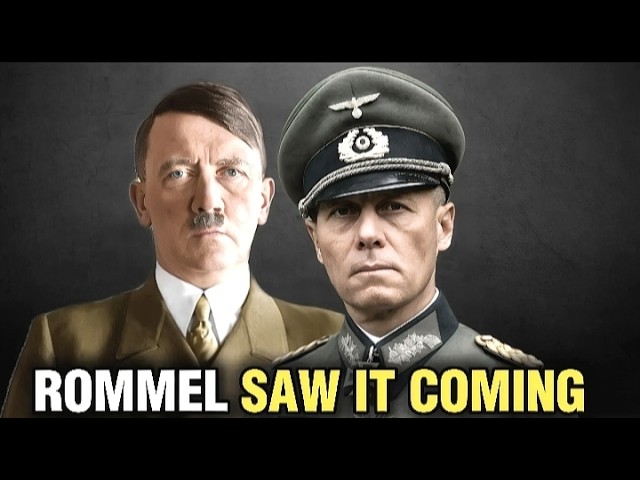
Field Marshal Erwin Rommel, the “Desert Fox” whose name British generals once spoke with grudging admiration, spent the final year of his life watching the Führer he had once revered make decisions that he believed would destroy Germany. By the summer of 1944, Rommel had stopped hiding his conclusions from the officers around him.
He told colleagues that Hitler had lost all touch with military reality. He argued that the war was already lost in every meaningful sense and that peace had to be negotiated immediately, before the fighting reached German soil. Under the regime he still technically served, that position bordered on treason.
What makes Rommel’s story so unsettling is not that he resisted Hitler from the beginning. It is that he spent years as one of Hitler’s most devoted admirers, a man who genuinely believed the Führer represented a new kind of leadership Germany needed.
Rommel had commanded Hitler’s personal escort battalion during the invasion of Poland. He dined with him. He received promotions and praise directly from his hands, leapfrogging more senior generals.
His command in France after the fall of 1940 came almost as a personal reward.
For a soldier raised on discipline and hierarchy, that kind of favor was hard to argue with. He owed his career to the man he would eventually decide was destroying his country. For a long stretch of the war, Rommel defended Hitler against critics inside the German officer corps who already suspected something was deeply wrong.
The turn did not happen overnight. It happened in pieces, each one small enough to explain away until the pieces added up to something Rommel could no longer ignore.
In North Africa, Rommel began noticing that Hitler’s orders arrived detached from any understanding of the battlefield reality his men faced. Requests for fuel, reinforcements and basic supplies for the Afrika Korps were met with vague promises or outright silence.
Hitler obsessed over territory that no longer mattered and refused to hear reports that contradicted the version of the war he had built inside his own head. Rommel later described the sensation of trying to reach Hitler through his generals as speaking into a void, watching decisions made thousands of miles away doom men whose faces he knew personally.
His soldiers had taken to calling him the Fox long before the British press ever picked up the nickname. It was born from watching him improvise supply lines out of captured enemy fuel and outmaneuver forces twice his size. He was earning victories with almost nothing, and the less Berlin gave him, the more Berlin expected.
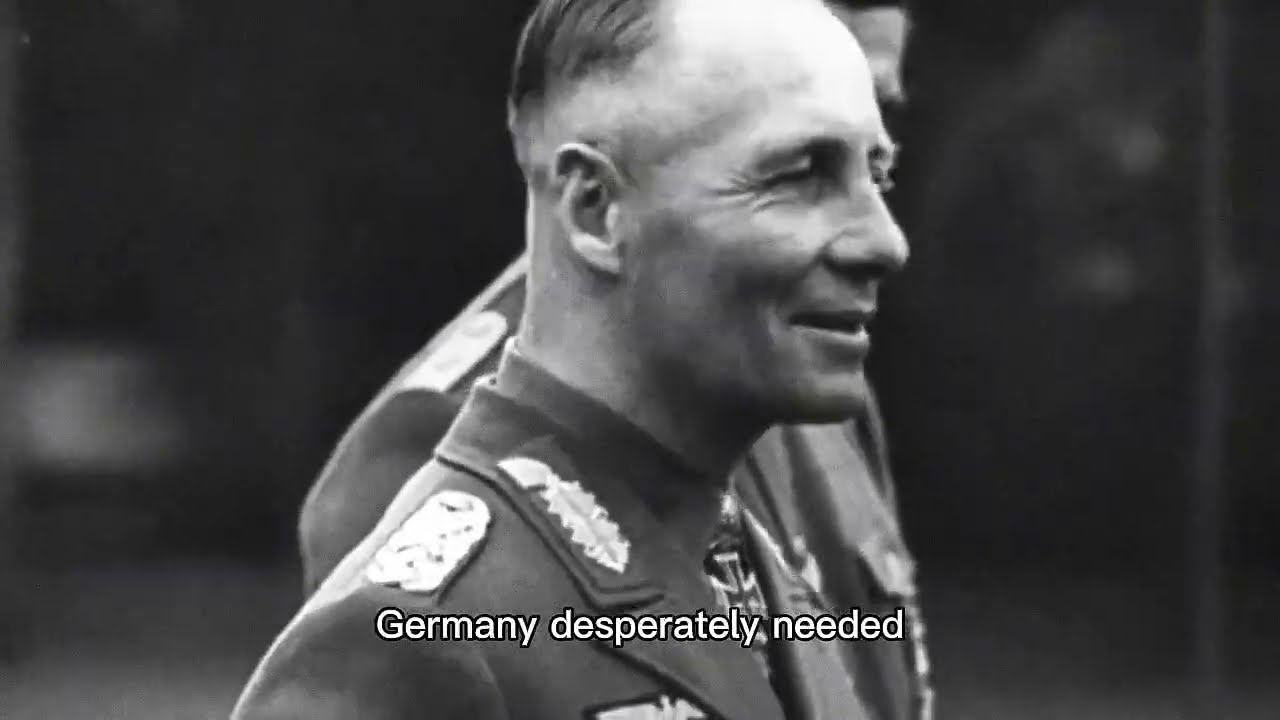
That gap between what Hitler demanded and what Hitler was willing to provide is where the first real cracks in Rommel’s loyalty began to show, quietly, in private letters home to his wife rather than in any public defiance.
Then came the moment historians consider the true breaking point. In 1942, as Rommel’s forces collapsed at El Alamein and he begged for permission to retreat and save what remained of his army, Hitler sent back an order demanding his men hold their ground and choose victory or death.
There was no strategic reasoning behind it. No path to actual victory was hidden in that command. It was pure defiance of reality, a refusal to accept that the war in North Africa was already lost, dressed up as unbreakable German willpower.
Rommel disobeyed the order and pulled his men out anyway, saving thousands of lives. In doing so, he crossed a line inside himself that he could never fully walk back. He had just watched his supreme commander choose the appearance of strength over the lives of actual soldiers.
He was never punished for the disobedience. That silence from Berlin may have unsettled him more than a reprimand would have. It meant Hitler’s authority was already beginning to bend around him, not because Hitler had changed, but because the war was slipping away from every direction at once.
By the time Rommel was sent to defend the beaches of Normandy in 1944, his doubts had hardened into something closer to certainty. What he witnessed there confirmed everything he feared.
He toured the coastline obsessively, walking the sand himself, studying tide charts, convinced the coming Allied invasion would decide the entire war within its first twenty-four hours. He begged Hitler’s high command to position German armored divisions close enough to the beaches to crush any landing before it could establish a foothold.
Hitler refused, insisting those tank divisions remain under his own personal control, hundreds of miles away, released only with his direct authorization. When the Allies landed on June 6, those tanks sat idle for hours while Hitler slept and his staff, terrified of waking him, refused to seek approval for their deployment.
By the time authorization finally came, the invasion had already succeeded and the war in the West was effectively decided by a decision Hitler never made in time to matter.
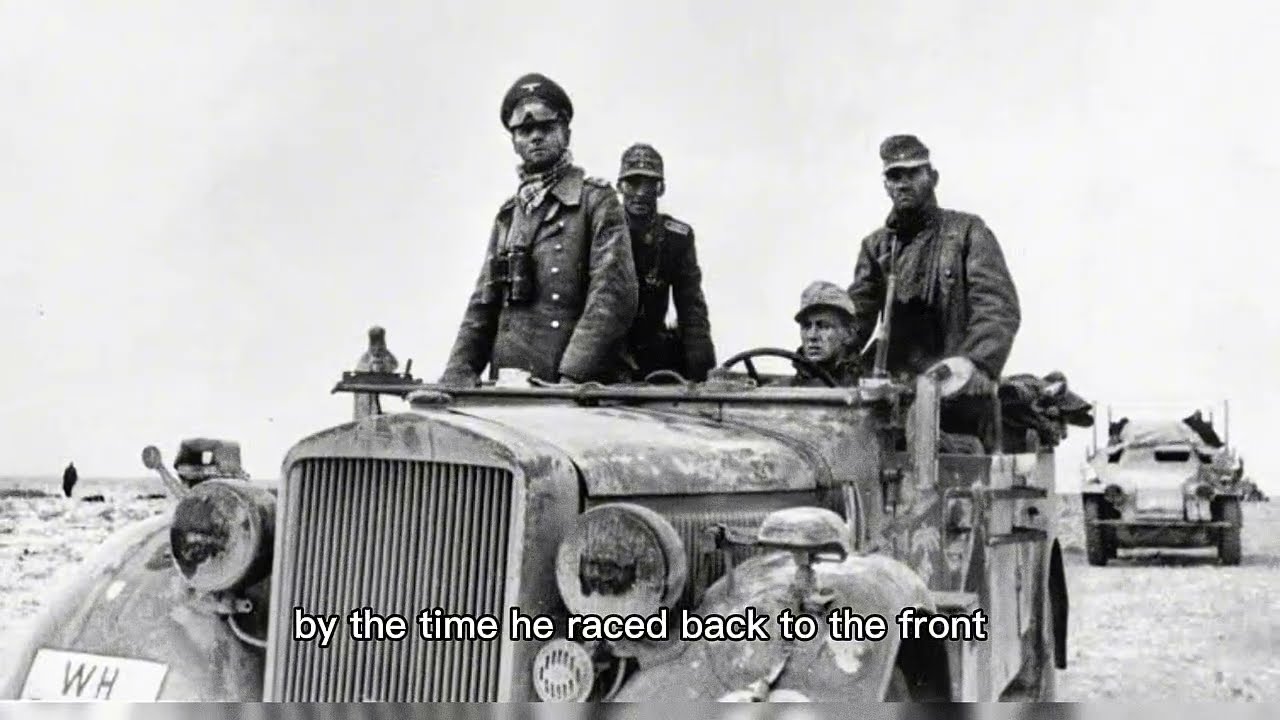 Rommel himself was not even in France when the invasion began. He had traveled home to Germany for his wife’s birthday, convinced by weather reports that the Allies would never attempt a landing in such rough seas, a miscalculation shared by much of the German high command that morning.
By the time he raced back to the front, driving for hours through roads already choked with Allied air attacks, the beachhead was secured and the narrow window in which a rapid German counterattack might have thrown the invasion back into the sea had closed for good.
Rommel spent the rest of that summer watching a battle he believed could have been won in its opening hours slowly turn into a battle nobody in the German command structure believed they could win at all. He kept fighting anyway because that was the only role left to him, a general executing a defense he privately considered pointless.
He returned from the front convinced that Germany had already lost the war and that Hitler’s refusal to accept that reality was going to get millions of people killed for nothing. He drafted a private memorandum urging immediate peace negotiations, a document some historians believe sealed his fate months before anyone connected him to a bomb.
He was not part of the actual bomb plot against Hitler that July, the attempt that came devastatingly close to ending the war months earlier than it did. But he knew about the growing conspiracy forming around him, and investigators would later find his name connected to it regardless.
Whether Rommel would have joined the plotters outright remains debated among historians to this day. Some point to his memorandum as proof he had already crossed into active resistance. Others argue he was a soldier to his core, unwilling to break his oath even to a man he no longer respected, and that his name was pulled into the conspiracy by men desperate to claim his popularity as cover for their own plans.
What is not debated is what happened once his name surfaced in the investigation that followed the failed assassination attempt.
Hitler’s inner circle had grown obsessed with controlling the narrative of the war as the military situation collapsed on every front. A public trial of Germany’s most beloved general would have shattered whatever illusion of unity still held the country together.
Investigators building the case against the July conspirators discovered Rommel’s name mentioned by several defendants under interrogation, testimony extracted through methods that left little room for defendants to protect anyone, guilty or not. Whether those confessions accurately reflected Rommel’s actual involvement mattered less to the regime than the danger his name posed if the connection became public at all.
Two generals arrived at Rommel’s home in October 1944 carrying an offer that was really no offer at all. He could face a public trial before the notorious People’s Court, a process that had already sent other suspected conspirators to brutal deaths and would almost certainly destroy his family’s reputation and safety. Or he could take a cyanide capsule quietly, immediately, in exchange for a promise that his death would be reported as complications from war wounds, sparing his wife and son from the regime’s retaliation.
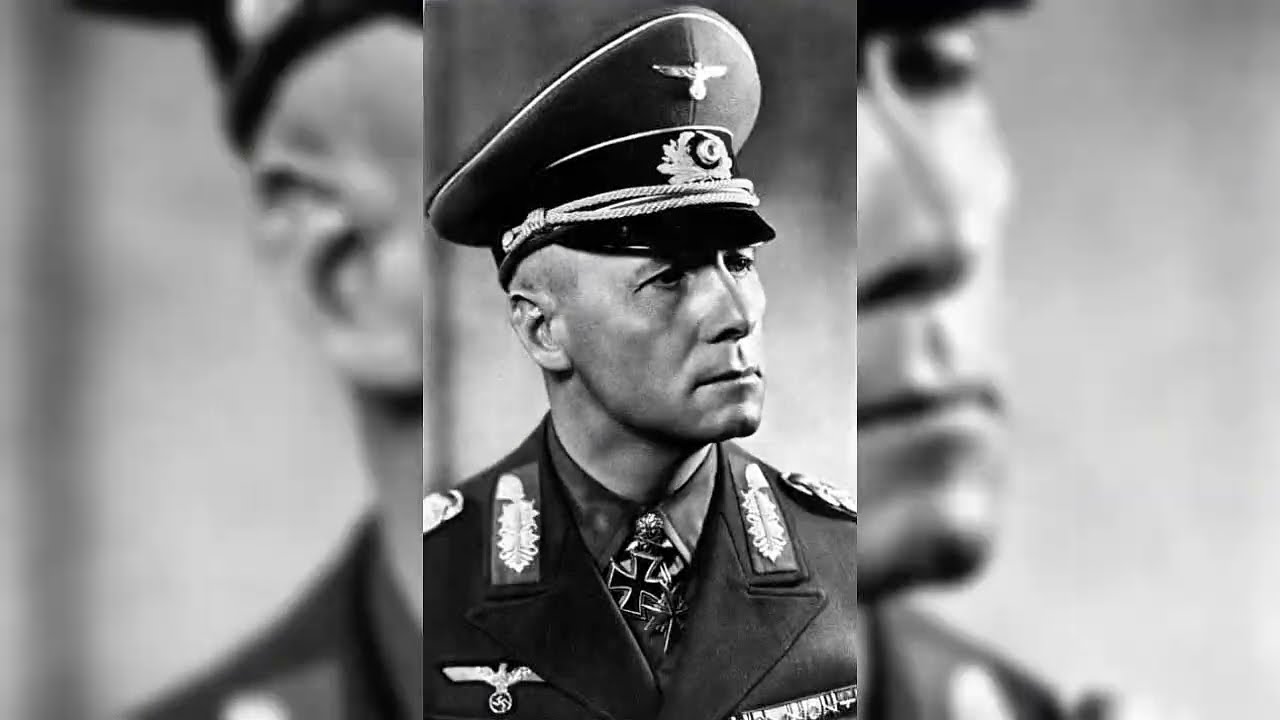
Rommel asked for a few minutes alone with his son first. Then he put on his coat, walked out to the car waiting outside and chose the poison. Within minutes, one of the most celebrated military commanders in modern history was dead in his own car outside his own home.
The German public was told their beloved Desert Fox had succumbed to injuries sustained months earlier, a lie that held for years afterward. He received a state funeral. Hitler sent a wreath.
The regime that killed him stood over his coffin and called him a hero, and almost no one outside a small circle of officers knew the truth until long after the war had ended.
What makes Rommel’s story genuinely unsettling is not that a good man simply resisted a bad leader from day one, the version so often told in simplified retellings. It is that a brilliant, deeply competent man spent years admiring, defending and serving someone whose worst instincts were visible the entire time to anyone willing to look honestly at the pattern forming in front of them.
The warning signs Rommel eventually recognized, decisions detached from reality, refusal to accept battlefield truth, willpower demanded in place of strategy, loyalty rewarded over competence, were present long before he allowed himself to see them clearly.
His tragedy was not blindness from the very beginning. It was how long it took someone that intelligent, that experienced and that close to the center of power to finally admit what he was serving, and how much devastation had already unfolded by the time he did.
That is the warning buried inside Rommel’s story, one far more uncomfortable than the simple hero narrative usually attached to his name. It was never really about Hitler alone. It was about how a system built entirely around one man’s certainty can consume even the most capable people around him, turning admiration into complicity long before anyone involved is willing to call it by its name.
Rommel saw it happen from the inside, tried to correct it when correction was still theoretically possible, and ultimately paid for that recognition with his life. The Desert Fox did not fall because he lacked the brilliance to see what Hitler truly was. He fell because by the time he finally saw it in full, the machine he had helped build was already too large and too far gone for one general’s warning to stop it.
And perhaps that is the part worth sitting with the longest. Not the poison, not the wreath, not the lie the regime told about how he died. The part worth sitting with is how ordinary the beginning of his story sounds: a talented man, a leader he believed in, a string of victories that made the doubts easy to ignore.
It never announces itself as the moment everything goes wrong. It just adds up, one silence at a time, until someone as sharp as Erwin Rommel looks up one day and realizes he has been serving a catastrophe for years.