Newly uncovered military records and firsthand veteran accounts have shattered the long-accepted narrative surrounding Private Roy William Cobb, the Easy Company soldier immortalized as a bitter antagonist in HBO’s “Band of Brothers,” revealing instead a decorated combat veteran whose tragic death at 42 came after a life far more complex than the series ever depicted.
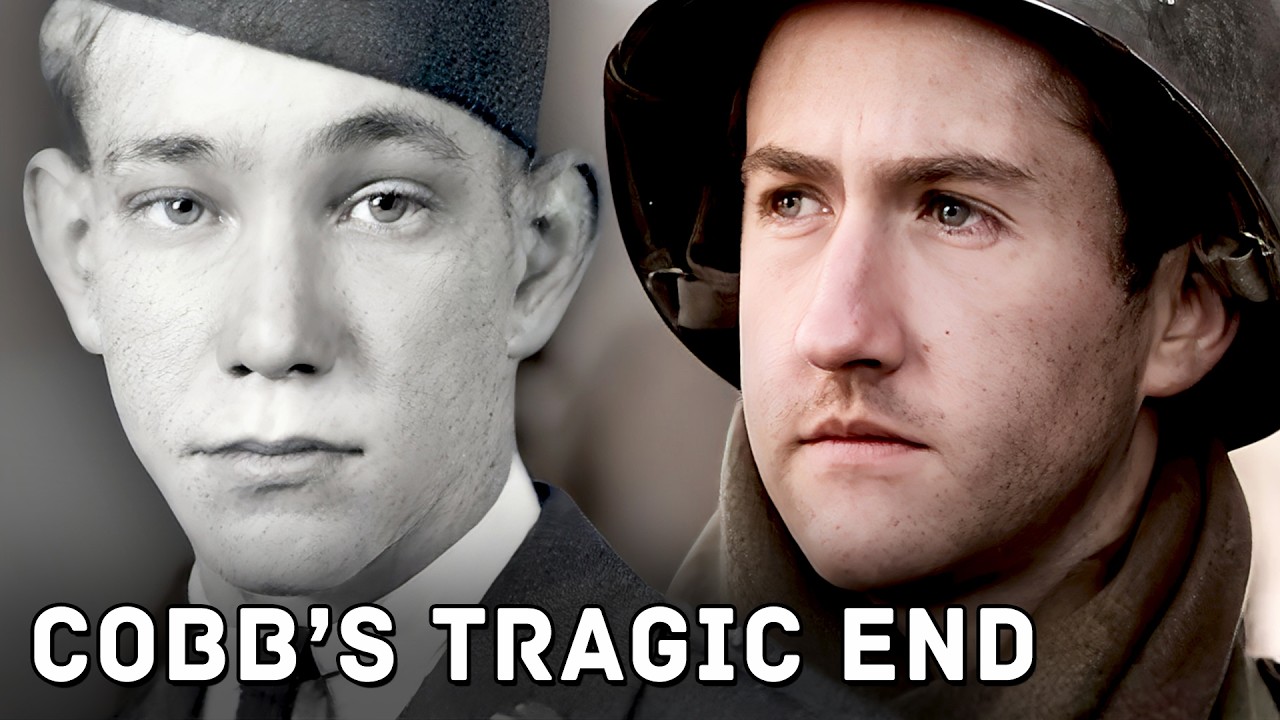
The findings, compiled through extensive archival research and detailed in a comprehensive new investigation, show that Cobb was never court-martialed, never dishonorably discharged, and was in fact awarded a Good Conduct Medal less than two months after the drunken altercation that the acclaimed miniseries used to write him out of its storyline. The revelation challenges nearly two decades of public perception shaped by Stephen Ambrose’s bestselling book and the subsequent television adaptation.
Born on March 4, 1922, in Harlan County, Kentucky, Cobb endured an impoverished childhood marked by the death of his father, Perry, when he was just two years old. His mother, Nancy, remarried a coal miner sixteen years her senior named Lonnie Roscoe Scarborough, and the family grew to include six additional children. Cobb, who went by the name Ray, left school after the seventh grade and enlisted in the Army around 1938 at just sixteen years old, falsifying his birth date to November 4, 1919, in order to meet the minimum age requirement.
By January 1940, he held the rank of private with Battery C, 68th Field Artillery Battalion at Fort Knox, Kentucky. When the unit was redesignated as armored that July, Cobb became part of the newly formed 1st Armored Division. From June to August 1942, he was hospitalized with tertian malaria at the 5th General Hospital near Belfast, Ireland, while serving with the Signal Corps.
According to Ambrose’s account, Cobb then participated in Operation Torch, the November 1942 Allied invasion of North Africa, with the 1st Armored Division. If accurate, this would make him the only member of Easy Company to have experienced both a beach landing and an airborne assault during World War II. Ambrose further claimed that the troop ship carrying Cobb back to the United States was torpedoed, forcing him to return aboard a destroyer.
While no specific record of that torpedoing has been located, the incident may reflect one of the many lesser-publicized convoy losses during the intense U-boat activity in the Atlantic and western Mediterranean following Operation Torch.
Cobb volunteered for the paratroopers in 1943, attending jump school at Fort Benning, Georgia, where he is recorded as serving with Company A of the 515th Parachute Infantry Regiment. By November 1943, he had been promoted to private first class while stationed at Camp McCall, North Carolina, with Company A of the 541st Parachute Infantry Regiment. He joined Easy Company, 506th Parachute Infantry Regiment, while the unit was stationed in Aldbourne, England, in the months before D-Day, meaning he was never at Camp Toccoa, Georgia, in 1942 as the series falsely depicts.
During the D-Day drops over Normandy, Cobb, a light machine gunner, switched seats on the C-47 with George Luz, who was concerned about maneuvering to the door with his heavy radio equipment. The decision proved disastrous for Cobb when flak penetrated the fuselage and struck him in the leg. Private Robert Rader recalled that Cobb was furious, having trained for two years only to miss the historic jump.
Two days later, Cobb received the Purple Heart for his wounds and eventually rejoined Easy Company in England prior to Operation Market Garden.
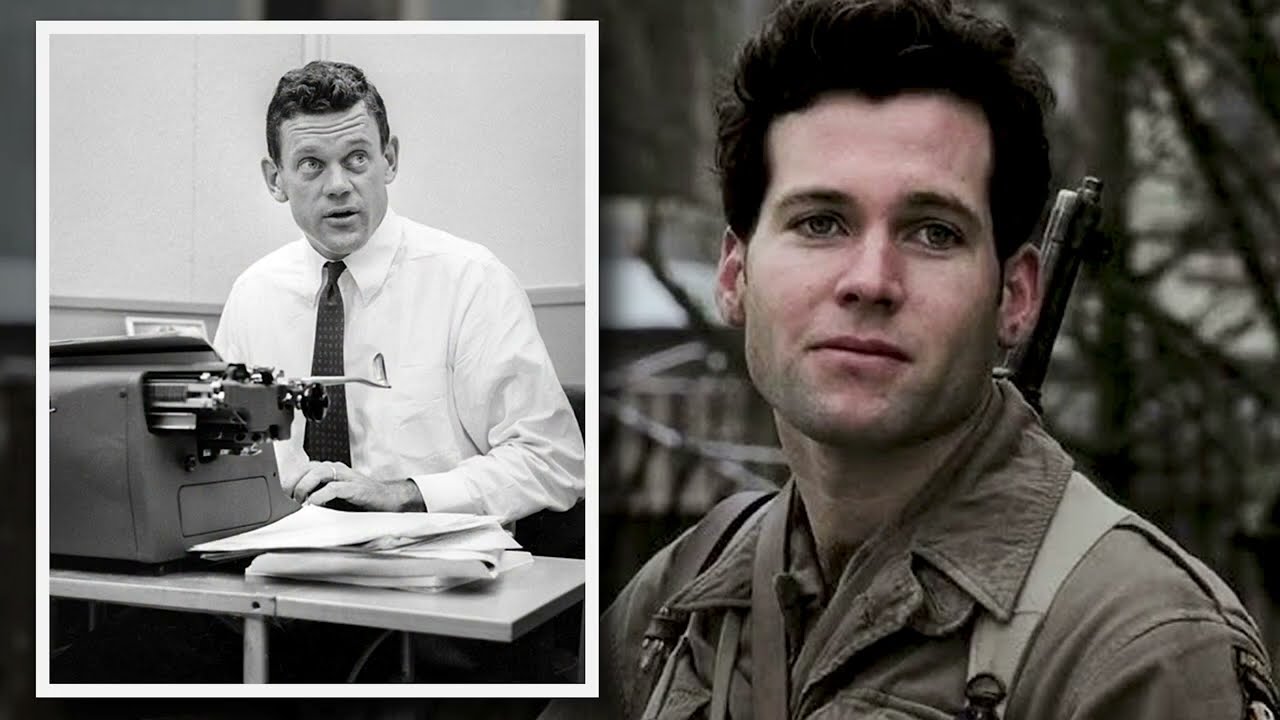 The series portrays Cobb bullying Private James Miller, a replacement, over his Presidential Distinguished Unit Citation, with Bull Randleman intervening to defend the newcomer. The entire scene is fictional. Notably, the citation was not redesignated as the Presidential Unit Citation until 1957; during the war, it was simply the Distinguished Unit Citation.
The scene was constructed to establish Cobb as an abrasive antagonist and Randleman as the virtuous hero.
What the series omitted is that Cobb had been fighting longer than nearly every other man in Easy Company and was already a seasoned soldier by that point. Fellow soldiers who knew him described a likable and effective combatant. Private David Kenyon Webster wrote in his memoir that Cobb was “invariably good-natured and friendly” outside of specific incidents.
Dick Winters described him as “hard-nosed, a regular army man who clearly understood combat.” Clancy Lyall wrote that Cobb “could be a pain in the butt, but you could count on him,” adding that he was “quite good as a combat soldier” and “a nice guy except when he got a bottle of booze.”
Winters specifically commended Cobb’s actions during the October 5, 1944, Crossroads battle in the Netherlands, stating that he delivered “extremely effective long-distance fire on the retreating Germans.” John Martin also praised his efforts. For his actions in the Netherlands, Cobb received the Bronze Star, believed to have been awarded for his role in the defense of the town of Uden.
In Hagenau, France, Cobb participated in the February 15, 1945, patrol across the Moder River to capture German soldiers for interrogation. His boat capsized twice in the icy water, and he and fellow soldiers Thomas McCrary and Melvin Wynn returned to shore. The patrol ultimately brought back two Germans but was forced to leave a wounded German soldier on the riverbank, shot through the lungs, wheezing and crying out in pain throughout the night.
In the series, Webster suggests putting the man out of his misery, and Cobb coldly replies, “F his misery.” In reality, Bob Marsh and Webster threw grenades across the river but failed to end the man’s suffering. According to Ambrose, Cobb could no longer bear the sound, went to the riverbank, and threw a grenade that killed the German and ended his agony.
The series depicts Cobb getting drunk on schnapps and verbally confronting Webster and Lieutenant Henry Jones Jr. This altercation is entirely fictional. According to Webster’s book “Parachute Infantry,” Cobb, Bill Morganti, and Donald Weisman found cases of schnapps in a house under German observation.
They stacked the cases in the courtyard, but the Germans heard them and shelled the area, destroying most of the liquor. The men managed to bring back two bottles each under rifle fire, and Weisman was grazed in the knee by a bullet.
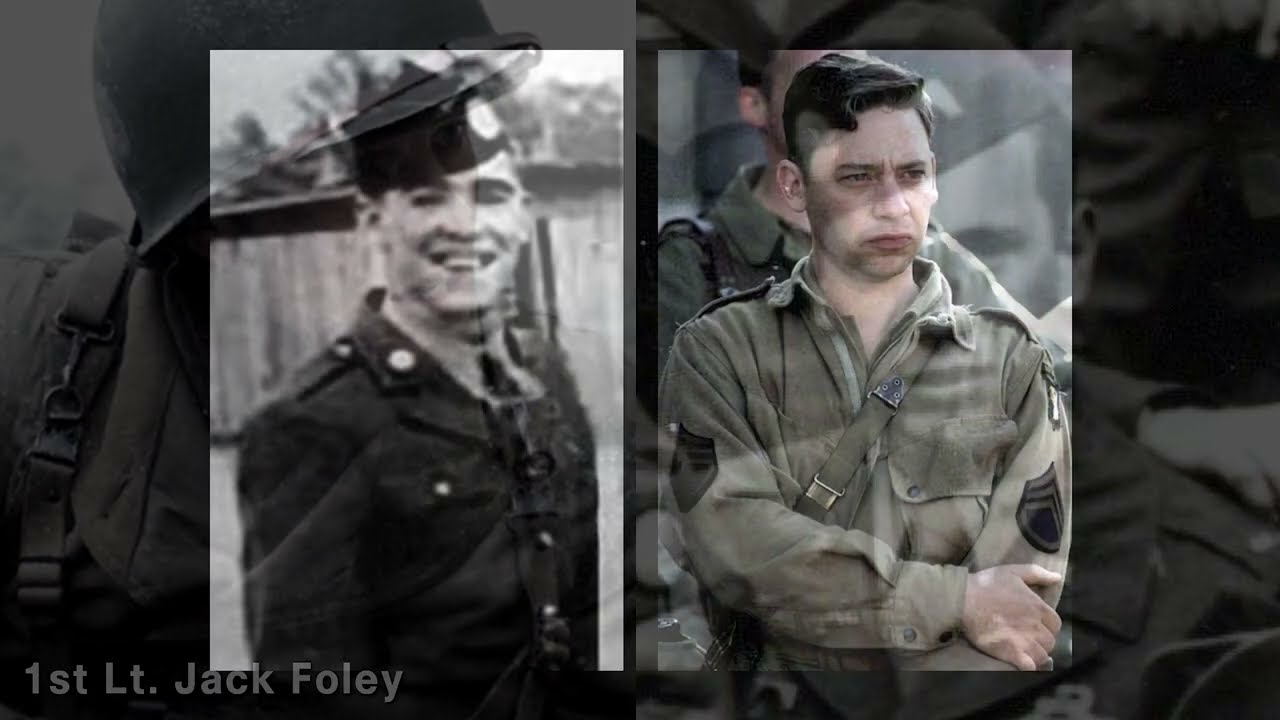 In reality, Cobb got into an altercation with Private Bob Marsh at Observation Post 2 after drinking and attempting to run a belt through a new machine gun. Marsh, who had never liked Cobb, confronted him, and a fight ensued, leaving Cobb with a bloody nose and black eye. Ambrose claimed Cobb then mouthed off at Lieutenant Jack Foley, charged at him, and was tackled by two men before being arrested.
This account is almost certainly incorrect, as Foley would not have been present at Observation Post 2, nor would John Martin, who communicated with the platoon primarily by phone.
Webster’s account indicates it was actually Donald Wiseman who mouthed off at Foley and then argued violently with Captain Ronald Speirs. The Easy Company morning report dated February 23, 1945, confirms that Wiseman was confined to the regimental stockade on February 17, 1945, with no mention of Cobb being arrested. Ambrose appears to have confused the men or received incorrect information during interviews conducted fifty years after the events.
Ambrose also falsely claimed Cobb faced a court-martial, though he never spoke to Cobb, who had died decades earlier. The series dramatizes this claim, showing Cobb escorted by military police in a Jeep, leading viewers to conclude he faced court-martial and dishonorable discharge—a false claim repeated endlessly online. The fact that Cobb received a Good Conduct Medal on April 12, 1945, less than two months later, definitively disproves any court-martial.
He was with Headquarters Company at the time, possibly transferred temporarily as a disciplinary measure, though this remains speculation.
A photograph of Easy Company taken in Kaprun, Austria, in July 1945 shows a man identified as Roy Cobb still clearly serving in the Army. Clancy Lyall stated that claims Cobb was upset about not being promoted were untrue, noting that Cobb made corporal after Hagenau and became an assistant squad leader.
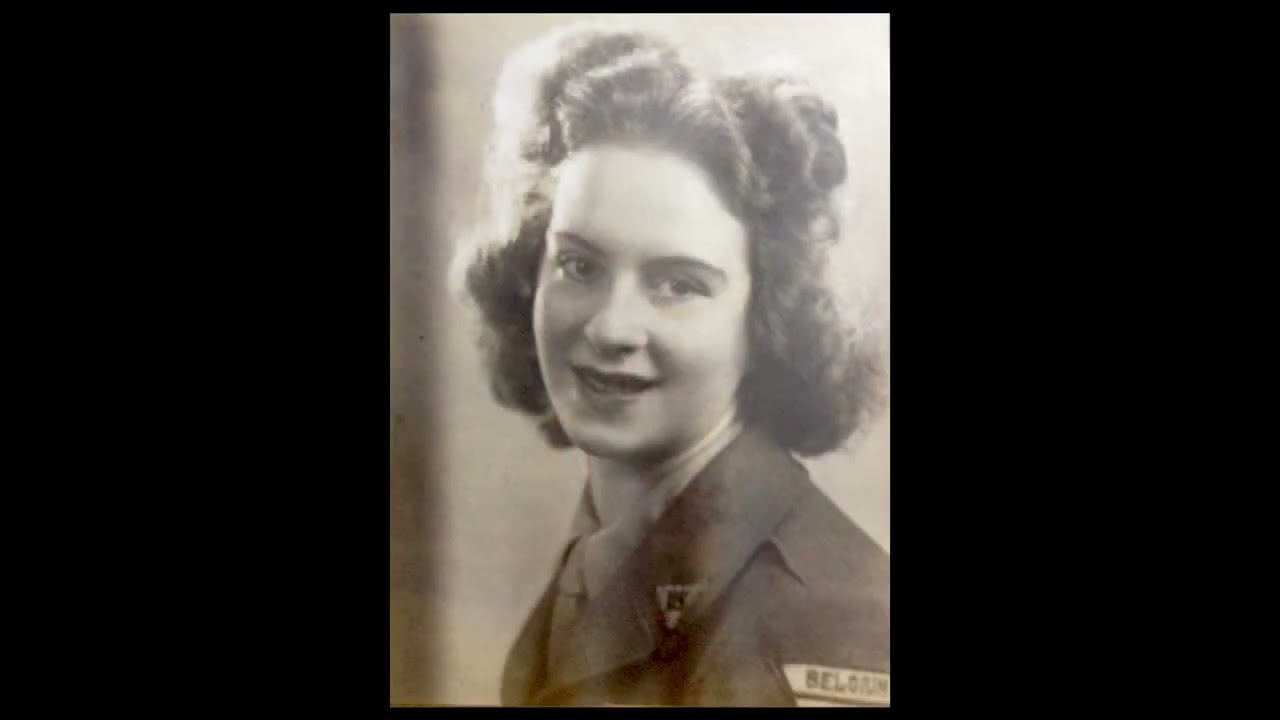
Military records confirm that Cobb re-enlisted in the regular Army on January 9, 1946, definitively disproving any dishonorable discharge, as re-enlistment would have been impossible. While stationed in post-war Europe, he met and married a Belgian woman named Marie, four years his junior, who had served in the British Auxiliary Territorial Service during the war. They had a son, Raymond, born in Belgium in 1947.
Cobb was honorably discharged on February 27, 1948.
Returning to Harlan County, Kentucky, Cobb struggled to find work as a coal miner. A daughter, Rose, was born in 1949, followed by another son, Gary. By 1950, the family was living with Cobb’s mother.
That same year, the census listed a 28-year-old Roy Cobb as a prisoner in the Harlan County Jail under the name Ray Cobb, though the reason for his incarceration remains unknown.
Around 1953, Cobb moved to California, apparently separated from his wife. Marie later moved to Michigan, attended community college, and became a physical therapist, working at Beyer Memorial Hospital in Ypsilanti until retiring at 83. She kept the name Marie Cobb and never remarried, dying at 86 in 2012.
On April 23, 1964, tragedy struck. According to the Sacramento Bee, Cobb and three other men had been drinking whiskey when they got into a car driven by 36-year-old Kenneth Fetty. Fetty, intoxicated, argued with 26-year-old Frank Essick, also drunk, and pulled off Elkhorn Road about eight miles north of Sacramento to fight, running over a reflector marker and stalling the car atop the signpost.
After Fetty and Essick fought, the men attempted to free the vehicle. Cobb and 23-year-old Barry Dyer pushed from behind while Essick pushed from the side. For unknown reasons, Fetty shifted into reverse, and the car shot backward into a steep drainage ditch, pinning Dyer underneath and Cobb between the bumper and ditch wall.
Both suffered crushed chests and internal injuries, dying before reaching Sacramento Hospital. Cobb was 42 years old and working as a farm worker.
Fetty was booked on suspicion of drunk driving and felony manslaughter, sentenced to prison the following month for involuntary manslaughter. A probation report revealed an extensive record of arrests for intoxication, including three prior drunk driving arrests and a 1959 purse-snatching arrest. Despite causing two deaths, Fetty was arrested again for drunk driving in 1969 and sentenced to six months, then arrested again in 1971 and ordered to jail time.
Roy Cobb’s body was returned to Kentucky and laid to rest in Odd Fellows Cemetery in Pineville. Of all the Band of Brothers veterans researched, Cobb’s story proved the hardest to untangle, with most online information tracing back to Ambrose’s book or the series itself. David Kenyon Webster’s “Parachute Infantry” and Clancy Lyall’s biography “Silver Eagle” provided the most reliable accounts.
Like Herbert Sobel, Norman Dike, and Albert Blithe, Roy Cobb was a victim of shoddy research and a lack of fact-checking by the series’ screenwriters. The real Cobb was a good combat soldier, generally well-liked by his fellow soldiers except when drinking. Like many veterans, he struggled with alcohol, but he was never court-martialed for it, nor discharged over the Hagenau incident.
He continued serving his country during the Allied occupation until 1948, when he received an honorable discharge.
The toll that the war, PTSD, and drinking took on his brief civilian life and marriage remains impossible to quantify. What is certain is that Roy Cobb deserved to be remembered for the man he truly was, not the fictional antagonist that “Band of Brothers” transformed him into because the storyline demanded another villain.