Just after sunrise on April 4, 1961, two federal agents walked into a quiet building in New Orleans, Louisiana. They told a short, thick-necked man with heavy eyelids that he was coming with them right now.
There was no long hearing, no chance to call a lawyer, and no goodbye to the people waiting outside for orders. They put him in a car, then on a plane. By the time the city heard the rumor, Carlos Marcello was no longer in America.
He landed in Central America with a suit on his back, a cigarette in his pocket, and a problem that only a handful of men on Earth could survive. This was not a regular deportation. It was a message from the Kennedys, from Washington, from the United States government, telling the boss of the New Orleans Mafia that his time was up.
Only it was not up. Not even close.
To understand why the government would act so bluntly, you have to understand what kind of threat Marcello represented. He was not just a racketeer. He was the man the FBI had been circling for years, the way sharks circle a boat they cannot quite bite.
The Bureau saw him as a national connector, a quiet power broker who did not need headlines because he had something better. He had Louisiana. For decades, he made the South feel like his private room.
This is the story of how New Orleans became the first American Mafia stronghold most people never learned about, and how Carlos Marcello built an empire on gambling, vice, labor control, and political corruption. It was an empire so durable that even when the president of the United States came after him, he simply walked back into the country and kept earning.
So here is the question that should bother you. If Marcello was so powerful that federal agents basically kidnapped him out of Louisiana, why does almost nobody know his story today?
Carlos Marcello was born Calogero Minacore on February 6, 1910, in Tunis, Tunisia. That origin mattered because it gave him a built-in shield later. He grew up American, but the paperwork around him stayed complicated. In the Mafia, paperwork can be a weapon.
He came to Louisiana as a baby. By the time he was old enough to understand the streets, he was in a city where politics and crime were not separate businesses. They were partners.
New Orleans in the early 20th century was not just jazz and parades. It was docks, cash, workers who needed jobs, officials who needed votes, and a constant flow of goods that could be taxed, skimmed, stolen, or controlled. If you control the docks, you control the arteries. You can choke a man without touching him.
Before Marcello ever became a name, the New Orleans underworld already had a structure. Sicilian groups had been operating around the French Quarter and the waterfront since the late 1800s.
That world exploded into public view after the murder of New Orleans Police Chief David Hennessy on October 15, 1890. The next year, on March 14, 1891, a mob stormed the parish prison on Marais Street and lynched 11 Italian suspects. Nine were shot inside, two were hanged outside. It is one of the largest mass lynchings in American history.
The part people miss is this. The lynching did not erase the Mafia. It hardened it. The survivors learned a lesson about visibility. Be feared. Be useful. Do not be obvious.
By the time Marcello was a young man, the old guard was aging, but the system was still there. He came up in the French Quarter, small time at first. Theft, fights. The kind of violence that makes you known to cops and respected by men who need enforcers.
He was not a glamorous gangster. He was a worker. He was the guy who showed up, the guy who remembered who owed what, the guy who did not panic.
There is a detail that followed him through life. People called him little man. Not because he was weak, but because he was compact. He looked like a man who belonged behind a counter, not at the top of a criminal government. That was part of the magic. In a world full of loud peacocks, Marcello was a brown shoe.
His first real branding moment came from prison time and proximity to older power. He spent serious time locked up early, including a robbery conviction that put him inside Louisiana State Penitentiary at Angola.
Prison does two things for a man like Marcello. It teaches patience, and it creates relationships. The Mafia is not built on love. It is built on favors, debts, and men who do not talk. Prison is where those men are sorted.
When he came out, he was in position under Sam Carolla, the boss who took over the New Orleans family after Charles Matranga stepped back in the early 1920s. Carolla was known as Silver Dollar Sam. Picture him. Older. Fleshy. A man with a reputation for narcotics and violence.
Carolla drew heat. Heat is bad for business. Marcello learned from that. He studied the way law enforcement looked at a target. Then he became a target who did not look like one.
By 1947, the government finally succeeded in deporting Carolla to Italy. That created a vacuum, and Marcello stepped into it like he was taking his seat at a dinner table he had been setting for years. He became the boss of New Orleans. Not with a war, but with a ledger.
His pitch was simple. Everybody earns, nobody freelances. Outsiders could do business in New Orleans, but only with permission. That policy mattered because it turned the city into a toll booth for national criminals. If you wanted access to ports, gambling, or vice in southern Louisiana, you paid respect to the local system.
Here is where it gets interesting. Marcello was not just controlling a neighborhood. He was controlling the idea of territory across the South. The New Orleans family became a hub. Dallas became an offshoot. Parts of Florida became partnership territory.
He built relationships with men like Santo Trafficante Jr. out of Tampa. He connected with national figures, and he did it without acting like he was trying.
Now consider how Marcello actually made money, because the Mafia is not magic. It is mechanics.
Scheme number one was the slot machine and pinball pipeline, and it was more elegant than people realize.
The opportunity was straightforward. Bars and clubs in New Orleans and Jefferson Parish wanted extra revenue. Politicians wanted cash. Law enforcement wanted easy money. Gambling was illegal in many forms, but vice enforcement was selective. That created a market.
The inside connection came through legitimate-sounding distribution fronts. One company often mentioned in reporting is Jefferson Music Company, tied to the Marcello circle. If you can place jukeboxes and pinball machines legally, you already have relationships with bar owners. You already have trucks, routes, and maintenance guys who walk in the front door like they belong.
The execution followed a pattern. A distributor placed a machine. A tech kept it running. Collections happened on a schedule, weekly, sometimes more. A bar owner got his cut. The distributor got his cut. The crew got its cut. And the political cut was delivered quietly, not in a suitcase labeled bribe, but in envelopes, in favors, in campaign help, in jobs.
The money was substantial. Slot machines were pure profit compared to jukeboxes. Even a modest route, a few hundred machines, could generate a river of cash. If one machine averaged, say, $100 US a week in net after payouts, 200 machines would be $20,000 US a week. That is over $1 million US a year, and that is conservative. Multiply that across parishes, across partner clubs, across protected locations, and you see why Marcello did not need bank robberies.
The problem was always greed and attention. Someone bought a new car. Someone talked. A reform politician wanted a headline. A federal task force wanted a scalp.
So Marcello countered with something he was great at, stabilizing the environment. He kept violence low. He kept disputes quiet. He kept the city functioning. That is the part outsiders never understand. The most powerful mobsters do not win by being feared by the public. They win by being tolerated by the systems that matter.
Marcello's daily life reflected that. He was not always in a fancy club. Often, he was in Metairie, suburban and safe. He liked routine. He liked control.
People who dealt with him described a man who could be charming, but also cold. A man who could listen quietly, then reduce you with a sentence. He did not need to yell. He needed you to understand that time was on his side.
By March 24, 1959, Marcello was important enough to be hauled before the United States Senate's McClellan Committee investigating organized crime. He invoked the Fifth Amendment repeatedly.
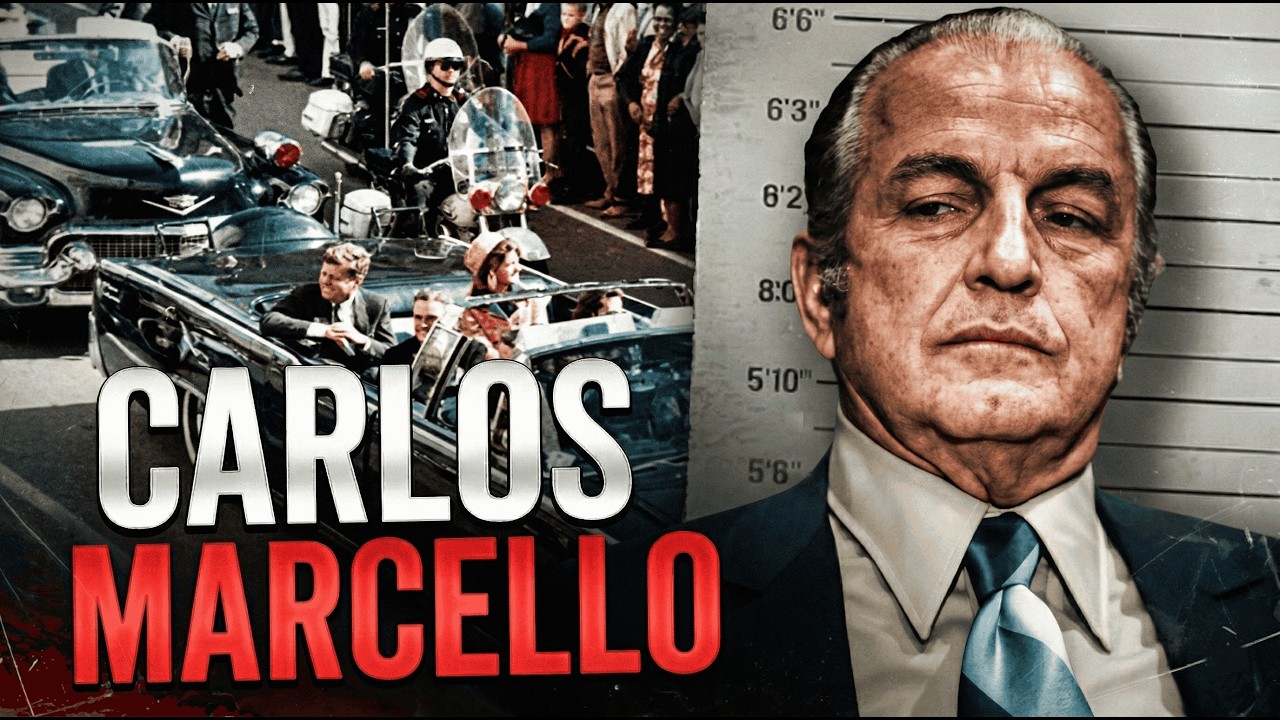
The moment is famous because the committee's orbit included two names that would shape Marcello's next decade. John F. Kennedy, a senator, and Robert Kennedy, the committee's counsel, who became attorney general. Marcello came out of that era with a new enemy. Not a rival gangster, but a federal crusade.
That brings us back to April 4, 1961. Marcello was deported to Guatemala as an undesirable alien, using the government's leverage over disputed birth and documents. The point was humiliation. Disorientation. Fear. They wanted him to feel powerless.
But Marcello was a survivalist. The details of how he returned vary depending on who tells the story, but the outcome is not in dispute. He made his way back into the United States and fought deportation through the courts and through influence.
When he was back, the lesson he absorbed was brutal. The government would break rules to get him. So he would make sure they could not.

Retain this name for later. Charles Dutson Morat, Oswald's uncle, was a New Orleans figure known to be connected to Marcello's orbit in local reporting. He is one of several threads that later make New Orleans unavoidable in the JFK assassination conversation, whether you believe the theories or not.
On November 22, 1963, President Kennedy was assassinated in Dallas, Texas. Three days later, on November 25, 1963, Jack Ruby shot Lee Harvey Oswald inside the Dallas Police Headquarters. Ruby was a nightclub operator with connections that have been examined for decades.
The result is that Marcello's name got dragged into a storm of suspicion, conjecture, and later investigations. Some authors allege he had motive because of Robert Kennedy's pressure. The House Select Committee on Assassinations later looked at Marcello as part of its broader organized crime inquiry.
But here is the disciplined way to say it. Marcello became a permanent suspect in America's imagination without ever being conclusively proven as an organizer of the assassination by official findings.
That suspicion had a consequence. It gave Marcello a kind of dark halo. It made people talk about him in whispers. It also made law enforcement look harder, which created pressure, which created mistakes.
In 1966, Marcello was convicted and served time for assaulting an FBI agent. That detail tells you something. The quiet boss could still snap. When you spend your life being watched, poked, and pressured, sometimes the mask slips.
But Marcello survived that, too. He stayed out of major prison trouble for years afterward. He kept the machine running. Gambling, prostitution, labor influence, political relationships. The kinds of rackets that do not show up as glamorous movie scenes, but keep money moving through the same hands.
Scheme number two was the protection and licensing style corruption that turns illegal vice into predictable revenue.
The opportunity was constant. New Orleans has always had vice, brothels, gambling rooms, backroom clubs. The demand is constant. Tourists want thrills. Locals want escape.
The inside connection required cops who looked the other way and city officials who steered enforcement away from your spots and toward your competitors. That did not always mean one big bribe. Often it meant a network. A friendly judge. A police supervisor with a relative who needed work. A councilman whose campaign needed printing, and somebody offered to handle it.
The execution was routine. A club operated. A madam paid weekly. A bookmaker paid weekly. A bar paid monthly for machines on location. If a new operation opened without permission, it got visited. The visit could be polite or violent. The goal was the same. Join the system or leave.
The money could be structured like a tax. $2,000 US a week from a major club. $500 US a week from a smaller operation. $10,000 US a month from a profitable machine route. Add loan-sharking interest that could run 10% a week, and you have a diversified portfolio. These are the kinds of numbers investigators and journalists have discussed as typical in organized crime ecosystems, and the exact amounts vary by decade and by heat. The point is the structure, not the fantasy.
The problem was that vice is addictive revenue, and addictive revenue makes men sloppy. Somebody overcharges. Somebody assaults the wrong person. A reform administration comes in. A federal task force arrives. The system has to be flexible.
Marcello's strength was flexibility. He did not need to be seen. He could rule through intermediaries, lieutenants, relatives, trusted earners.
If you want one humanizing detail that explains why Marcello could last 30 years, it is this. He was not chasing applause. A lot of mobsters want to feel like kings. Marcello wanted to feel like the house, the building people walk into and cannot move.
But that kind of power has a cost. It isolates you. It makes every friendship conditional. And it creates a special kind of paranoia. Not the loud kind where a man screams about betrayal, but the quiet kind where you assume everything is recorded.
By the late 1970s and early 1980s, the FBI had evolved. Wiretaps got better. Undercover operations got more aggressive. And federal prosecutors were learning that you do not always beat a boss by catching him holding a gun. You beat him by catching him agreeing to take money.
That sets the stage for Marcello's late-life disaster, the BriLab case.
In January 1982, a federal judge sentenced Marcello to 7 years in prison for a conviction tied to a corruption and labor racketeering scheme involving bribes and kickbacks around state insurance contracts in Louisiana. The operation used undercover FBI agents posing as businessmen. The idea was to record the pitch, record the agreement, and then present it as proof that the system is not just street crime. It is political crime.
But that is not the crazy part. The crazy part is that Marcello was in his 70s by this time. This was a man who built his legend on avoiding cages. And now the government had him in a courtroom, painted as an old king who could not stop trying to influence outcomes.

Then came another blow. In April 1982, Marcello received an additional 10-year federal sentence for an effort to bribe a federal judge in Los Angeles connected to a racketeering case.
If you want a psychological read, it looks like the instinct that made him powerful finally turned on him. The instinct to fix problems with influence. To treat the legal system like another machine you can grease. That can work for decades until it does not.
Scheme number three was the judicial and contract fixing play. It is the most dangerous because it depends on trust.
The opportunity was government contracts, huge pools of money. Insurance, construction, labor. If you can steer a contract worth, say, 5 million US dollars, even a small percentage skim is serious.
The inside connection required a connected official or broker. Somebody who could open doors. Somebody who could signal which judge was friendly, which regulator was hungry, which politician wanted help.
The execution followed a careful script. A proposal was crafted. A bribe was offered as a consulting fee, a campaign donation, a job for a relative, or a straight envelope. Meetings happened in restaurants, back offices, cars. Names were spoken carefully. If it worked, the contract was awarded. If it failed, everyone denied everything.
The money added up. A 2% cut on $5 million US dollars is $100,000. A 5% cut is $250,000. Add ongoing kickbacks, and you create a steady stream.
The problem was undercover agents, informants, and recording devices. The higher you go, the more the government wants to make an example. Street arrests do not change history. Public corruption cases do. Marcello became that example, at least temporarily.
Years later, in 1989, the Fifth Circuit Court of Appeals threw out Marcello's Brylab conviction, and he was released. But the victory was bitter. He had suffered strokes. His health was damaged. The machine did not need him the way it used to. The man who spent decades proving he was untouchable had been touched in the one place that matters. Time.
So let us return to the emotional truth of this story, because that is what makes it stick. Marcello's real genius was not violence. It was governance.
He ran New Orleans like a criminal city hall. He set rules. He enforced them. He negotiated with outsiders. He partnered when it paid. He blocked when it threatened the home base. Because of that, he became something rare in American organized crime history. A regional boss with national relevance.
And yet he never got the same myth as New York bosses. Part of it is geography. Part of it is media. New York produces headlines. New Orleans produces atmosphere, music, food, celebration. The city distracts you. It makes you forget that behind the parades, there were men who treated vice like an industry.
Another reason is Marcello's personality. He did not sell himself. He did not want to be a celebrity. The most useful thing a boss can be is forgettable to strangers. And Marcello was forgettable until you crossed him.
His legacy also lives in the way New Orleans crime is discussed today. When people talk about corruption, about local power networks, about how hard it is to separate business from politics, the Marcello era is a case study. Not because it created corruption, but because it shows how corruption becomes normal. It becomes the cost of doing business. It becomes the joke everyone tells, but nobody reports.
Carlos Marcello died on March 2, 1993, in Metairie, Louisiana. The immediate aftermath was not a street war. There was no dramatic funeral shootout. There was no final public confession. The organization faded, fragmented, and adapted.
Law enforcement pressure changed the landscape. New generations learned new methods. And the old style, the neighborhood boss who could control an entire region with relationships and fear, became harder to maintain in a world of wiretaps and federal sentencing.
So what is the real ending here? The resolution is that Marcello survived the Kennedy era. He survived decades of investigation. He was convicted late, then partially vindicated on appeal, but his health and power declined. He spent time in federal custody. He lost years.
The public record includes a 7-year sentence in early 1982 and another 10-year sentence in 1982 tied to a judge bribery scheme. Even with reversals and appeals, the damage was real. The government finally got what it always wanted. Not a headline death, but a slow reduction.
The ripple effects are bigger than one man. Marcello's story shows how organized crime embeds in local economies, how it uses legitimate businesses as delivery systems, how it treats politics as a marketplace, and how the most powerful criminals often look like administrators, not movie villains.
The meaning is uncomfortable. The Mafia is not just guns and nightclubs. It is paperwork. It is favors. It is control of labor, control of permits, control of who gets to operate and who gets shut down. And when a criminal system becomes stable enough, it can feel like part of the city's natural order.
Here is the final thought you should keep. Carlos Marcello did not need to conquer America. He only needed to conquer one strategic place and make the rest of the country come to him. That is why he mattered. And that is why his story should not be forgotten.